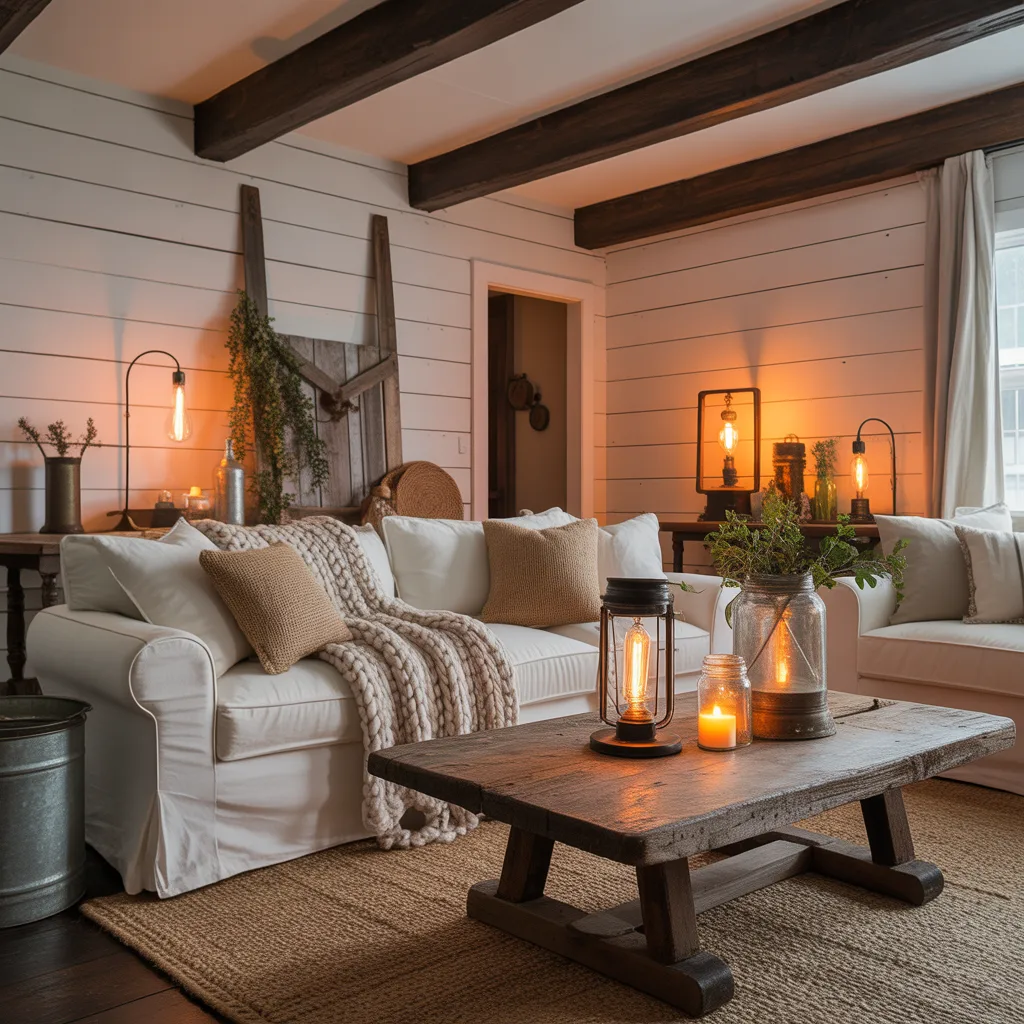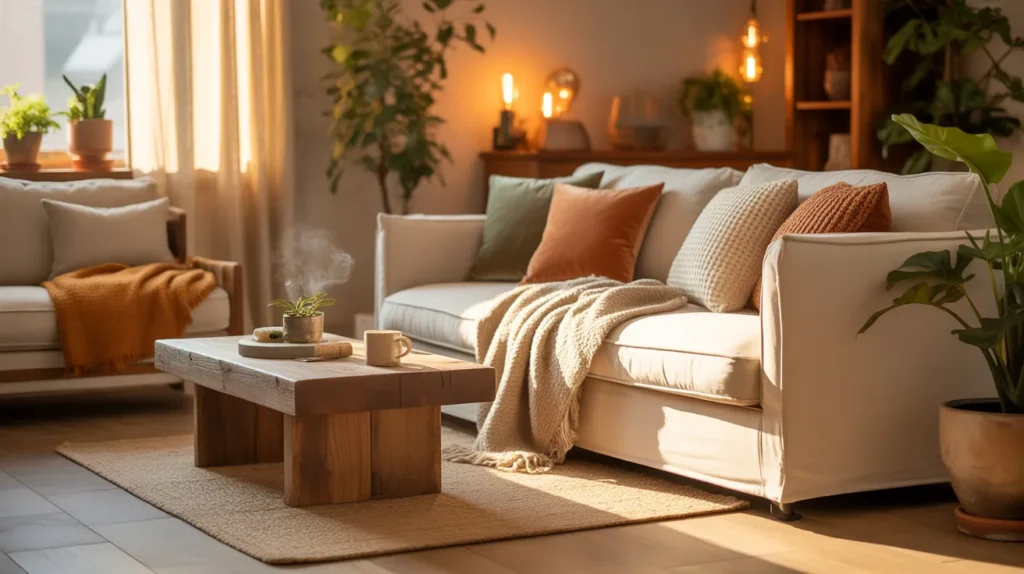
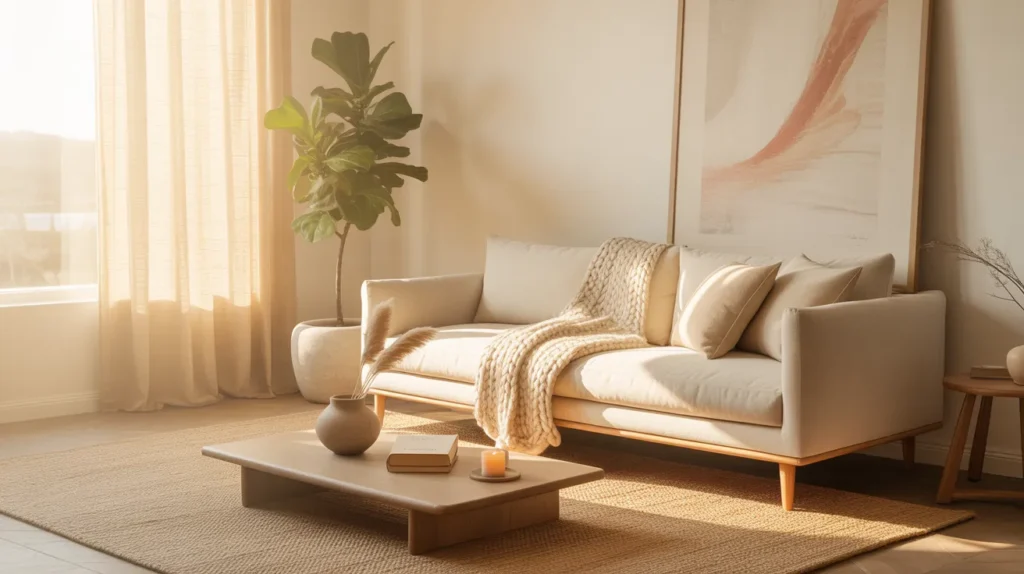
If you’re feeling overwhelmed by household clutter, these 11 Minimalist Living Room Tips & Tricks will help you reclaim your space, your calm, and your mental clarity — without sacrificing style or breaking the bank. A streamlined, intentionally designed living room isn’t just beautiful — it’s one of the most powerful daily wellness habits you can build for your emotional and physical well-being.
By embracing a minimalist home aesthetic, you can eliminate visual stressors, improve indoor air quality through natural toxin-free materials, and foster a sense of openness that genuinely reduces anxiety. Health-conscious homeowners are discovering that simple living room design strategies — clean layouts, organic textures, and breathable negative space — directly support mental clarity, mindful presence, and a calmer, more grounded daily life.
Whether you’re starting fresh or mindfully editing your existing space, these minimalist decor hacks blend functional beauty with sustainable, wellness-focused choices to create a lounge that feels as restorative as it looks. Each tip is curated to help you design a breathable, low-clutter sanctuary that is effortlessly Pinterest-worthy — and deeply, soulfully yours.
1. Declutter Surfaces Ruthlessly but Mindfully
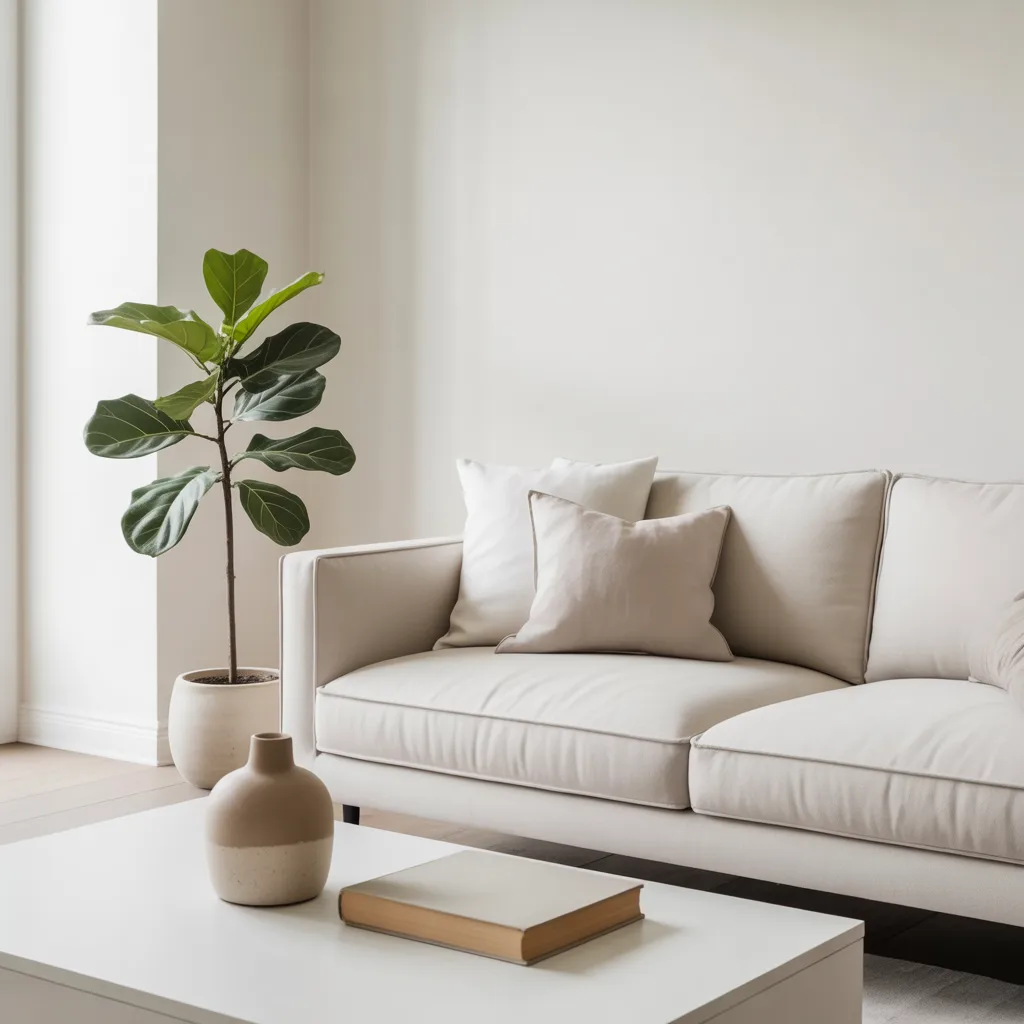
Decluttering is the single most transformative step in any minimalist living room journey — and it requires no shopping, no budget, and no design skills. Before adding new decor or furniture, take time to honestly remove every item that no longer serves a clear purpose or brings you genuine joy. Clear surfaces like coffee tables, shelves, and mantels of all unnecessary objects, leaving only what is both beautiful and meaningful. A clear surface acts as a powerful visual reset, instantly making any room feel significantly larger, more peaceful, and more intentionally designed.
For a health-conscious home, a clutter-free environment is scientifically proven to lower cortisol levels, improve daily focus, and reduce feelings of anxiety and overwhelm. When you mindfully edit your belongings, you create a space that actively supports mental clarity and reduces the background cognitive load that a chaotic environment constantly imposes. Prioritize keeping only high-quality, sustainable items made from natural materials like wood, stone, or linen. This foundational minimalist approach ensures your living room becomes a permanently breathable sanctuary that honors both your wellness values and your daily quality of life.
Pro Tip: Start with just one surface — your coffee table. Remove everything, then return only three objects. This single act delivers an immediate and deeply satisfying transformation that will motivate the rest of your declutter journey.
2. Commit to a Warm, Monochromatic Neutral Palette
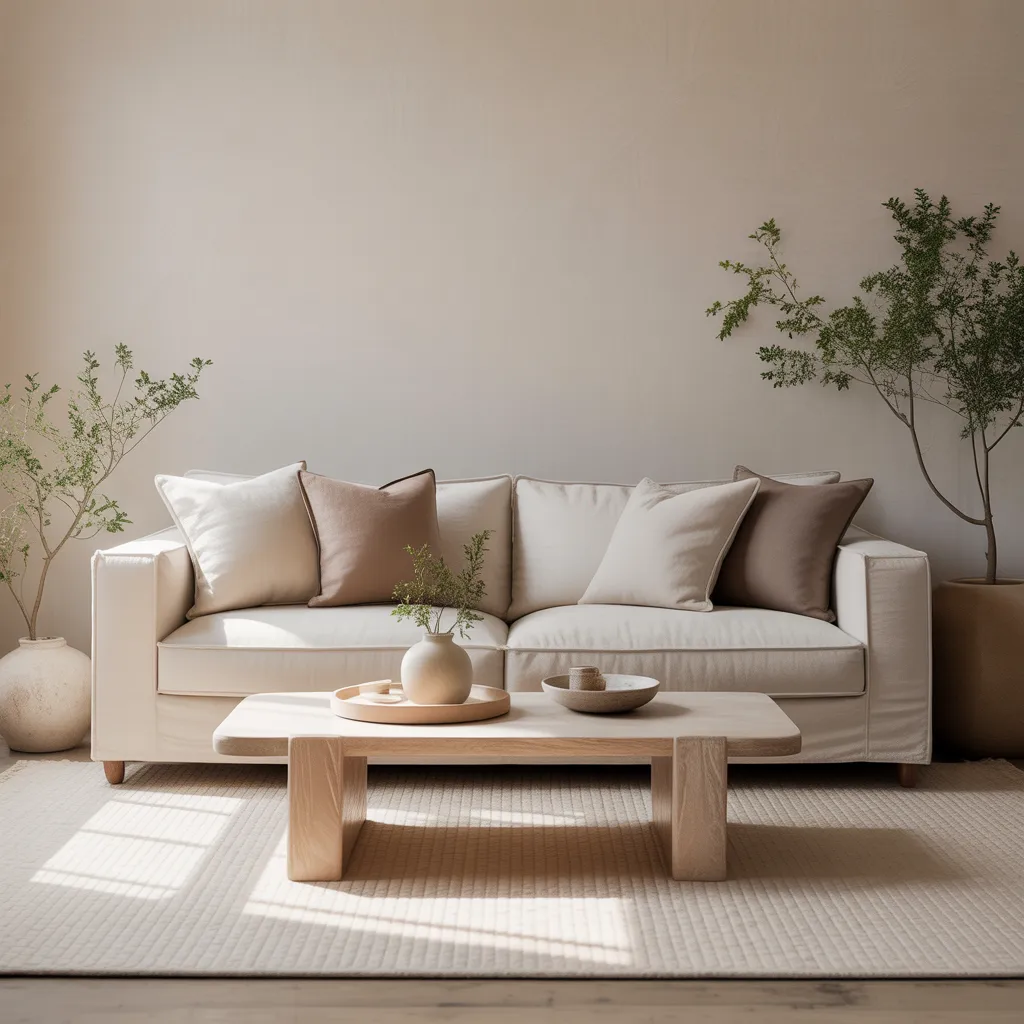
Color is one of the most powerful and most underestimated tools in minimalist interior design. Choosing a warm, monochromatic neutral palette — using different shades of a single neutral like soft ivory, warm greige, or gentle sand — creates a sophisticated visual continuity that makes walls appear to recede and rooms feel significantly more spacious and airy. Unlike stark white minimalism that can feel cold and clinical, warm neutral tones reflect natural light beautifully, photograph with extraordinary richness for Pinterest, and feel genuinely timeless rather than trend-dependent.
From a wellness perspective, warm neutral palettes carry scientifically supported psychological benefits that go far beyond aesthetics. Soft, muted tones lower heart rate, reduce visual stimulation, and promote a state of calm alertness that supports both deep focus and genuine relaxation. Always choose low-VOC or zero-VOC paint in your selected neutral to actively protect indoor air quality — a non-negotiable consideration for health-focused decorators. Layer different textures within the same color family — a linen sofa against a wool rug and a woven jute basket — to add sophisticated depth without introducing any visual chaos or complexity.
Pro Tip: Choose two or three tonal variations of one warm neutral and repeat them across your walls, soft furnishings, and decor for a cohesive, professionally designed look that costs nothing extra but elevates everything.
3. Invest in ‘Leggy’ Furniture for Visual Flow and Airiness
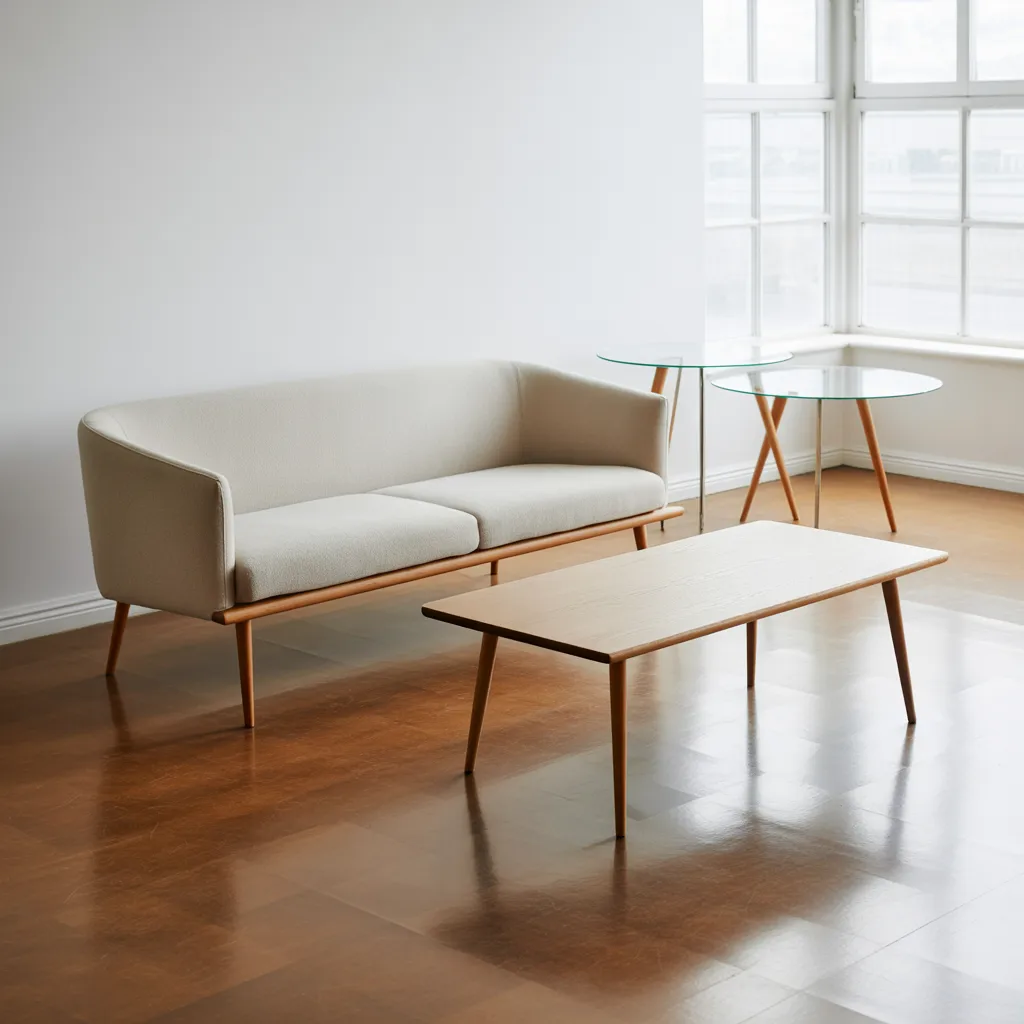
Choosing furniture with visible, slender legs is a classic and highly effective minimalist decor hack that professional designers use consistently to transform the feel of any living room. When sofas, armchairs, and sideboards are elevated on tapered wooden or metal legs, light and air circulate freely beneath them — creating a continuous, uninterrupted visual flow across the floor. This prevents the room from feeling ground-heavy, dark, or unnecessarily cramped. In a minimalist home, maintaining this sense of visual lightness and airiness is absolutely crucial for ensuring the space feels breathable and expansive at every moment.
For wellness-conscious decorators, leggy furniture offers genuine health benefits that extend well beyond visual appeal. Elevated pieces make cleaning significantly easier and more thorough — preventing the buildup of dust, allergens, and mold in the hard-to-reach corners that solid, floor-hugging furniture creates. Prioritize pieces made from sustainably sourced solid wood with non-toxic, natural finishes like beeswax or plant-based oils rather than synthetic lacquers that off-gas VOCs into your living environment. Clean-lined furniture with honest, natural materials also ages beautifully over decades — a powerful argument for choosing quality over disposable fast-furniture alternatives.
Pro Tip: If replacing furniture isn’t in your budget right now, simply raising your existing sofa on affordable furniture leg risers creates an immediate and surprisingly dramatic improvement in how open and airy your room feels.
4. Master the Art of Negative Space
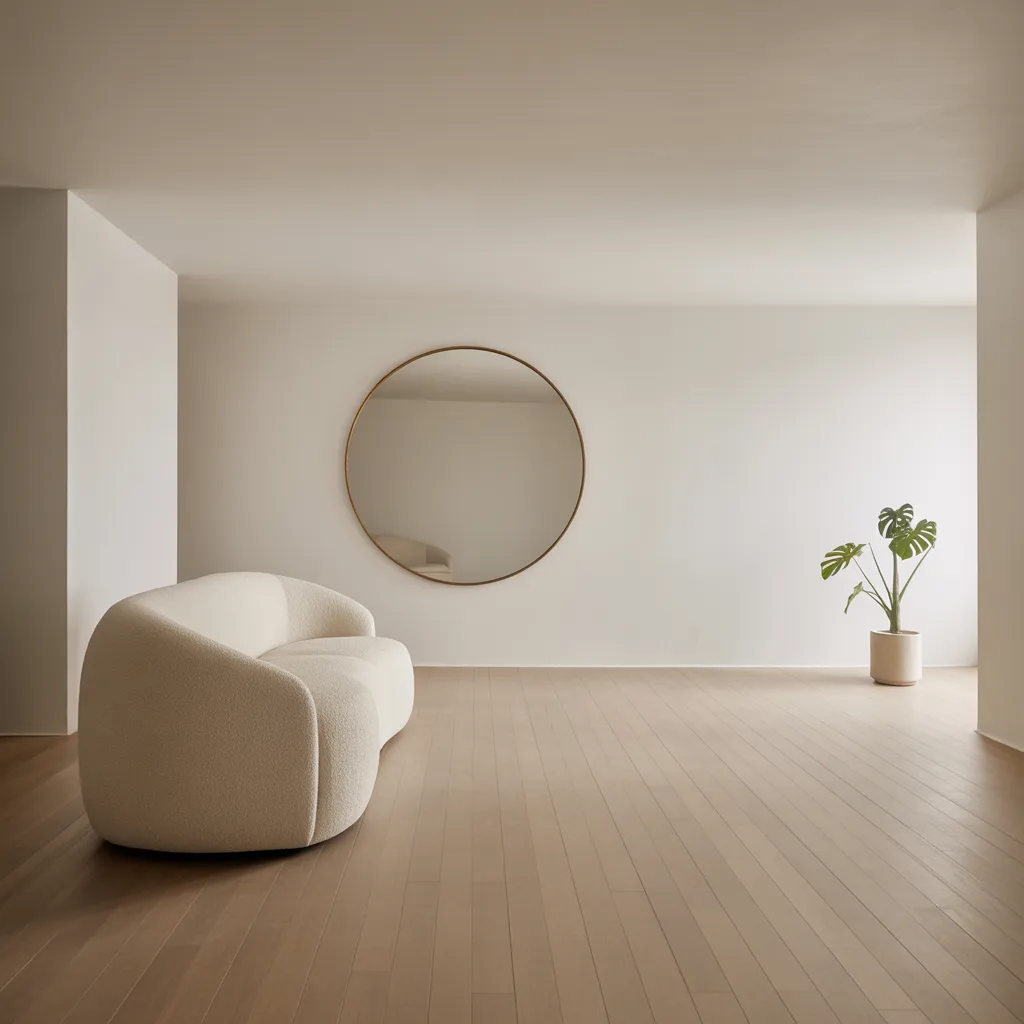
Negative space — the intentional empty areas around and between your objects — is the single most misunderstood and most underutilized element in interior design. Most people feel instinctively compelled to fill every corner, cover every wall, and style every surface — but the world’s most beautiful and most-saved minimalist interiors on Pinterest are defined precisely by what they deliberately leave out. An empty wall, a bare wooden floor, a completely clear surface — these deliberate absences create essential visual breathing room that makes every object that remains feel genuinely considered, precious, and luxurious.
Embracing negative space is as much a wellness practice as it is a design philosophy. Research in environmental psychology consistently demonstrates that visually open, uncluttered spaces lower anxiety, improve cognitive focus, and support the kind of present-moment calm that mindfulness traditions have long advocated as essential to human flourishing. Resist the cultural pressure to decorate every available inch — instead, protect generous open spaces as the defining and most valuable feature of your room. When you walk into a space with thoughtful negative space, you involuntarily exhale. That release of tension is your nervous system responding to genuine, deeply felt visual peace.
Pro Tip: Stand in your living room and deliberately remove one more object than feels comfortable. Live with that extra emptiness for a week. Almost universally, people discover they love it — and never want to go back.
5. Layer Natural Textures to Avoid Starkness
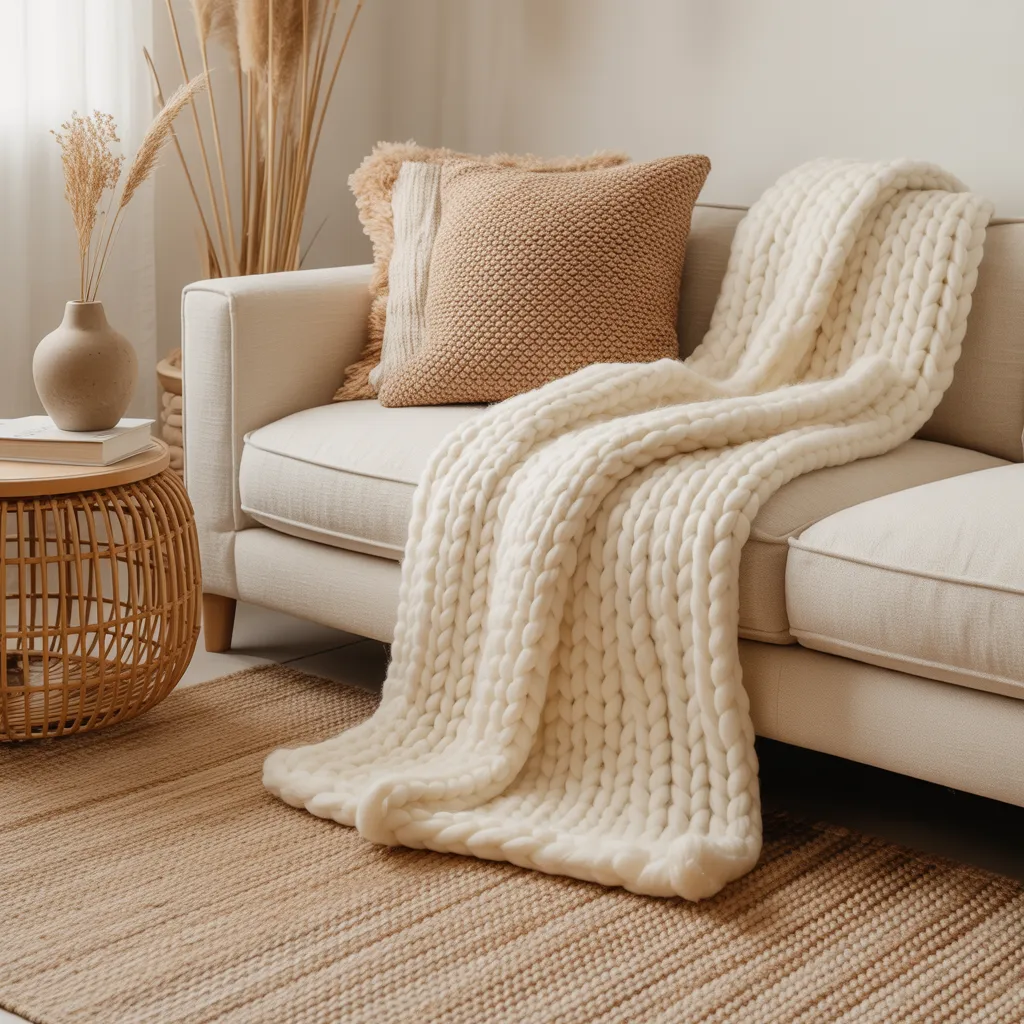
One of the most common and most damaging misconceptions about minimalist living rooms is that they must feel cold, sterile, or devoid of personality and warmth — but the most beloved minimalist interiors on Pinterest consistently disprove this entirely. The secret lies in intentional texture layering using natural, organic materials that add visual warmth, tactile richness, and sensory depth without introducing clutter or visual complexity. A chunky knit throw, a woven jute rug, a rattan side table, and a simple ceramic vase together create extraordinary warmth and dimension while maintaining perfect visual calm and sophisticated harmony.
For wellness-conscious decorators, natural textures deliver profound benefits that extend well beyond their visual appeal. Materials like organic linen, merino wool, jute, and unfinished wood are non-toxic, biodegradable, breathable, and completely free from the synthetic chemicals found in mass-produced alternatives — making them genuinely superior choices for indoor air quality and long-term physical health. The tactile experience of natural materials also activates the parasympathetic nervous system, measurably lowering cortisol and promoting genuine physical relaxation. Limit yourself to a maximum of three complementary natural textures per room to maintain the clean, breathable aesthetic that defines true, soulful minimalist living.
Pro Tip: The perfect minimalist texture formula: one smooth surface (linen sofa), one woven surface (jute rug), and one chunky soft element (knit throw). These three together create all the warmth and richness you need without a single piece of visual clutter.
6. Maximize Natural Light with Sheer, Floor-to-Ceiling Drapes
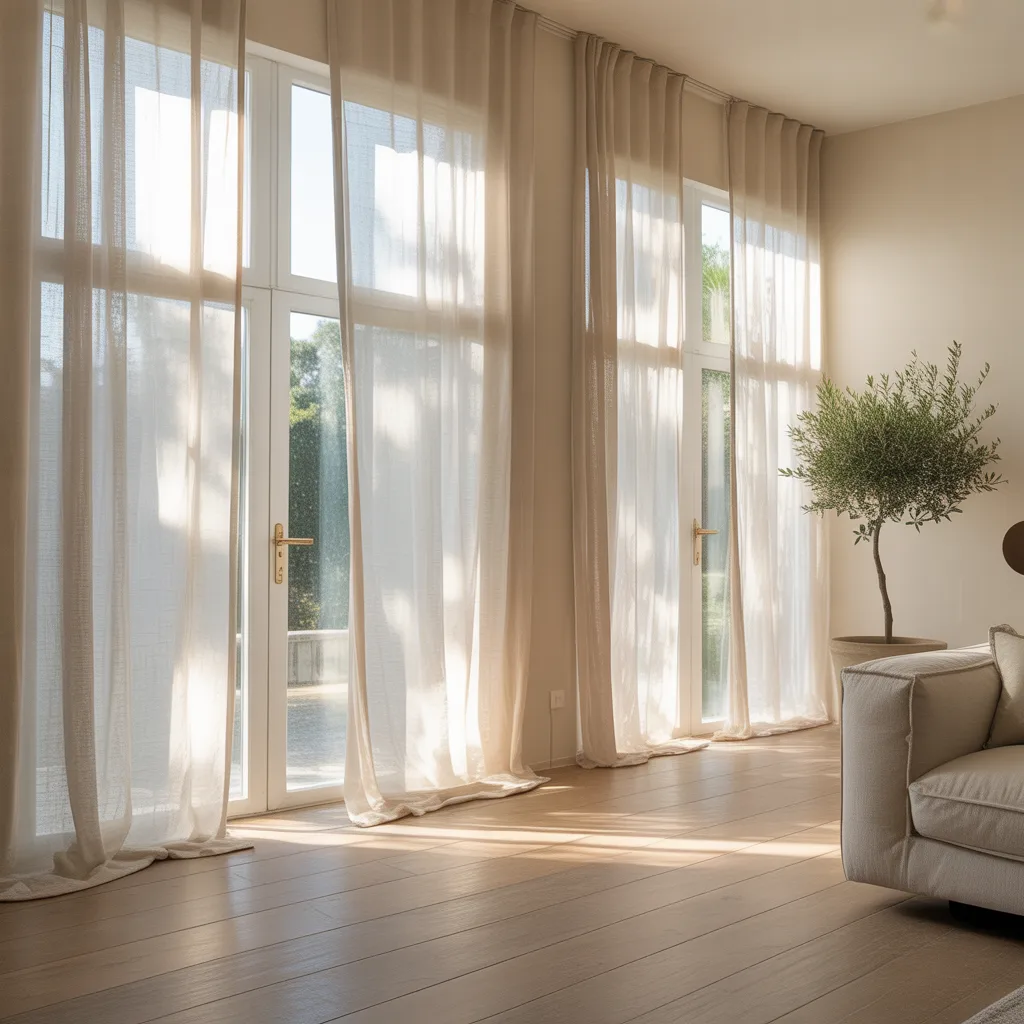
Natural light is the single most vital and most democratically accessible design element in any minimalist home — and maximizing it costs almost nothing. Replace heavy, dark drapes that block light and make rooms feel smaller with sheer linen or organic cotton curtains that allow natural light to filter in softly and abundantly. The most impactful hanging trick is to mount your curtain rod as close to the ceiling as possible and allow the panels to fall all the way to the floor, ideally with a slight elegant puddle. This zero-cost adjustment makes any room feel dramatically taller, grander, and more luxurious.
For health-conscious homeowners, maximizing daylight is a genuine and well-documented wellness imperative, not simply an aesthetic preference. Exposure to natural light during the day regulates circadian rhythm, significantly boosts serotonin production, improves mood and cognitive performance, and supports the deep, restorative sleep that is foundational to physical health. Choosing natural, unbleached linen or organic cotton for window treatments also avoids the synthetic chemical treatments found in conventional blackout fabrics — actively supporting pristine indoor air quality. Sunlight flooding a clean, simply dressed minimalist room creates the most beautiful, most-saved aesthetic on Pinterest — naturally, effortlessly, and at virtually no cost.
Pro Tip: Sheer linen curtains hung from ceiling to floor transform the perceived height and grandeur of any room more dramatically than almost any other single change — and budget options are widely available at accessible prices.
7. Implement Smart Hidden Storage Solutions
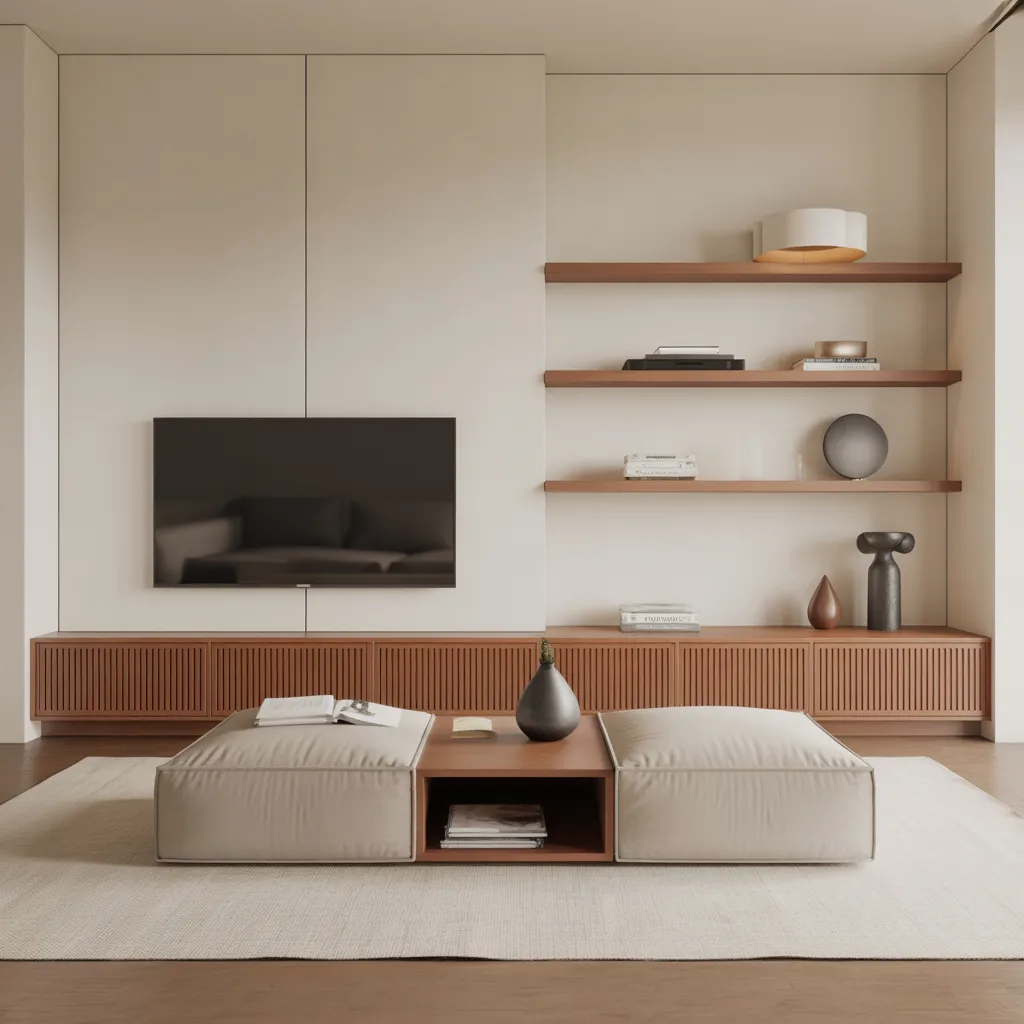
A truly minimalist living room is only sustainably beautiful when thoughtful, well-designed storage systems work invisibly behind the scenes. The most Pinterest-worthy minimalist spaces look effortlessly serene precisely because their owners have solved the practical storage challenge rather than ignored it. Invest in furniture that works double duty — ottomans with hidden interior compartments, media consoles with seamless closed-door storage, coffee tables with discreet drawers, and built-in floating shelves styled with only three or four carefully chosen objects. When everyday items like remote controls, chargers, books, and blankets all have a designated hidden home, maintaining the minimalist aesthetic becomes genuinely effortless and sustainable.
For a wellness-focused home, smart hidden storage delivers significant and compounding psychological benefits that improve daily life in measurable ways. When everyday items are consistently stored out of sight, your visual field remains calm, uncluttered, and restful — directly reducing the background mental load that a chaotic environment continuously imposes on your nervous system. Research in environmental psychology links organized, clutter-free homes to meaningfully better sleep quality, lower stress hormones, and improved emotional regulation and resilience. Choose storage baskets in natural rattan, seagrass, or woven cotton to corral smaller items with organic warmth that maintains your minimalist aesthetic beautifully.
Pro Tip: The most powerful hidden storage investment is a large upholstered storage ottoman that replaces your coffee table — it stores everything, serves as a surface, provides extra seating, and makes your room look more elegant all at once.
8. Prioritize Quality Over Quantity in Every Purchase
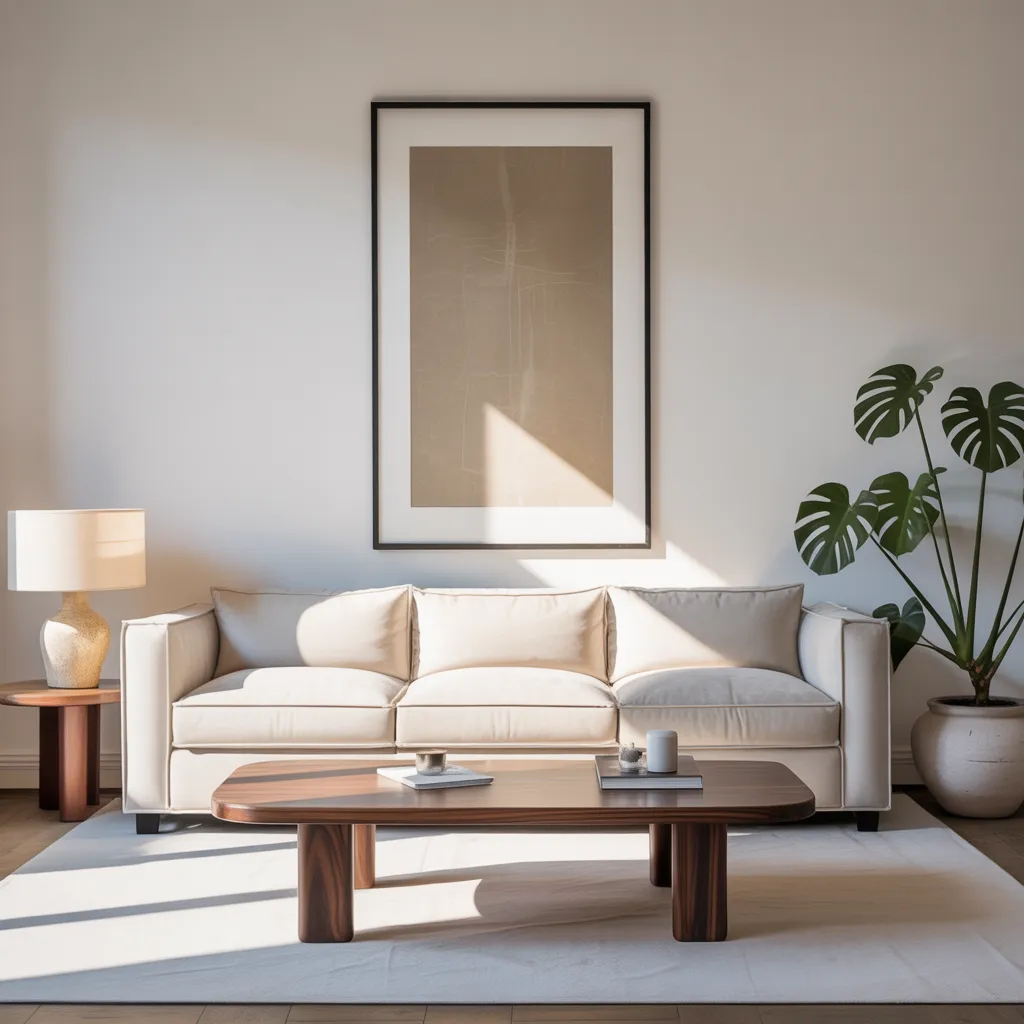
The philosophy of quality over quantity is at the absolute heart of meaningful, enduring minimalism — and it is the principle that most clearly separates a truly beautiful minimalist living room from one that simply looks empty. Instead of filling your space with many inexpensive, disposable pieces, invest thoughtfully and patiently in fewer, better objects that bring genuine daily joy and will last for years or decades. One perfectly proportioned sofa in a quality natural fabric, one solid wood coffee table with beautiful grain, one meaningful piece of art — these singular, carefully considered choices create a room that feels genuinely rich, curated, and deeply personal regardless of their individual price points.
Embracing quality over quantity is simultaneously one of the most powerful wellness choices and most responsible sustainability decisions you can make as a conscious homeowner. Well-made objects crafted from natural, durable materials last for decades — reducing waste, saving significant money over time, and filling your home with things that carry genuine meaning and beauty rather than disposable novelty. From a health perspective, high-quality natural materials off-gas significantly fewer toxic compounds than cheap synthetic alternatives, actively and continuously supporting better indoor air quality. Each time you choose one beautiful, lasting thing over several mediocre ones, you are practicing the deepest and most authentic expression of minimalist philosophy.
Pro Tip: Before any purchase, ask yourself: ‘Will I still love this in ten years? Is it made from natural materials? Does it genuinely improve my daily life?’ If the answer to any of these is no, wait. The right piece is always worth the patience.
9. Use Intentional, Warm Layered Lighting
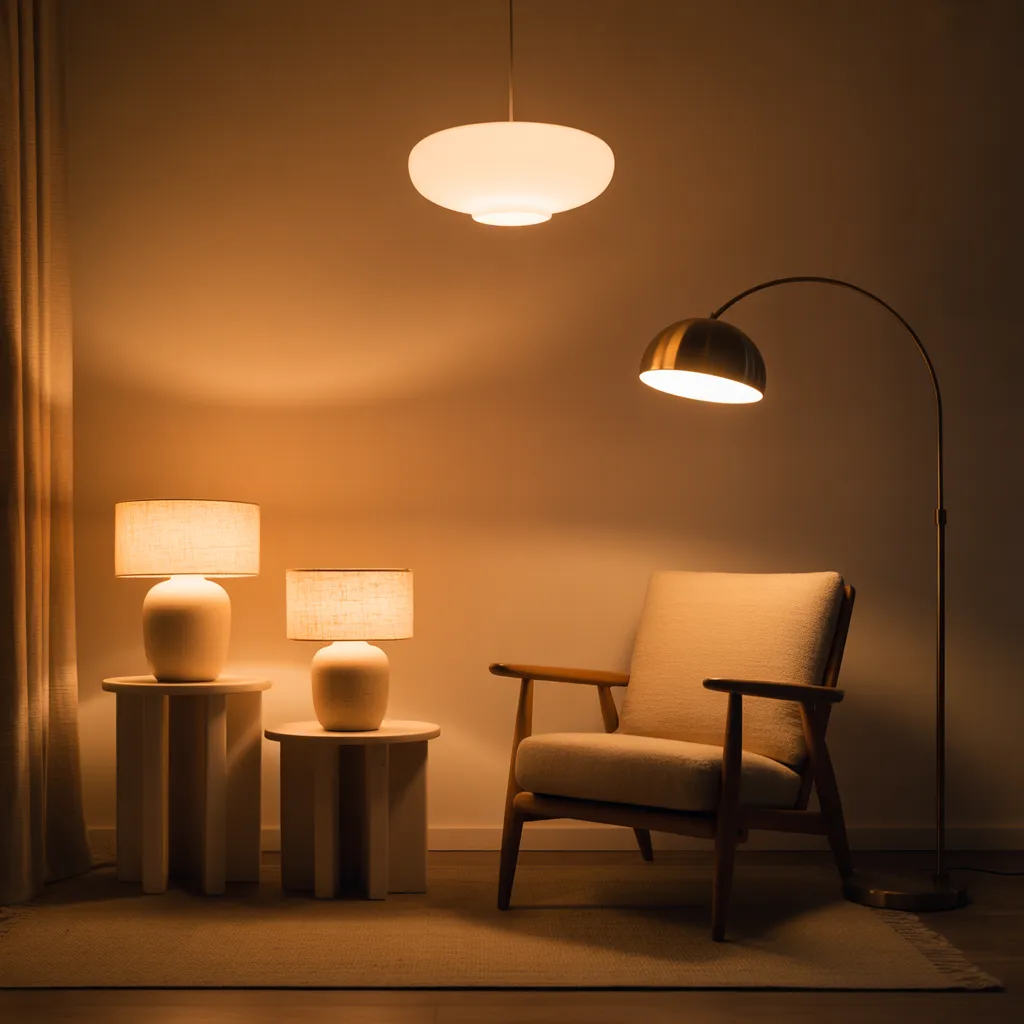
Lighting is the single most transformative yet most consistently overlooked element in any minimalist living room — and understanding it correctly costs far less than most people assume. The golden rule of minimalist lighting is to always layer your sources at varying heights rather than relying on a single overhead fixture that creates flat, harsh, and unflattering illumination. A simple pendant light combined with two ceramic table lamps and one arched floor lamp creates depth, warmth, and the soft golden glow that defines the most atmospheric and most-saved minimalist living rooms on Pinterest. Each light source contributes a different quality of light that together creates something genuinely beautiful.
For wellness-conscious homeowners, lighting choices carry significant, well-documented health implications that extend far beyond aesthetics and should be considered a daily health decision. Warm-toned bulbs in the 2700K to 3000K range support healthy circadian rhythm regulation — boosting serotonin during daylight hours and facilitating the natural melatonin production that enables deep, restorative sleep in the evenings. Installing affordable dimmer switches gives you complete daily control over your room’s atmosphere and your body’s light-dark cycle. Choose lamp bases in natural materials — ceramic, solid wood, or woven rattan — to maintain the organic, toxin-free aesthetic of your wellness-focused minimalist sanctuary throughout every hour of the day.
Pro Tip: Install dimmer switches on every light circuit in your living room — this single affordable upgrade is the fastest and most dramatic way to transform an ordinary room into a genuinely atmospheric, five-star sanctuary.
10. Introduce One Powerful Statement Plant
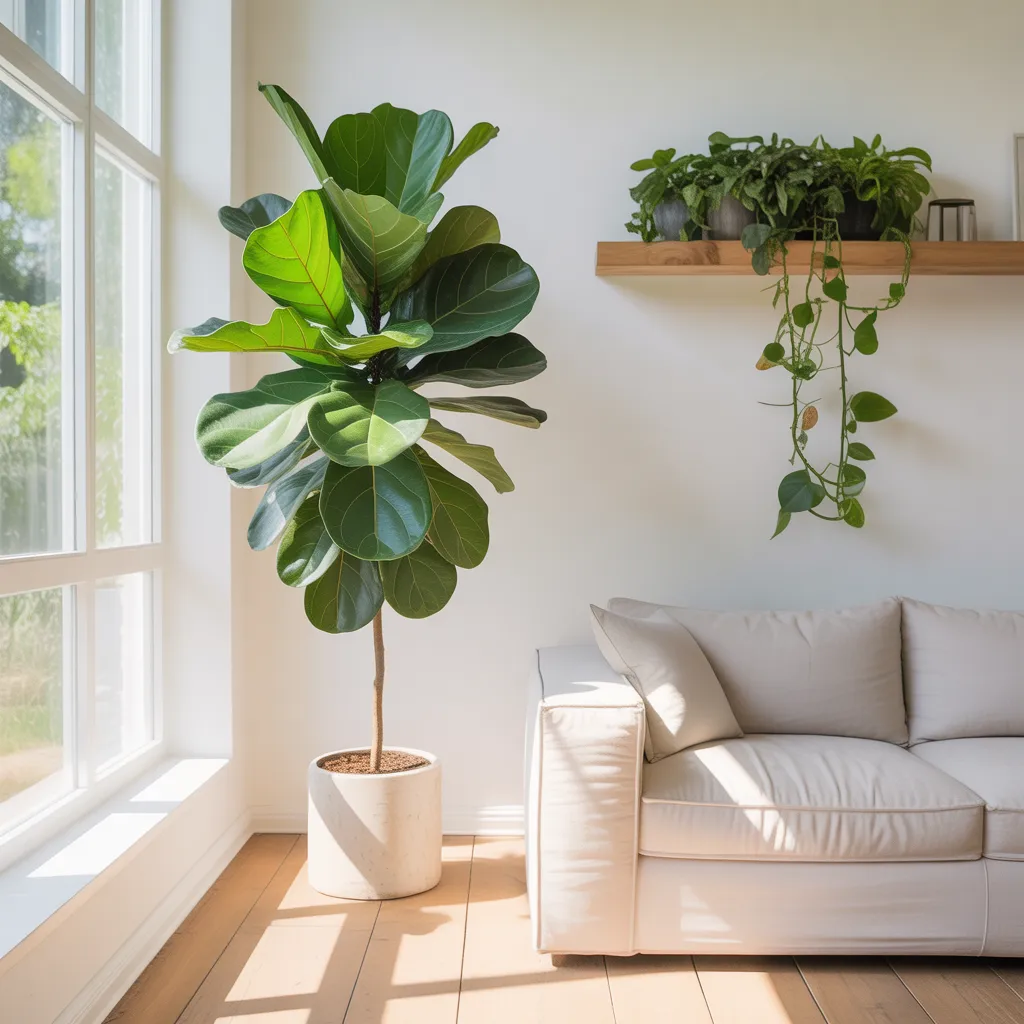
In a minimalist living room, a single statement plant is infinitely more powerful than a crowded collection of many smaller ones — and choosing the right one is one of the most impactful and joyful decisions you will make. One large, architectural plant like a fiddle leaf fig, a tall monstera, or a dramatic olive tree adds a living burst of organic color, height, movement, and genuine vitality without introducing any visual noise or complexity. Positioned thoughtfully in a corner beside a window, a single large statement plant creates a natural focal point that softens the room, grounds the entire composition, and makes the space feel beautifully and unmistakably alive.
For health-conscious decorators, indoor plants represent one of the most scientifically validated wellness investments available for any living space, at any budget. Studies consistently demonstrate that living plants measurably reduce airborne toxins including formaldehyde and benzene, lower ambient carbon dioxide levels, decrease background noise, reduce stress hormones, and lower blood pressure in regular occupants. The presence of living greenery also satisfies our deep evolutionary need for biophilic connection — the innate human desire to be surrounded by nature — which directly supports emotional well-being, creative thinking, and cognitive function throughout the day. Choose low-maintenance varieties like pothos, snake plants, or peace lilies for maximum benefit with minimum effort.
Pro Tip: Place your statement plant in a simple, high-quality ceramic pot that complements your neutral palette. Terracotta, matte white, and warm sand tones all work beautifully — and the right pot elevates even an affordable plant into a sophisticated design statement.
11. Create Visual Balance with One Generous Area Rug
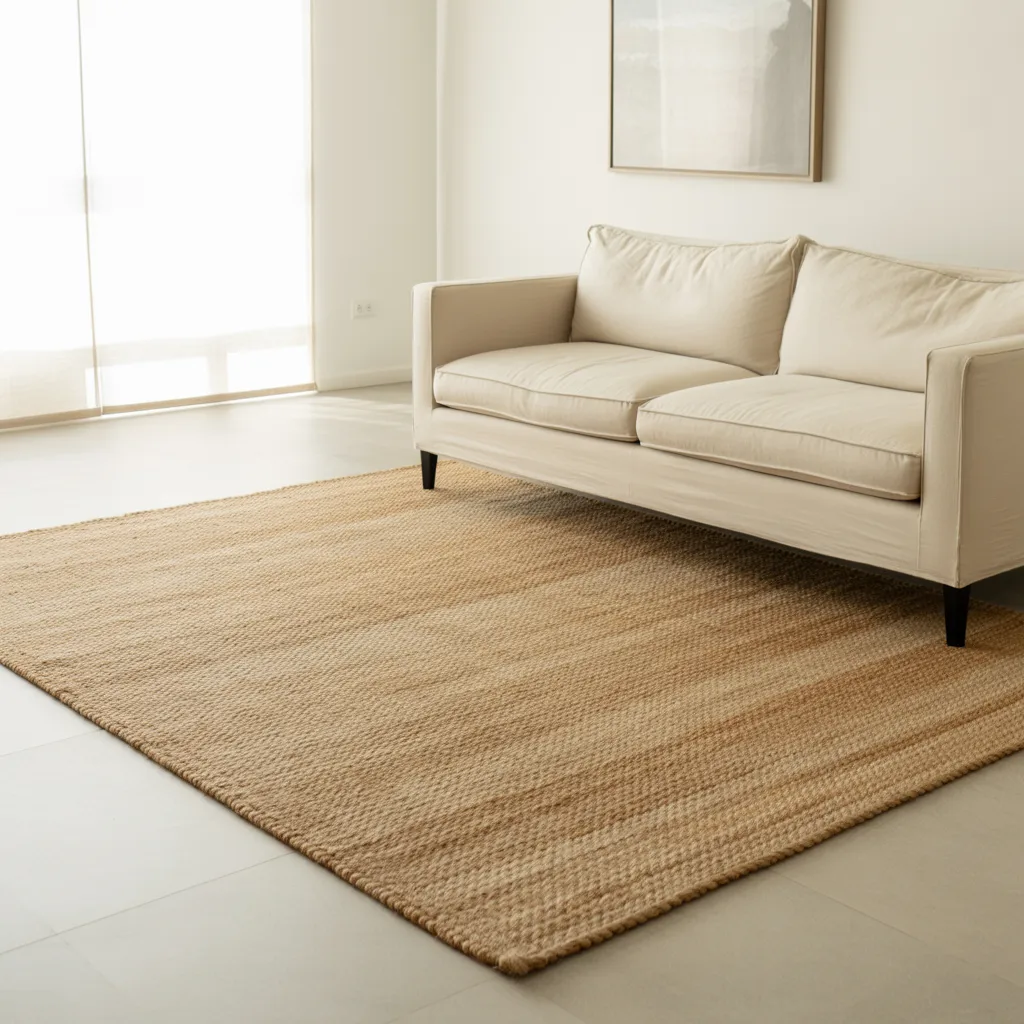
A single, generously sized area rug is one of the most powerful, most underestimated, and most frequently misused tools in minimalist living room design. In an open, carefully edited minimalist space, a large rug serves as the quiet, grounding anchor that defines the seating zone, unifies the furniture arrangement, and prevents the room from feeling cold, sparse, or unintentionally unfinished. The critical and non-negotiable rule is always to size up significantly beyond what initially feels necessary — your rug must be large enough for all front furniture legs to rest comfortably on it, creating a cohesive, unified composition that looks deliberately and professionally designed.
For a wellness-focused minimalist interior, always choose rugs crafted from natural fibers — jute, wool, organic cotton, or undyed sisal — that are completely free from the synthetic dyes and chemical treatments found in most mass-produced alternatives. Natural fiber rugs add extraordinary tactile warmth underfoot, help regulate humidity naturally, and actively contribute to a cleaner, healthier indoor air environment for your family. Warm neutral tones in natural tan, soft ivory, undyed natural fiber, or gentle sage photograph with timeless richness and complement any minimalist palette beautifully across every season. One beautiful rug, chosen thoughtfully and sized with genuine generosity, does more to complete a minimalist living room than almost any other single design decision available to you.
Pro Tip: When in doubt about rug size, always go one size larger than feels instinctively right. The moment all your furniture legs rest on the rug and the seating zone feels defined and grounded, your entire room will instantly look more intentional, expensive, and professionally designed.
Save this guide to your Pinterest boards, and explore our 14 luxury living room ideas on a budget for even more small space design inspiration.
Conclusion: Designing a Home That Truly Feels Like You
These 11 Minimalist Living Room Tips & Tricks prove beautifully that creating a calm, clutter-free home isn’t about deprivation — it is about liberation. It is the profound, daily freedom that comes from surrounding yourself only with what genuinely matters, what actively serves your wellbeing, and what brings you authentic and lasting joy. Minimalism is not a rigid design trend — it is a deeply personal lifestyle philosophy that honors your mental clarity, your physical health, and your right to a home that genuinely restores you every single day.
When you pair smart, intentional design with sustainable, non-toxic natural materials, you create a living room that doesn’t just look Pinterest-worthy — it actually feels genuinely good to live in. Every thoughtful choice, from the leggy furniture to the statement plant, from the monochromatic palette to the hidden storage, contributes to a calmer, more grounded, more present version of yourself. A decluttered, beautifully designed space lowers your cortisol, supports your sleep quality, improves your indoor air, and creates the kind of daily peace that no amount of additional purchasing could ever provide.
Begin today with just one tip — perhaps clearing your coffee table to three objects, or swapping one synthetic textile for a natural linen alternative, or simply pulling your sofa two inches away from the wall. Small, consistent, mindful changes accumulate over time into a home that feels genuinely and profoundly transformative. Your minimalist sanctuary is not a distant destination — it is one single, intentional decision away from where you are right now.
Eco-friendly design, and mindful living — Love small space ideas too? Check out our 14-luxury living room ideas on a budget helping you craft a home that feels both deeply soul-soothing and perfectly, uniquely yours.
Frequently Asked Questions (FAQs)
Q1: What is the very first step to creating a minimalist living room?
The first and most essential step is always a thorough, honest declutter. Remove every item from your surfaces and assess each one honestly — keep only what is genuinely beautiful, meaningful, or functional. This single act, before any purchasing or styling decisions, delivers the most dramatic visual and psychological transformation in the shortest possible time. Everything else in this guide builds upon this essential, liberating foundation.
Q2: How do I make a minimalist living room feel warm rather than cold?
Warmth in a minimalist space comes entirely from two sources: layering natural textures and choosing a warm neutral color palette rather than stark white. Use organic linen, chunky wool throws, woven jute rugs, and natural wood furniture to create tactile richness. Ensure your lighting is warm-toned (2700K bulbs) and layered. One or two statement plants also add extraordinary organic warmth and prevent any minimalist room from feeling clinical or sterile.
Q3: Can minimalist design work effectively in a small living room?
Minimalist design is actually most powerful and most transformative in smaller spaces. Editing ruthlessly, choosing leggy furniture, using large mirrors to amplify light, embracing negative space, maximizing natural light with sheer curtains, and keeping surfaces completely clear all work together to make compact living rooms feel significantly larger, brighter, and more breathable than their actual square footage suggests. Small spaces benefit most dramatically from minimalist discipline and restraint.
Q4: What colors work best in a minimalist living room?
Warm neutrals in a monochromatic palette are universally the most effective foundation — soft ivory, warm white, gentle greige, taupe, and undyed natural fiber tones. These create a cohesive, calm backdrop that reflects light beautifully and feels genuinely timeless. For depth and subtle interest, introduce one or two accent tones in dusty sage, warm terracotta, or soft blush through textiles and small organic decor objects, while keeping walls and large furniture firmly within the warm neutral family.
Q5: How many decorative objects should a minimalist living room contain?
The practical and proven guideline is a maximum of three objects per styled surface or zone — one tall, one medium, and one low — to create natural visual rhythm without clutter or competition. Across the entire room, always err on the side of fewer rather than more. Regularly audit your objects to ensure each one is still earning its place and bringing genuine value. When genuinely in doubt, always choose to remove rather than add. Less, curated with deep care and intention, is always infinitely more powerful.