Most home decor projects fail not because of budget but because of material choice — a $10 terracotta pot styled correctly outperforms a $60 store-bought piece every time. These 9 DIY Home Decor Ideas You’ll Love skip the generic craft store suggestions and focus on specific techniques using natural materials like raw white oak, honed travertine, and matte black hardware that anchor a room’s visual direction without touching the furniture.
The best DIY home decor ideas don’t require a full weekend or a dedicated craft room — they need one good material, one clear direction, and maybe thirty minutes. Whether you’re wrapping a plain glass bottle in natural jute rope, mounting a raw oak floating ledge with industrial black brackets, or dipping the bottom third of a white vase in matte black paint, each project creates a result that looks like something you’d actually buy rather than something you made on a Tuesday night.
What separates a DIY home decoration project that looks intentional from one that looks rushed is finish quality — the last five percent of any project matters more than the first ninety-five. These handmade home decor ideas each come with one specific finishing detail, from the right paint technique to the exact material pairing, so you know exactly where to spend that extra ten minutes to make the result look completely custom.
1. Floating White Oak Picture Ledge
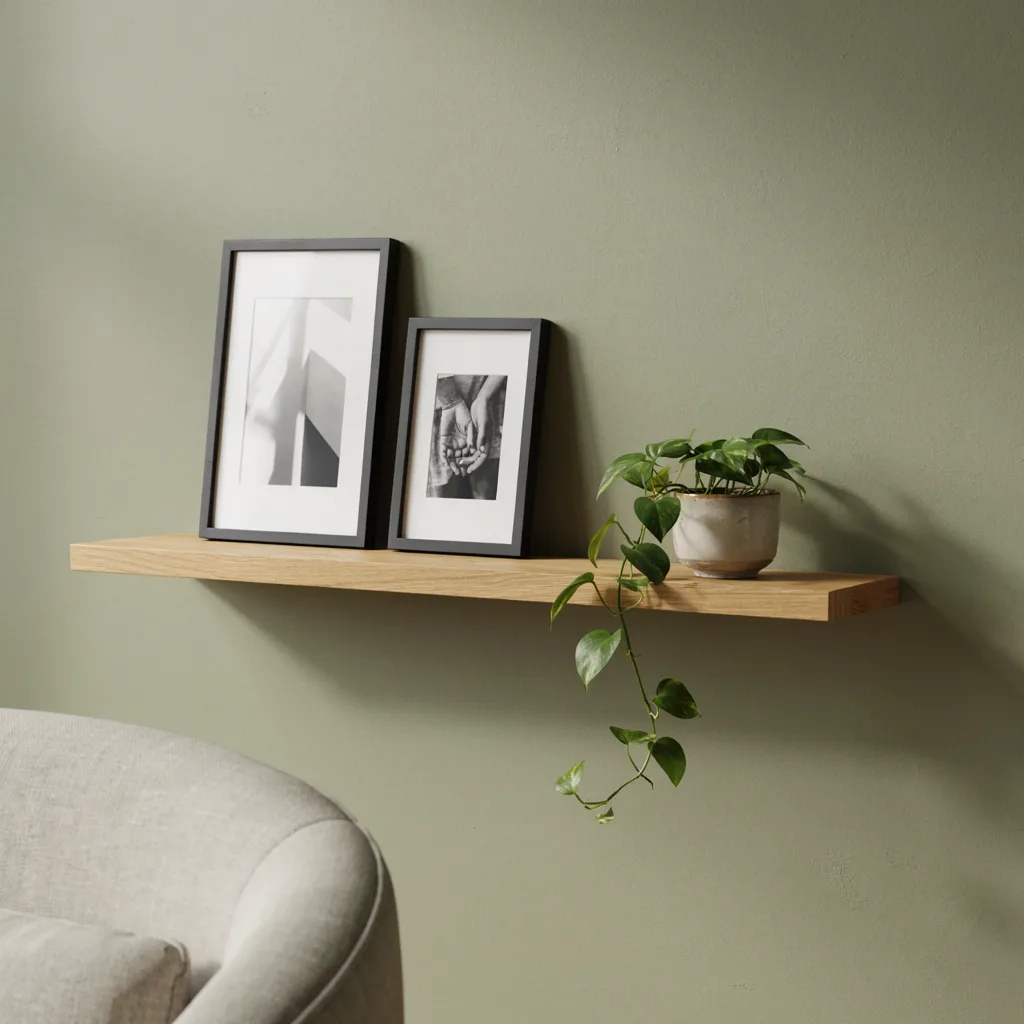
A floating display ledge built from raw white oak costs a fraction of what a retail version runs and looks more considered because the wood grain itself becomes part of the display. Cut a 1×4-inch white oak board to 36 inches, sand through 120 then 220 grit, and finish with one coat of Danish oil — this brings out the natural grain without darkening the wood the way stain does. Add a narrow 2-inch front lip using wood glue and countersunk screws from underneath so items don’t slide off the front edge.
Pre-drill two keyhole slots along the back plate so the ledge mounts completely flush against the wall, then mount into studs using standard drywall screws. The total material cost typically runs $20–$30 for the wood, oil, and hardware. Style the finished ledge with two leaning framed prints and one small ceramic pot — odd numbers and visible wood grain between objects is what keeps the display looking intentional rather than crowded.
2. Fluted Ceramic Lamp Base
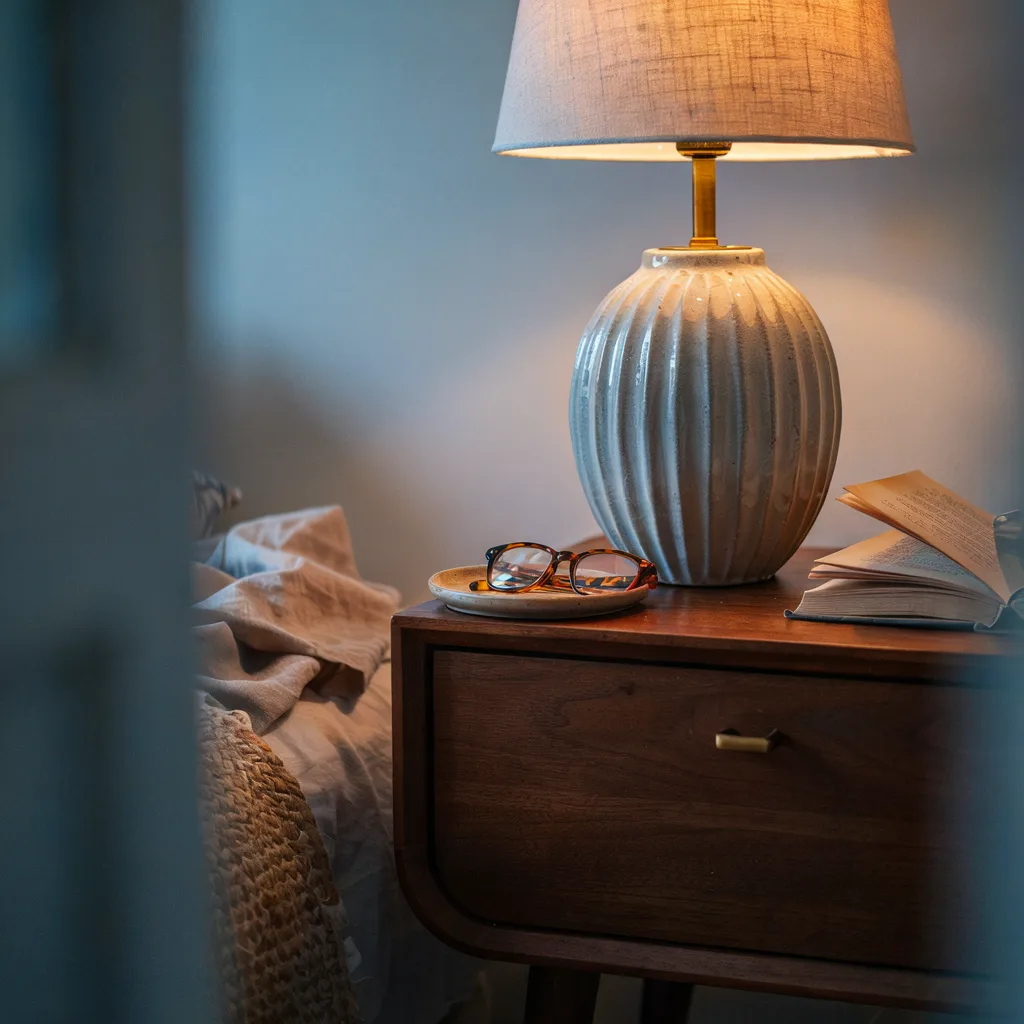
A dated thrift store lamp base becomes a sculptural statement piece with one texture technique — no pottery wheel required. Scuff the existing glossy surface with coarse steel wool, then apply a layer of lightweight spackling paste using a notched plastic trowel to create vertical uniform ridges across the body. The ridges mimic a high-end fluted ceramic finish and mask any existing pattern underneath in one step.
Once the paste dries fully over 24 hours, apply two coats of chalk-finish acrylic paint in soft ivory or sandy beige. Finish with a fresh brass socket kit and an 11-inch linen drum shade. The entire transformation typically costs $15–$25 including the thrifted base, paste, paint, and shade — and the result looks like a boutique lamp that retails for $150 or more.
3. Honed Travertine Entryway Catchall
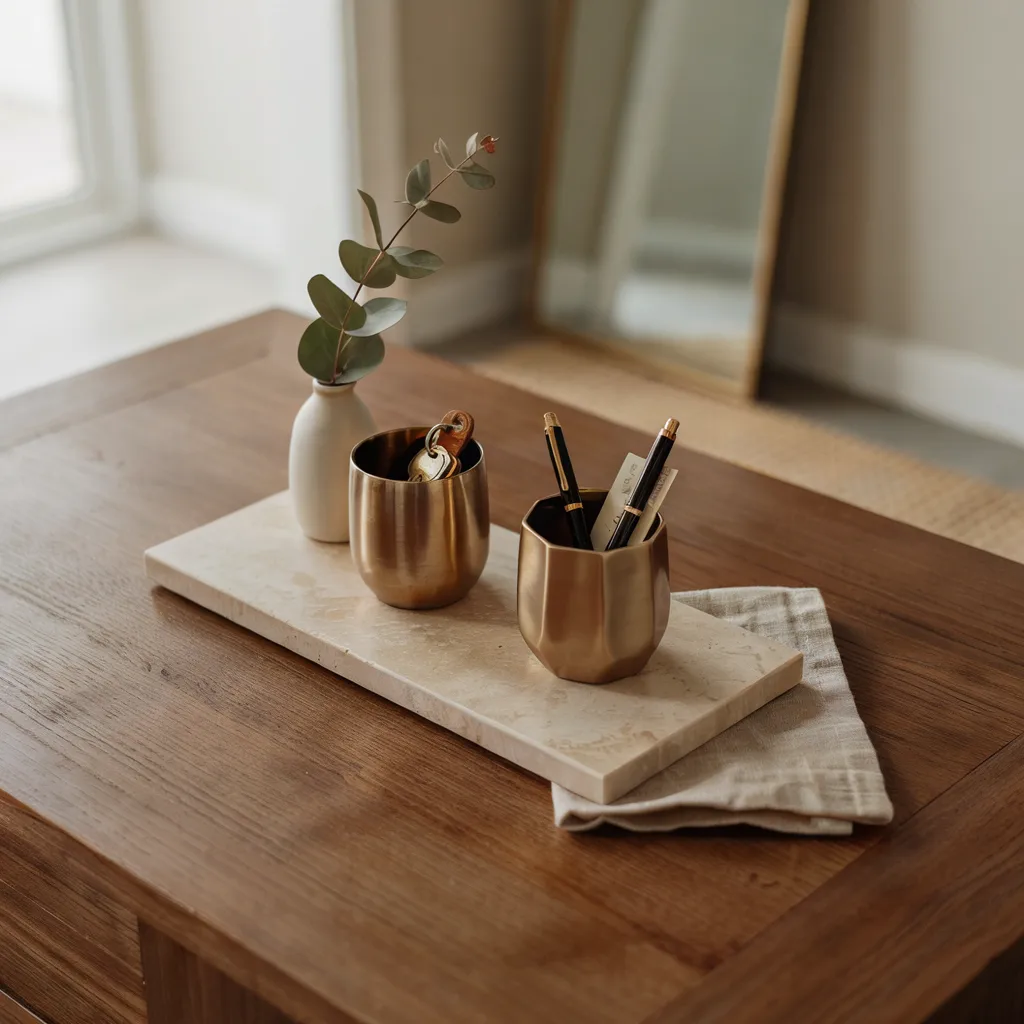
A single honed travertine paver tile from a local tile or masonry store — typically $8–$15 — becomes a permanent entryway organizer with almost no construction involved. Attach four felt protective disks to the rough underside corners to protect the console surface, then mount two small open-top brushed brass geometric cups onto one end using clear epoxy adhesive. The cool sandy-tan stone paired with warm brass metal creates a material combination that reads as high-end without any finishing or sealing required on the stone surface.
Use the remaining flat stone area to corral daily items — keys, sunglasses, wallet — so the console stays clear. The complete assembly costs under $25 and takes about twenty minutes to put together. This is one of the few DIY home decor ideas on this list where the material itself does all the visual work without any painting, staining, or crafting technique involved.
4. Chunky Cotton Rope Storage Basket
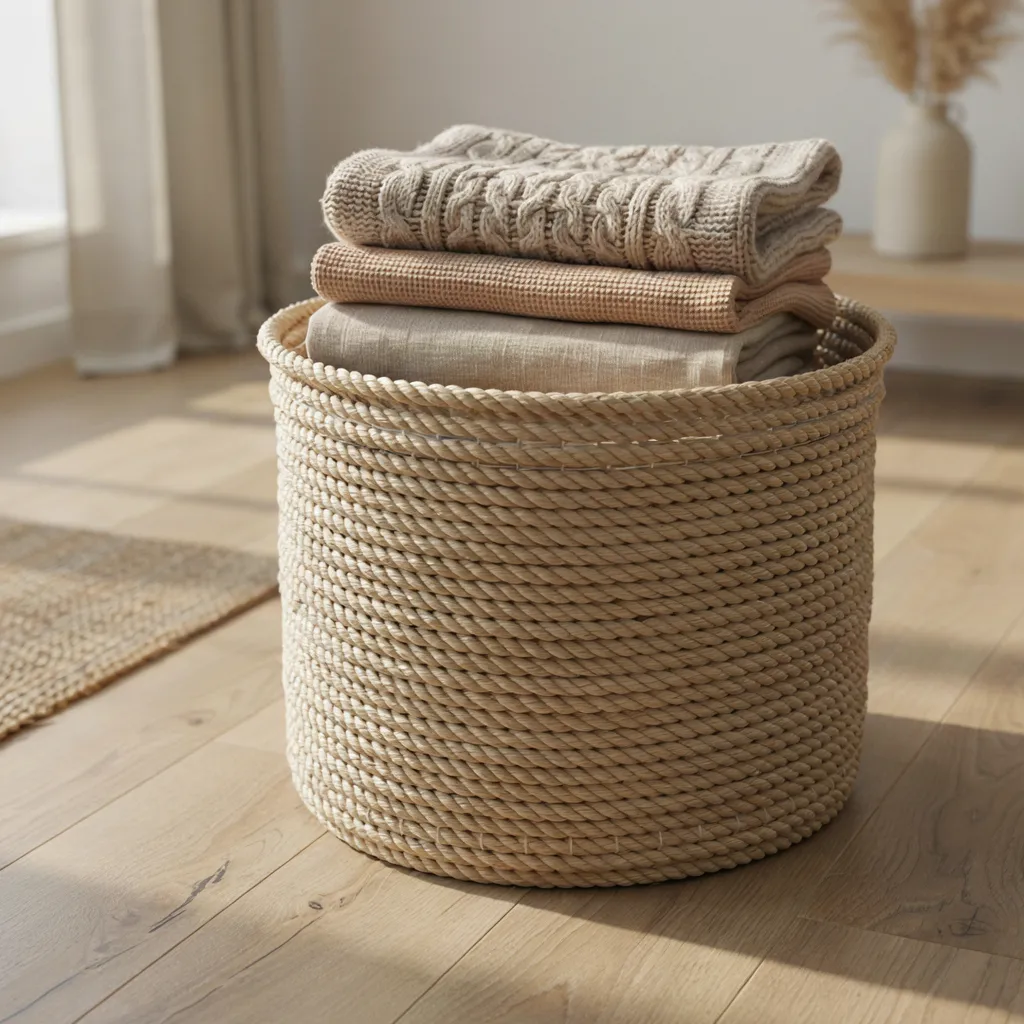
A rope basket made from 1/2-inch unbleached cotton piping cord holds its cylindrical shape better than most seagrass or woven alternatives, which tend to sag when empty. Start by coiling the rope into a flat circular base and using a sewing machine with a zigzag stitch and a thick denim needle to fuse the rows together. Once the flat base reaches 12 inches in diameter, tilt the rope edge upward at a 90-degree angle and continue stitching to build the walls to about 14 inches tall.
Fold the final two inches of rope back onto itself to create two integrated carry handles rather than adding separate hardware. A 50-foot spool of cotton cord costs $12–$18 and makes one full basket. The finished piece works beside a sofa for throw blankets, in a bedroom for extra pillows, or in a bathroom for rolled towels — anywhere a structured, soft-toned container improves the room’s organization without competing with the surrounding decor.
5. Two-Tone Dipped Ceramic Vase
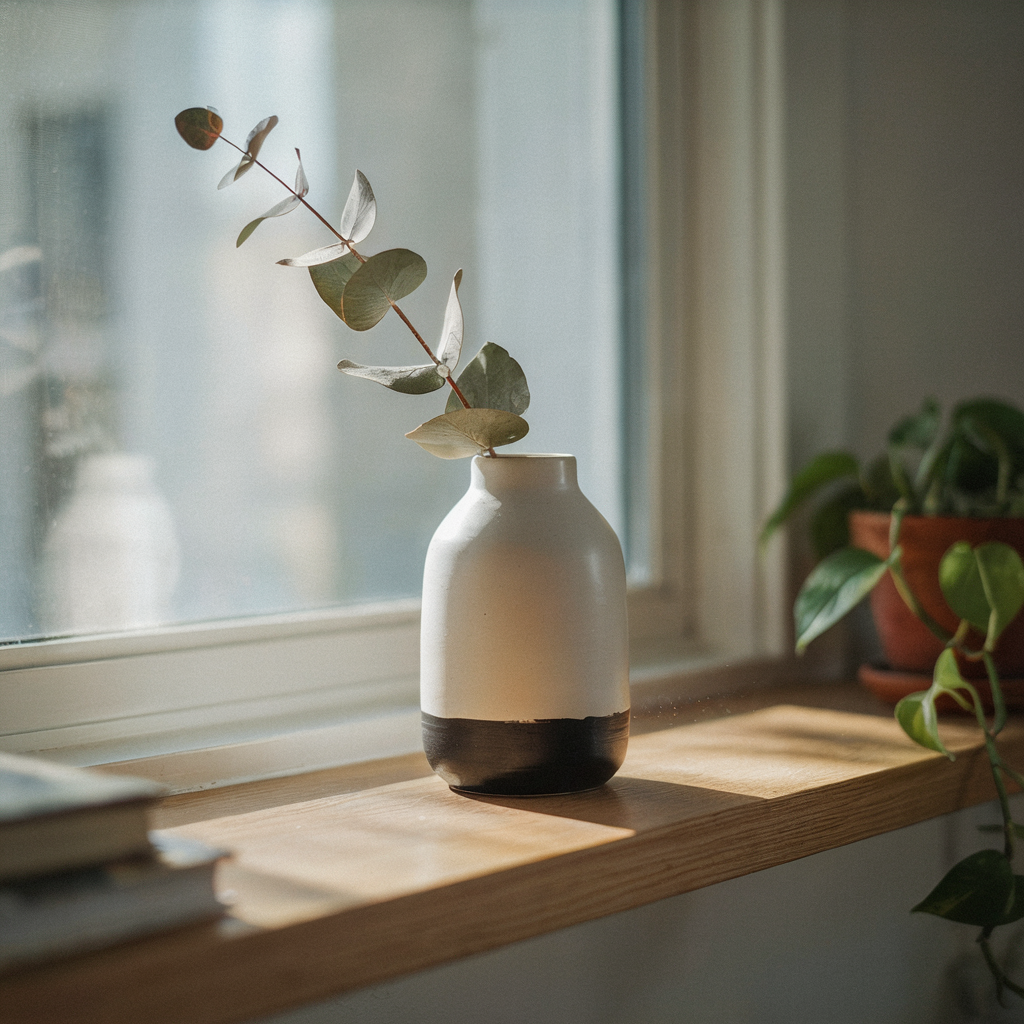
A plain white ceramic vase from any discount home store becomes display-worthy when the bottom third is dipped in matte black chalk paint — the two-tone result reads as a deliberate design choice rather than a basic purchase. Use a foam brush to apply two thin coats below the midpoint, letting each coat dry fully, and tape a clean horizontal line with painter’s tape before the first coat so the edge stays crisp rather than uneven.
Seal the painted section with one light coat of matte mod podge to prevent chipping when the vase is handled. The entire project costs under $12 including the vase, paint, and sealer. Style the finished piece with a single dried eucalyptus stem or pampas grass — the structured silhouette of dried botanicals complements the geometric paint line better than fresh flowers, since both elements share the same minimal, considered quality.
6. Poured Concrete Taper Candle Holders
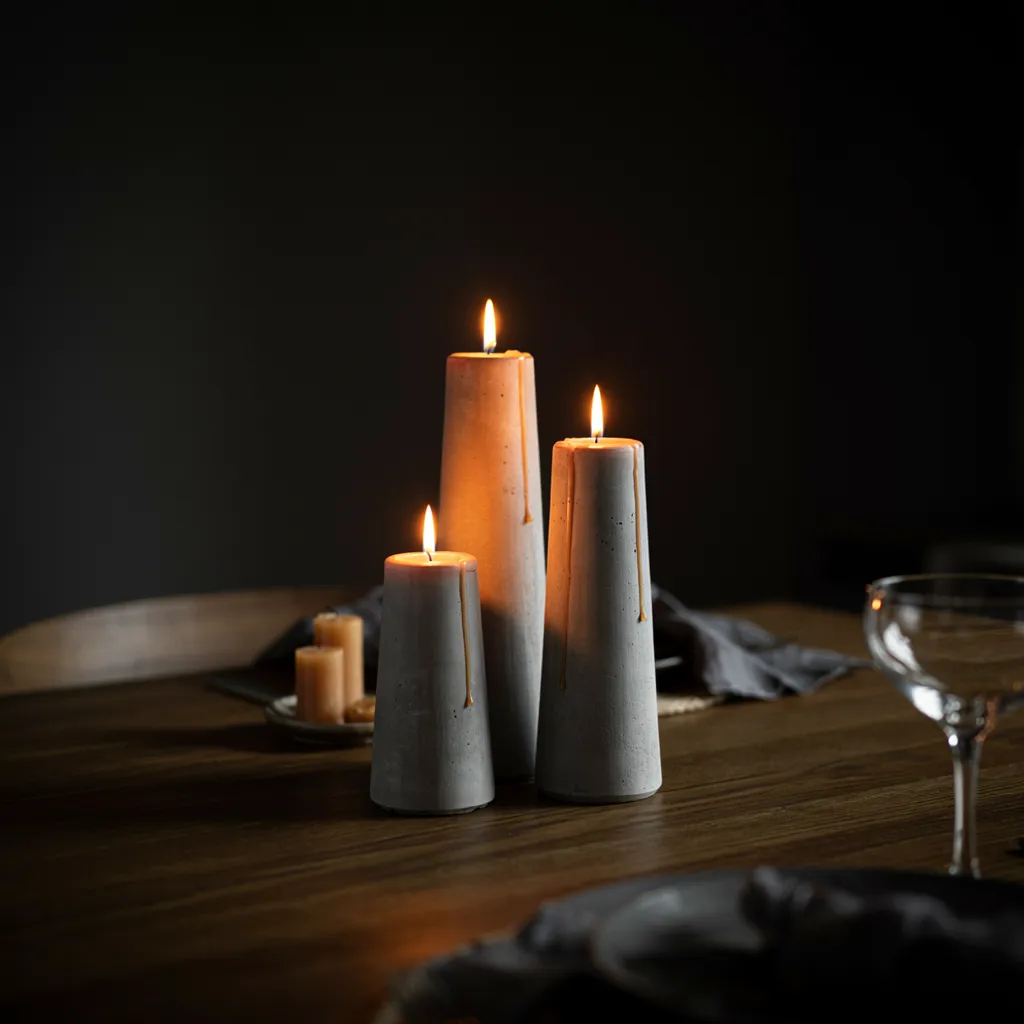
Poured concrete candle holders are one of the few DIY projects where the material’s imperfections — slight surface pitting, tonal variation — are exactly what makes the finished piece look considered rather than mass-produced. Cut three plastic juice containers down to staggered heights of 3, 5, and 7 inches as molds, mix fast-setting concrete with water to a thick consistency, and fill each mold to the brim. Press a 7/8-inch copper pipe coupling into the center of each wet pour to create the candle cavity, and hold it in place with tape across the top.
Unmold after 24 hours, sand the base flat with 120-grit sandpaper, and seal with a light coat of matte concrete sealer — this five-minute step prevents surface dust and extends the life of each piece significantly. A single bag of fast-setting concrete costs $8–$12 and makes six to eight holders depending on size. Group all three heights together as a centerpiece cluster rather than spacing them individually, which is what gives the arrangement a composed, editorial quality.
7. Thrifted Frame Gallery Grid in Aged Brass
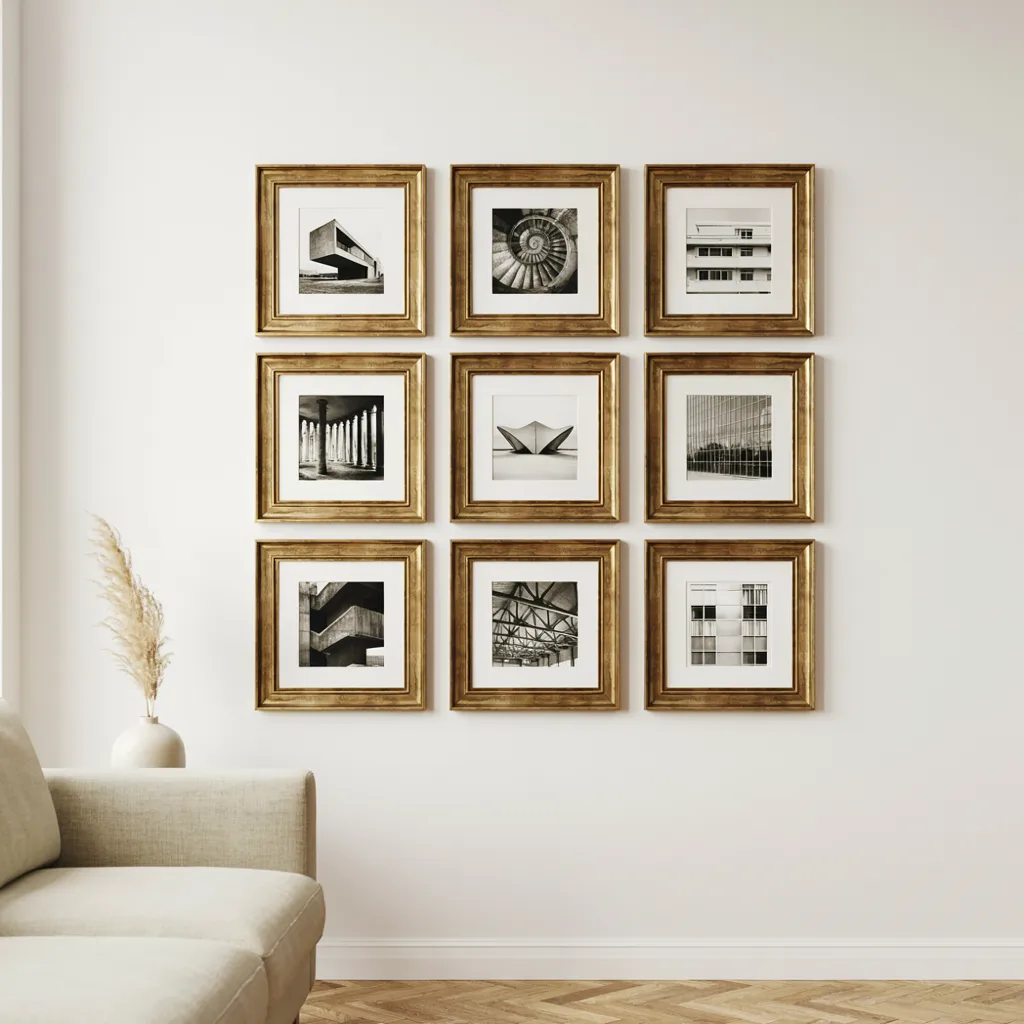
A perfectly symmetrical gallery grid delivers visual balance that an eclectic mix of frames rarely achieves — and the key is buying nine identical frames rather than sourcing different shapes and sizes. Pick up nine matching 12×12-inch frames in an aged or brushed brass finish from a thrift store and spray them with two light coats of antique brass spray paint for a consistent tone. Add a 3-inch white acid-free mat board inside each frame so the central print sits surrounded by a wide white border, which creates the museum-quality framing effect.
Space each frame exactly 2 inches apart using a strip of low-tack painter’s tape as a guide line, and use a small level on top of each frame before securing the hook. The combination of the warm brass frame and the wide white border creates a high-contrast graphic effect that works in dining rooms, living rooms, and home office walls equally well. Nine frames at $2–$4 each from a thrift store, plus spray paint, typically runs the whole installation under $60. If you enjoy putting together handmade pieces as gifts, these 11 DIY Gift Set Ideas People Actually Want pair perfectly with the brass frame aesthetic for a thoughtful, coordinated present.
8. Paneled Wood Mudroom Accent Wall
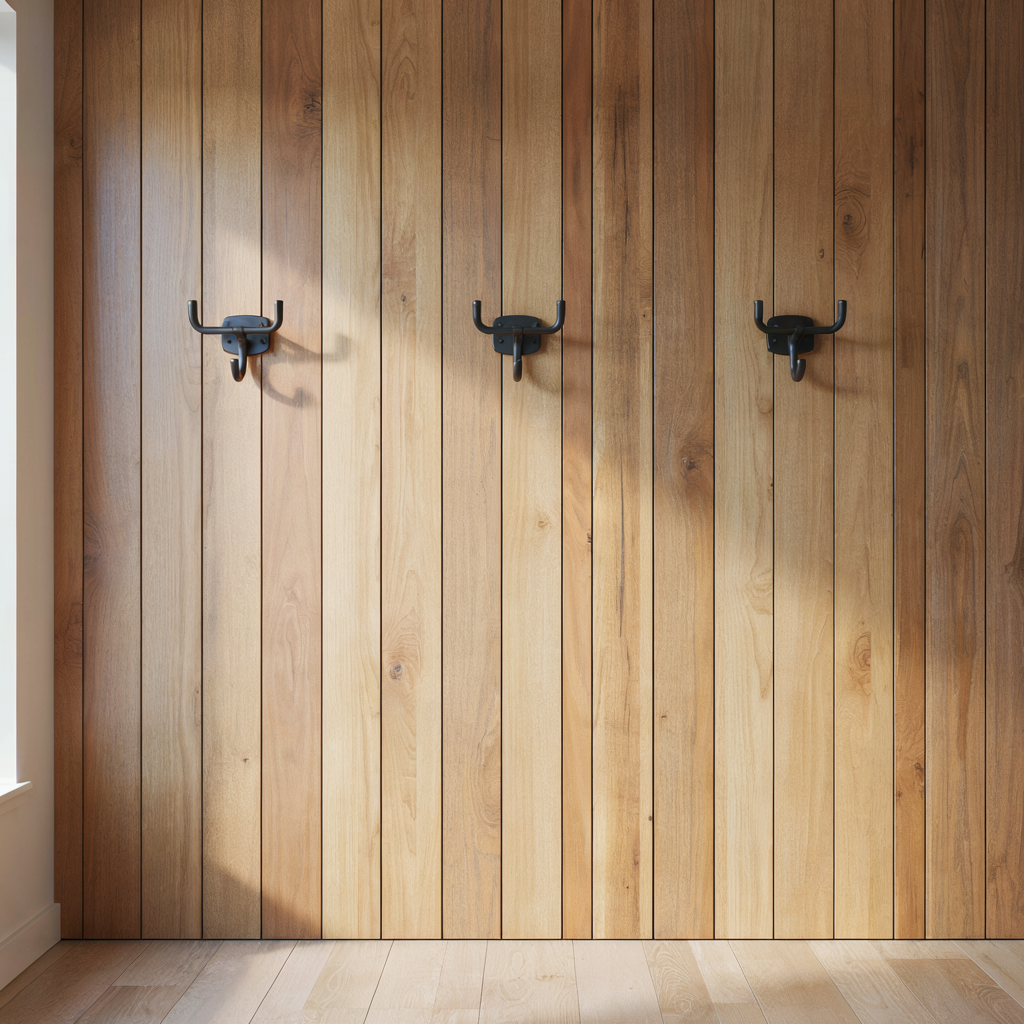
Plain drywall in a mudroom or entryway scuffs quickly and offers nothing visually — a vertical slat panel solves both problems at once. Cut 2-inch wide select pine or white oak boards to ceiling height and mount them vertically with a half-inch gap between each slat using a brad nailer or finish nails. The half-inch shadow gap between slats creates the architectural depth that makes this look expensive despite the low material cost — a standard mudroom wall typically requires $40–$70 in lumber.
Stain the slats with a water-based clear oak or walnut finish to match existing flooring, then mount three heavy-duty matte black double-prong iron hooks directly through the slats into wall studs. The hooks need to go into studs — not just slats — so locate them before installing the wood panels and mark the positions first. This wall treatment takes one Saturday to complete and transforms a scuffed, bare entryway into the most finished-looking room in the house.
9. Limewash Terracotta Pot Cluster
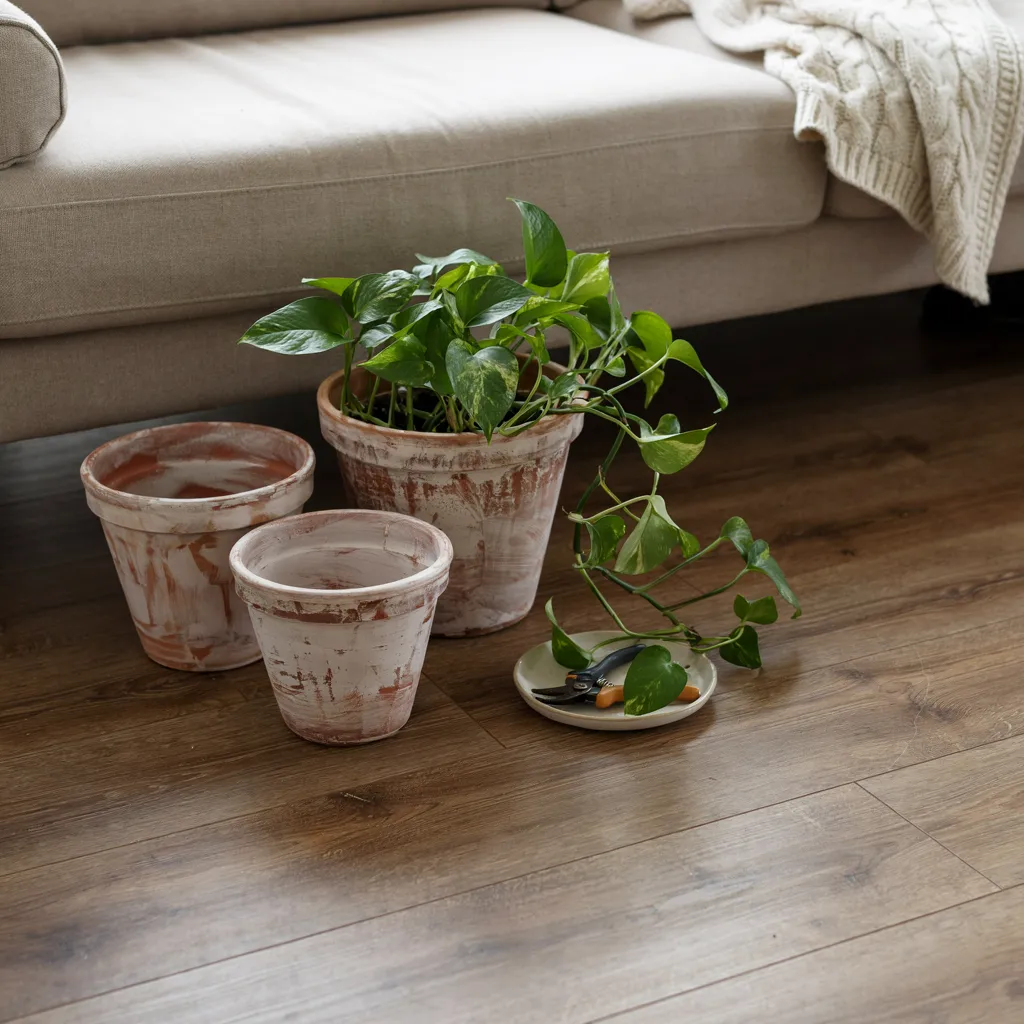
Dry-brushing terracotta pots with white chalk paint creates a limewash finish that makes basic garden center pots look like aged European ceramics — the technique takes about ten minutes per pot and the results depend entirely on how much paint you remove rather than how much you apply. Dip a stiff dry brush into white chalk paint, wipe most of it off on a paper towel until almost no paint transfers, then drag the nearly-dry brush across the pot surface in short irregular strokes. The terracotta orange showing through the uneven white is the finish — don’t cover it completely.
Group three pots in small, medium, and large as a cluster rather than spacing them individually around the room. Plant a trailing pothos in the largest, a succulent in the medium, and leave the smallest empty as a catch-all dish or spare key holder. The complete project including pots and chalk paint typically costs $12–$22, and the grouped arrangement reads as a styled collection in a way that individual placement never quite manages.
Final Thoughts:
None of these 9 DIY Home Decor Ideas You’ll Love require specialist tools, a dedicated craft room, or more than a weekend afternoon to complete. The strongest results across every project come from one consistent principle — choosing one quality material and finishing it properly rather than combining several materials without a clear direction. Concrete, raw oak, travertine, and chalk paint appear most across this list because they share the same visual language: matte, natural, and tactile.
Finishing steps like sealing, sanding, or a final coat of mod podge are where most DIY projects either succeed or fall apart, so never skip them in the name of saving time. Start with whichever project solves a visible gap in your current room — a bare wall, an empty console, or a cluttered entryway — and build outward from there using the same material palette. A room with three well-finished handmade pieces looks more considered than one filled with ten rushed ones. For more DIY home decor inspiration and styling ideas, visit Nestella Home on Pinterest.
FAQ:
Do I need special tools for these DIY home decor ideas?
Most projects require only basic supplies — a foam brush, sandpaper, painter’s tape, hot glue gun, and spray paint cover the majority without any power tools needed.
What’s the easiest project for a complete beginner?
The two-tone dipped ceramic vase and the limewash terracotta pot cluster are both under 30 minutes, cost less than $15 each, and require no measuring or cutting.
How do I make DIY home decor look expensive rather than homemade?
Finish quality matters more than project complexity — sealing painted surfaces, sanding rough edges, and choosing one consistent color palette across projects are what separate a polished result from a craft project.
Can these ideas work in a rental where I can’t drill or paint walls?
The paneled mudroom wall and limewash accent wall require permission, but every other idea — ledges with removable strips, gallery walls with Command strips, and all surface-level projects — works in a rental without permanent changes.
What’s the most budget-friendly idea on this list?
The two-tone dipped ceramic vase costs under $12 for the complete project and delivers one of the highest visual returns per dollar of anything on this list.