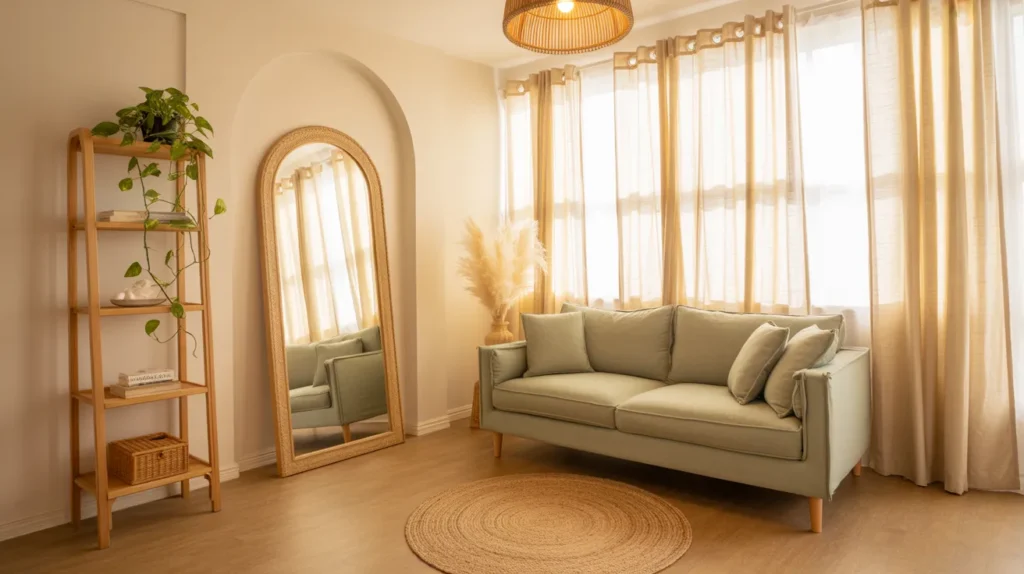
Toys can take over a small living room fast, but these 15 Toy Storage Ideas for Small Spaces show that staying organized doesn’t mean sacrificing style. From woven seagrass baskets to oak storage benches with hidden compartments, each idea uses wood and fabric pieces that blend naturally into modern family homes.
What makes small-space storage work is furniture that pulls double duty — think cube shelving that doubles as a divider, or an ottoman that also seats guests. These 15 Toy Storage Ideas for Small Spaces lean into vertical storage and closed compartments, from under-bed bins to wall-mounted organizers, so you maximize every inch without losing floor space.
Whether it’s a studio apartment or a shared kids’ room, closed storage beats open shelving here, since visible toy piles make small rooms feel more crowded. Neutral finishes like rattan, oak, and soft sage keep everything practical while still matching your existing decor. Let’s get into the list.
1. Stuffed Animal Storage Bean Bag
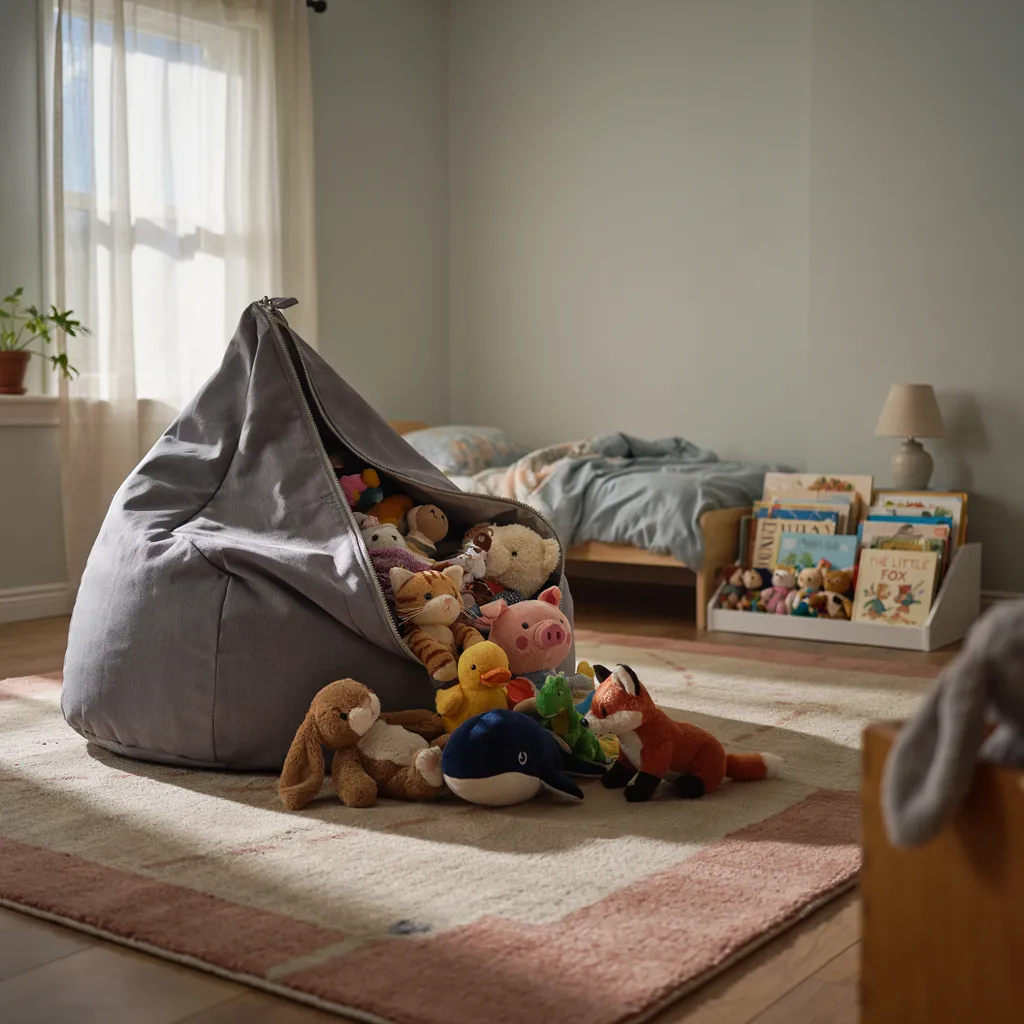
A stuffed animal storage bean bag solves two problems at once by using the plush toys themselves as the filling, which means the more stuffed animals a kid collects, the more comfortable the seat becomes. Instead of foam beads, the cover unzips to reveal a mesh liner that holds dozens of soft toys in place while still giving the bag its shape. This works especially well for families who’ve run out of shelf space for an ever-growing plush collection.
Look for a cover around 38 inches tall with a durable double-zipper closure so the liner doesn’t shift during regular use. Wash the outer canvas cover separately from the mesh liner to keep both pieces looking fresh. These storage bean bag covers typically cost $40 to $70.
2. Rotating Corner Lazy Susan Bin
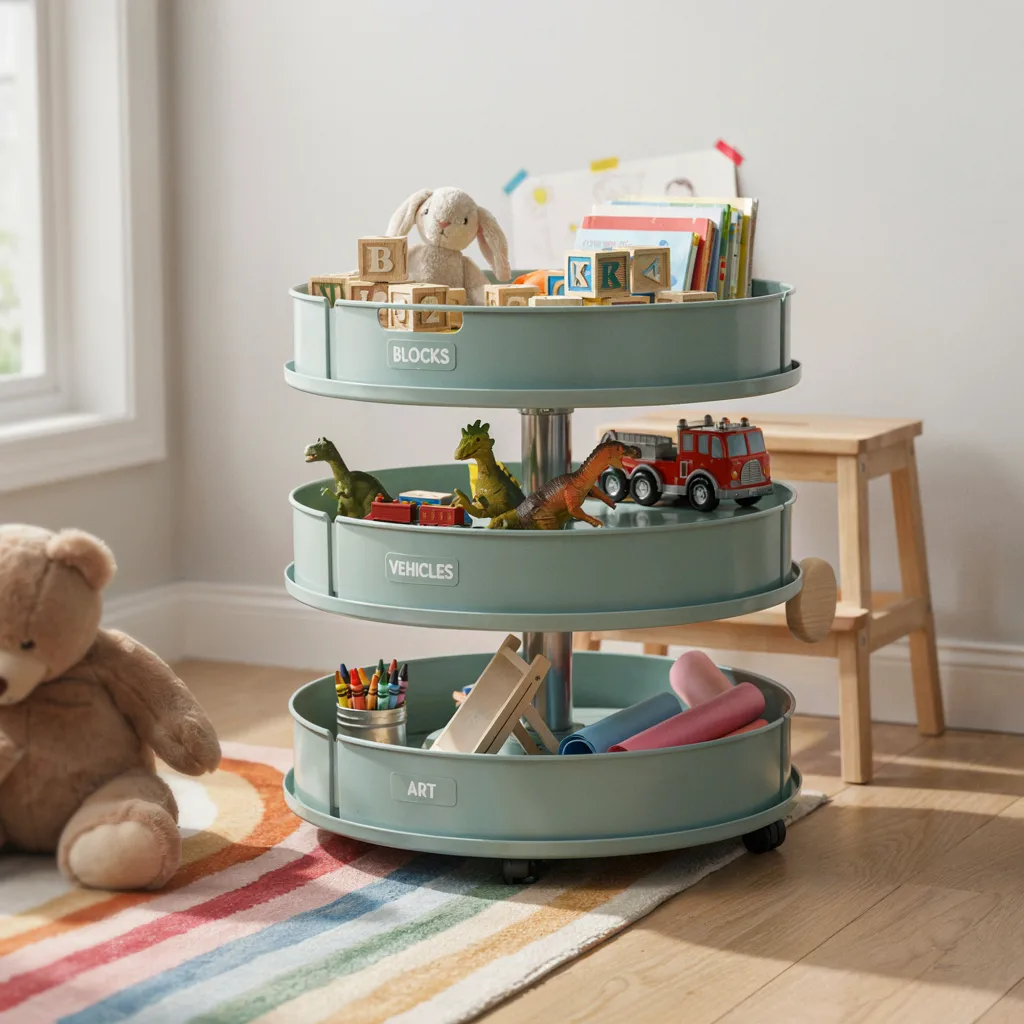
A rotating corner unit uses the same lazy Susan mechanism found in kitchen cabinets, letting a child spin the tiers to find the right bin instead of digging through a static shelf. Because it’s designed for a corner, it claims a spot in the room that usually goes unused by furniture, freeing up wall space elsewhere for other storage. The circular design also means there are no sharp corners at kid height, which matters in smaller rooms with less room to maneuver around furniture.
Choose a unit around 24 inches in diameter with at least three tiers to separate toy categories clearly. Keep the heaviest bin on the bottom tier so the unit stays balanced while spinning. Rotating corner units in this size typically cost $65 to $110.
3. Fold-Flat Collapsible Storage Cubes
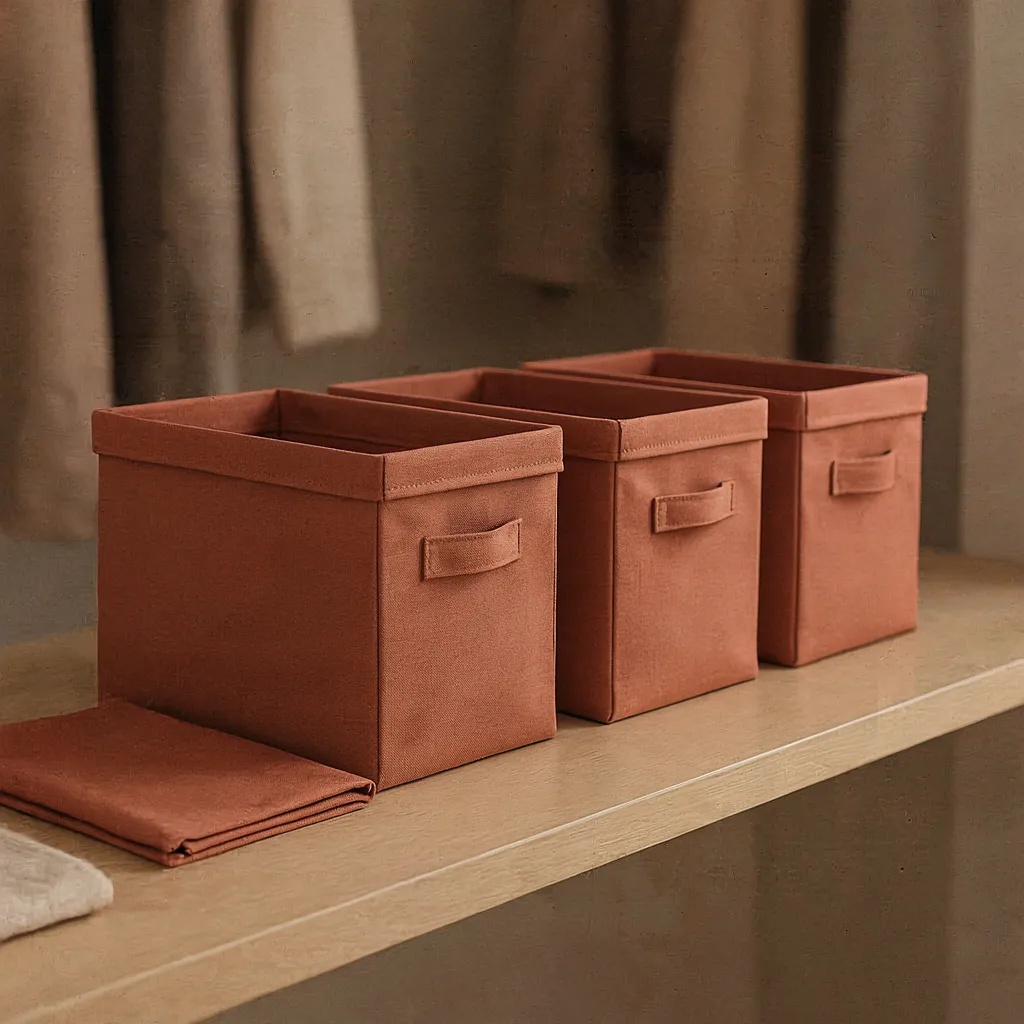
Collapsible cubes solve a problem that rigid bins can’t: when a toy collection shrinks or a family moves, the empty cubes fold down to almost nothing instead of taking up shelf space while empty. The fabric sides use a wire frame that pops into shape instantly, so switching from flat storage to a usable bin takes only a few seconds. This makes them a practical option for families who don’t want to commit to permanent shelving.
Choose cubes around 11 inches square to match standard shelving grids if you’re using them alongside a cube organizer. Fold unused cubes flat and store them behind other bins rather than taking up an active shelf slot. A set of six collapsible cubes typically costs $30 to $55.
4. Wall-Mounted Floating Storage Drawers
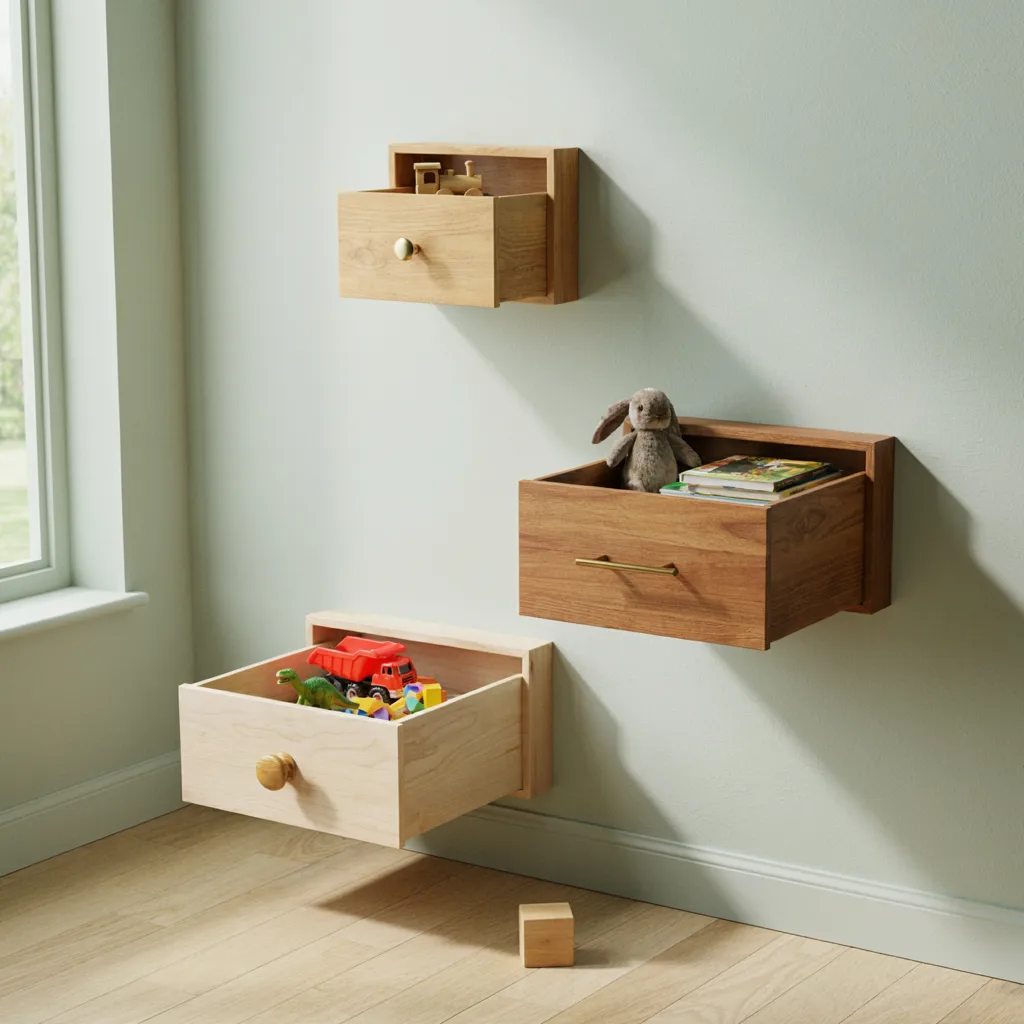
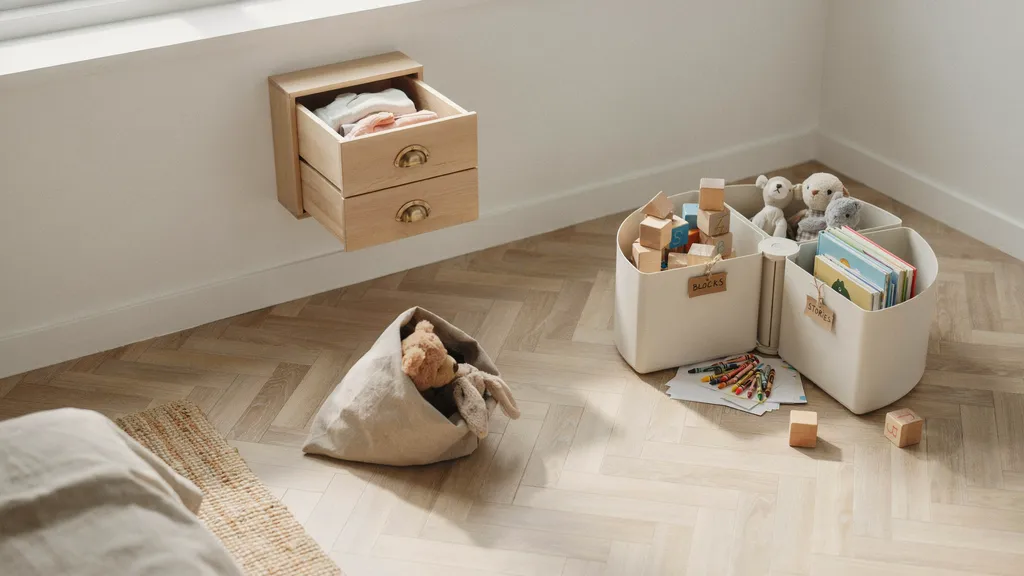
Floating drawers mount straight to the wall without a surrounding cabinet frame, giving you the concealment of a drawer without the floor space a dresser would require. Staggering three drawers at different heights also creates a small architectural feature on an otherwise plain wall, doing double duty as both storage and simple wall decor. Because each drawer operates independently, kids can access one without needing to open the others.
Look for drawers around 14 inches wide, mounted into wall studs with brackets rated for at least 15 pounds once loaded. Space each drawer roughly 8 inches apart vertically so they read as a set rather than a random cluster. A set of three floating drawers typically costs $70 to $130.
5. Magnetic Wall Panel for Toy Cars
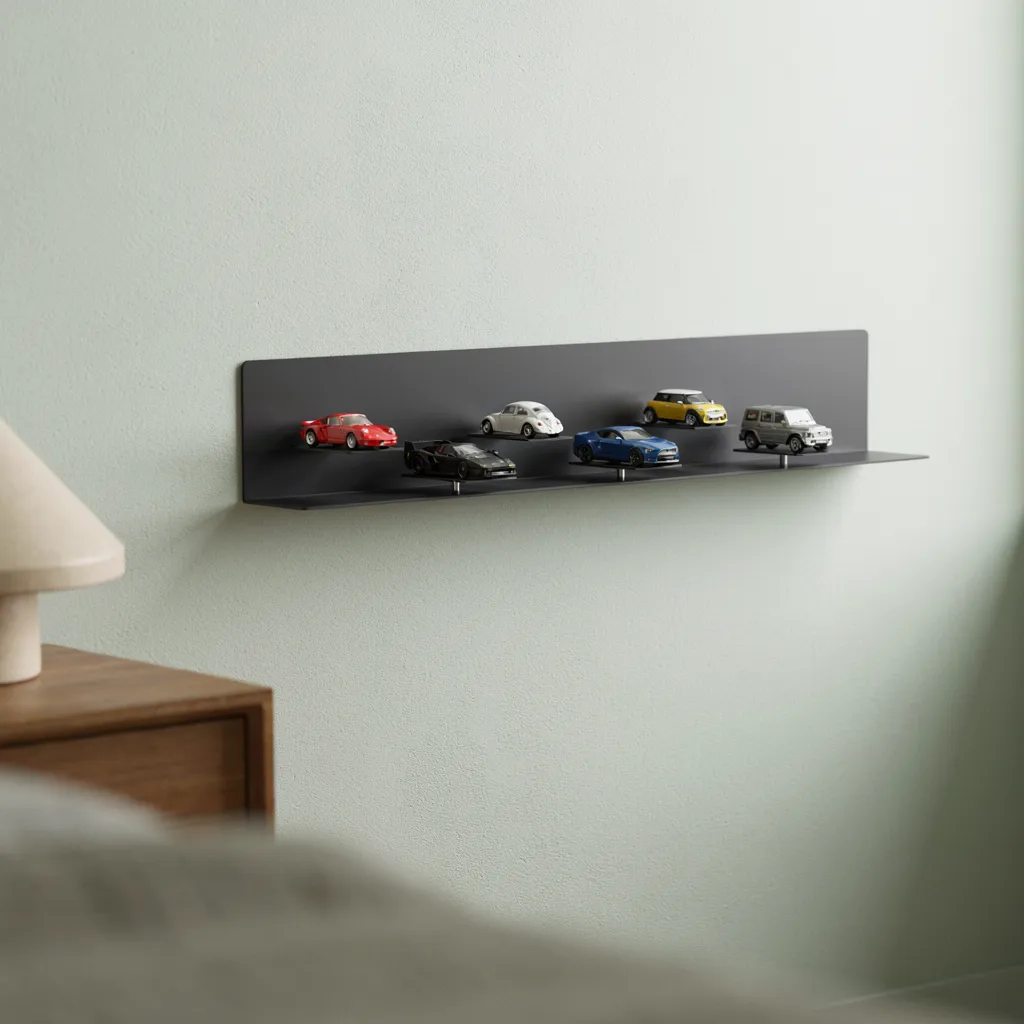
A magnetic wall panel turns toy cars and other small metal-based toys into a wall display instead of a pile on the floor, using the same principle as a magnetic knife strip in a kitchen. Small adhesive magnets attached to the underside of each car let kids arrange and rearrange the display themselves, which adds a layer of play to what would otherwise be plain storage. This works only for toys with a flat metal or magnet-compatible surface, so it’s best paired with die-cast car collections specifically.
Choose a panel around 24 by 18 inches, thin steel sheet metal rather than a heavier gauge that would be harder to mount. Use small rare-earth magnets no larger than a dime to avoid overpowering lightweight toy cars. Magnetic panels with basic mounting hardware typically cost $25 to $50.
6. Vintage Suitcase Stack Storage
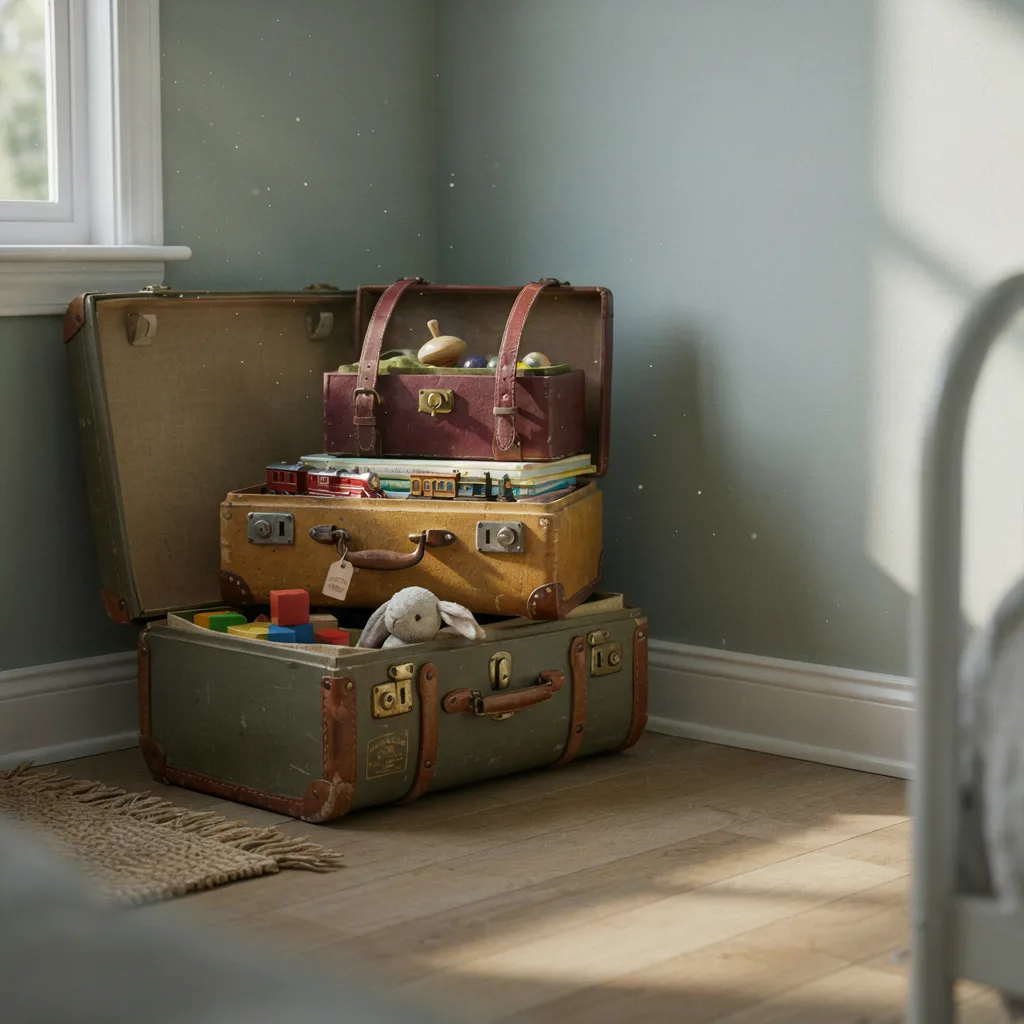
Stacked suitcases bring a storage solution that doubles as a decorative object, since the exterior reads as a styled stack even when a passerby doesn’t know toys are hiding inside. Each case opens independently, so smaller items like puzzles or card games can stay separated by suitcase rather than mixed together in one large bin. This idea works particularly well in rooms with a vintage or eclectic style where a plastic bin would clash with the existing decor.
Choose a set with the largest case around 24 inches wide, graduating down to roughly 16 inches for the smallest. Use the top case for lightweight items only, since a fully loaded bottom case supports the stack’s overall stability. Vintage-style suitcase sets typically cost $50 to $95.
7. Sliding Barn Door Storage Bench
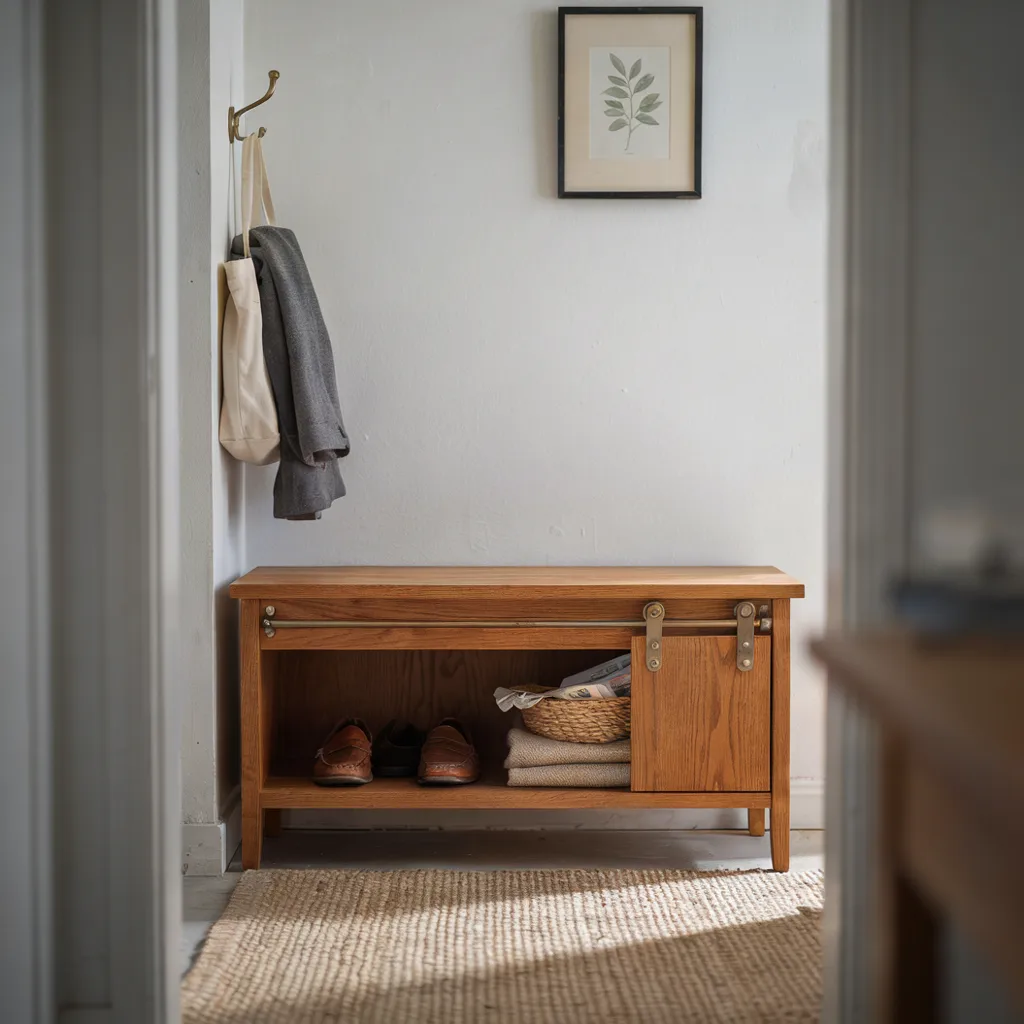
A sliding barn door bench swaps the usual lift-top lid for a front panel that slides open, which matters in tight entryways where there isn’t enough clearance above the bench to lift a hinged top fully. The sliding mechanism also means nothing needs to be moved off the top surface to access storage underneath, since the bench top stays clear for bags or mail at all times. This makes it a more practical option than a lift-top design in spaces with limited vertical room.
Look for a bench around 40 inches wide with a door track rated for the panel’s weight, typically solid wood rather than hollow-core construction. Add a small pull handle to the sliding door for easy grip when little hands are opening it. Sliding barn door benches typically cost $130 to $220.
8. Slim Board Game Door Rack
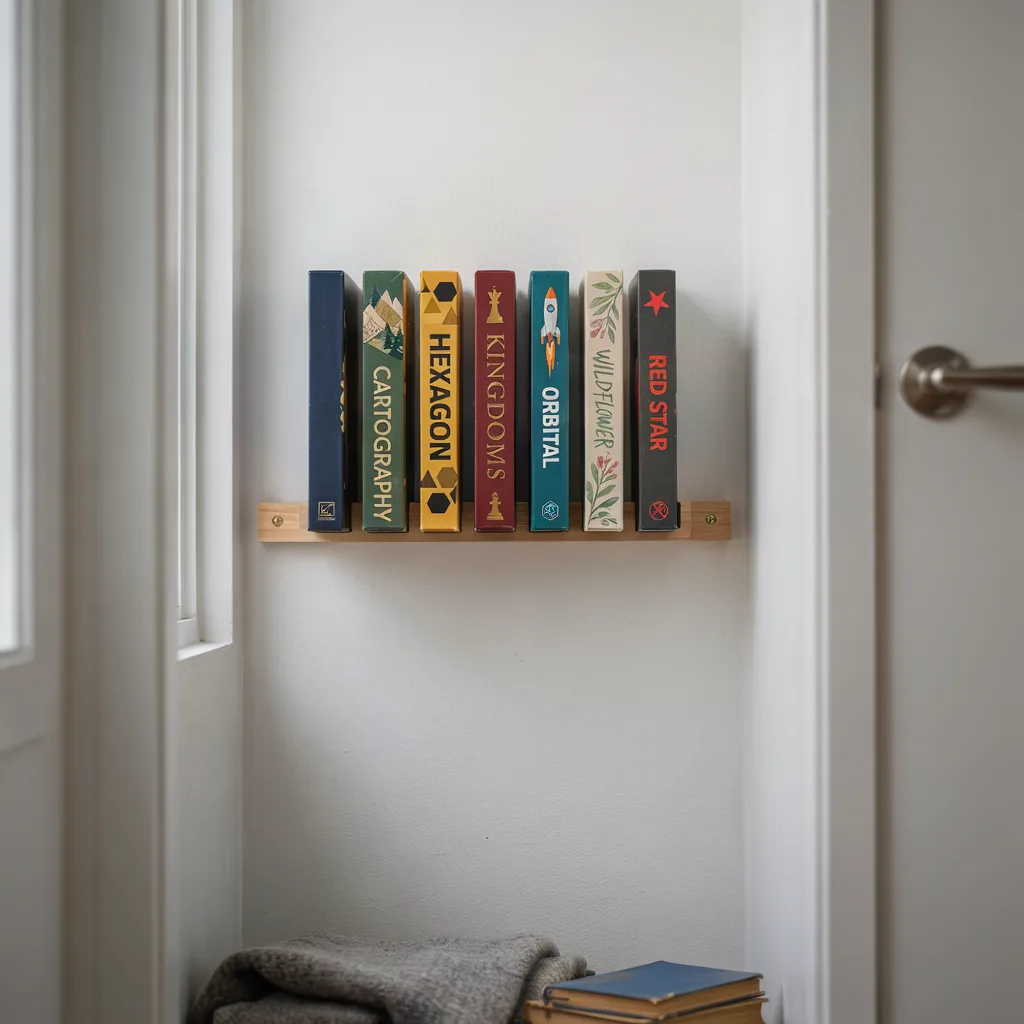
A slim door rack holds board games upright in individual slots, solving the specific problem of games sliding around and getting crushed on a flat shelf. Because it mounts on the inside of a closet door, it uses space that would otherwise stay completely empty when the door is closed. This setup also makes it easy to see every game’s spine at a glance, rather than digging through a stack to find one specific box.
Choose a rack with slots spaced at least 2 inches apart to accommodate most standard board game box widths. Confirm the rack’s depth clears any shelving inside the closet before the door closes fully. Slim board game racks typically cost $35 to $65.
9. Nesting Wooden Crate Shelf
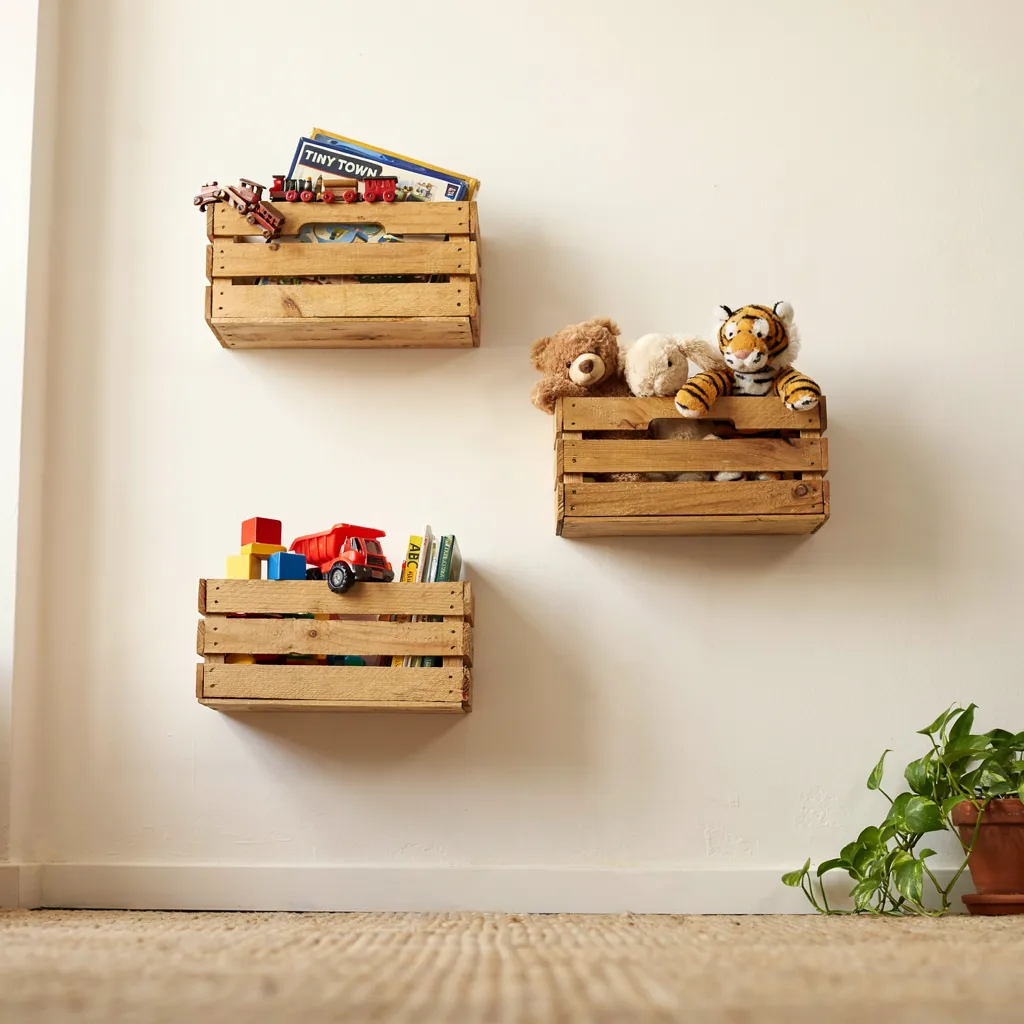
Wooden crates mounted directly to a wall function as open shelving with a rustic edge that a standard cube organizer doesn’t have, and because each crate is a separate unit, you can add or remove one without redoing the entire display. The slightly rough, unfinished wood also holds up well to daily handling, since scuffs and marks tend to blend into the existing texture rather than standing out. This makes the setup forgiving for households where furniture takes a beating.
Choose crates around 14 by 12 inches, mounted with the open side facing out and anchored into studs for stability. Stagger three crates at slightly different heights rather than lining them up perfectly level for a more dynamic look. A set of three wall-mounted crates typically costs $45 to $85.
10. Step Stool with Hidden Drawer
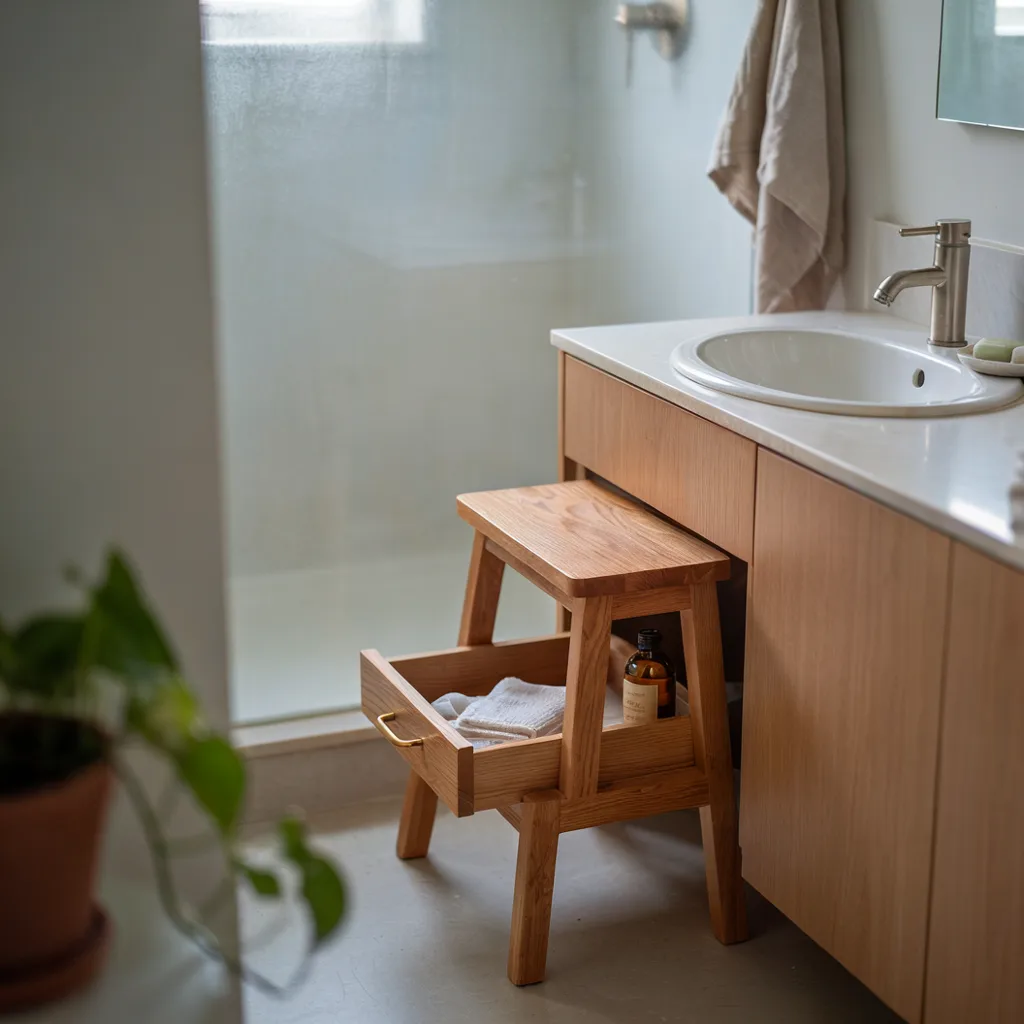
A step stool with a hidden drawer combines two items a small bathroom or bedroom often needs separately, using the stool’s base for a shallow drawer that holds bath toys or small items instead of leaving them loose on the floor. Because the drawer sits below the step surface, it doesn’t add any extra footprint beyond what the stool already occupies.
Look for a stool around 12 inches tall with a drawer depth of about 3 inches, enough for lightweight bath toys without becoming too heavy to pull. Choose a sealed wood finish if it will be used in a bathroom, since untreated wood can warp with regular moisture exposure. Step stools with a hidden drawer typically cost $35 to $60.
11. Fold-Down Wall Play Station with Storage
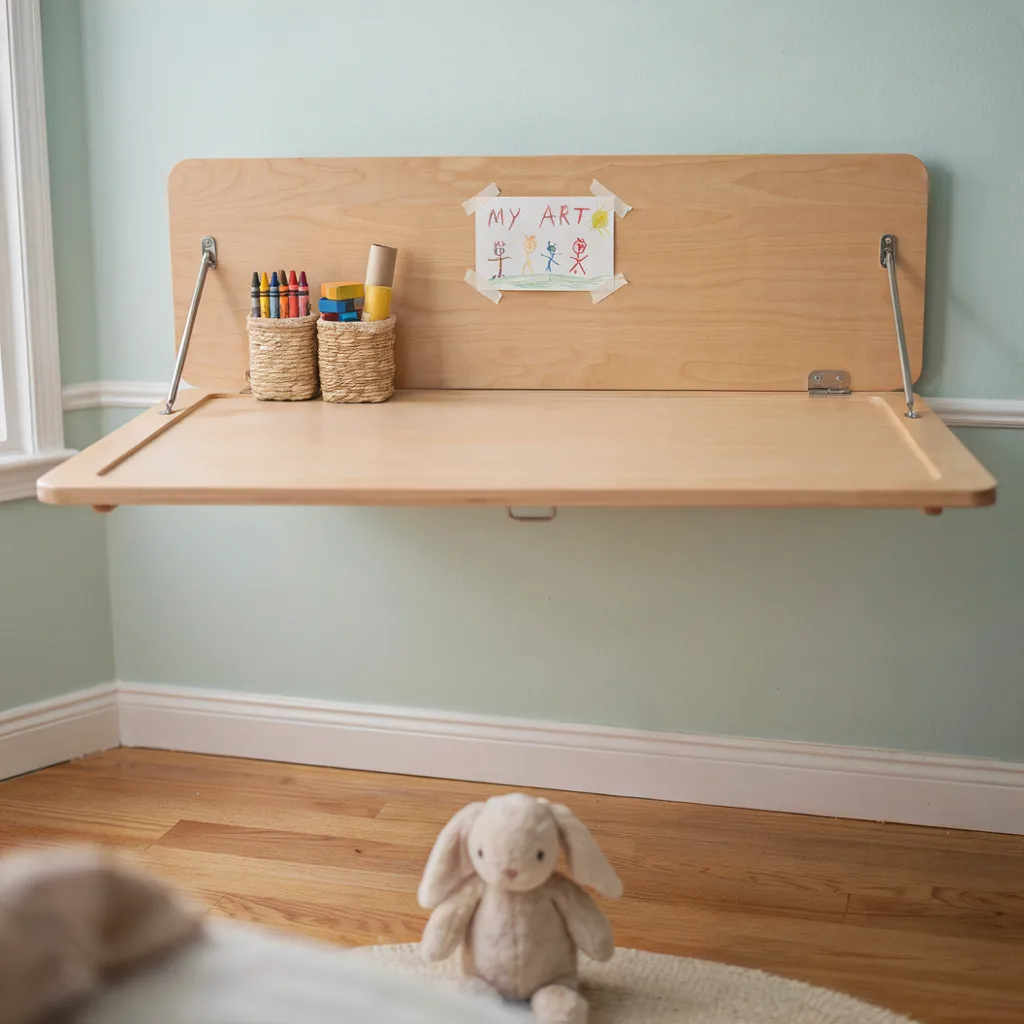
A fold-down play station mounts flat against the wall when not in use, unfolding into a small table with built-in side bins for crayons or building blocks during active play. This works well in bedrooms too small for a permanent kids’ table, since the entire setup collapses back to just a few inches of depth against the wall. The built-in bins also mean supplies stay within arm’s reach during play instead of scattered across the floor.
Choose a unit around 24 inches wide when unfolded, with a locking mechanism that holds the table flat and secure during use. Mount it into wall studs, since a loaded table surface adds meaningful weight when extended. Fold-down play stations typically cost $90 to $160.
If fold-down furniture works well in this room, our 7 Tiny Art Studio Ideas for Small Spaces shows more ways to use the same space-saving trick for creative corners.
12. Garage or Mudroom Cubby Wall for Outdoor Toys
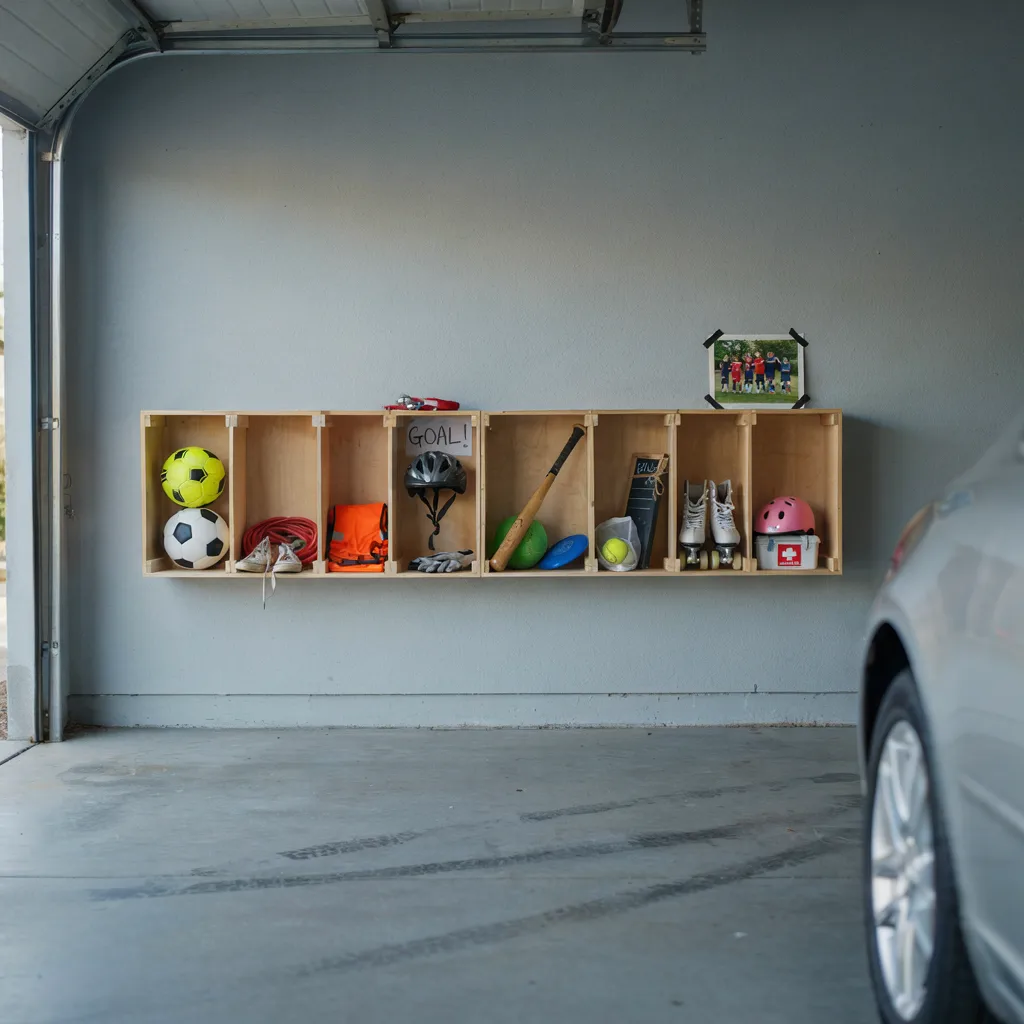
An outdoor-specific cubby wall keeps bikes, balls, and sports gear out of the main living space entirely, which matters most for families where outdoor toys tend to migrate indoors and clutter entryways. Mounting the cubbies in a garage or mudroom also means dirt and sand stay contained to a space built for it, rather than tracking through carpeted rooms.
Choose cubbies around 16 inches square, sized to fit helmets and mid-size balls without gear falling through gaps. Mount the row at a height kids can reach independently, generally starting around 24 inches from the floor. A set of six outdoor cubbies typically costs $80 to $150.
13. Framed Canvas Wall Pocket Organizer
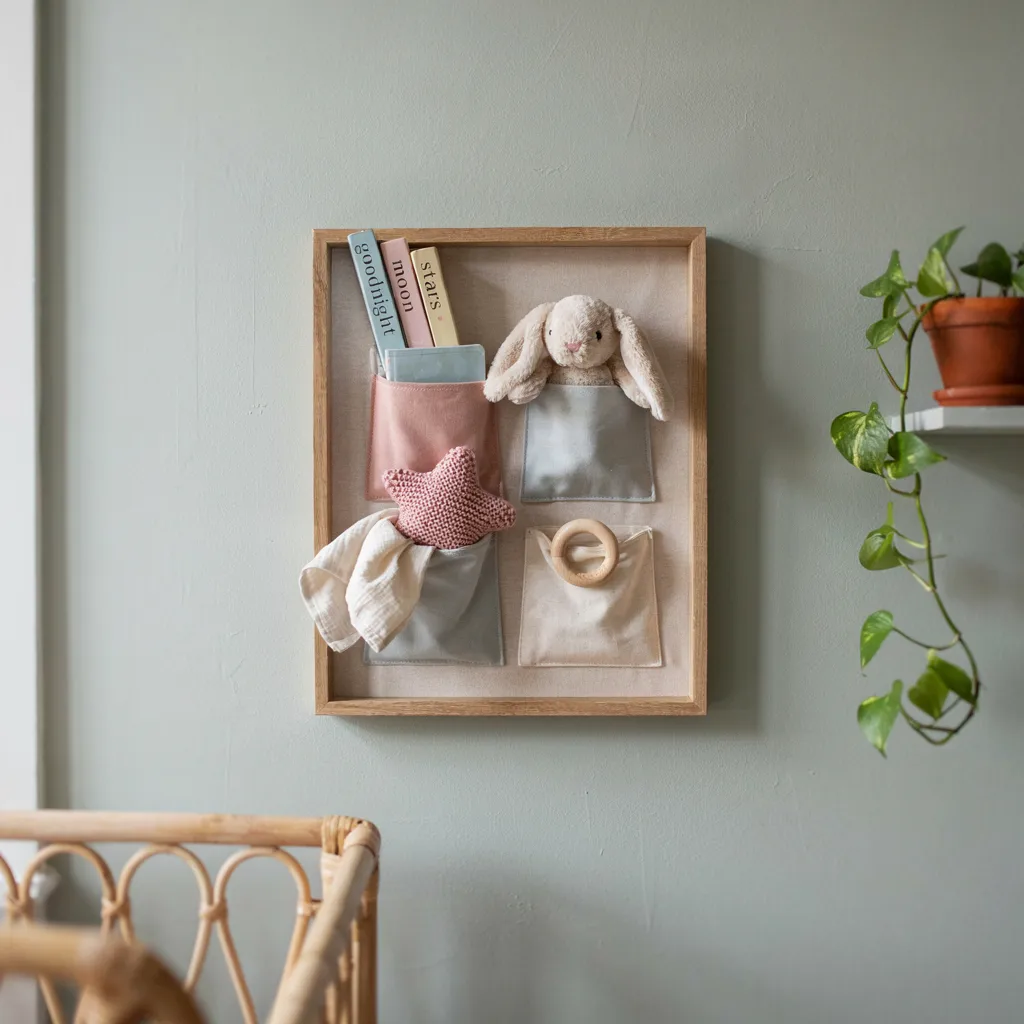
A framed canvas pocket organizer is built to look like wall art first and storage second, using a wooden frame around fabric pockets so it reads as a decorative piece even in a shared living space. This makes it a good fit for nurseries or playrooms that double as guest-visible areas, since it doesn’t carry the obvious “storage bin” look that most organizers have.
Choose a frame around 24 by 30 inches with at least four pockets sized for small books or soft toys. Mount it using a French cleat rather than standard picture hooks, since the combined weight of a loaded pocket organizer is heavier than typical wall art. Framed pocket organizers typically cost $55 to $95.
14. Toy Storage Side Table with Drawer
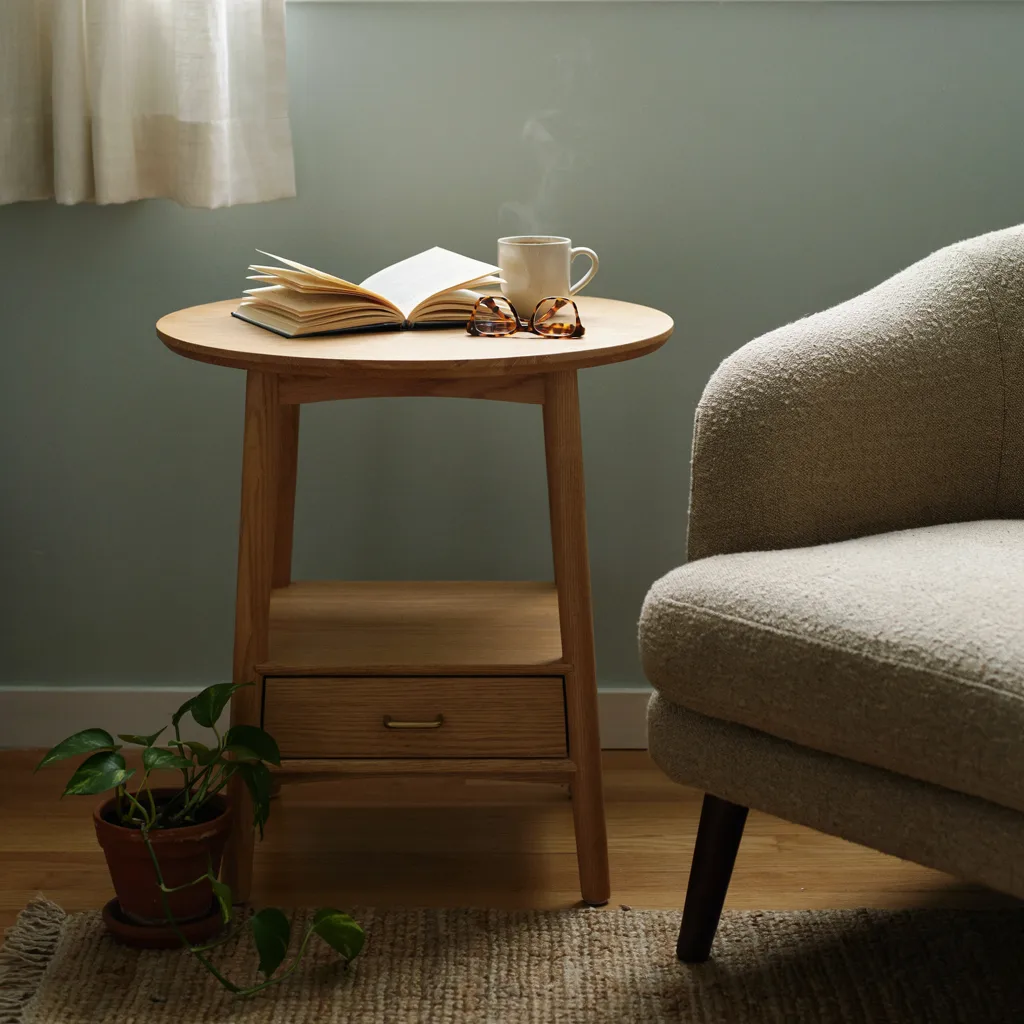
A side table with a built-in drawer gives a living room a spot for small toys without introducing a separate storage piece into the room, since the table already has a job to do beside a chair or sofa. This works especially well for items used during quiet activities near a reading chair, like small puzzles or coloring supplies, keeping them close at hand without cluttering the tabletop itself.
Choose a table around 18 inches in diameter with a drawer at least 2 inches deep for flat items like books or cards. Solid wood construction handles the added weight of a loaded drawer better than particleboard alternatives. Side tables with a storage drawer typically cost $60 to $110.
15. Trundle Drawer Storage Under Stairs
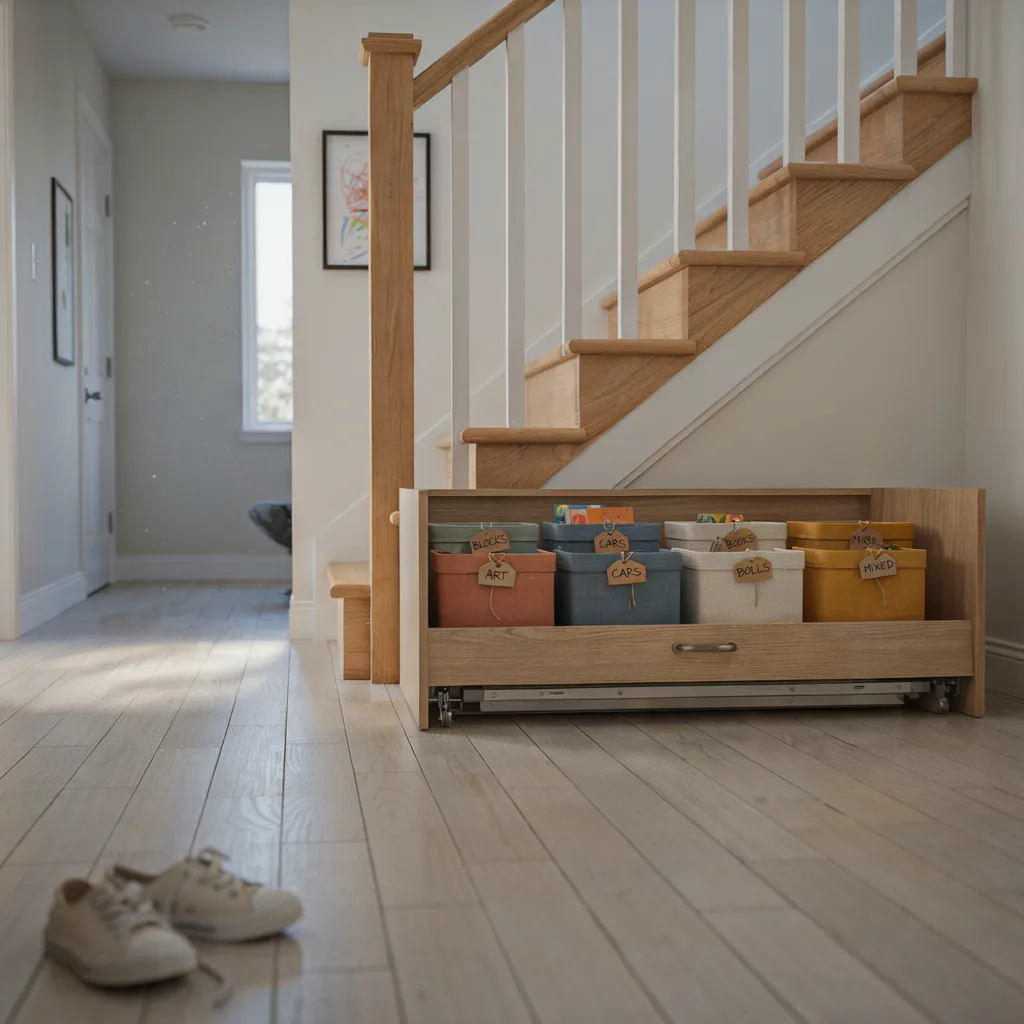
Space beneath a staircase often sits completely unused in small homes, making it one of the largest untapped storage opportunities available without adding new furniture. A trundle drawer built into that triangular gap slides out on rails, giving full access to what would otherwise be a dead, hard-to-reach corner. Because the drawer follows the slope of the stairs, capacity varies by section, so deeper drawers typically go toward the taller end near the base of the staircase.
Custom trundle drawers are usually built to match the specific stair dimensions in a home, so measuring the available depth and height before ordering or building is essential. A basic single-drawer under-stair build typically costs $200 to $450 depending on material and finish. This option works best as a semi-permanent addition rather than a piece you’d move between homes.
conclusion:
These 15 Toy Storage Ideas for Small Spaces work best when you match the idea to an actual gap in your home rather than trying to fit all of them into one room. A rotating corner bin solves a completely different problem than a fold-down play station, so start with whichever pain point comes up most during daily cleanup. Built-in options like a trundle stair drawer or floating wall drawers make sense for a more permanent setup, while collapsible cubes and suitcase stacks work better if you expect to move or downsize the collection later.
Mixing a couple of display-forward pieces, like the framed pocket organizer or magnetic car panel, with more purely functional storage keeps a room from feeling like it’s entirely dedicated to organization. Whatever you choose, involve kids in deciding where things go, since a system only stays tidy if it’s simple enough for them to use without help. Small spaces don’t need more storage — they need storage that’s chosen with the specific room in mind.
Save these ideas and follow us on Pinterest for more creative small-space storage inspiration.
FAQ:
1. What’s the most space-efficient toy storage option for a very small room?
Wall-mounted or built-in options like floating drawers, wall crates, or a trundle stair drawer add storage without using any floor space at all.
2. Are collapsible storage cubes sturdy enough for daily use?
Yes, the wire frame inside keeps them upright during regular use, and they only fold flat when intentionally collapsed for storage or a move.
3. How do I keep a magnetic toy wall from damaging paint or drywall?
Mount the metal panel with screws into studs where possible, and use adhesive-backed magnets on toys rather than adhering the panel itself with tape.
4. Is building a trundle drawer under the stairs a DIY-friendly project?
It’s possible for someone comfortable with basic carpentry, but the sloped, custom dimensions of most staircases make it a project many households hire out instead.
5. Can these ideas work in a rental where drilling isn’t allowed?
Freestanding options like the rotating corner bin, suitcase stack, side table, and sliding barn door bench don’t require any wall mounting at all.