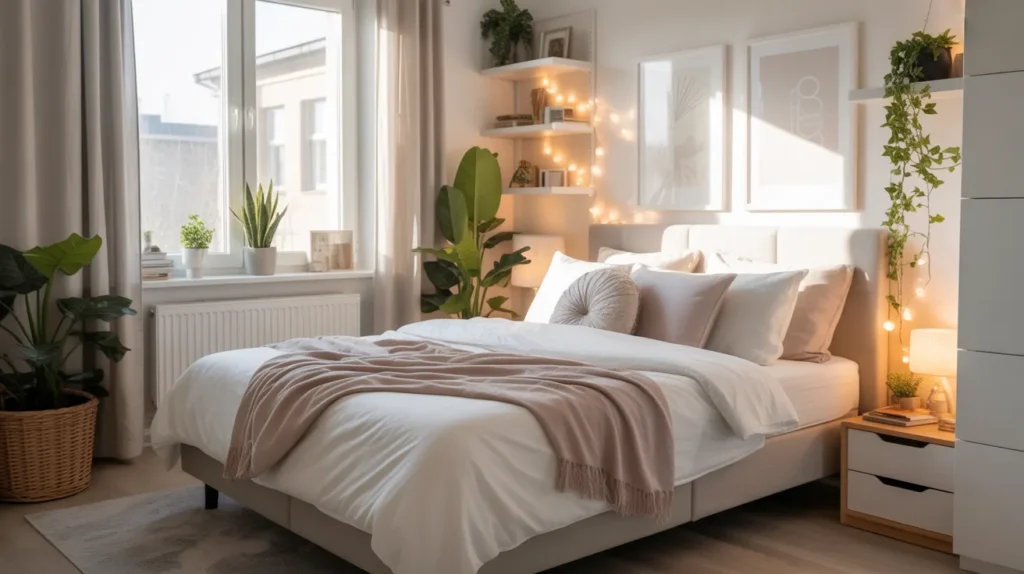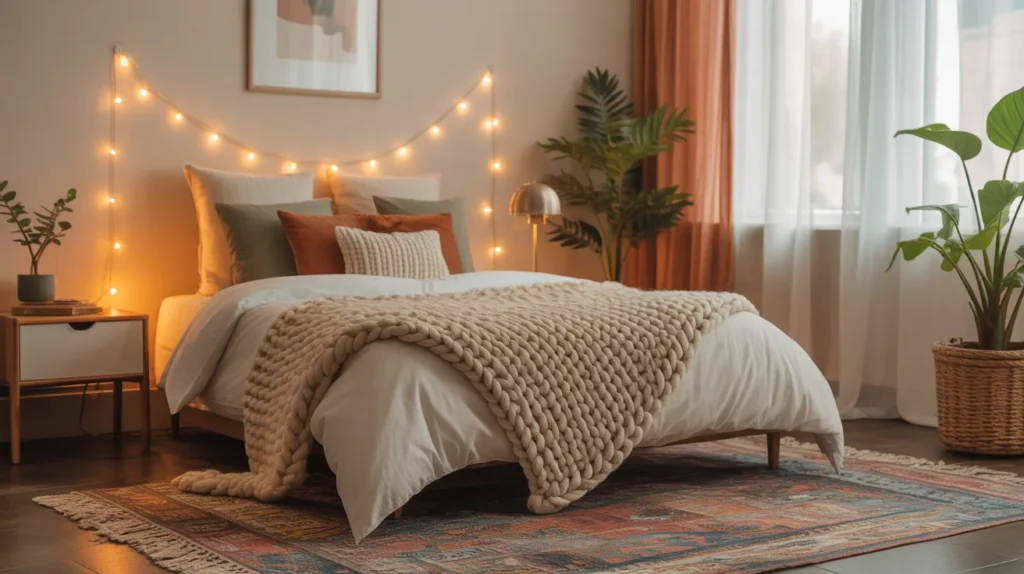
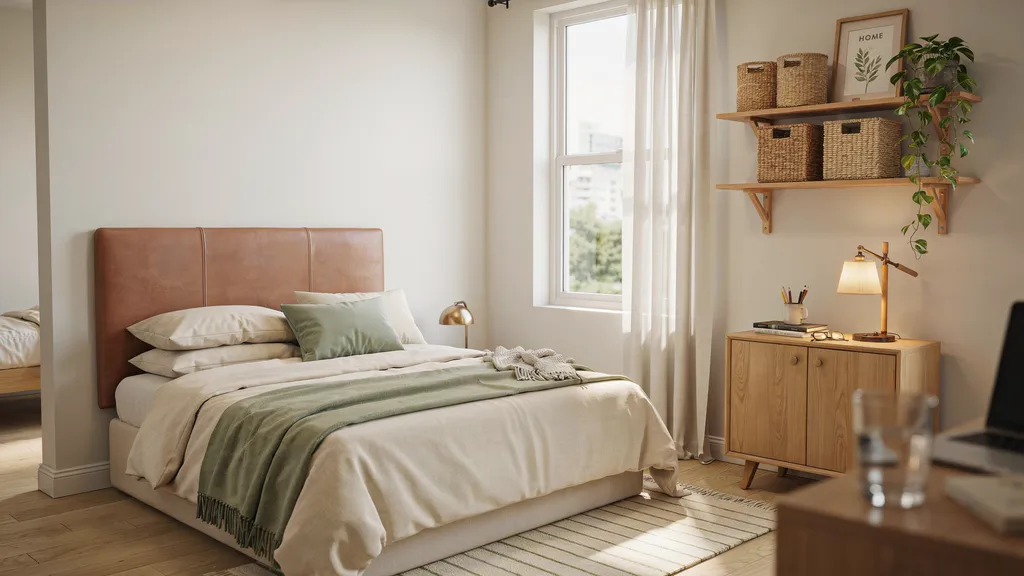
Move-in day usually means staring at scuffed linoleum floors, bare cinder block walls, and a single overhead light that makes everything look temporary. These 13 College Bedroom Ideas to Copy in 2026 skip the flimsy plastic crates and matching bedding sets most students default to, and instead break down exactly how to layer textures and colors so a rented room looks finished by the end of one afternoon.
What makes these college bedroom ideas work is countering those hard, institutional surfaces with materials that actually hold up to dorm life — a heavy waffle-weave cotton quilt, an unglazed terracotta desk tray, a tufted headboard panel that mounts with non-damaging adhesive strips instead of screws. Anchor the sleeping area with one solid focal piece like this, and the rest of the room starts building around it instead of competing with it.
Rather than buying a generic all-in-one bedding bundle for your twin XL mattress, this guide focuses on asymmetric color blocking — pairing soft sage green with crisp cream and warm light oak — to make an inexpensive bed frame read like a custom-built daybed. Inside, you’ll find the exact college bedroom decor ideas, material picks, and color combinations to copy for a dorm or student apartment that actually looks designed, not just decorated.
1. Stick-On Faux-Leather Headboard Panel
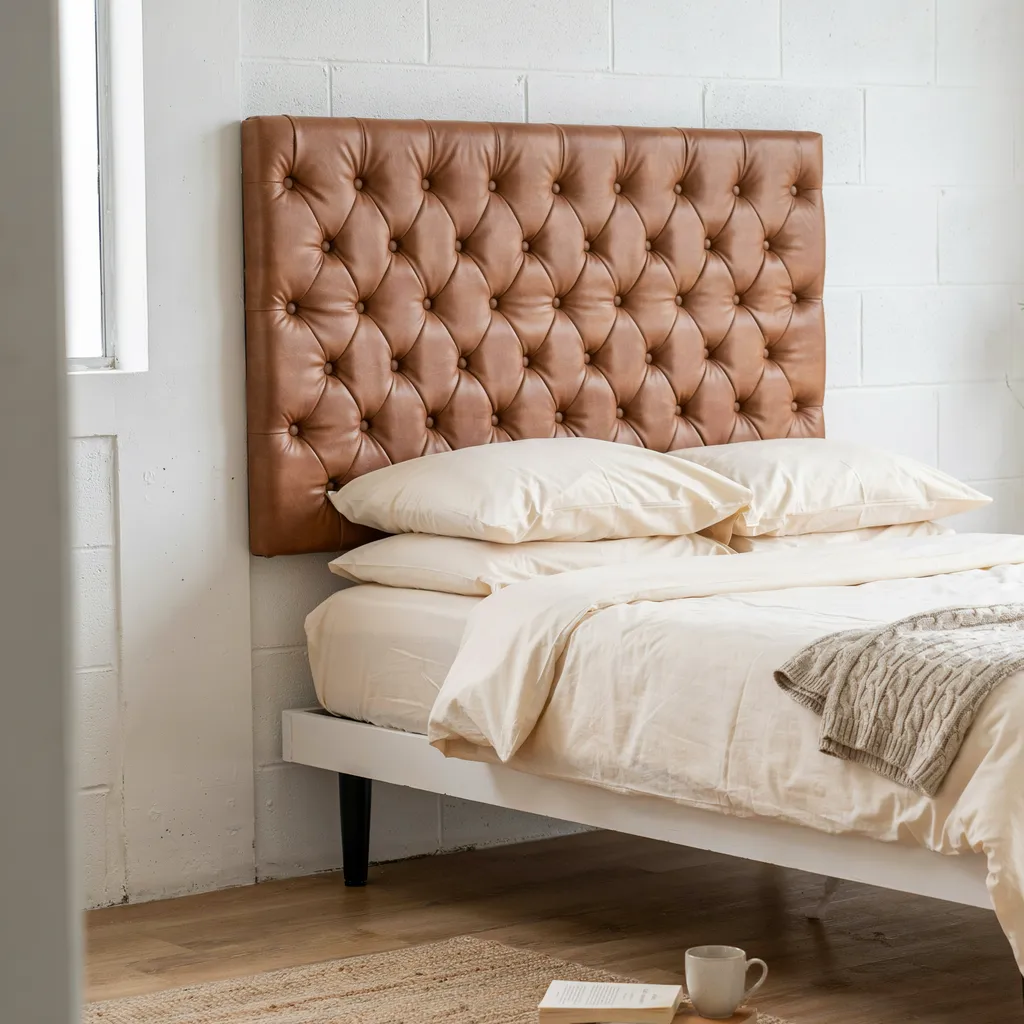
A bare wall behind a mattress is one of the fastest ways to make a dorm bed look unfinished, regardless of how nice the sheets are. A tufted faux-leather headboard panel, sized around 36 to 39 inches wide to match a standard twin XL frame, solves this by mounting flush against the wall using heavy-duty adhesive strips rated for 5 to 10 pounds — no drilling, no damage deposit risk. Panels in caramel, espresso, or cream typically cost between $35 and $60.
Center the panel where your pillows actually sit rather than centering it on the wall itself, since dorm beds are rarely positioned in the middle of a room. Press each strip firmly along all four edges and let the adhesive cure for at least an hour before leaning anything against it. The result is a defined, intentional edge at the head of the bed that a bare wall never achieves on its own. For more ways to style the bed itself, see these 9 dorm bed ideas that make your room look amazing.
2. Asymmetric Color Blocking with Sage and Cream
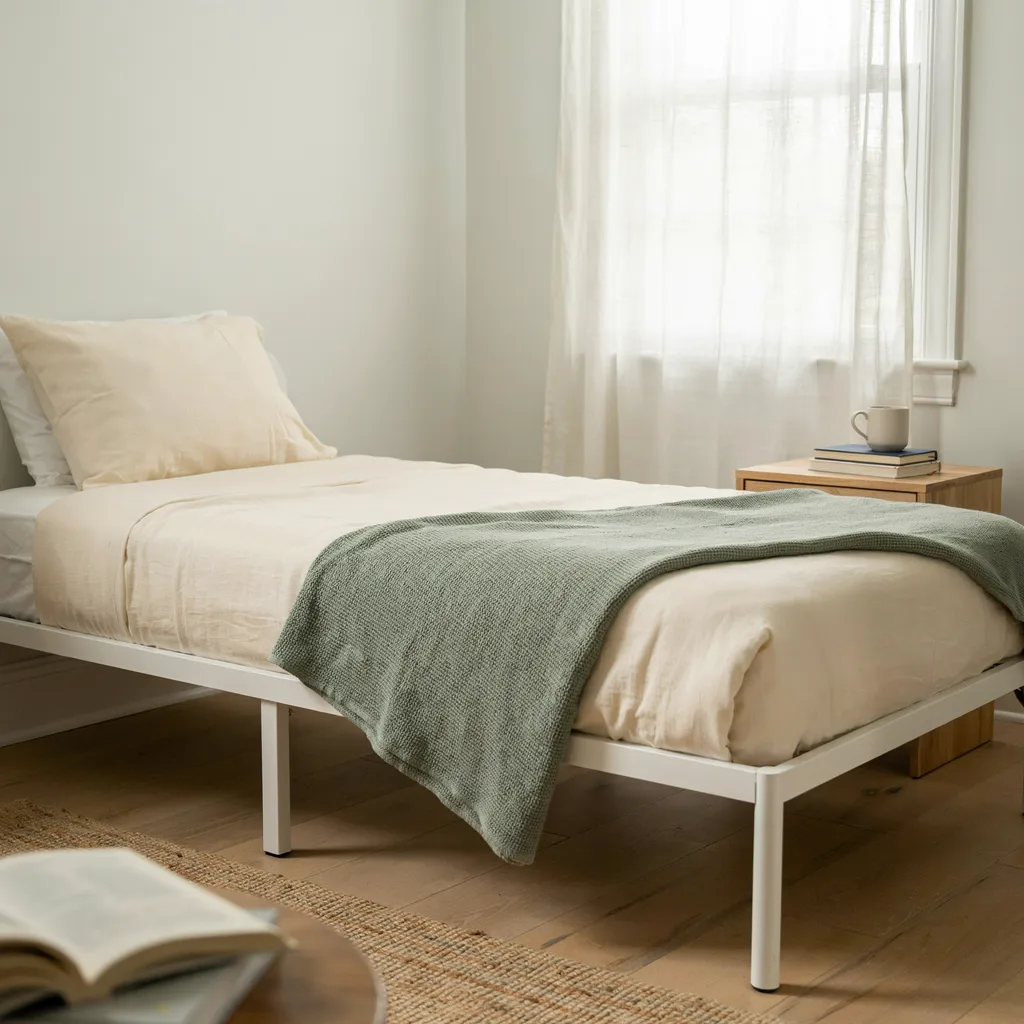
Most dorm bed-in-a-bag sets default to one uniform color across every layer, which is exactly why so many dorm beds look the same. Asymmetric color blocking breaks that pattern: start with a crisp, unbleached cream fitted sheet as your base, then fold a sage green waffle-weave cotton throw into a neat 24-inch band and drape it diagonally across one bottom corner instead of covering the bed evenly.
The diagonal placement is what makes this read as styled rather than just unmade. Keep every other textile in the room — pillowcases, a desk chair cushion, any rug — limited to these same two tones so the bed stays the room’s clear anchor point. Skip adding a third color near the bed entirely, since one extra tone is enough to make the layering look accidental instead of deliberate.
3. Woven Seagrass Cord Organizer

Tangled chargers and loose cords across a nightstand undo a styled bedroom faster than almost anything else in the room. A small woven seagrass basket, around 8 by 8 inches with a 4-inch profile, corrals these cords while adding a natural, textured material that breaks up the smooth plastic surfaces of modern electronics. These baskets typically cost under $15.
Cut a small slot through the back weave to thread your main power strip cord through cleanly, so the basket sits flush against the wall instead of pulling forward. Keep the basket dedicated to cords only rather than turning it into general catch-all storage — a single clear purpose is what keeps it looking intentional instead of like an overflow bin.
4. Triple Euro Sham Daybed Setup
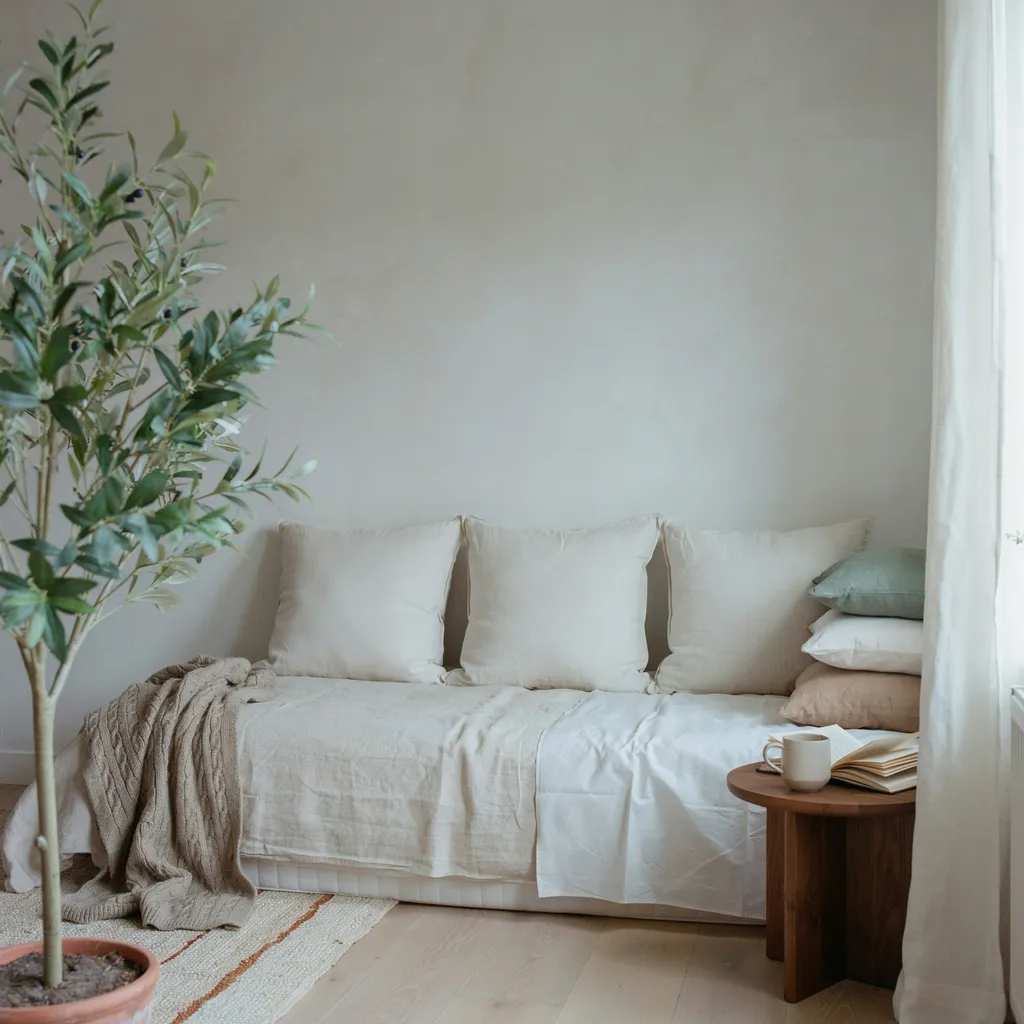
A narrow dorm bed pushed against the long wall of the room can double as daytime seating if you style the backrest correctly. Line up three 26-by-26-inch Euro shams in machine-washable cream linen covers along the wall, using firm inserts so each pillow stays upright rather than collapsing forward when someone leans back.
Add one contrasting lumbar pillow in front, centered, to break up the row of identical squares without introducing a third texture. This setup gives a single mattress two functions — sleeping at night, casual seating during the day — which matters most in rooms too small for a separate couch or chair.
5. Unglazed Terracotta Desk Tray

A desk covered in loose keys, lip balm, and stray coins looks cluttered no matter how organized the rest of the room is. An unglazed terracotta tray, about 7 inches in diameter with a slight raised rim, gives those small items one defined spot. The raw, matte clay surface also adds a textural contrast against the smooth laminate most dorm desks come with, and trays in this size typically cost between $12 and $20.
Limit the tray to three to five small items rather than letting it become a dumping ground for everything on the desk. The matte clay also absorbs small water drops from a sweating water bottle or wet keys, which keeps the desk surface itself free of water rings — a small practical benefit on top of the styling one.
6. Fluted Acrylic Desk Privacy Screen
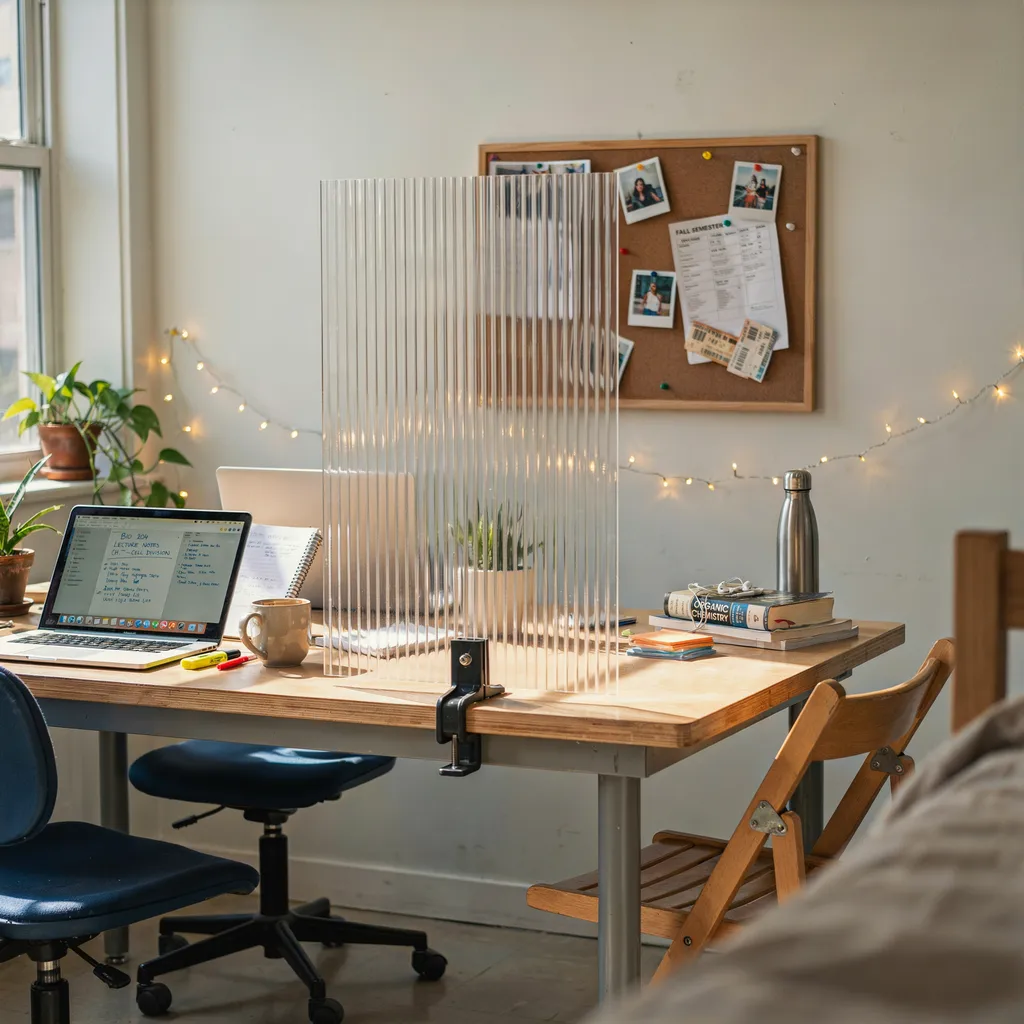
Shared dorm rooms rarely offer any visual separation between two desks pushed against the same wall. A fluted frosted acrylic privacy screen, about 18 inches tall, clamps onto the shared edge of the desk using non-damaging thumb screws and installs in under two minutes. The ribbed texture diffuses movement from the other side without blocking window light the way a solid divider would.
This works specifically because it’s removable — most dorm leases don’t allow permanent partitions, and a clamp-on screen can come down in seconds at the end of the semester. The repeating vertical lines also double as a small design detail, giving an otherwise plain shared desk setup a more considered, structured look.
7. Removable Arch Wall Decal
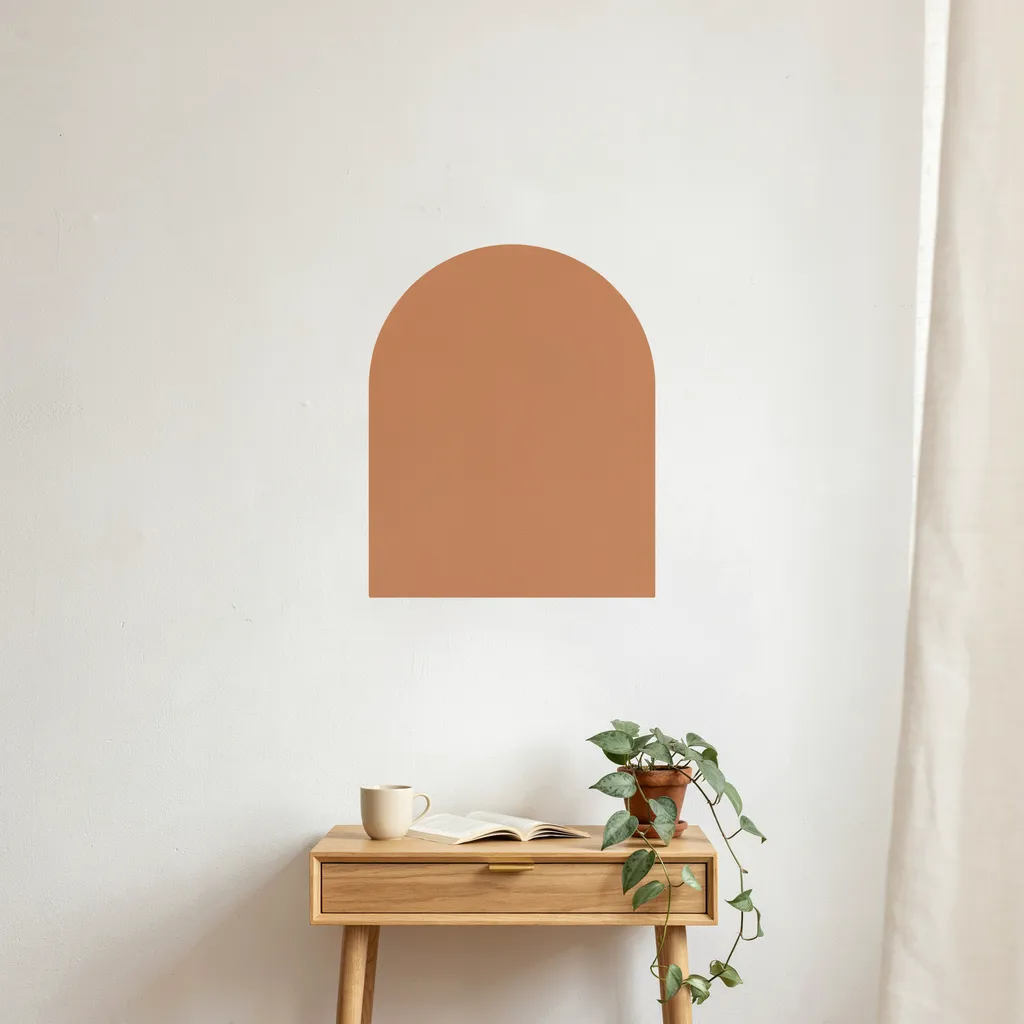
Painting an accent wall is off the table in almost every dorm, but a removable vinyl decal gets close to the same effect without violating the lease. A large terracotta arch graphic, centered behind a nightstand or desk, breaks up the boxy shape of a standard rectangular room and gives a smaller piece of furniture a defined backdrop instead of floating against a blank wall. Decals in this size typically run around $30 to $40.
Choose a vinyl specifically labeled for clean, residue-free removal, since standard decals can leave adhesive marks or pull paint when removed at the end of the year. This single graphic does more visual work than several smaller posters scattered across the same wall, because it reads as one deliberate design choice rather than a collage.
8. Heavy Waffle-Weave Foot Throw
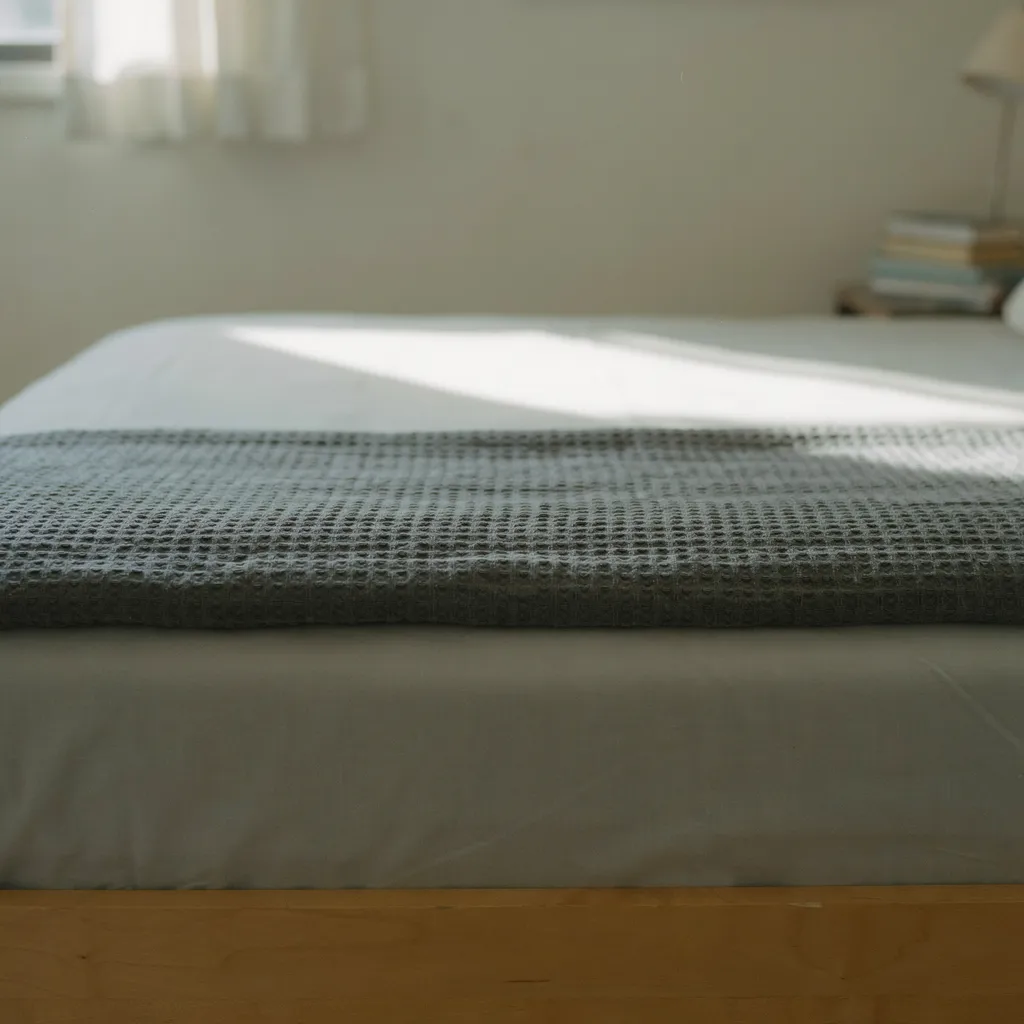
A folded throw at the foot of the bed is one of the most repeated styling details in interior design for a reason — it adds visual weight to an otherwise flat comforter. A heavy waffle-weave cotton throw, at least 50 by 70 inches, folded into a crisp straight band rather than tossed loosely, gives the bed a finished bottom edge and works in charcoal, oat, or sage depending on the rest of the room’s palette.
Beyond the styling benefit, this throw also keeps the primary comforter cleaner by catching dirt from backpacks or shoes set on the bed during the day. Fold it the same way each time you make the bed — a straight, even band rather than a crumpled pile — since consistency is what makes this detail look intentional instead of incidental.
9. Floating Birch Wood Hook Rail
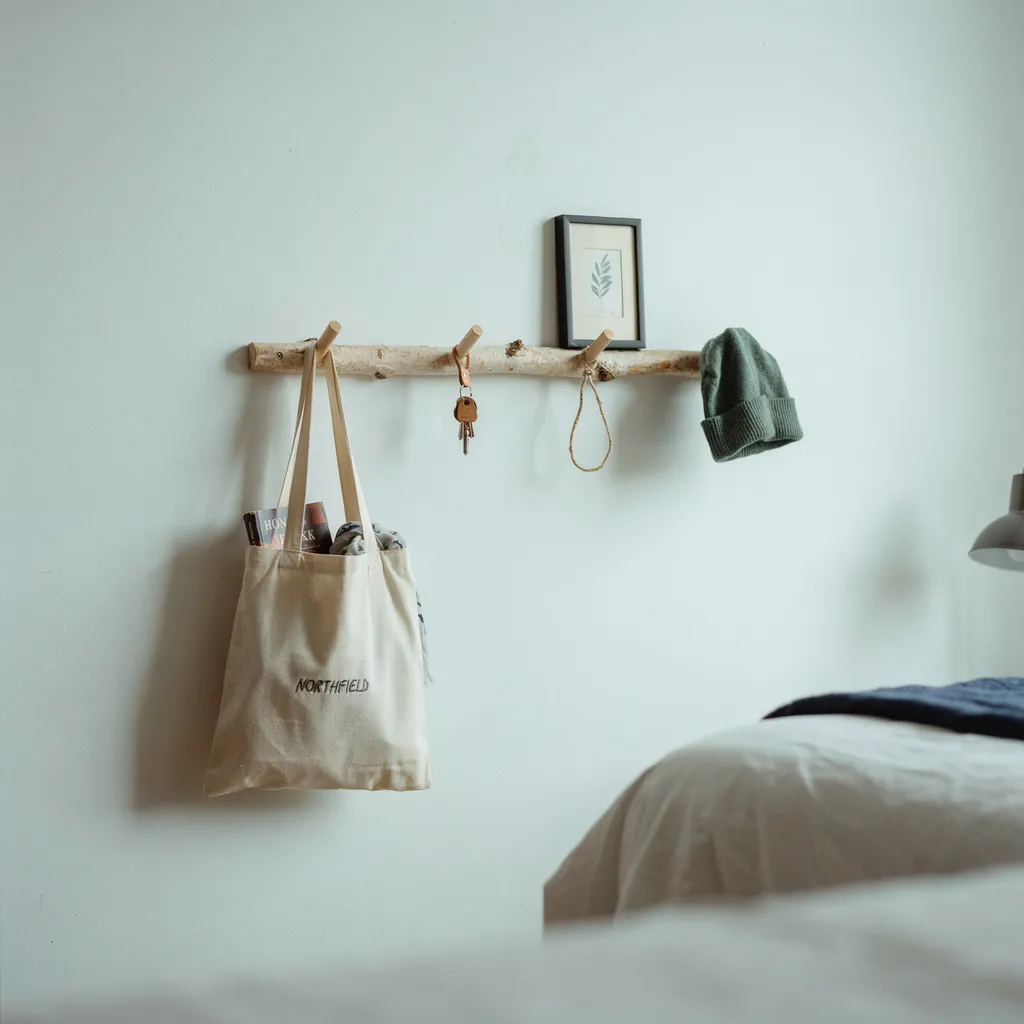
A desk chair draped in coats and backpacks is one of the most common clutter problems in a dorm room. A horizontal birch wood rail with four pegs, mounted about 54 inches above the floor using heavy-duty adhesive hooks or interlocking strips rated for the rail’s weight, gives outerwear and bags a dedicated spot that clears the floor and the desk chair both.
Light birch wood also softens the look of a plain white wall more effectively than a plastic hook strip would, adding a small Scandinavian-style detail without any extra furniture. Dedicate the hooks to daily essentials only — a tote bag, keys, a jacket — so the rail doesn’t turn into a second closet that ends up looking just as cluttered as what it replaced.
10. Textured Faux-Shearling Bolster Pillow
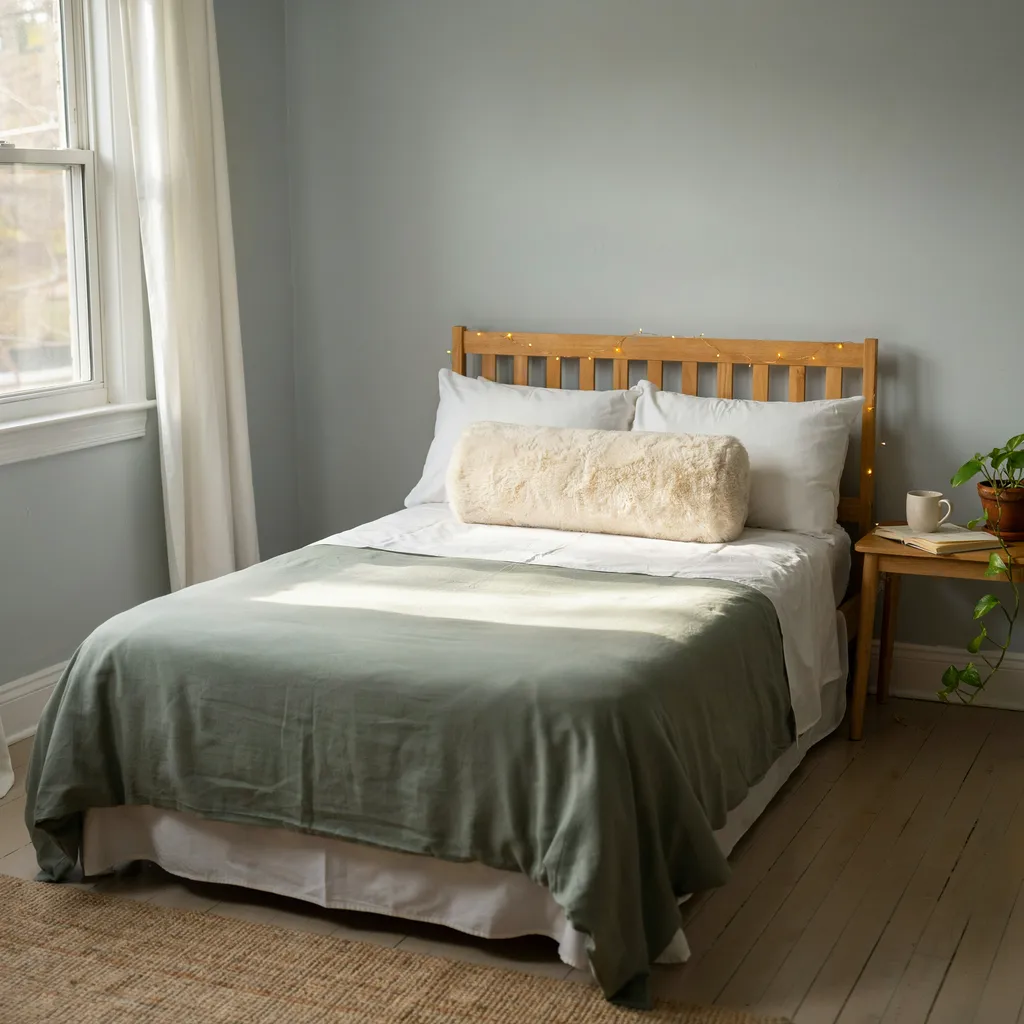
A bed crowded with five mismatched throw pillows usually looks cluttered rather than cozy, especially on a narrow twin XL mattress. One long cylindrical bolster pillow in a textured, nubby cream faux-shearling fabric does more visual work than several smaller pillows combined, and a single quality bolster in this style typically costs around $35 to $45.
The irregular texture of the shearling contrasts nicely against smooth cotton sheets, and because it’s one continuous shape rather than several separate pillows, it takes only a few seconds to set in place each morning. This is one of the simplest updates on this list to execute, since it requires no installation and works on any bed regardless of what else is already on it.
11. Mocha Mousse Accent Pillows

Mocha mousse — a warm, muted brown-beige — is one of the defining neutral tones for 2026 because it bridges cooler shades like sage with warmer ones like terracotta without clashing against either. Rather than repainting anything, introduce it through a pair of 20-by-20-inch velvet pillow covers, which typically cost between $20 and $30 for the pair.
Pair the pillows with ivory or cream bedding so the mocha tone reads as a deliberate accent rather than darkening the whole bed. If the rest of the room leans toward sage and cream already, this color becomes the one warm note that ties the cooler tones together without requiring an entirely new palette to coordinate around.
12. Layered Warm-White Lighting
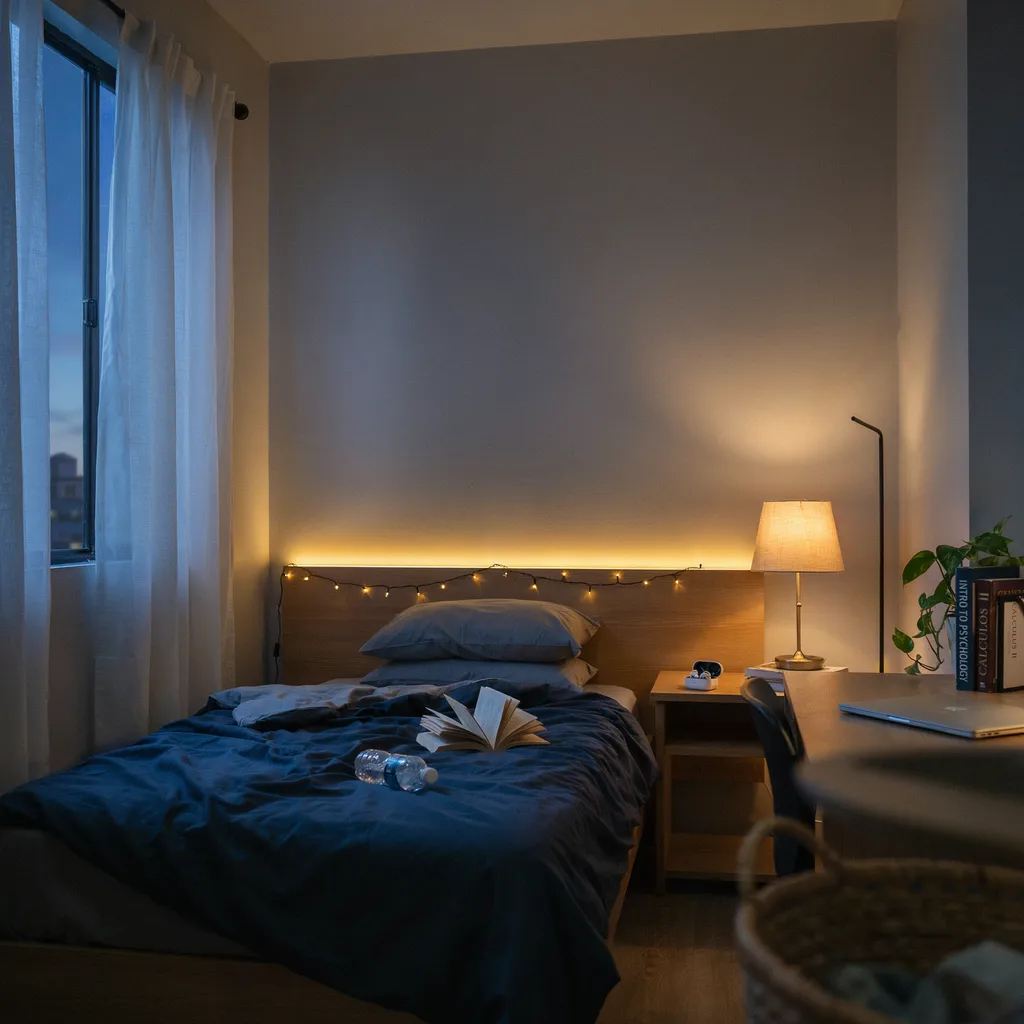
A single fluorescent overhead light gives a dorm room exactly one mood, all day, every day. Layering in a bedside lamp, a slim floor lamp in an empty corner, and a strip of warm-white LED lighting behind the headboard — all using 2700K to 3000K bulbs instead of cool white — lets different parts of the room serve different purposes depending on the time of day.
Floor lamps in this style run between $25 and $45 and typically stand 50 to 60 inches tall, which adds vertical height to a room where most furniture sits low. Turn off the overhead light entirely in the evening and rely on these layered sources instead — the difference in how the same room feels is immediate, without changing a single piece of furniture.
13. Coordinated Woven Storage Baskets
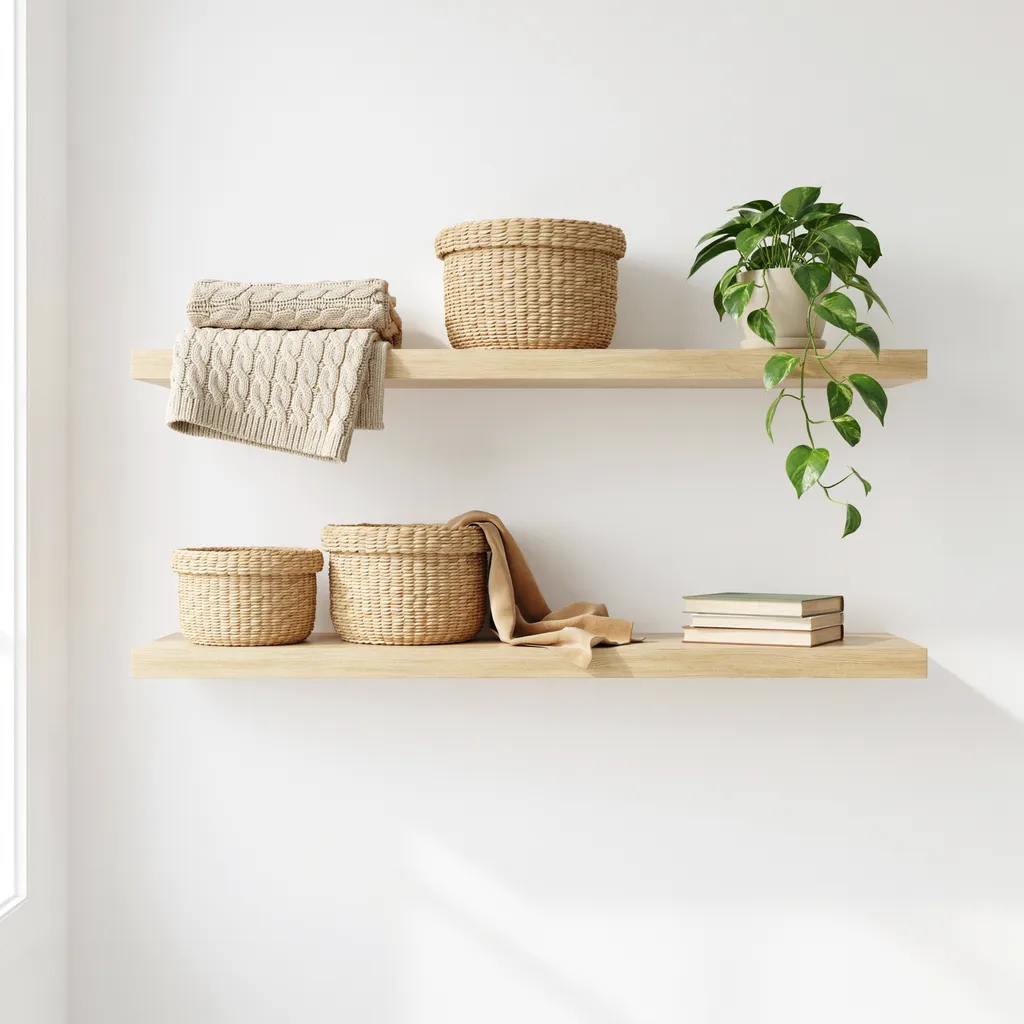
Open shelving in a dorm room often ends up looking like a shallow closet — cords, mismatched containers, and folded laundry all visible at once. Matching woven baskets, around 15 by 15 inches for standard cube shelving, give that same storage a consistent look instead of a pile of unrelated bins, and a set of two or three typically costs between $30 and $45.
Label the inside of each basket — not the outside — so the organization stays functional without adding visual clutter to the shelf itself. Pair the baskets with a few folded throws and stacked books on the open shelf space around them, so the storage and the display elements work together instead of looking like two separate systems sharing the same shelf.
Conclusion:
Putting together a college bedroom that looks designed rather than thrown together comes down to a handful of repeatable decisions, not one large purchase. Start with the bed itself — a headboard panel, a color-blocked throw, or a daybed-style sham arrangement gives the room its anchor point before anything else gets added. From there, small details like a terracotta tray, a seagrass cord basket, or a single bolster pillow do more per dollar than a full matching decor set ever will. Most of these updates use adhesive strips, tension rods, or freestanding pieces specifically because dorm leases rarely allow drilling or paint changes, so check your own building’s policy before mounting anything.
Stick to one or two consistent colors and wood tones throughout the room so individual pieces read as coordinated rather than randomly collected over move-in weekend. None of these ideas require specialty tools, and most fall well under $300 combined for an entire room. Build the space gradually across the semester rather than trying to finish everything on day one — a few of these updates, like the wall decal or storage baskets, are easiest to add once you know how the room is actually being used. The result is a bedroom that looks intentional from the doorway, regardless of how temporary the furniture underneath actually is.
For more dorm and bedroom styling inspiration, follow NestellaHome on Pinterest.
Frequently Asked Questions:
Q1. What size bedding fits a college dorm bed?
Most college dorm beds use a twin XL mattress, measuring 38 by 80 inches, which is longer than a standard twin. Always confirm your specific dorm’s mattress size before ordering, since a regular twin sheet set will fall several inches short at the foot.
Q2. Will adhesive strips actually hold a headboard panel without damaging the wall?
Heavy-duty adhesive strips rated for 5 to 10 pounds per strip generally hold lightweight panels well and remove cleanly without paint damage, but always check your housing contract’s specific wall policy first. On solid cinder block or concrete walls, adhesive strips work better than toggle anchors, which require a hollow cavity to expand properly.
Q3. How much should I budget for a full college bedroom update?
Most individual ideas on this list cost between $12 and $60, and combining six to eight of them for a full room typically totals under $300. Spreading purchases across move-in week and the following month makes the cost easier to manage.
Q4. What’s the easiest idea to start with if I’m short on time?
A bolster pillow or a desk tray are the simplest starting points since both require no installation and add an immediate styled detail. The headboard panel and layered lighting make the biggest overall difference but take slightly more setup time.
Q5. Do these ideas work in a shared dorm room with a roommate?
Yes — most of these ideas are built around one twin XL bed and one desk, so they apply directly to each side of a shared room independently. A privacy screen and a consistent color palette work especially well in shared spaces since they keep two different setups from visually competing with each other.