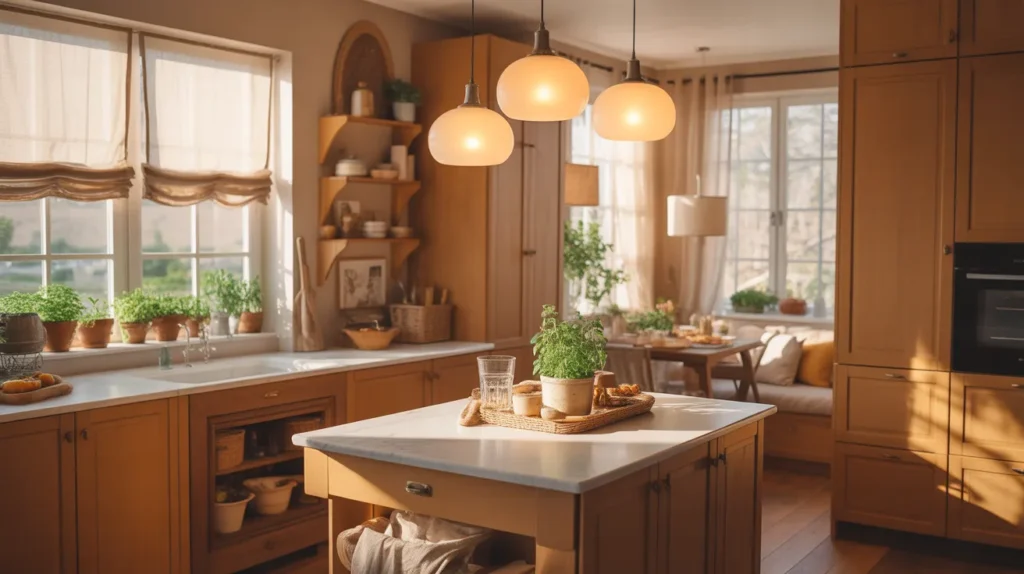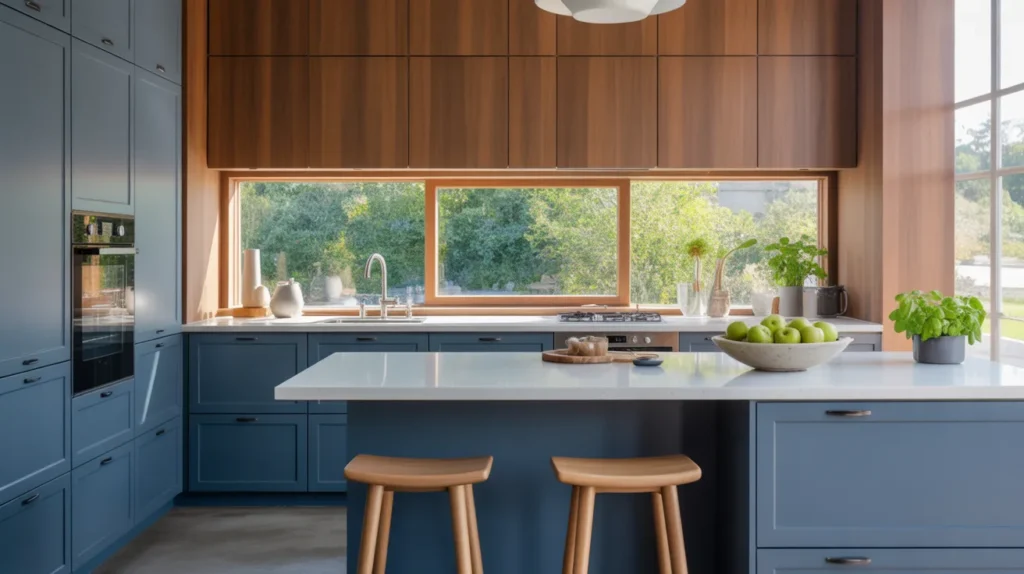
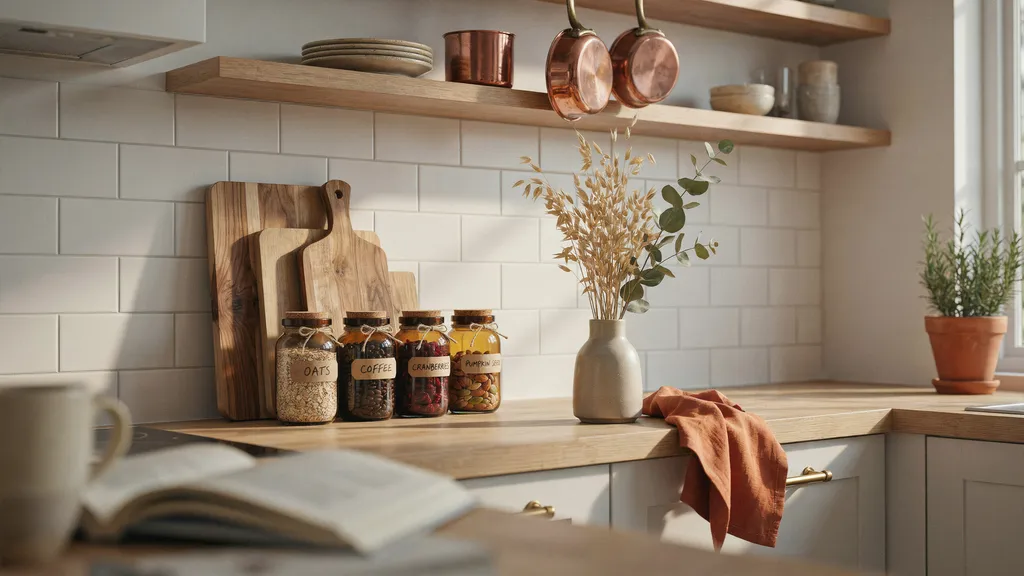
A cluster of unglazed terracotta pots on open shelving does more for a kitchen than any garland ever could, and that’s exactly where these 18 Fall Kitchen Decorating Ideas to Try begin. Swap light summer linens for heavyweight waffle-weave towels in mustard and rust, and the counters already read as autumn.
Kitchens shift fast once the small stuff changes. Leaning dark acacia boards behind a brushed copper utensil crock, or filling amber glass jars with pantry staples, are the kinds of fall kitchen decorating ideas that take twenty minutes and hold up through daily cooking.
Rather than chasing disposable trinkets, this list sticks to a few durable materials — copper, stoneware, raw wood — and builds around what you already own. Each idea comes with an exact size, price, or how-to detail, so nothing here requires guesswork.
1. Lean Layered Wooden Cutting Boards Against the Backsplash
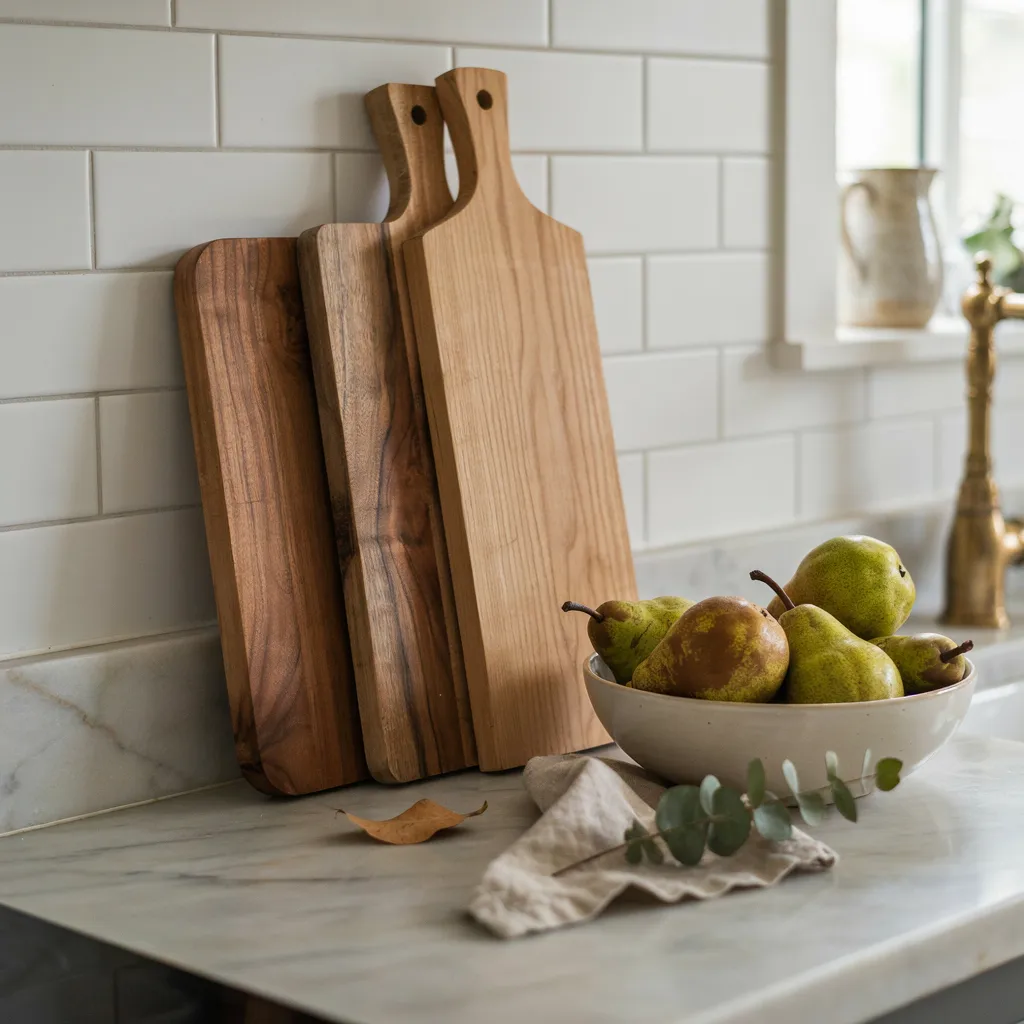
Leaning boards against the backsplash turns everyday prep tools into part of the room’s color story. Set the largest rectangular board, around 14 to 18 inches tall, flat against the wall first, then overlap a smaller arched board slightly in front of it. Small felt pads along the back edges keep the stack from sliding whenever the counter gets bumped during cooking.
A set of three quality hardwood boards typically runs $35 to $70. Wipe each surface with food-safe mineral oil every couple of weeks to keep the grain rich, since this display only works if the wood still looks cared for.
2. Fill Amber Glass Jars With Pantry Staples
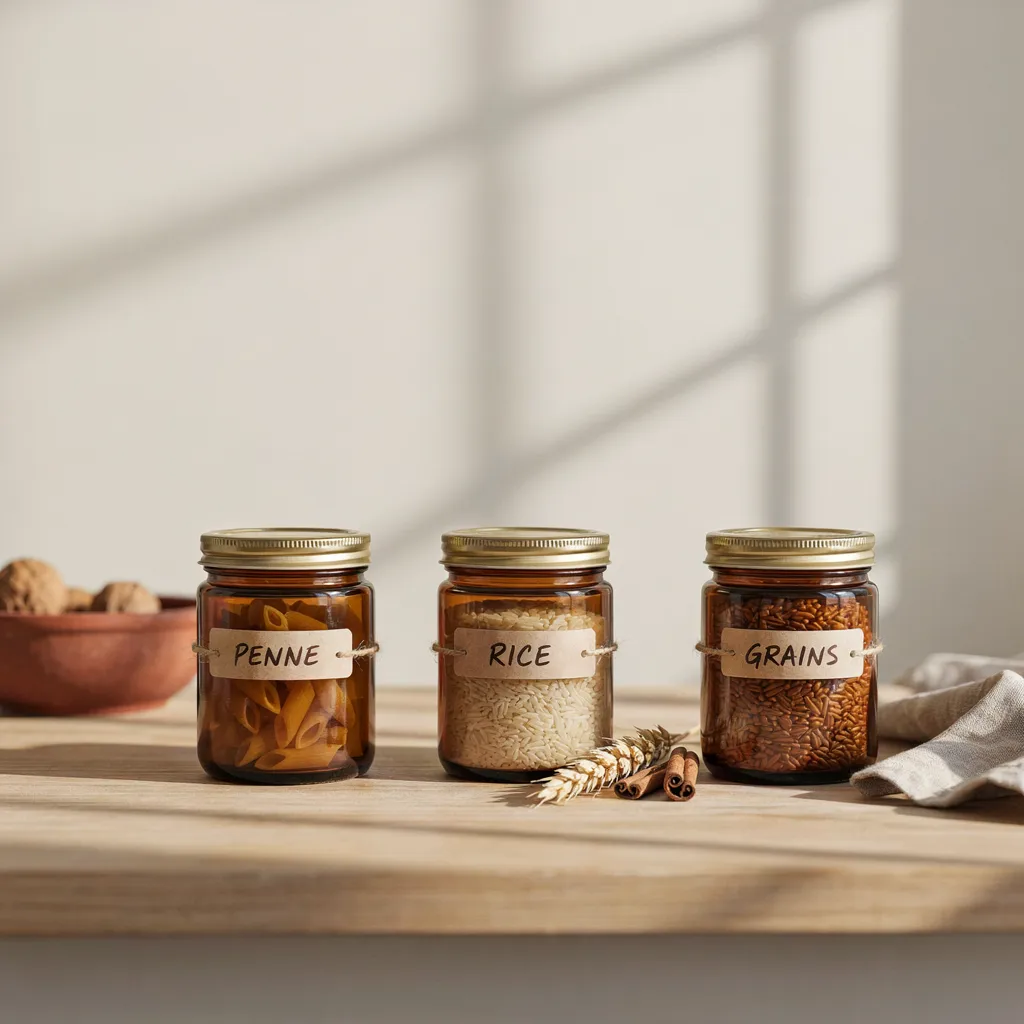
Amber glass changes a counter’s mood even when what’s stored inside stays completely ordinary. Choose jars in three graduated sizes, around 6, 8, and 10 inches tall, with airtight lids so dry goods like oats or rice stay fresh in view. The tinted glass filters afternoon light into a soft golden cast that clear glass simply can’t produce.
A three-piece amber jar set generally costs $25 to $50. Group them by height rather than lining them up flat, since a slight stagger adds visual rhythm instead of looking like uniform pantry storage. This same swap is one of the core starting points in our 8 Fall Kitchen Decor Ideas That Work if you want a shorter list to begin with.
3. Display Copper Cookware on Open Shelving
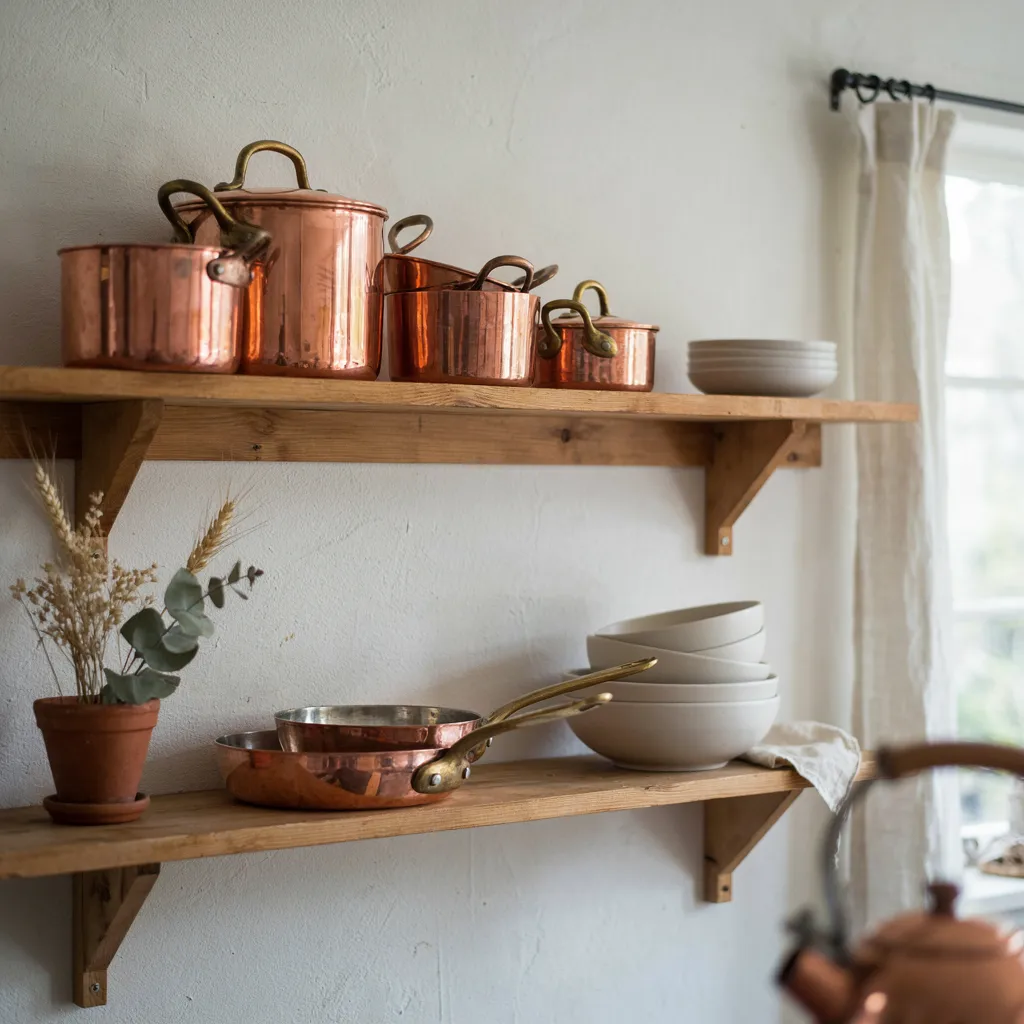
Copper catches light in a way stainless steel or nonstick coating never quite manages, which makes it worth pulling out for display. Bring out two or three copper-bottomed pots with visible patina, nesting them beside plain white bowls or glass jars so the metallic tone has something quiet to bounce light against.
Vintage copper pans at estate sales or thrift shops typically run $20 to $55 each. Polish with a mixture of coarse salt and lemon juice every month or two to lift oxidation without scratching the surface underneath.
4. Swap in Ochre or Rust Waffle-Weave Towels
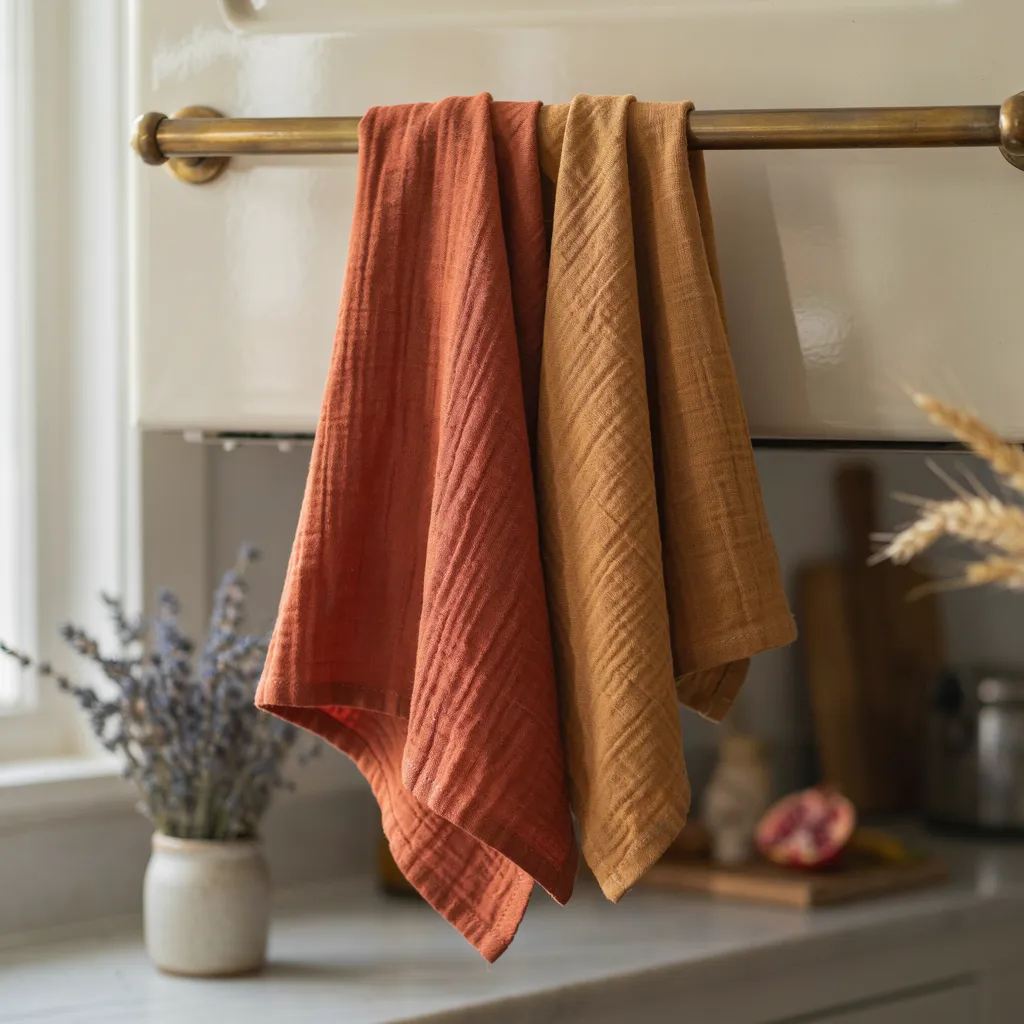
Towels get replaced often enough that this is one of the simplest seasonal changes available. Choose a pair of waffle-weave or slubbed linen towels around 18 by 28 inches in rust, ochre, or burnt umber, and drape one over the oven handle while folding the second beside the sink.
A two-pack of pre-washed linen towels costs $14 to $28. Wash in cold water and line-dry or tumble-dry on low heat to keep the color from fading quickly, since these towels see far more daily use than most items on this list.
5. Replace Cabinet Hardware With Brushed Brass
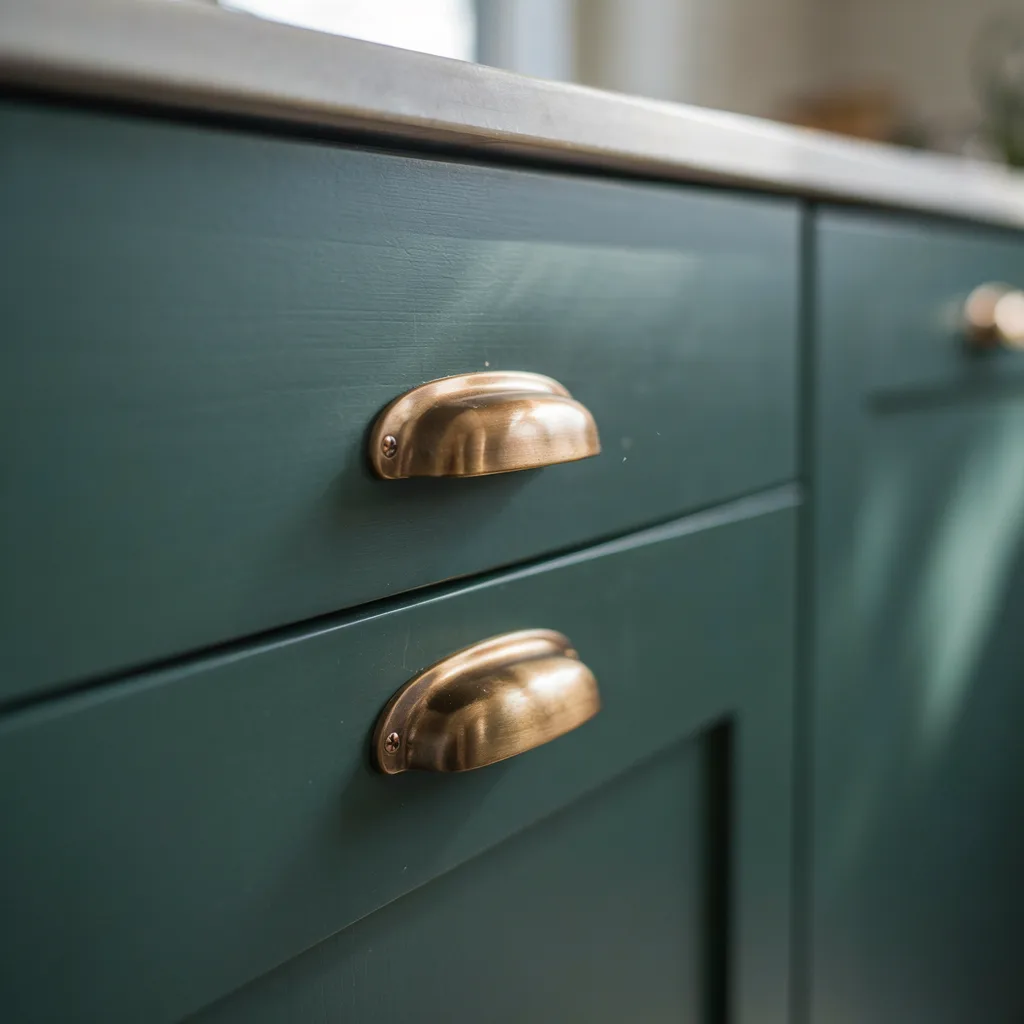
Hardware is a small project that changes how the whole kitchen reads at a glance. Measure the center-to-center hole spacing on your existing pulls, typically 3 or 3.75 inches, before ordering replacements so the new hardware lines up without extra drilling.
Individual brass pulls cost $3 to $10 each, meaning a full kitchen update usually lands between $60 and $130. Installation takes a basic screwdriver and roughly five minutes per drawer, fitting into a single evening rather than a full weekend.
6. Tuck Terracotta Herb Pots Onto Open Shelves
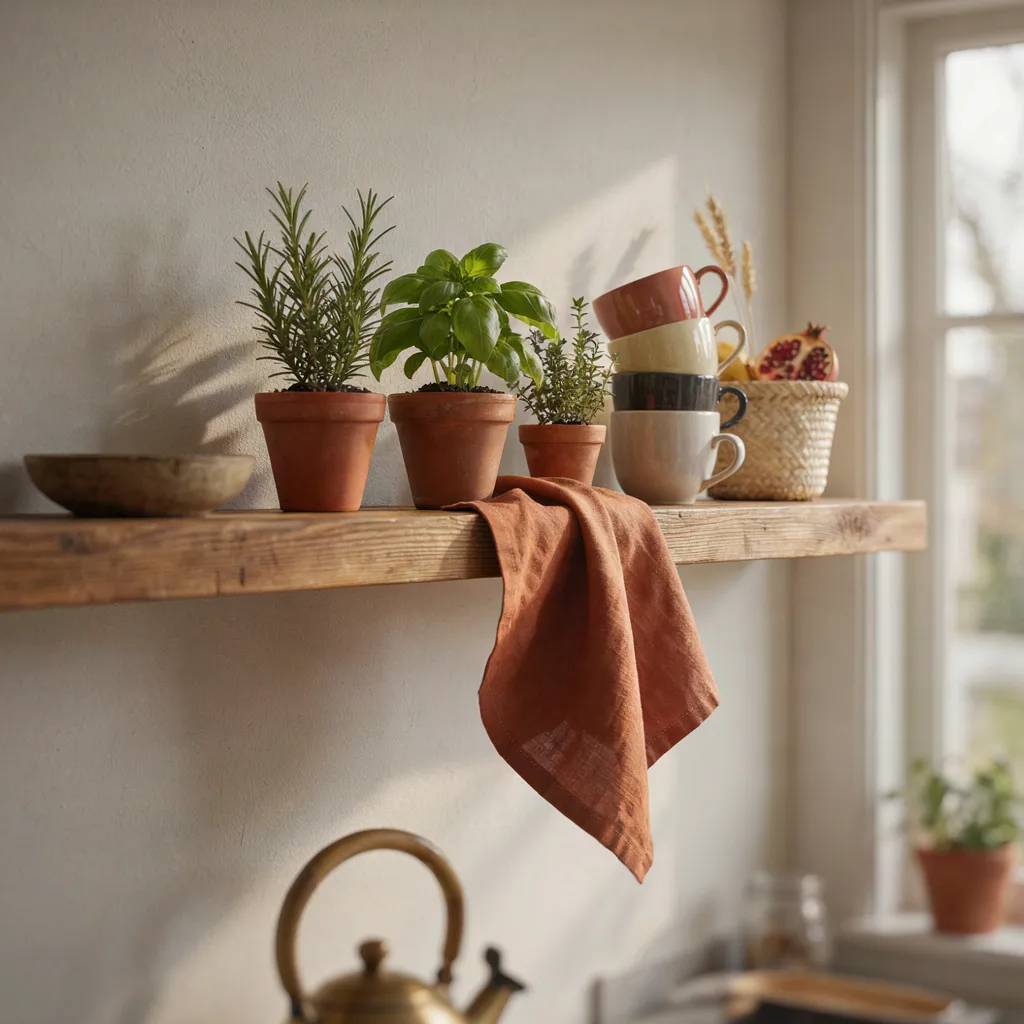
Open shelves put whatever’s stored on them on constant display, which makes material choice matter more than usual. Tuck small unglazed terracotta pots, around 3 to 4 inches wide, beside a cluster of stoneware mugs in cream or olive glazes, and plant rosemary or thyme so the display stays useful rather than purely decorative.
Terracotta pots cost $3 to $6 at most garden centers, while stoneware mugs run $10 to $22 each. Stagger the pieces diagonally across shelf levels instead of lining them up straight, and confirm the shelf brackets are anchored into studs before adding the extra weight.
7. Build a Spice Station on a Woven Tray
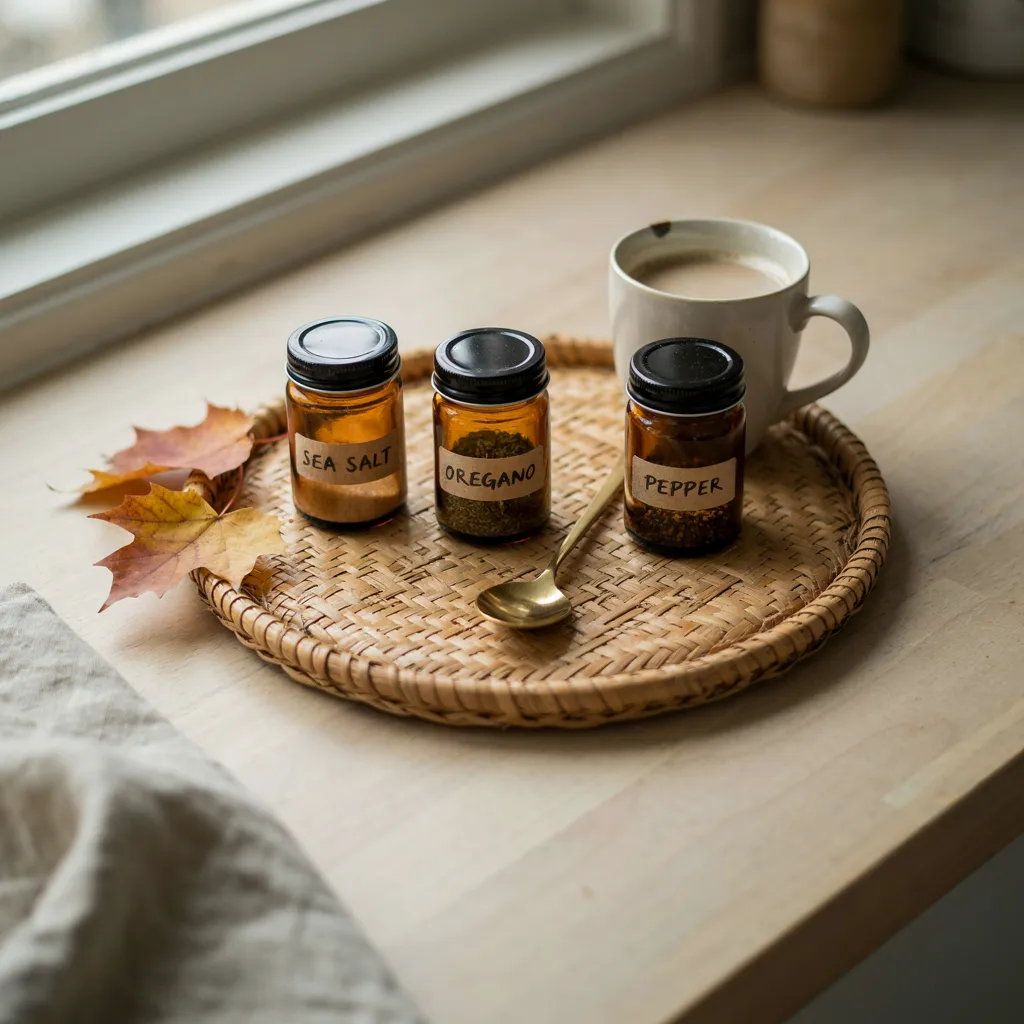
Corralling loose spice jars onto one tray keeps the counter tidy while adding a natural texture flat surfaces usually lack. Choose a round rattan tray about 12 to 14 inches across, and fill it with amber glass jars holding cinnamon sticks, star anise, or whole nutmeg, which the tinted glass helps shield from direct sunlight.
A sturdy woven tray with a matching set of labeled jars typically costs $28 to $45 total. Push the tray toward one end of the counter near the stove, leaving the rest of the surface completely clear for actual prep work.
8. Arrange Dried Wheat Stems in a Stoneware Vase
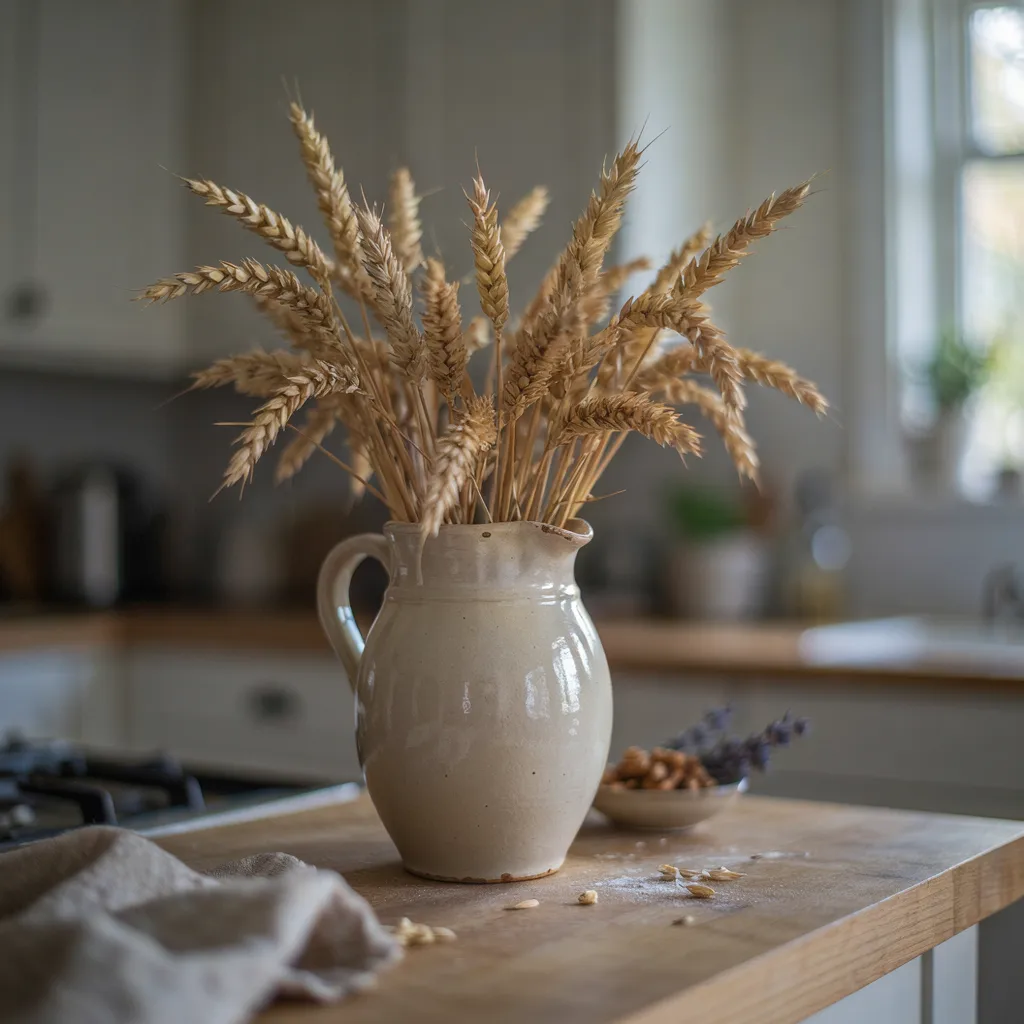
Dried stems bring height to an island without any watering or upkeep required afterward. Choose a heavy stoneware pitcher, since its weight keeps top-heavy stems from tipping during meal prep, and bundle four to six stalks of dried wheat or burgundy bunny tails, trimming the ends so the foliage sits roughly one and a half times the vase’s height.
Dried stem bundles from craft shops or florists typically run $12 to $28. Position the arrangement slightly off-center on the island, away from the sink’s splash zone, and clear dust from the fronds every few weeks with a hairdryer set to cool, low airflow.
9. Roll Out a Rust-Toned Kitchen Runner
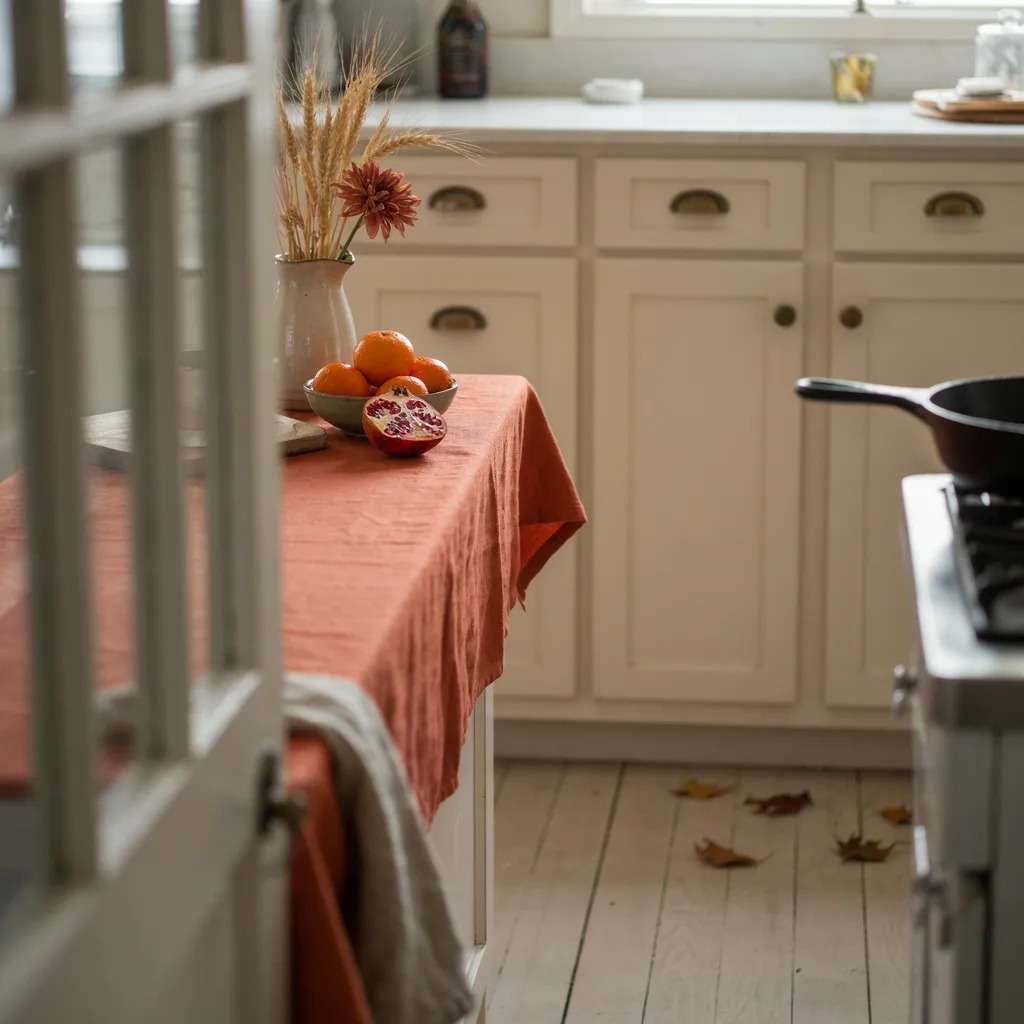
A runner along the main cabinet stretch introduces fall color without touching anything permanent. Choose a cotton or washable flat-weave runner around 2.5 feet wide and 6 to 8 feet long, sized to clear cabinet doors without bunching underfoot.
A washable runner in this size typically costs $25 to $60. Keep the pattern simple, especially if the backsplash already has visible texture, since two busy patterns competing for attention tend to look cluttered rather than styled.
10. Line the Windowsill With Muted Mini Pumpkins
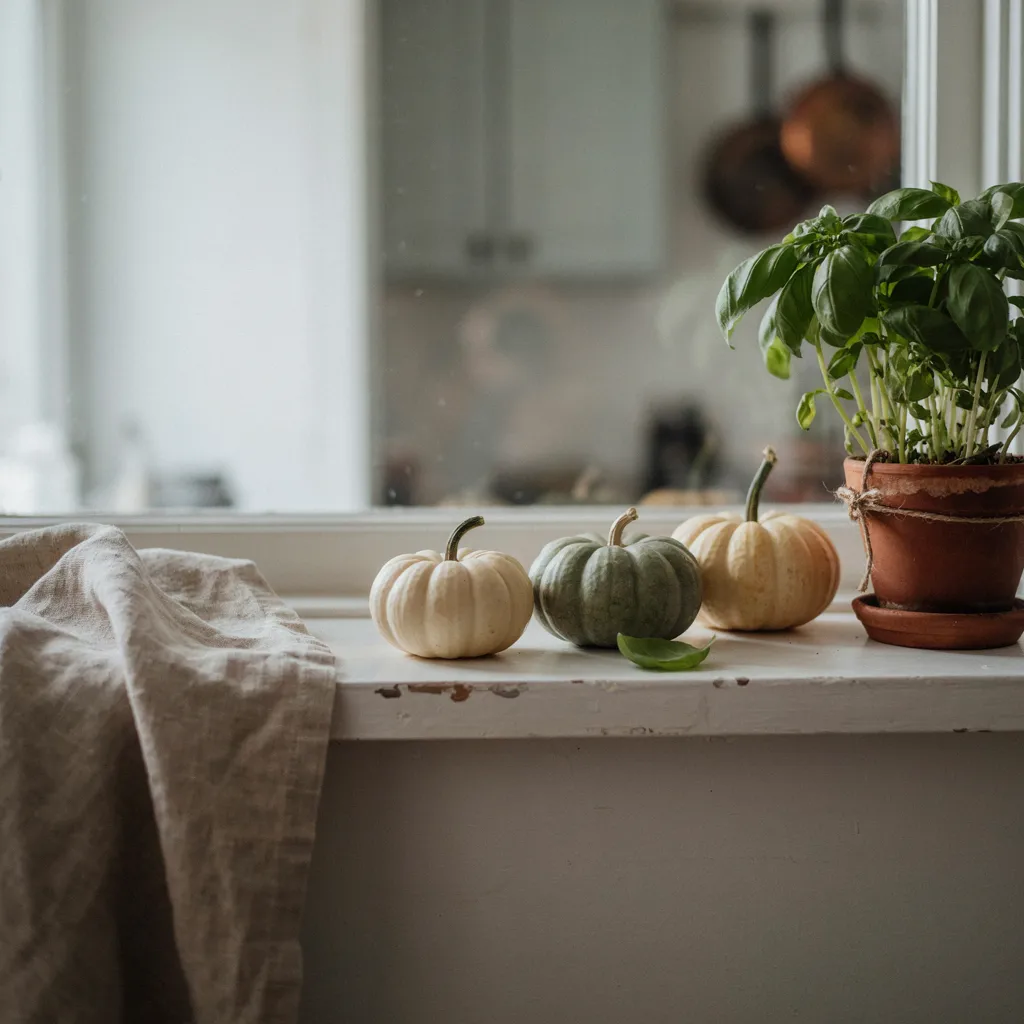
A windowsill display works especially well because it uses space that would otherwise sit empty. Select three to five small pumpkins in cream, muted sage, or soft tan rather than bright orange, arranging them along the ledge so they catch daylight without blocking it from the counter below.
Firm, unblemished mini pumpkins cost $1 to $3 each at farm stands and stay fresh indoors for up to eight weeks. Line the sill with a strip of wax paper underneath first, since condensation from the fruit can leave rings on painted wood over time.
11. Set Up a Coffee Station on a Wood Tray
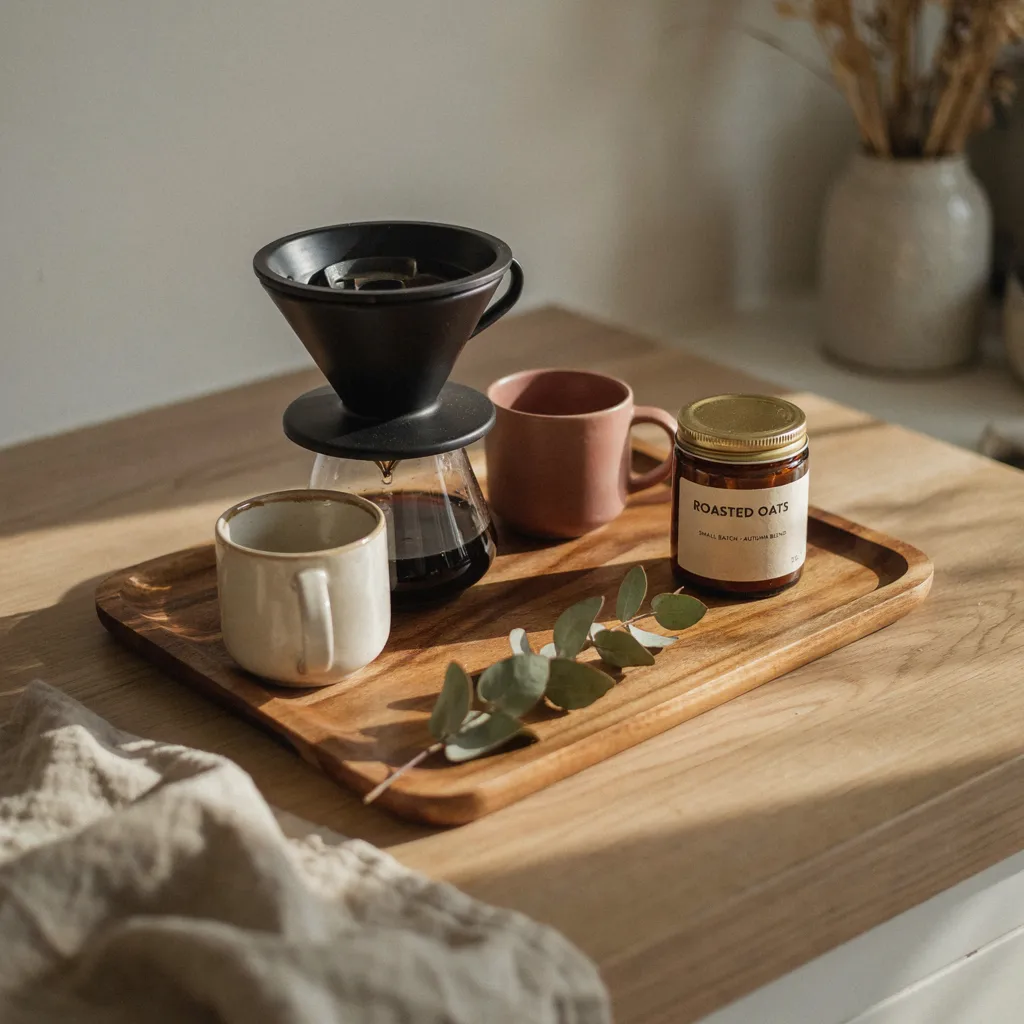
A wood tray groups coffee essentials into one movable zone instead of letting them spread across the counter. Choose a walnut or acacia tray around 12 by 16 inches, large enough for a coffee maker, two mugs, and one small accent like an amber jar placed toward the back.
A tray this size costs $20 to $45. Keep the front edge clear for daily use, and choose a rectangular shape over a round one if the counter is narrow, so the whole setup sits neatly against the backsplash.
12. Fit Woven Baskets Into Open Storage
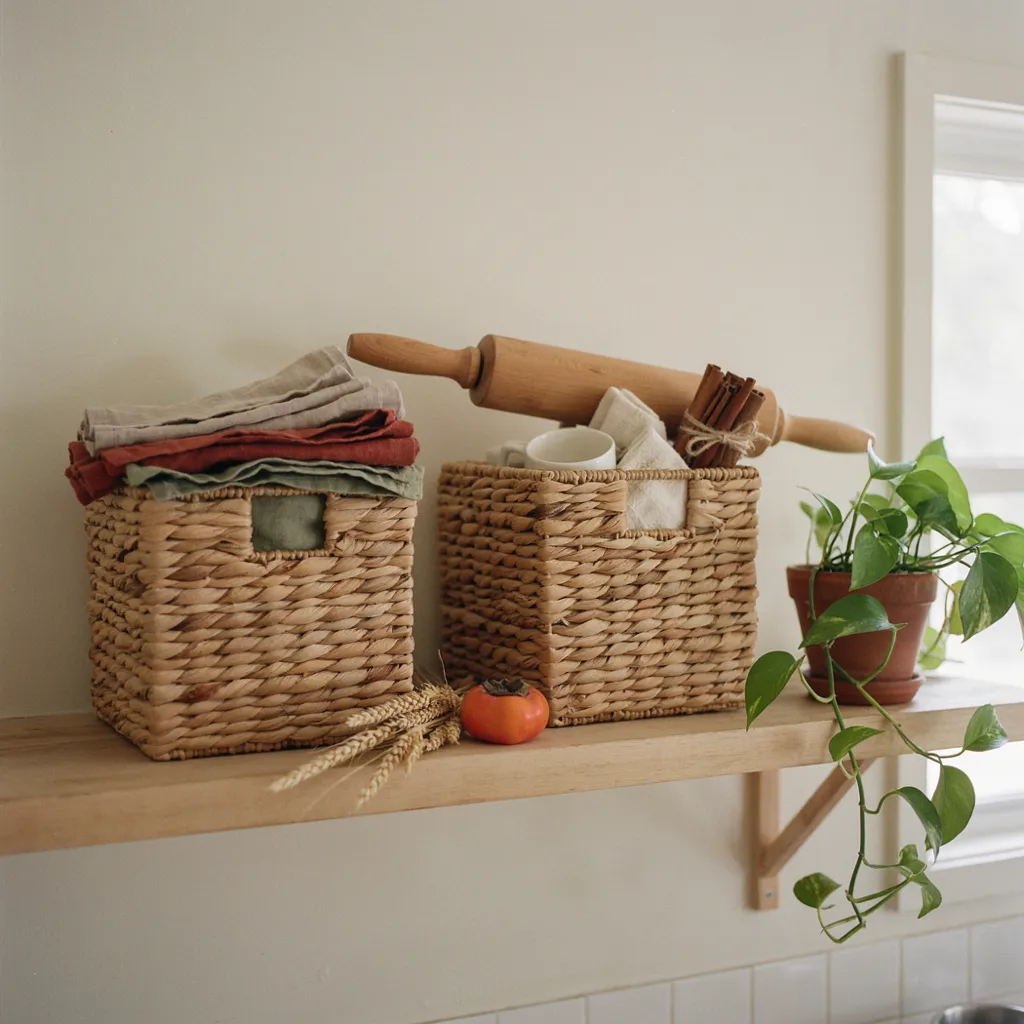
Woven baskets earn their spot by combining storage with texture rather than adding another purely decorative object. Fit a seagrass or water hyacinth basket into a shelf cubby, leaving about an inch of clearance on each side, and use it to hold folded napkins, extra baking tins, or pantry stock that doesn’t need to stay in view.
Durable woven baskets cost $15 to $32 each. Tuck one rust-colored textile inside so a hint of autumn color shows without needing to fill every shelf with matching containers.
13. Layer In a Checked Cotton Runner
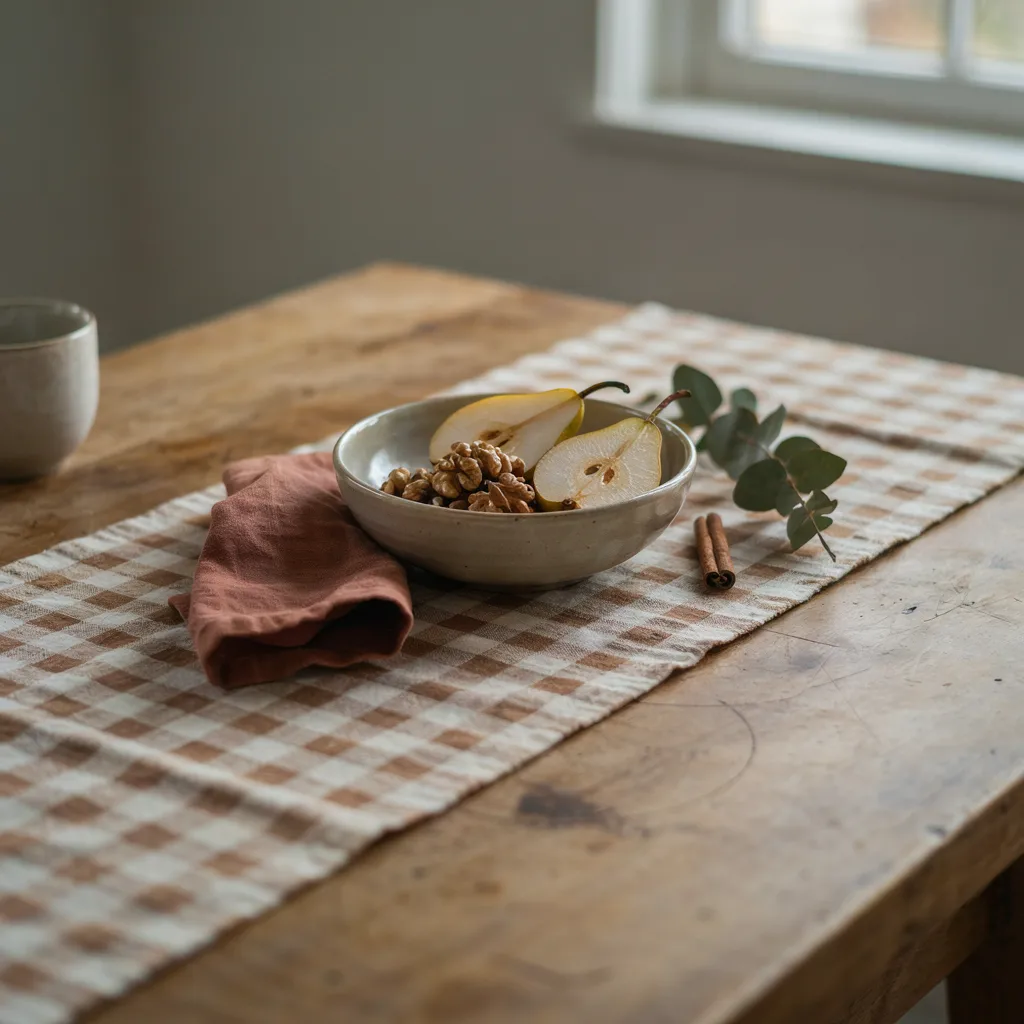
A checked runner adds pattern without requiring a full linen swap elsewhere in the kitchen. Choose one in cream, rust, or brown, sized around 14 inches wide for a standard table, and keep the centerpiece simple, such as a wooden bowl or single ceramic vase, so the two elements don’t compete for attention.
A cotton runner in this size typically costs $15 to $35. If the surrounding kitchen already has a patterned backsplash, opt for a smaller check rather than a bold plaid to keep the overall look balanced instead of busy.
14. Drape a Slim Autumn Garland Along a Shelf
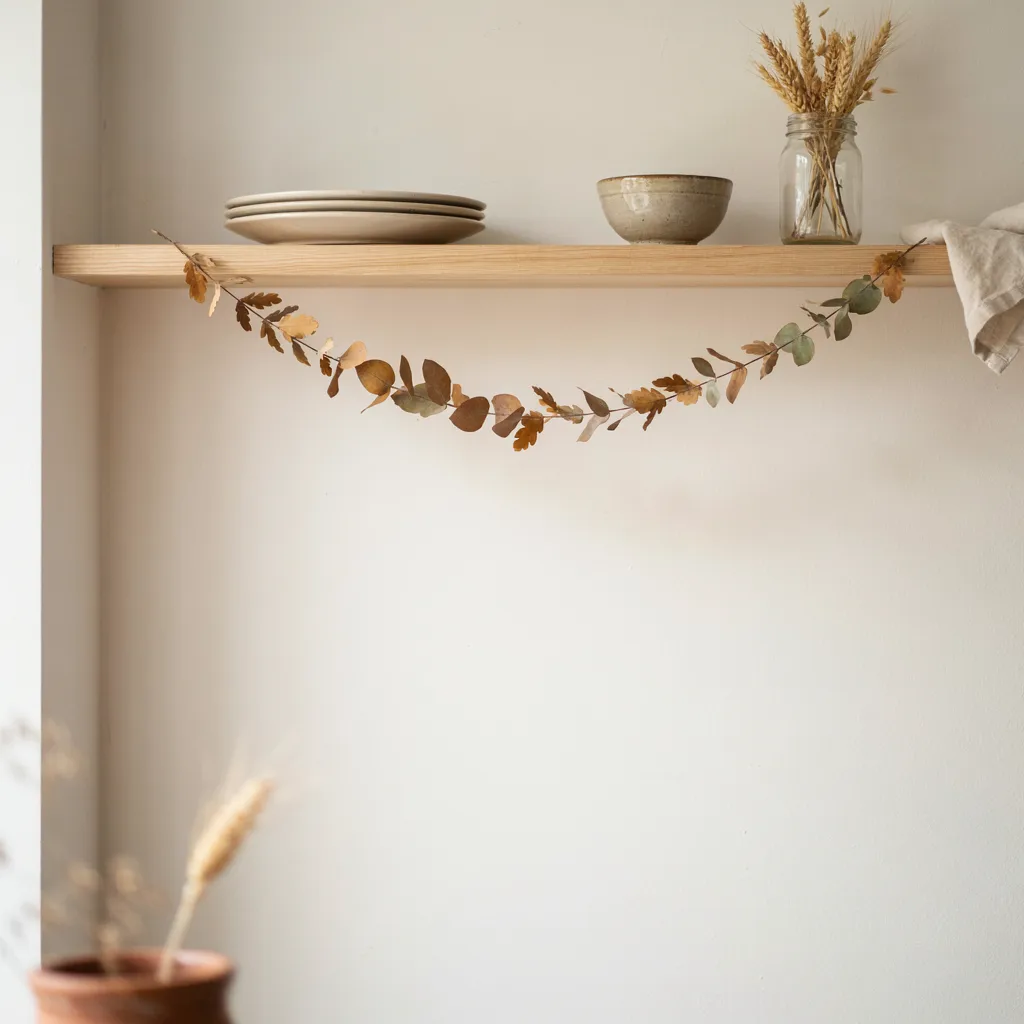
A narrow garland adds a seasonal detail to a wall without using any countertop space at all. For a shelf around 4 feet wide, choose a garland roughly 5 to 6 feet long in muted olive, brown, or rust tones, and drape it along the front edge using small removable clips that won’t mark the wood.
Faux garlands generally cost $15 to $35. Skip pairing it with extra pumpkins or ribbon and let the greenery stand as the single seasonal detail on that shelf, since one clear accent reads better than several competing ones.
15. Hang a Braided Garlic and Herb Swag
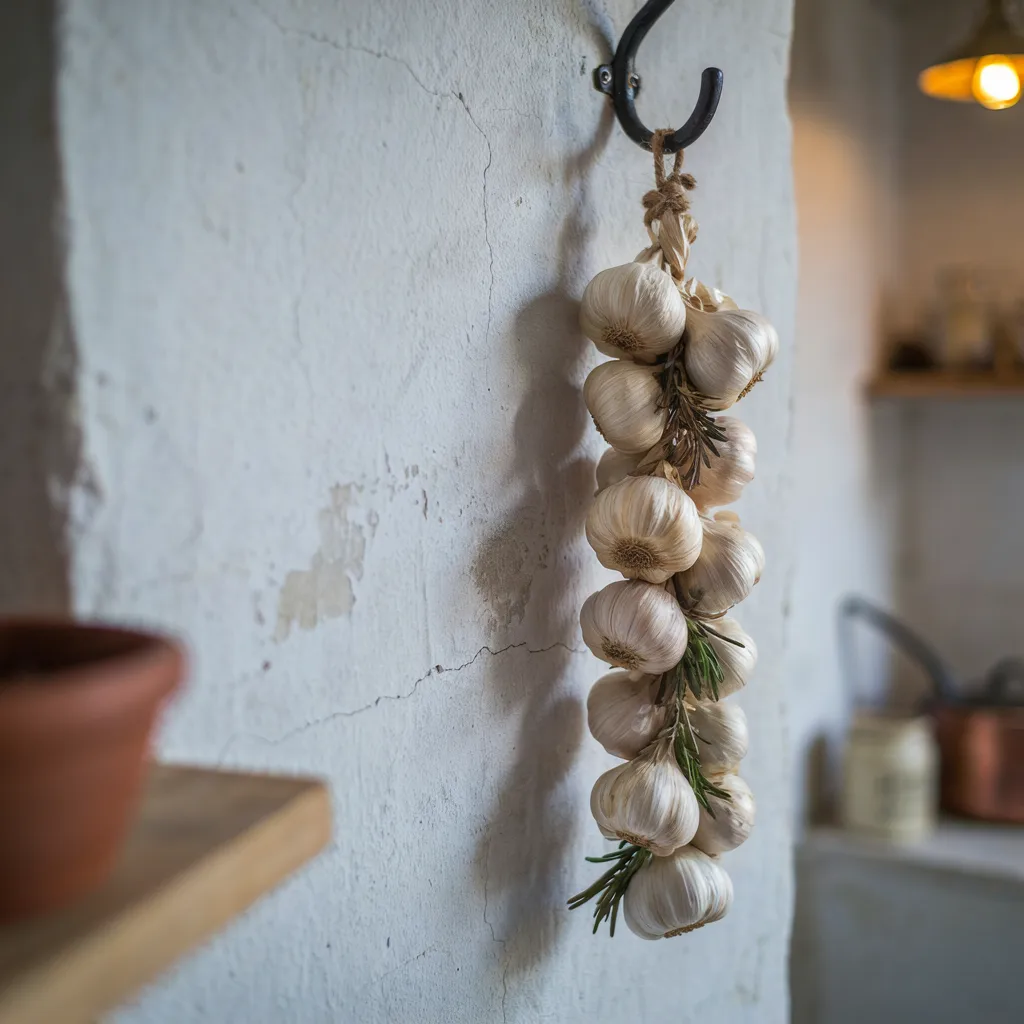
A braided herb swag brings traditional texture to a blank wall while staying genuinely useful during cooking. Braid dried garlic bulbs, bay leaves, and rosemary stems together with jute twine into a bundle 12 to 18 inches long, then hang it from a small iron hook near the main prep area, away from steam sources like a kettle or dishwasher vent.
Making one costs roughly $10 to $18 in raw materials, or pre-braided versions run similar prices at farm markets. Pluck a bay leaf or garlic clove directly from the braid when cooking, so the display slowly earns its place rather than sitting untouched.
16. Mount a Brass Rail for Hanging Utensils
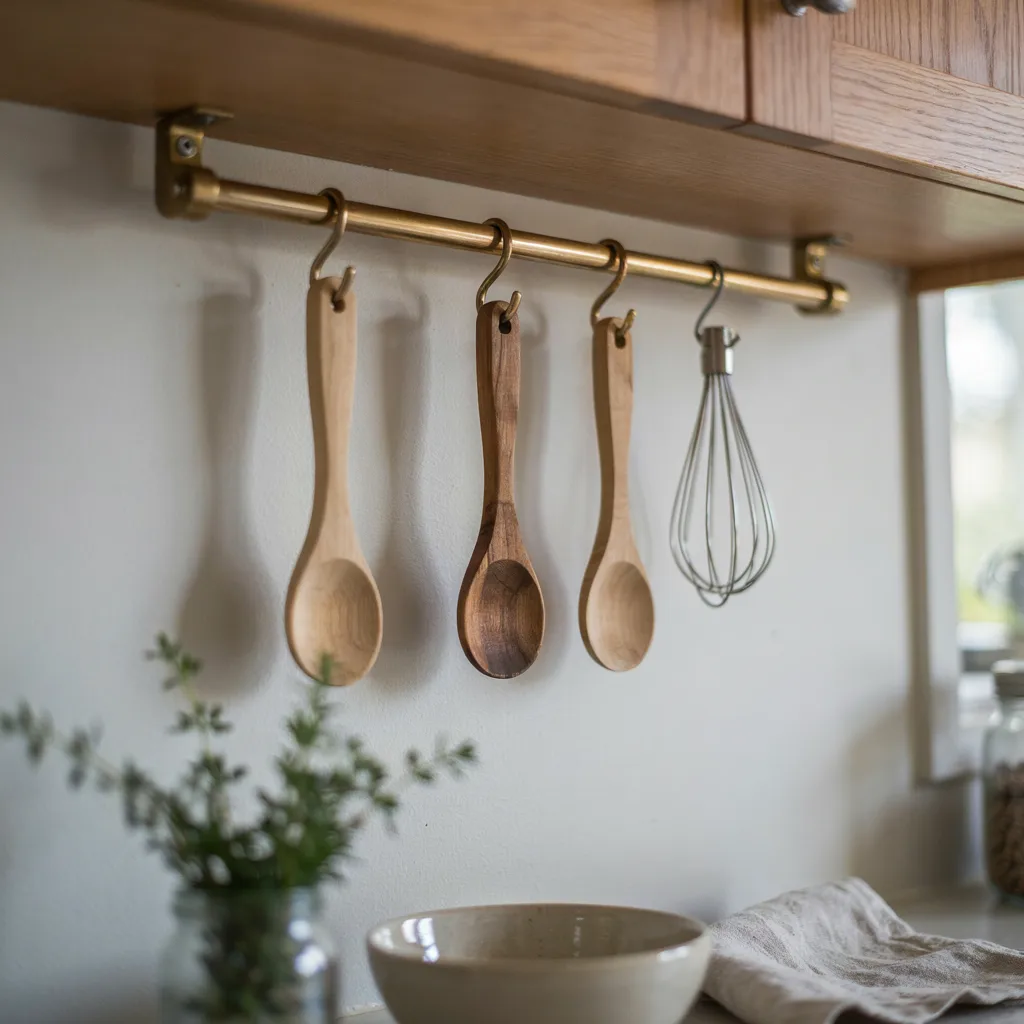
A slim brass rail beneath the upper cabinets puts frequently used tools within reach while adding a warm metallic line to the backsplash. Mount a 24-inch brass rod with matching S-hooks, then hang two or three wooden spoons and a whisk so the tools stay visible instead of buried in a drawer.
A rail kit with hardware and hooks costs $28 to $50. Use a masonry drill bit if mounting into tile, working slowly to avoid cracking the surrounding surface during installation.
17. Add a Footed Wooden Riser Near the Cooktop
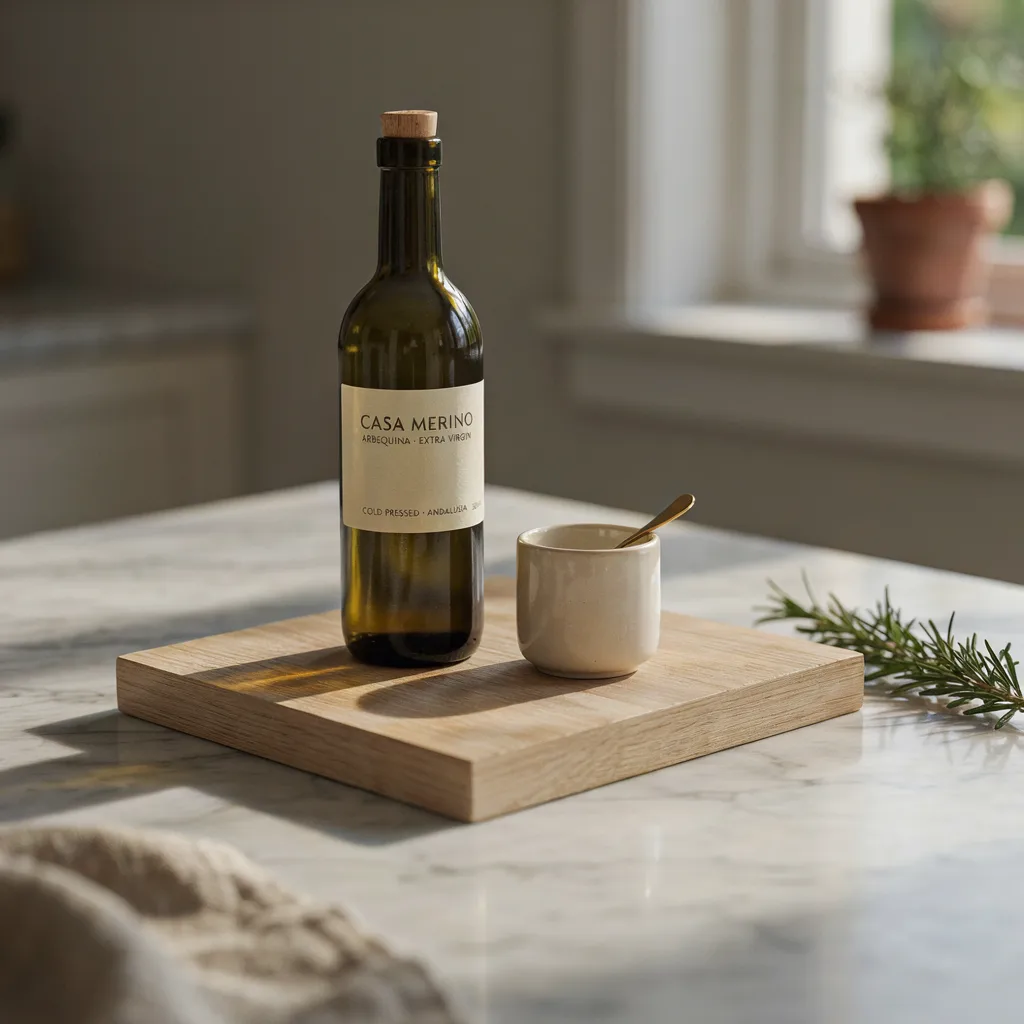
A footed riser lifts everyday condiments off the counter, clearing grease buildup from the surface below while adding a bit of height variation nearby. Choose a reclaimed wood or acacia riser around 2 to 3 inches tall, and set it beside the cooktop holding an oil cruet, a pepper grinder, and a small salt dish.
A sturdy hardwood riser typically costs $20 to $40. Treat the wood with food-safe beeswax occasionally to protect it from splatters, and look for one with rubber feet so it won’t slide on smooth quartz or granite.
18. Fill a Matte Black Bowl With Seasonal Fruit
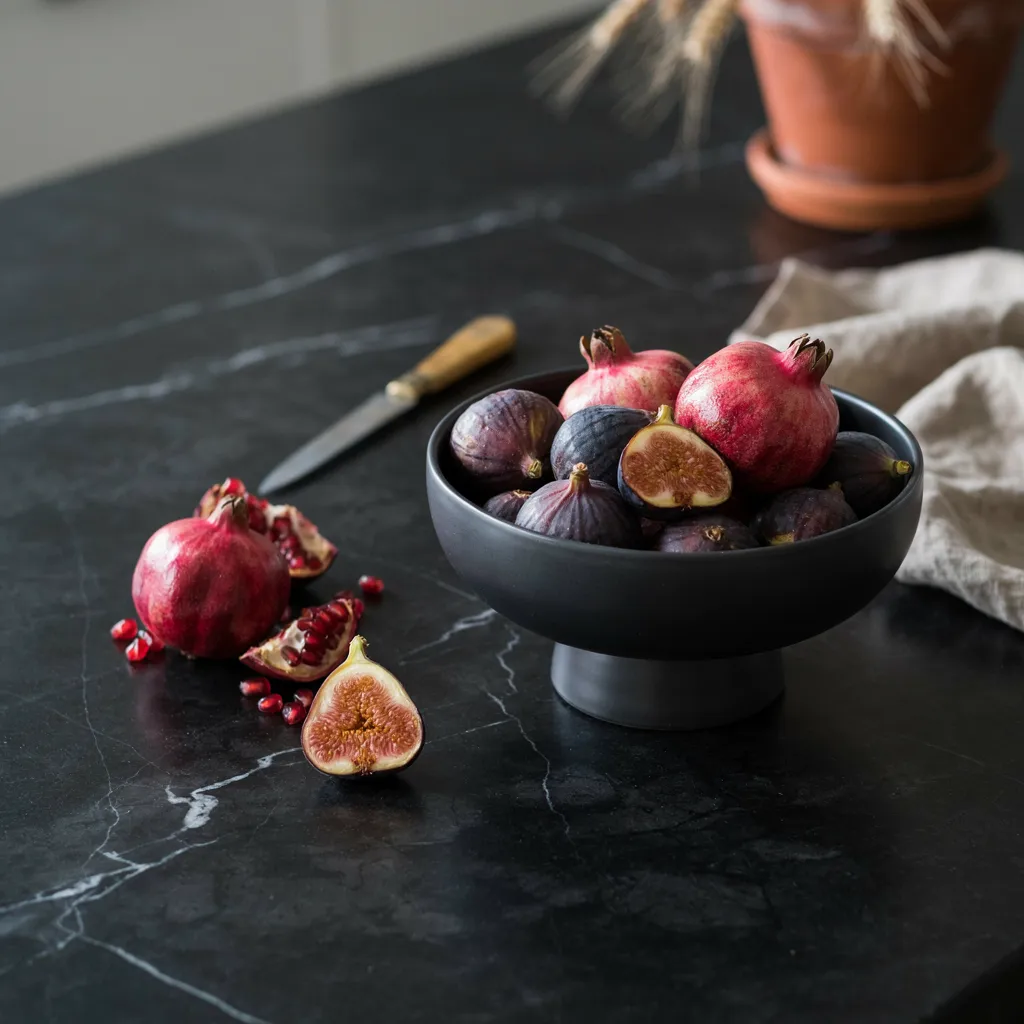
A dark ceramic bowl gives seasonal produce somewhere to sit while making the colors themselves the main event. Choose a matte black pedestal bowl around 10 to 12 inches across, and fill it with whole pomegranates, figs, or small green pears, letting the dark surface pull focus toward the deep reds and greens instead of competing with them.
Matte ceramic or cast iron bowls in this size run $25 to $50. Replace the fruit as it’s eaten rather than treating the bowl as a static display, keeping the centerpiece both functional and genuinely seasonal.
Conclusion:
None of these eighteen projects require a remodel or a large budget to make a visible difference. Start with the fastest, lowest-cost swaps, like towels or a windowsill display, before moving toward hardware, a rail, or a full cutting board arrangement. Pay attention to the specific details throughout this list, since board thickness, jar sizing, and tray dimensions all shape how finished the final result looks.
A budget under $30 comfortably covers towels, a garland, or a small riser, while $100 to $200 stretches across hardware and a full cutting board set. Spread the work across a few days instead of tackling everything at once, and favor pieces that still serve a daily purpose over purely decorative objects. Picking four or five ideas that fit your actual kitchen will always look more intentional than crowding every surface at once. Specific, functional changes consistently outperform generic seasonal clutter. For more curated autumn kitchen boards and fresh seasonal inspiration, follow Nestella Home on Pinterest.
FAQ:
1. What’s the fastest way to start on these fall kitchen decorating ideas?
Swapping in ochre or rust towels, or lining the windowsill with mini pumpkins, both take under fifteen minutes and cost less than $30.
2. How many fall accents should a kitchen have at once?
A good guide is one larger display, like a shelf or island arrangement, plus three or four smaller accents such as towels, jars, or a garland.
3. Can these fall kitchen decorating ideas work in a small kitchen?
Yes. Scaled-down versions, like a single amber jar trio or a small windowsill display, work well in compact kitchens without taking up needed counter space.
4. What materials pair well together for an autumn kitchen look?
Walnut wood, amber glass, brushed brass, and terracotta all pair naturally without competing, especially against cream or dark cabinetry.
5. How long does it take to try several of these ideas at once?
Most single projects take 10 to 30 minutes; combining five or six ideas from this list typically fills one afternoon.