If your console table currently holds a random mix of keys, mail, and decor that doesn’t quite work together, you’re not alone. These 7 console table decorating ideas focus on practical styling tricks that make an entryway or hallway feel intentionally designed, whether you love modern farmhouse, organic modern, or classic transitional interiors.
One trend showing up everywhere right now is the combination of warm wood finishes, textured ceramic vases, and an oversized asymmetric mirror as the anchor piece. These console table styling ideas show you how to mix height and texture like pairing a live-edge walnut top with a single stoneware jug instead of five small trinkets competing for space.
The best console table decorating ideas aren’t about filling every inch of the surface, they’re about choosing the right mix of height, texture, and function. From woven baskets tucked underneath to brass hardware and neutral accessories, these layouts are easy to adapt to your own home, whatever your decorating style.
If you’re still deciding which console table shape or size works best for your space, check out these 11 Console Table Ideas for a Stylish Home before styling it.
1. The High-Low Asymmetric Vignette
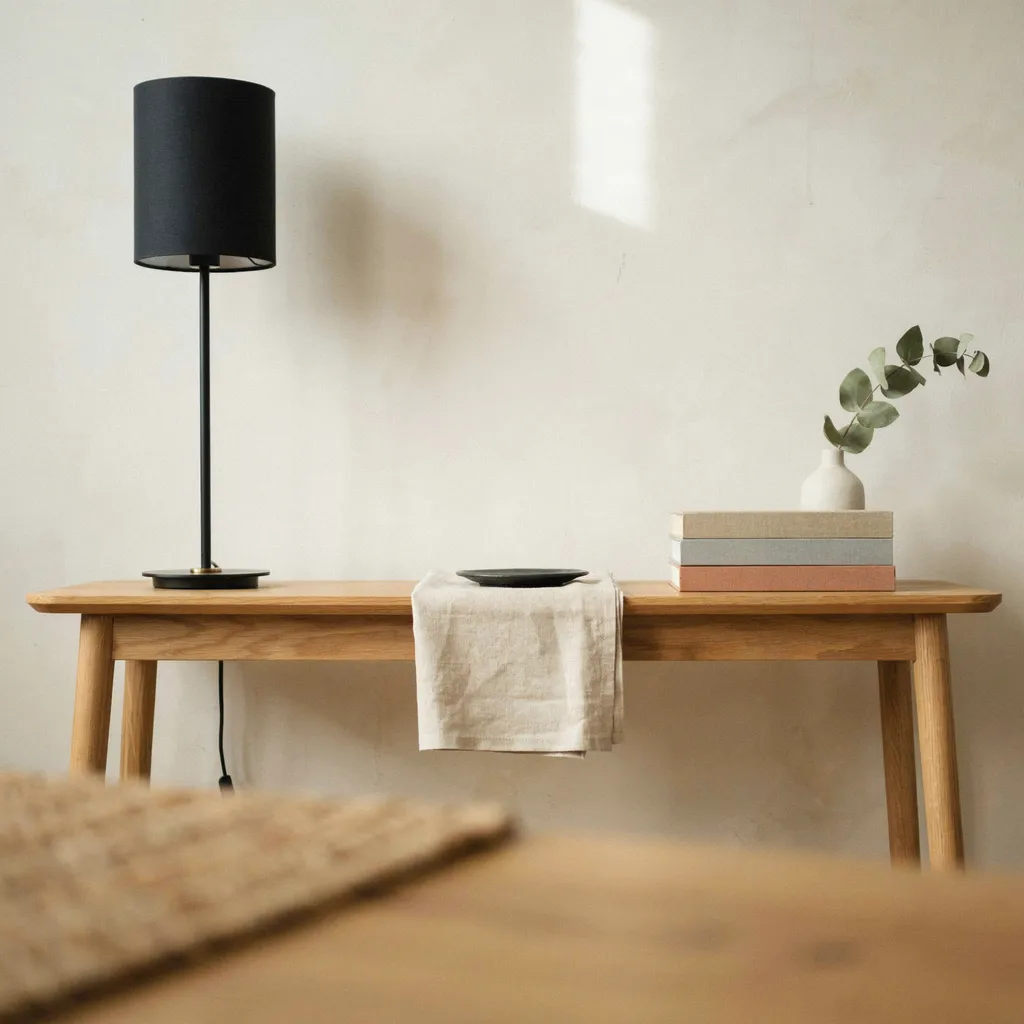
Creating a balanced asymmetric vignette starts with vertical weight distribution across the table surface. Position a slender 28-inch matte black metal lamp on one end to establish your tallest visual point, then balance it on the opposite side with three stacked linen-bound books topped with a small brass object. This contrast in height anchors both ends without making either side feel heavier than the other.
Slide a small ceramic bowl slightly off-center near the book stack so the middle doesn’t look disconnected from either side. This layout leaves roughly 35 percent of the surface open as negative space, which keeps a narrow console table from feeling crowded. It’s the same proportion ratio interior stylists rely on to make standard tables read as curated rather than thrown together.
2. Twin Ottomans for Under-Table Symmetry
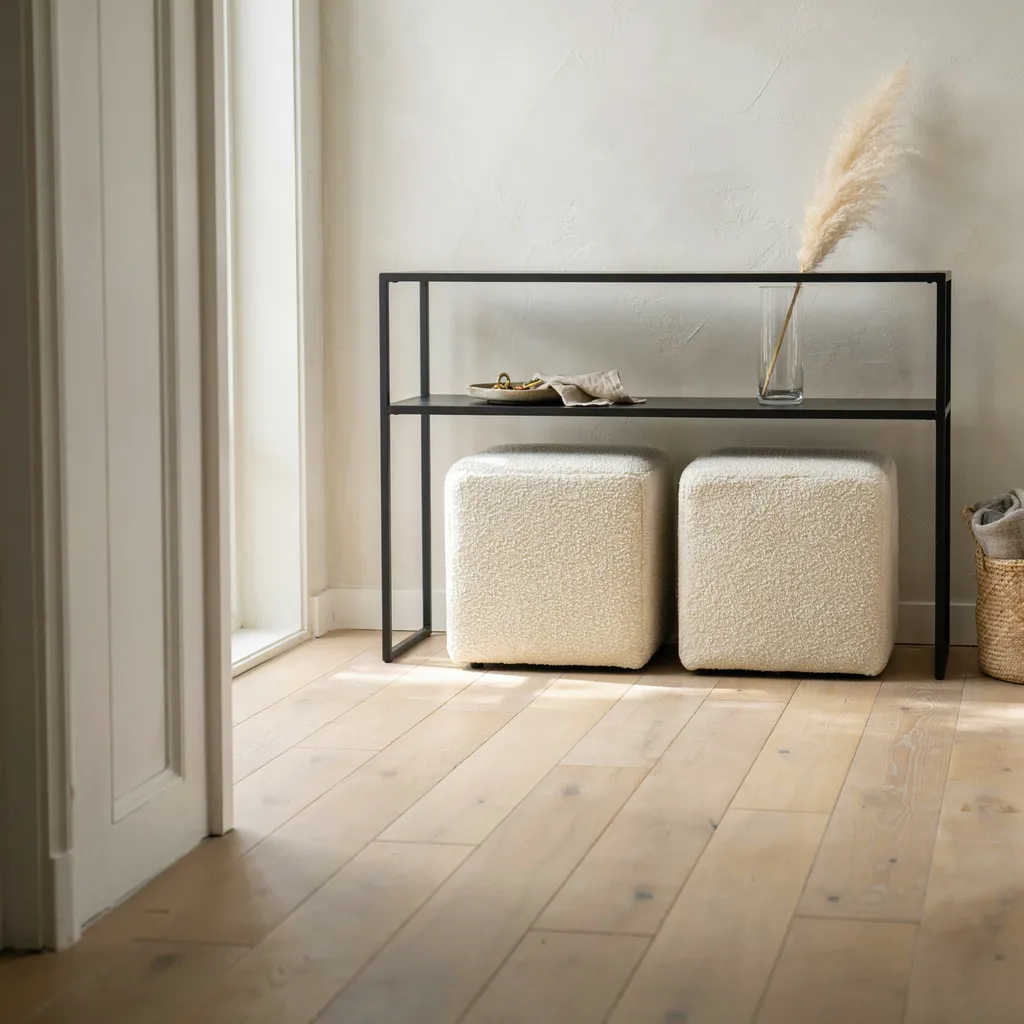
Open-frame console tables often leave an awkward gap along the baseboards that throws off a room’s proportions. Tucking two identical 16-inch square bouclé ottomans directly beneath the lower shelf solves this instantly, grounding the floating frame and giving the whole setup a custom-built feel. Budget-friendly ottomans in the $45 to $70 range work just as well for this trick as higher-end versions.
Mirror that symmetry on the tabletop above with two matching glass hurricane candle holders placed near the outer edges. This layered approach also doubles as practical seating for putting on shoes, and it conveniently hides wall outlets or tangled cords that would otherwise sit in plain view along the baseboard.
3. Layered Frame and Mirror Backbone
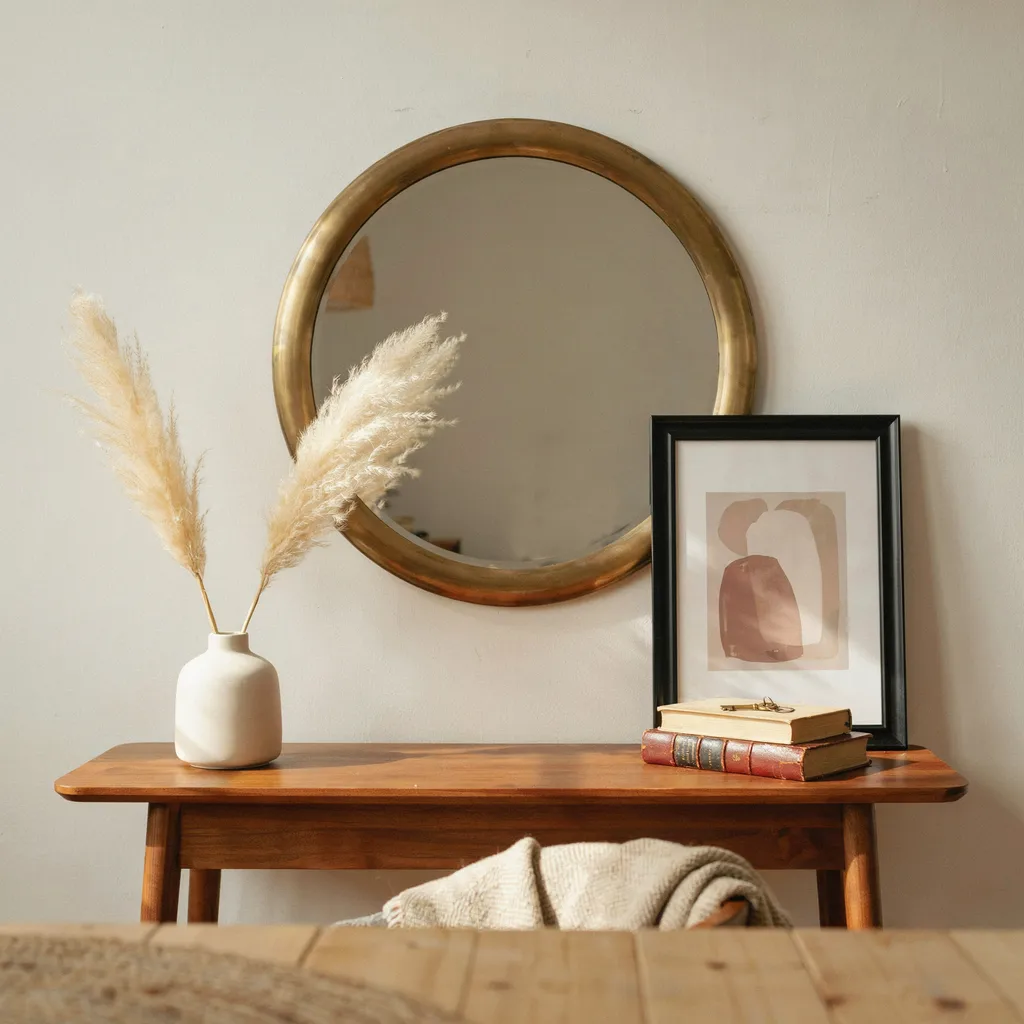
Instead of centering a single frame on the wall, try overlapping two pieces to build a sense of depth. Mount a 30-inch round brass mirror so its bottom edge sits 2 to 4 inches above the console, then lean an 8×10 inch black-framed print on the tabletop, letting its top corner overlap the mirror’s lower edge slightly.
This intersection of reflective glass, black metal, and warm brass breaks up the flat look of a single wall piece sitting alone. Choose a simple charcoal sketch or an architectural print for the leaning frame so it contrasts against the brighter mirror instead of competing with it for attention.
4. Sculptural Stoneware with Oversized Dried Branches
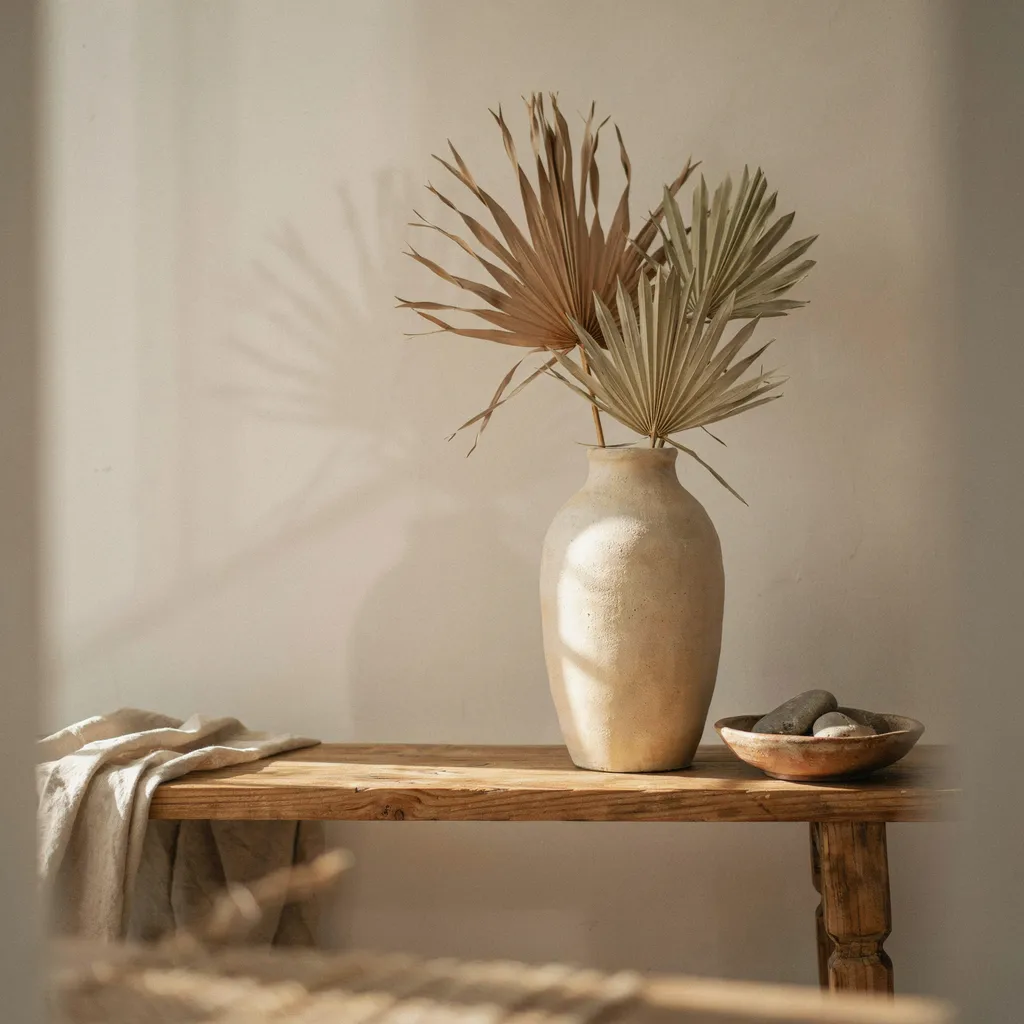
For an arrangement that needs almost no upkeep, place one oversized stoneware jug with a coarse, textured glaze across roughly one-third of the table’s length. Skip multi-stem floral bouquets and instead insert two or three tall dried palm fronds or pampas stems that stretch well above the vase itself for height.
As a general guide, your branch height should measure about 1.5 times the height of the jug for proportions that fill the wall space without looking sparse. This single-vase approach costs less than a multi-piece floral arrangement and still reads as an intentional, designer-level focal point on its own.
5. The Triple-Object Clustering Formula
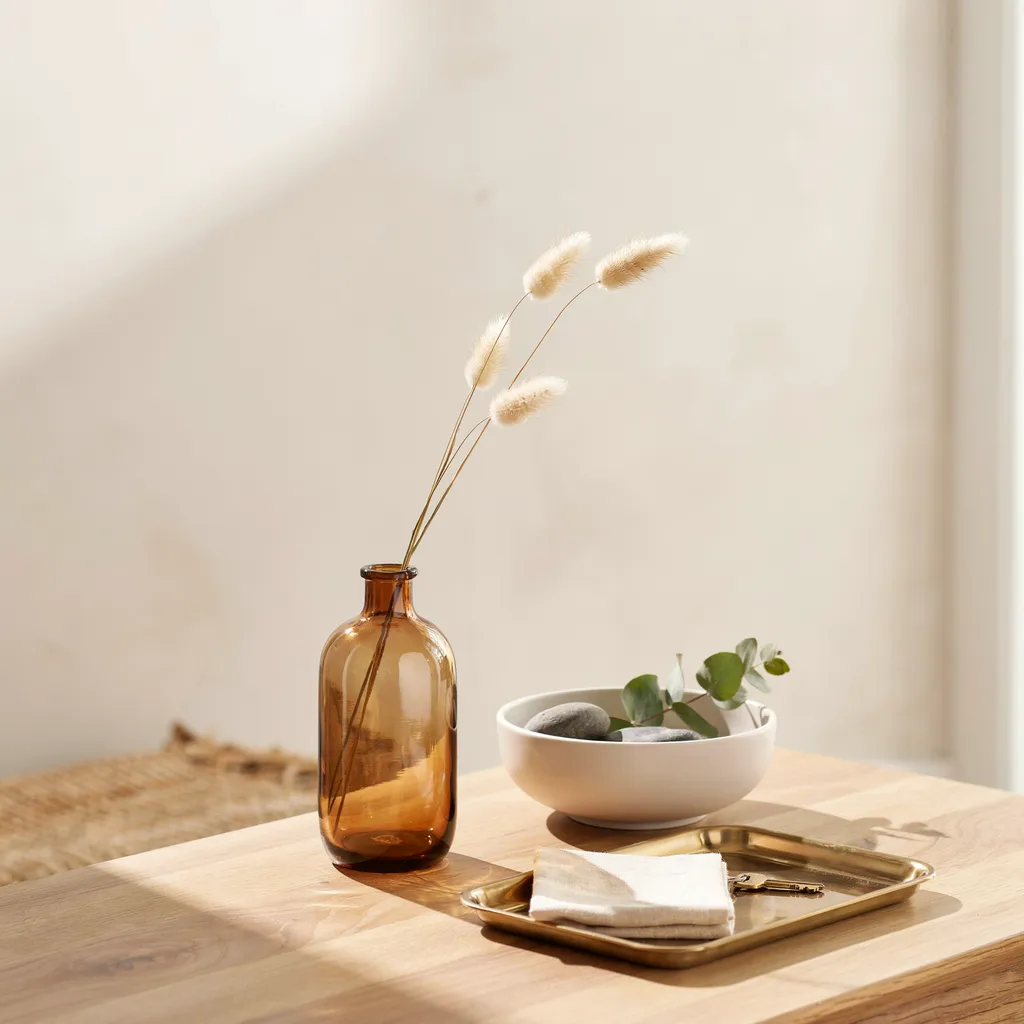
Grouping objects in odd numbers is one of the most reliable styling formulas, and there’s a reason it works — it forces the eye to move across the cluster instead of skipping past it. Start with a tall amber glass vase, add a medium white ceramic bowl slightly forward and to one side, then finish with a small brass tray placed in front to anchor the lowest point.
Keep the three pieces within close reach of each other so they read as one cohesive cluster rather than scattered objects across the table. This entire grouping can be put together for under $30 using a mix of thrifted and new pieces, yet it delivers a noticeably more curated look than a single large object on its own.
6. Mix Natural Wood with Matte Black Accents
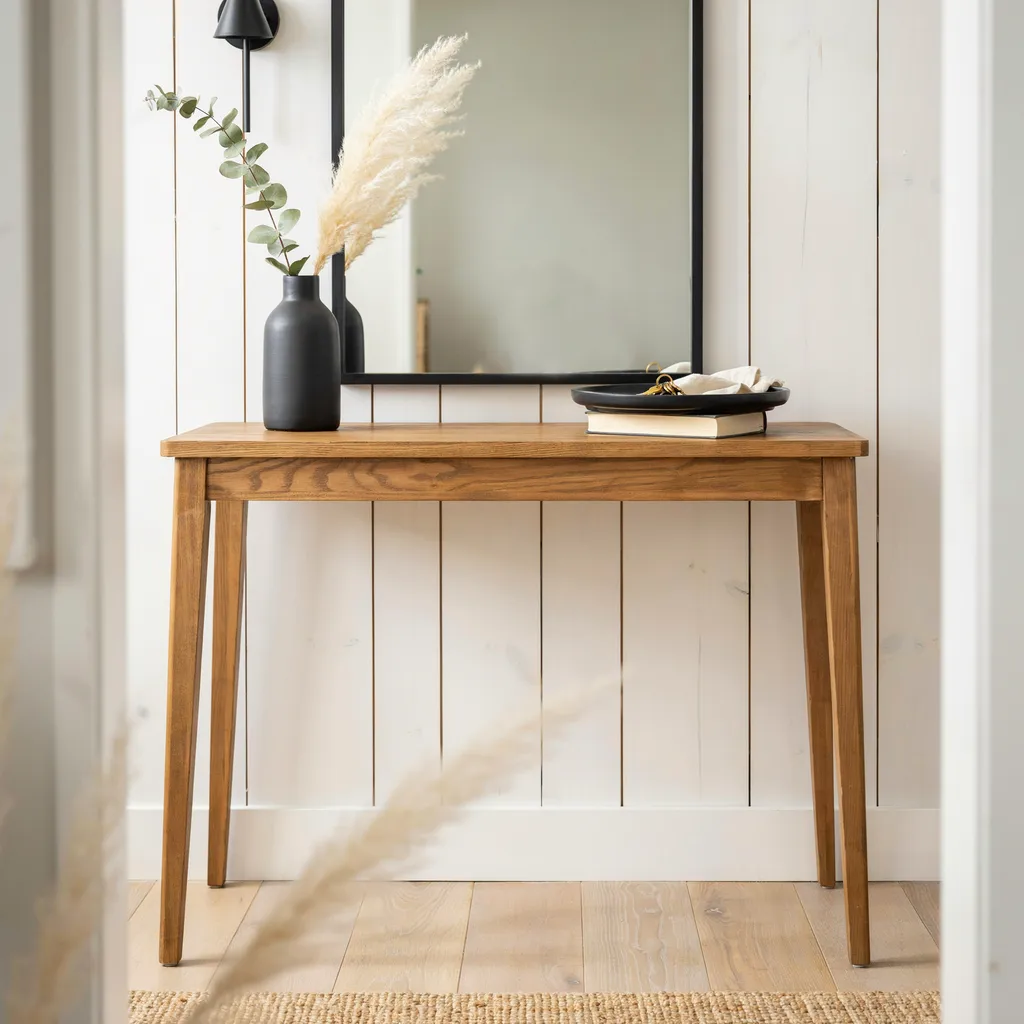
Pairing warm wood tones with matte black finishes is one of the more durable design combinations, since it doesn’t read as a fleeting trend. An oak console table styled with a black-framed mirror, a black metal candle holder, and a black tray creates contrast without making the surface feel cold or sparse.
Limit black accents to three or four pieces total so they stand out rather than overwhelm the wood grain underneath. Use a small black tray to corral keys or mail, which keeps the rest of the surface clear while still tying the color scheme together visually.
7. Monochromatic Block Styling
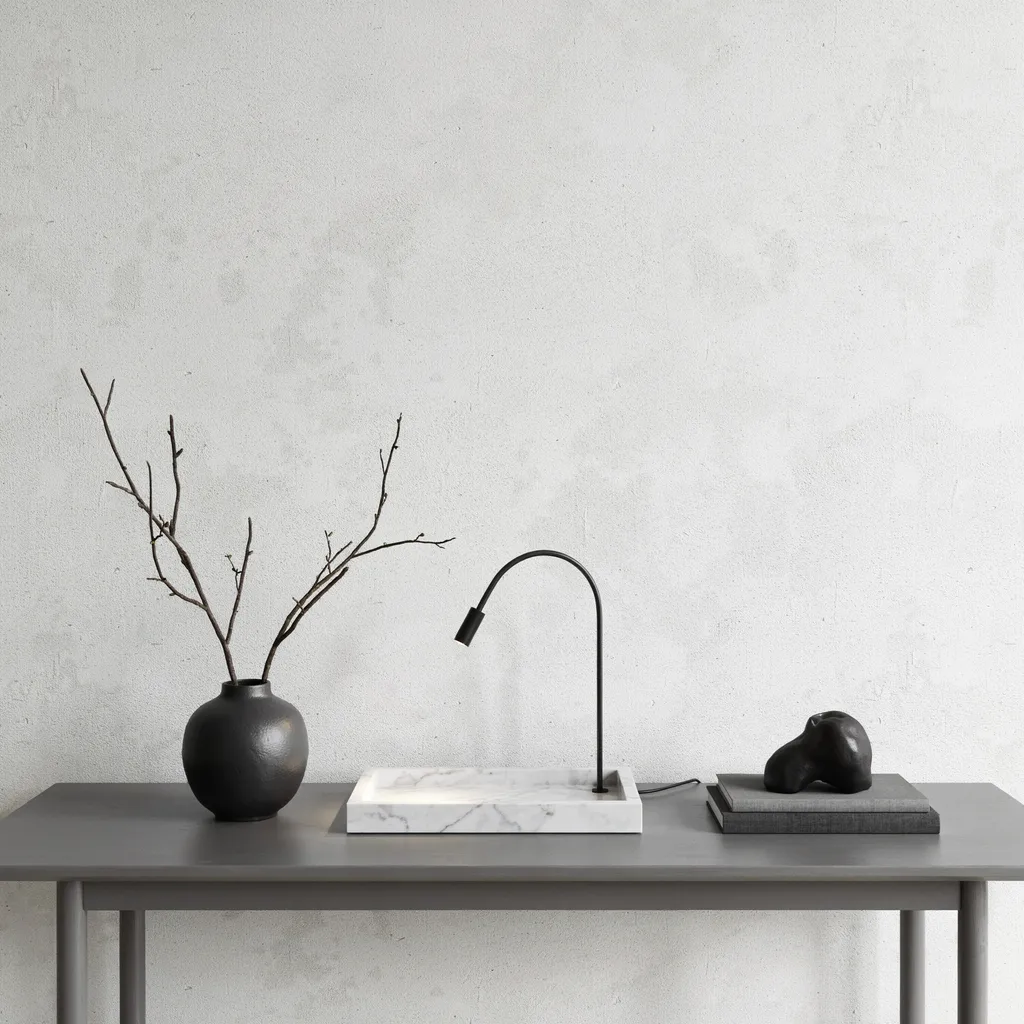
Committing to one tight color palette is a reliable way to make mismatched decor pieces look unified and expensive together. Choose a charcoal grey or matte black console table as your base, then style it exclusively with black accessories — a linear metal lamp, a small marble tray, and one sculptural object.
Removing competing colors entirely shifts attention to texture and silhouette instead, which is what makes this approach feel architectural rather than flat. It works especially well against white or light-colored walls, where the contrast does most of the visual work without needing extra accessories.
Conclusion:
These 7 console table decorating ideas to copy prove that a well-styled surface comes down to a few repeatable decisions — the right height contrast, a limited color palette, and enough negative space to let each piece breathe. Whether you start with the high-low asymmetric vignette or the monochromatic block styling approach, each formula gives you a clear starting point instead of leaving you guessing about what goes where.
The most common mistake with console table styling is adding too many small objects that compete with each other rather than working together. These ideas fix that by showing you exactly how many pieces to use, where to position them, and what proportions to aim for. A single stoneware jug with dried branches reads stronger than five mismatched trinkets. Two matching ottomans underneath a floating frame solve the awkward floor gap instantly. Three objects clustered in odd numbers move the eye across the surface more naturally than a single large centerpiece.
What makes these console table styling ideas practical rather than just visual inspiration is the specific detail behind each one — a 28-inch lamp height, a $45 ottoman budget, a 70/30 finish ratio for mixing brass and black. These numbers take the guesswork out of decorating and give you a reliable framework you can return to every time you want to refresh the look.
Start with just one technique from this list and see how it changes the feel of your entryway or hallway before adding anything else. A console table that looks professionally styled is rarely the result of buying more — it’s the result of choosing the right three things, not thirty.
For more styling inspiration, follow us on Pinterest.
Frequently Asked Questions:
Q1. How far should a console table mirror hang above the tabletop?
Mount the mirror so its bottom edge sits 2 to 4 inches above the table surface. Hanging it higher creates a visual gap that disconnects the mirror from the objects styled below it.
Q2. What’s the best way to hide cords or wall outlets behind a console table?
Pin cords flat against the back legs with clear adhesive clips, or place storage baskets and ottomans on the floor beneath the table to block outlets from view entirely.
Q3. How deep should a console table be for a narrow entryway?
A table between 10 and 12 inches deep works well for tight hallways, leaving at least 36 inches of walking clearance between the table and the opposite wall.
Q4. Can I mix brass and black metal finishes on the same console table?
Yes — use one finish for about 70 percent of your accessories and introduce the second finish through a single tray or bowl for intentional contrast.
Q5. How do I keep leaning art frames from sliding on a smooth tabletop?
Place a small ball of removable museum putty under the bottom corners of the frame. It grips the surface invisibly and keeps the piece stable against door slams or vibration.