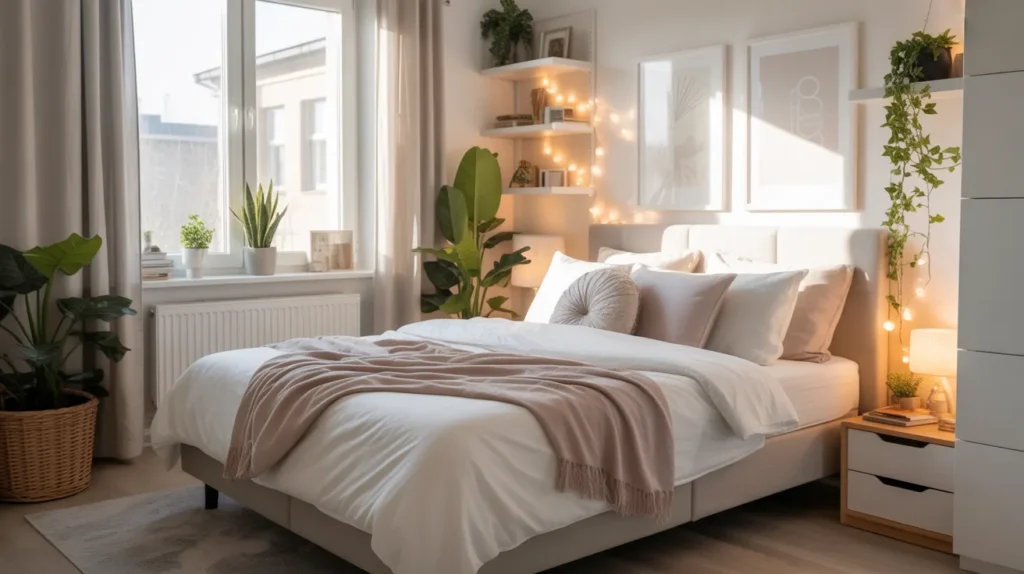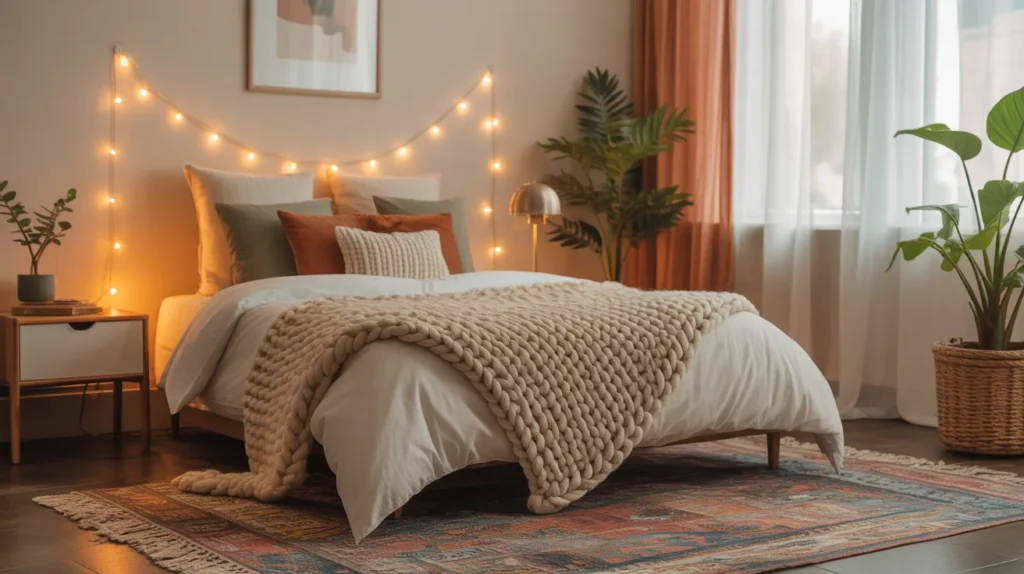
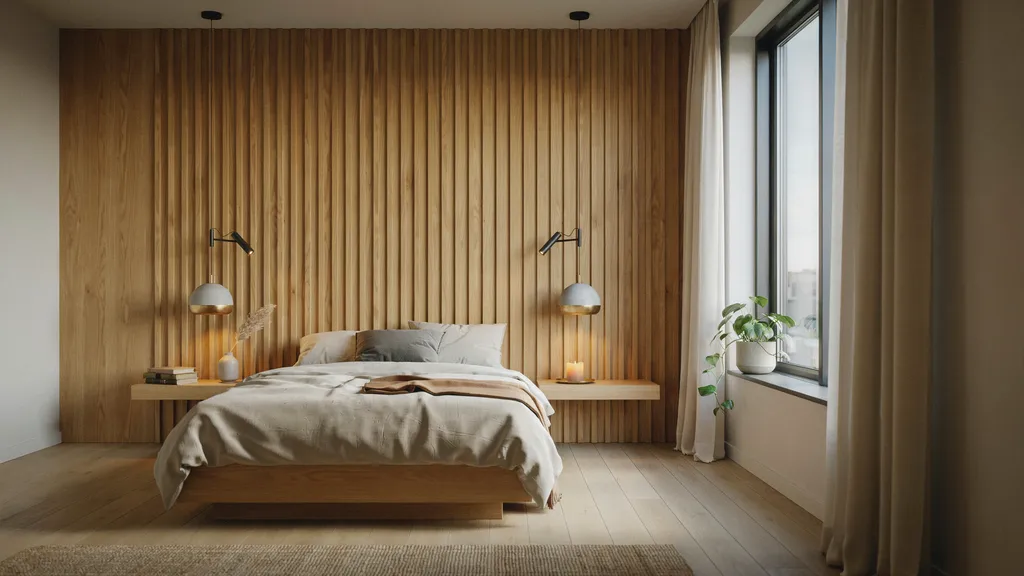
A bedroom starts to feel modern the moment it stops relying on a matching furniture set from a single catalog page. These 17 modern bedroom design ideas lean on details like a fluted walnut headboard, a plaster-finish accent wall, and low-profile matte black sconces instead of another overhead fixture — choices that read as put-together rather than purchased as a bundle.
If your room still centers on a bulky wood dresser and a stock nightstand, a few targeted swaps can shift the whole feel without a full furniture overhaul. Think a streamlined platform bed with exposed wood legs, or a woven jute rug layered under a smaller printed one instead of covering the whole floor with a single flat piece.
What actually holds a modern bedroom together usually comes down to restraint in material choice, not more accessories on the nightstand. A single strong surface, like a limewash wall or a boucle bench at the foot of the bed, tends to define the room’s character more than five smaller decorative touches ever could — whether you’re refreshing a compact space or a larger master suite.
1. A Low Walnut Platform Bed With Floating Ledges
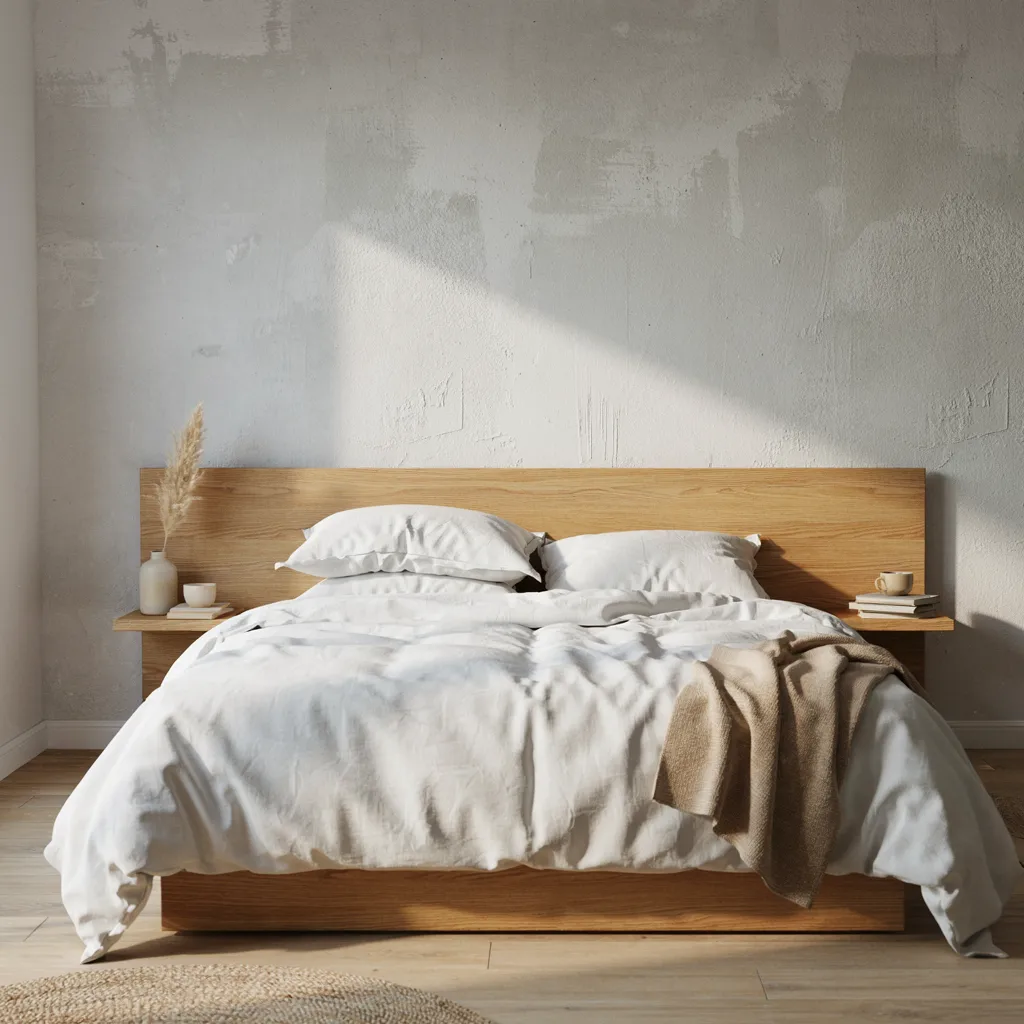
Dropping the bed frame to a lower profile changes how the entire room reads, since the exposed wall space above visually stretches the ceiling in a smaller room. Choosing a frame with built-in floating shelves along the sides also removes the need for separate nightstands taking up floor space.
Look for a frame that sits 12 to 14 inches off the floor, and leave at least 30 inches of clearance on both sides for comfortable movement. A solid walnut platform frame with integrated ledges typically runs $600 to $1,200.
2. A Fluted Oak Panel Accent Wall
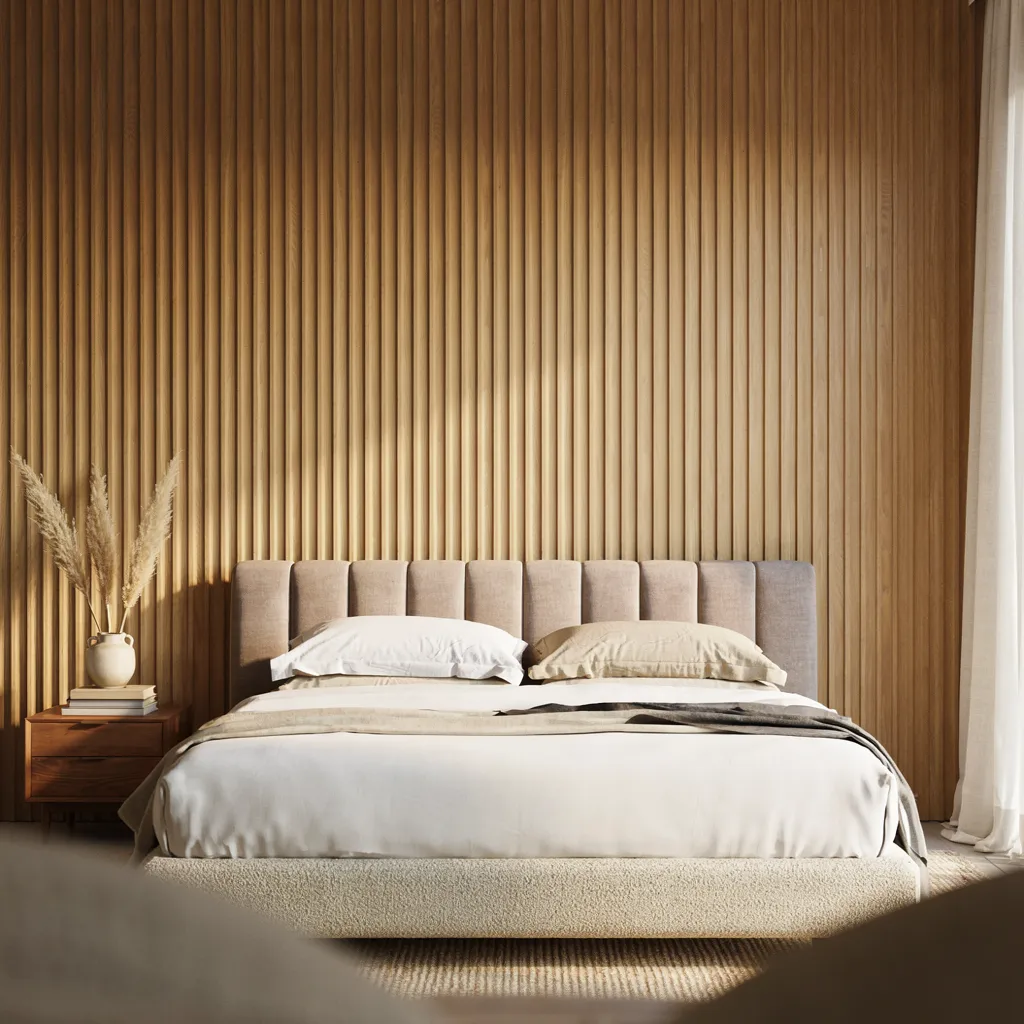
Covering the wall behind the headboard in fluted oak panels breaks up a flat surface with repeating shadow lines that shift throughout the day as natural light moves across the room. Pre-assembled panel modules make this a manageable weekend project rather than a full carpentry job.
Standard panels run about 94 inches tall in 24-inch-wide sections, priced around $90 to $150 each, so a typical 10-foot headboard wall costs roughly $500 in materials. Mount them with construction adhesive and finish screws along the backing edges.
3. Matte Black Swing-Arm Sconces
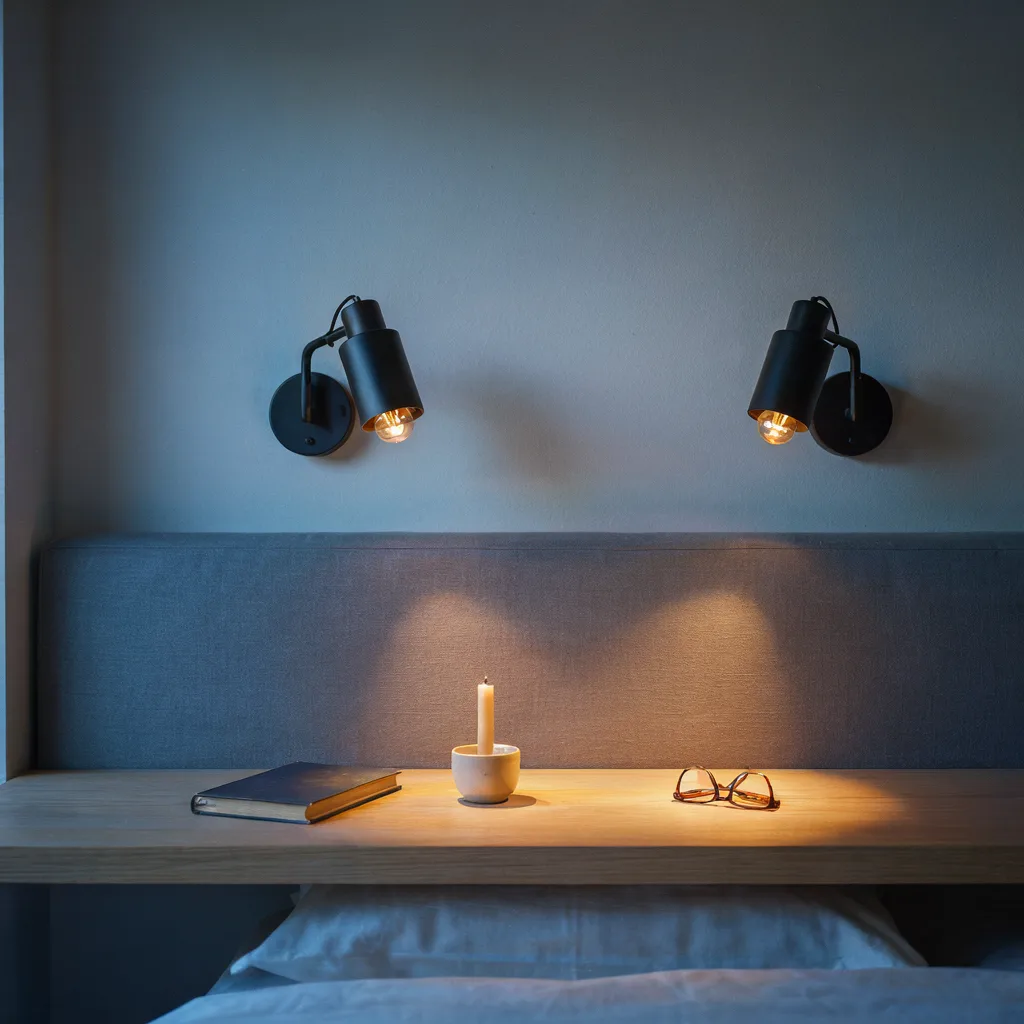
Swapping table lamps for adjustable swing-arm sconces clears nightstand surfaces entirely while still giving you directional light for reading. The articulating arm lets you angle the beam exactly where it’s needed instead of relying on a fixed lampshade.
Mount the backplate 30 to 36 inches above the mattress rail so the arm reaches comfortably when you’re sitting upright. Quality matte black swing-arm sconces run $80 to $180 each.
4. A Limewash Plaster Wall Finish
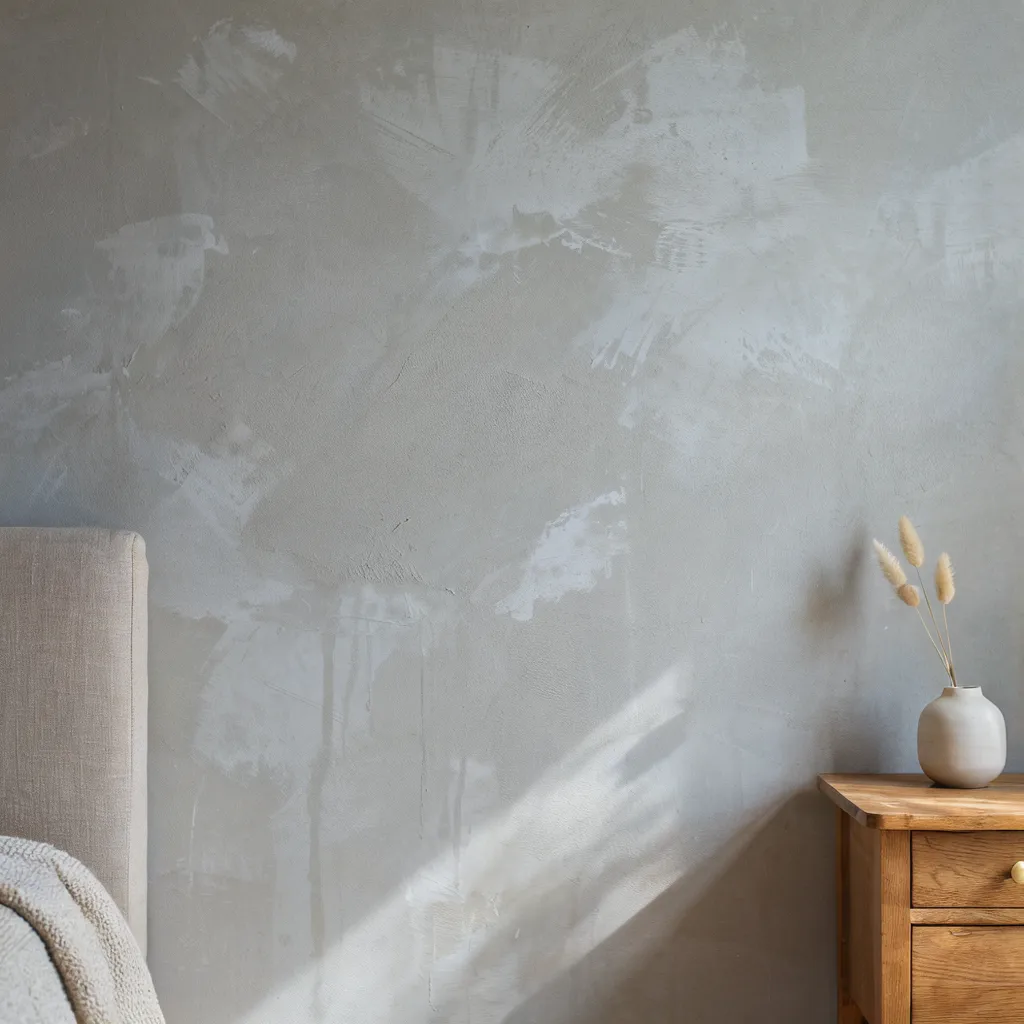
Limewash is mixed from slaked lime and mineral pigment rather than standard latex, which is why it dries with a soft, uneven texture that diffuses light instead of reflecting it flatly. No two walls finished this way look quite identical, since the brush strokes stay slightly visible under the surface.
Apply two coats with a wide block brush in loose cross-hatch strokes over a mineral primer. A gallon covers roughly 250 square feet and costs $70 to $95.
5. A Ceiling-Recessed Curtain Track
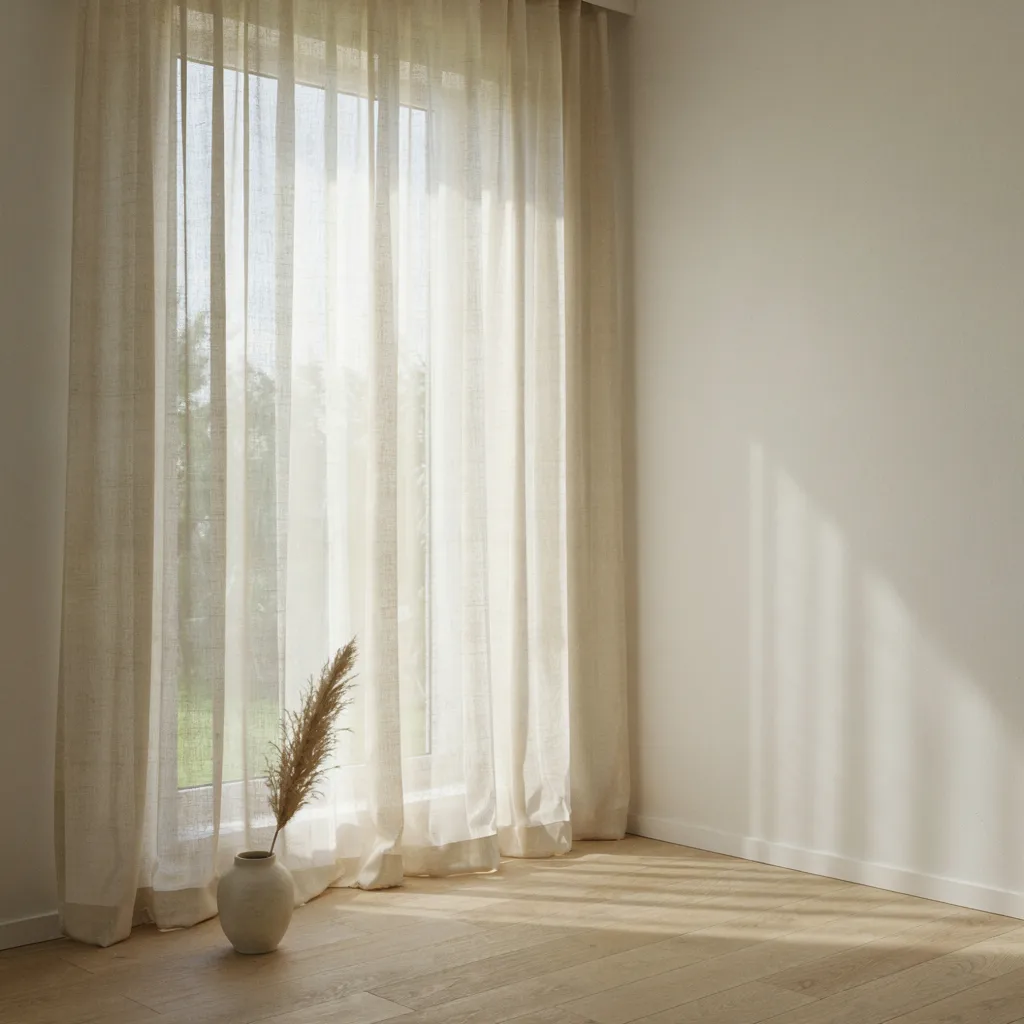
Mounting curtains from a track recessed into the ceiling instead of a rod above the window frame removes the visual break that a standard rod creates, pulling the eye all the way up and making the room feel taller than it is. The continuous glide also makes opening and closing the panels noticeably smoother.
Recess the track 3 inches into a custom drywall pocket for a fully invisible install, and size panels to hang just half an inch off the floor. Track hardware kits run $45 to $110.
6. Flush-Mount Built-In Wardrobes
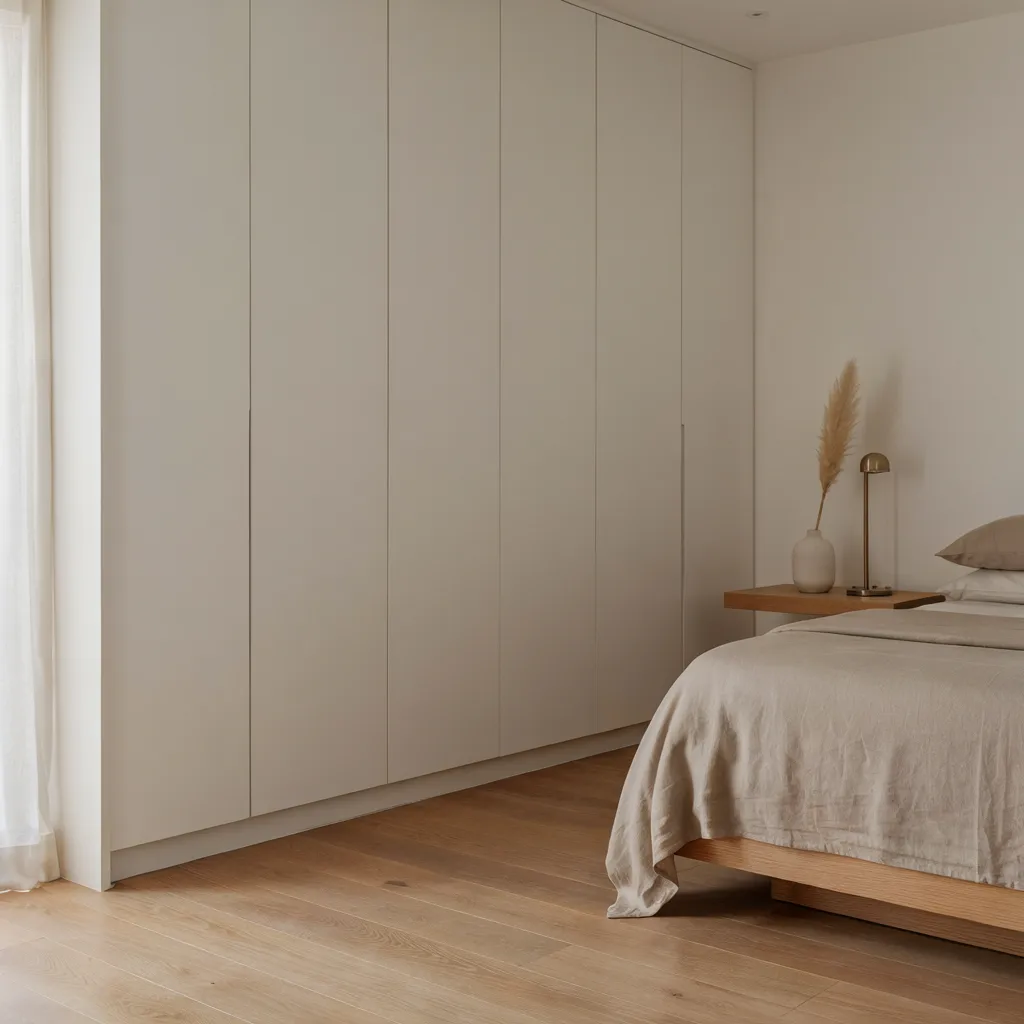
Painting wardrobe doors the exact same shade as the surrounding wall makes the storage nearly disappear into the room’s perimeter instead of standing out as a separate piece of furniture. Push-to-open latches also remove the need for visible pulls, keeping the whole surface uninterrupted.
Retrofitting modular cabinet carcasses with custom trim and flat painted fronts costs $800 to $2,000 for an 8-foot-wide setup, well under the price of fully custom cabinetry.
7. An Oversized Wool Area Rug
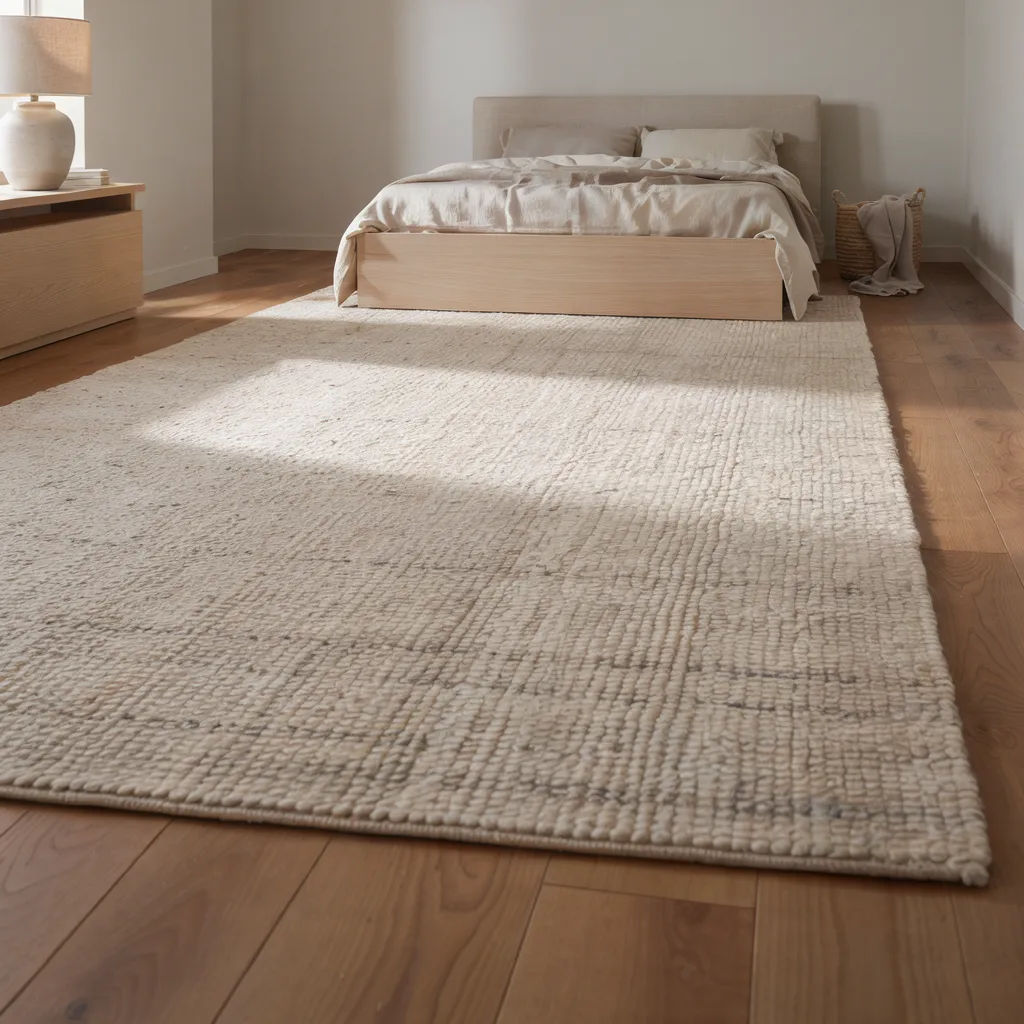
A rug that barely peeks out from under the bed frame makes the whole layout look disconnected, while a genuinely oversized one pulls the bed and nightstands into a single cohesive zone. Low-pile wool in particular resists shedding better than a plush weave, which matters for a surface that gets daily foot traffic.
Choose an 8-by-10-foot rug for a queen bed so it extends 24 to 36 inches beyond the sides, stopping about 8 inches short of the nightstands. Quality wool rugs this size run $350 to $750.
8. Under-Bed Recessed LED Lighting
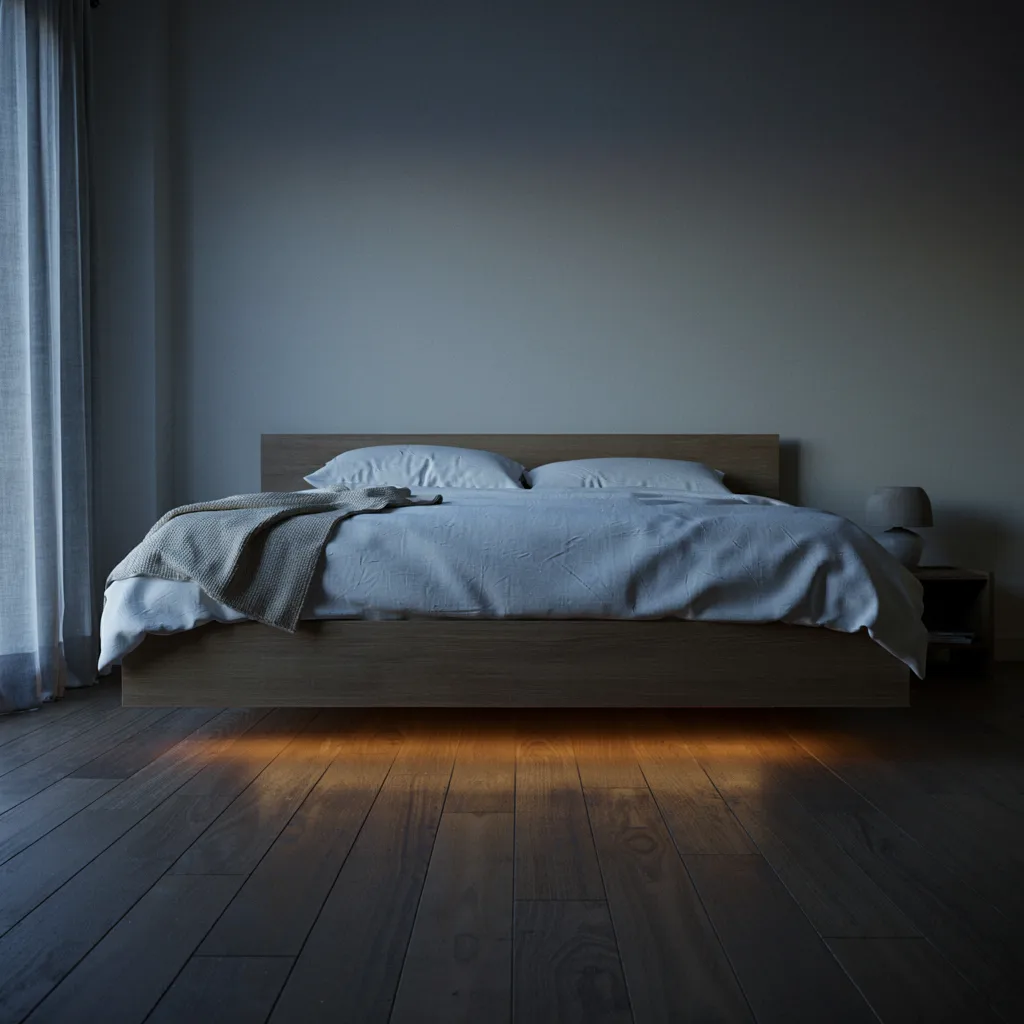
Hidden LED strips mounted along the underside of the frame create a floating visual effect across the floor without any visible diodes catching the eye directly. The soft downward glow also works as gentle nighttime guidance without the harshness of flipping on an overhead light.
Set the channel 2 inches inward from the bed rail edge to keep the strip fully concealed. Smart LED kits with app control cost $25 to $60 for a full queen-frame perimeter.
9. A Curved Bouclé Accent Chair Corner
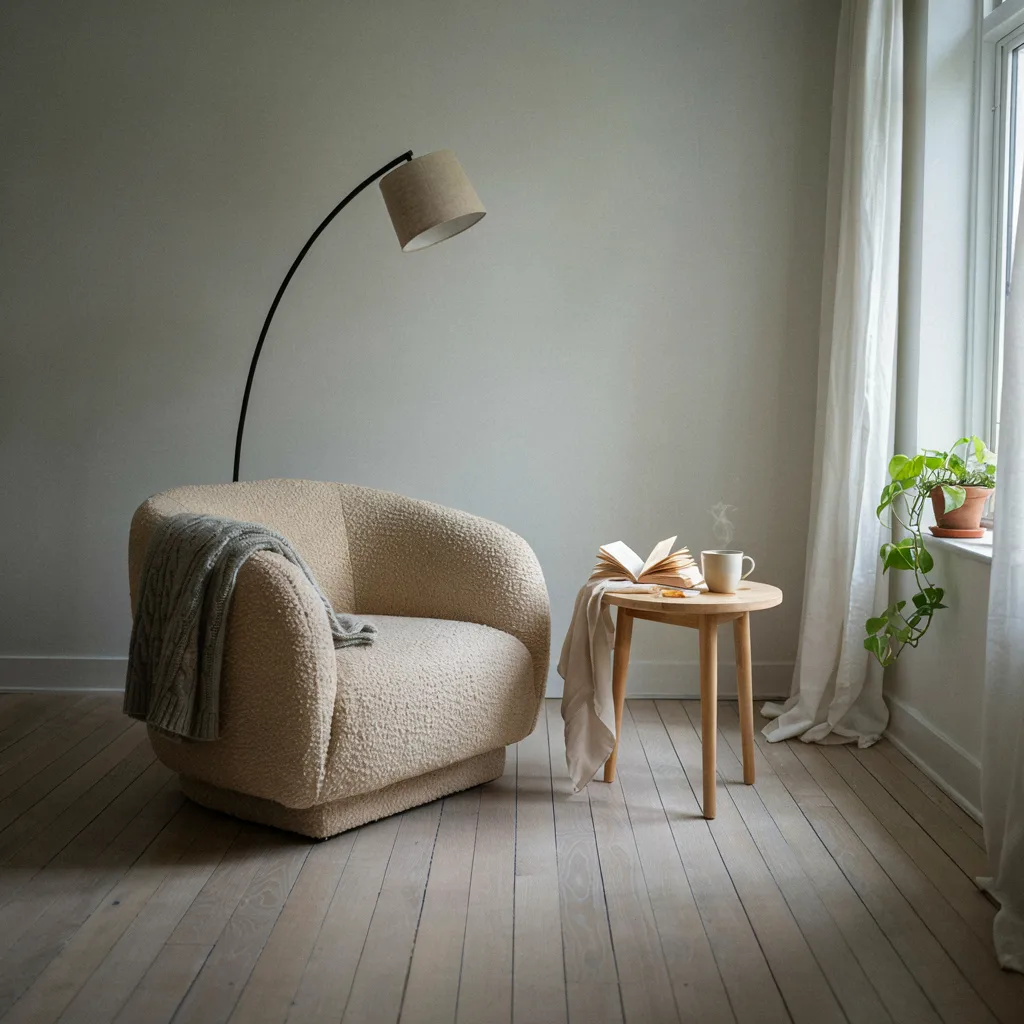
Rounded furniture softens a room otherwise built entirely around the straight lines of a rectangular bed frame and dresser, and a single curved chair fills an unused corner without adding bulk. The compact footprint also means it works in bedrooms too small for a full seating arrangement.
Choose a barrel-style chair with a 28- to 32-inch diameter footprint to fit comfortably in a standard corner. Quality accent chairs in this style run $250 to $550.
10. A Minimalist Picture Ledge Shelf
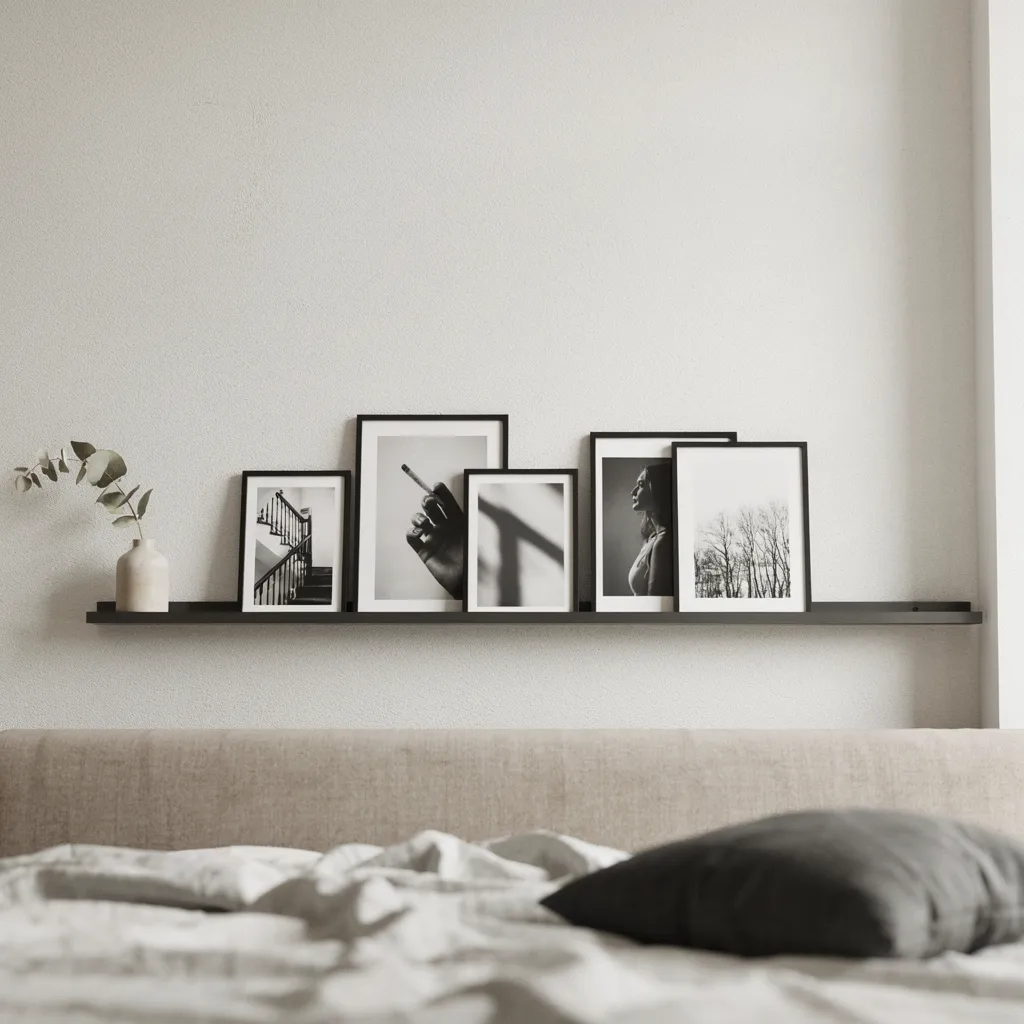
A shallow ledge shelf above the bed gives you a rotating display surface for artwork without committing to permanent nail holes or a fixed gallery layout. Leaning frames at slightly varied heights also creates a relaxed, collected look that a perfectly aligned row doesn’t offer.
Mount a 48- to 60-inch ledge 10 to 12 inches above the headboard using anchors rated for 50 pounds. Pre-finished metal ledges cost $35 to $75 each. If this kind of pared-back styling appeals to you, our 15 Minimalist Bedroom Design Ideas You’ll Love guide has more direction.
11. Concrete and Brass Pendant Lighting
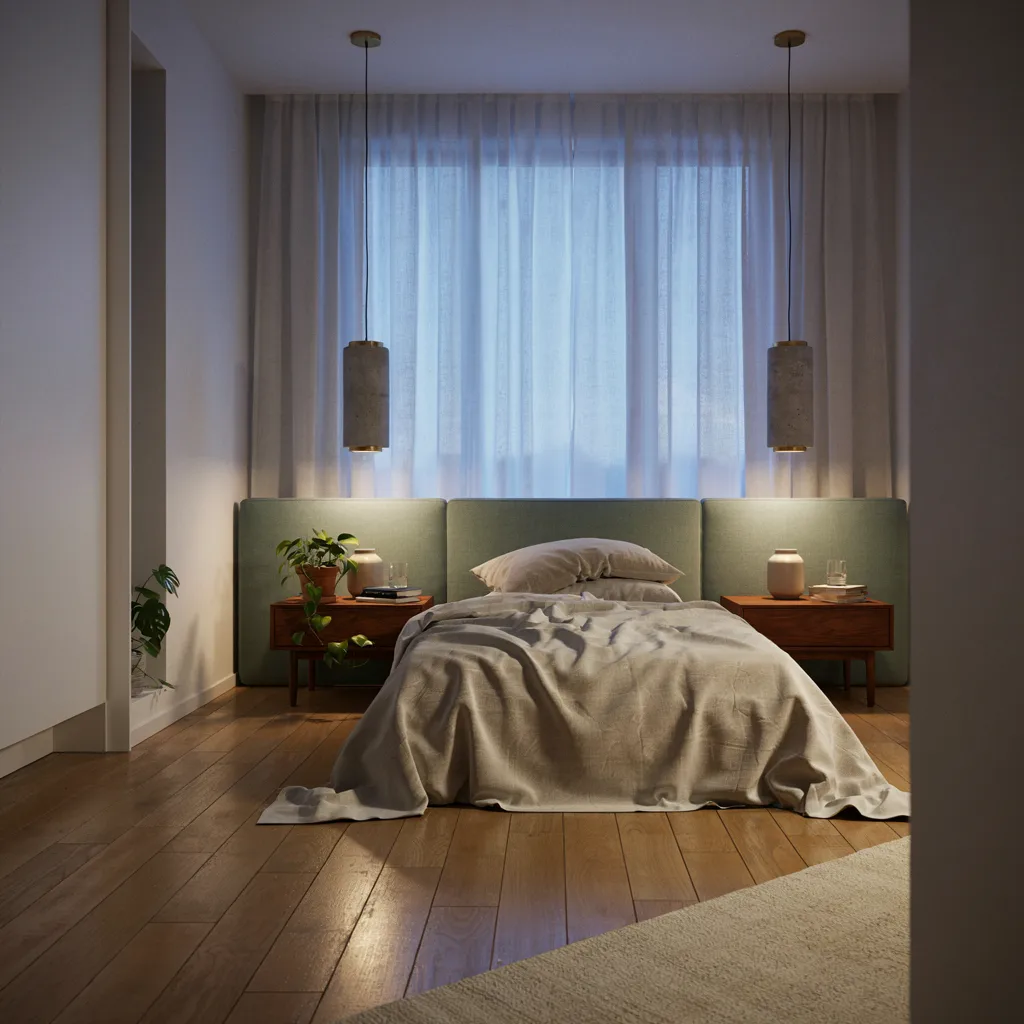
Pairing raw concrete cylinders with brushed brass caps introduces an industrial-meets-refined contrast that a standard drum pendant doesn’t offer. Hanging the fixtures from the ceiling also frees the nightstand surface completely, since there’s no lamp base taking up space.
Hang pendants so the bottom sits 20 to 24 inches above the nightstand top. Concrete pendant fixtures typically run $60 to $130 each.
12. A Matte Black Glass Room Divider
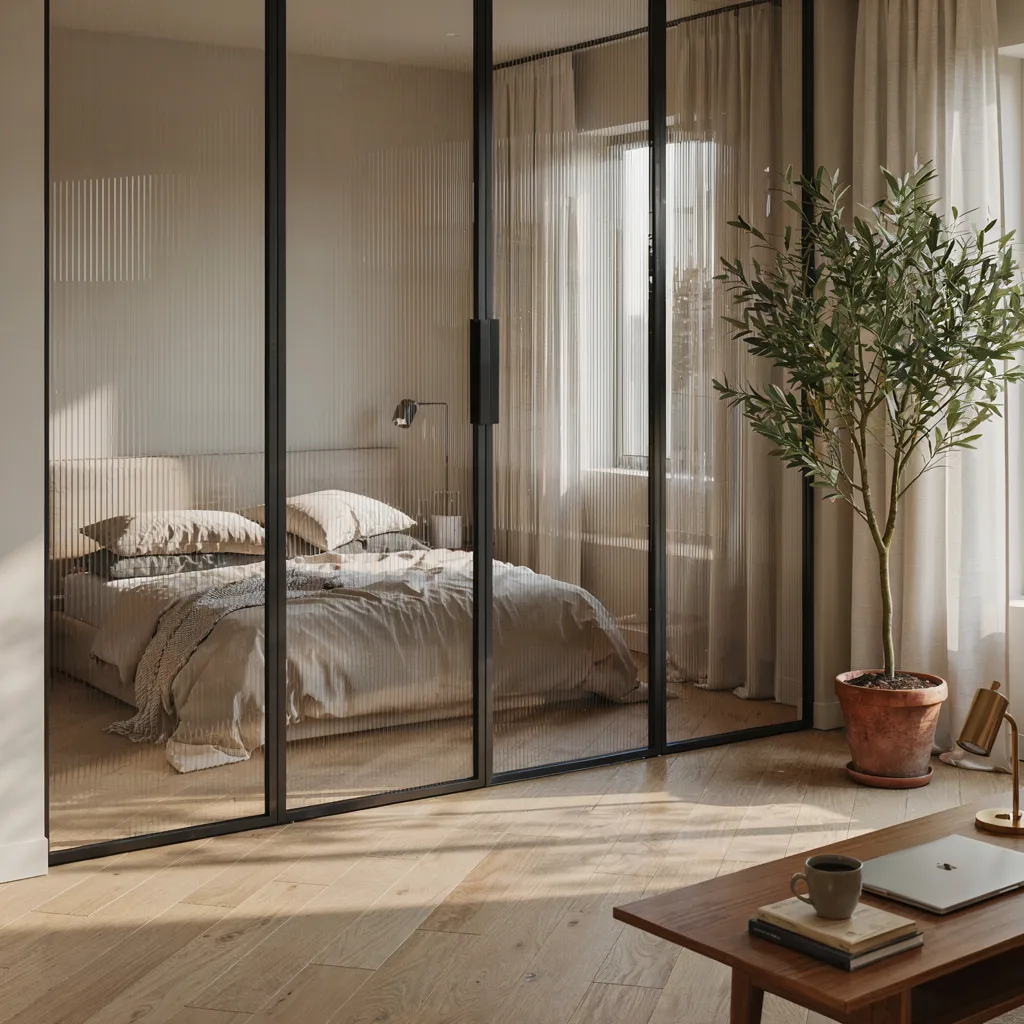
In a larger bedroom or studio layout, a steel-framed glass screen separates a sleeping zone from a workspace without the cost or permanence of a drywall partition. Fluted or reeded glass panels let light pass through while still obscuring desk clutter from view.
A stationary 4-foot panel or a 3-panel folding screen secured into floor and ceiling joists runs $200 to $550 depending on glass thickness.
13. A Wall-to-Wall Wood Slat Headboard
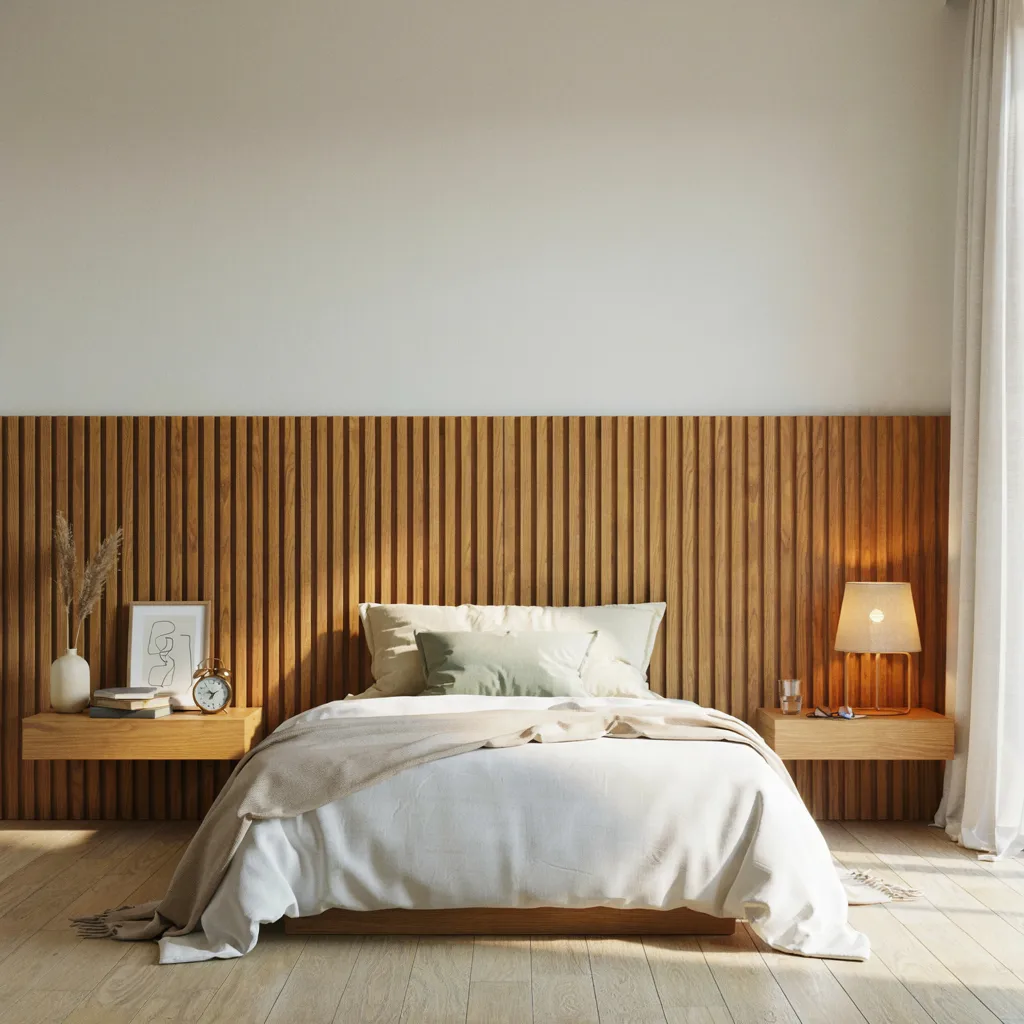
Extending a slatted headboard the full width of the wall unifies the bed and both nightstands into a single custom-feeling installation instead of three separate furniture pieces. Horizontal slats in particular help a narrower room read as visually wider than it actually is.
Build the slat system from 1×2-inch hardwood boards spaced half an inch apart over a felt backer board. Material costs for an 11-foot span run $300 to $650.
14. A Horizontal Color-Blocked Accent Wall
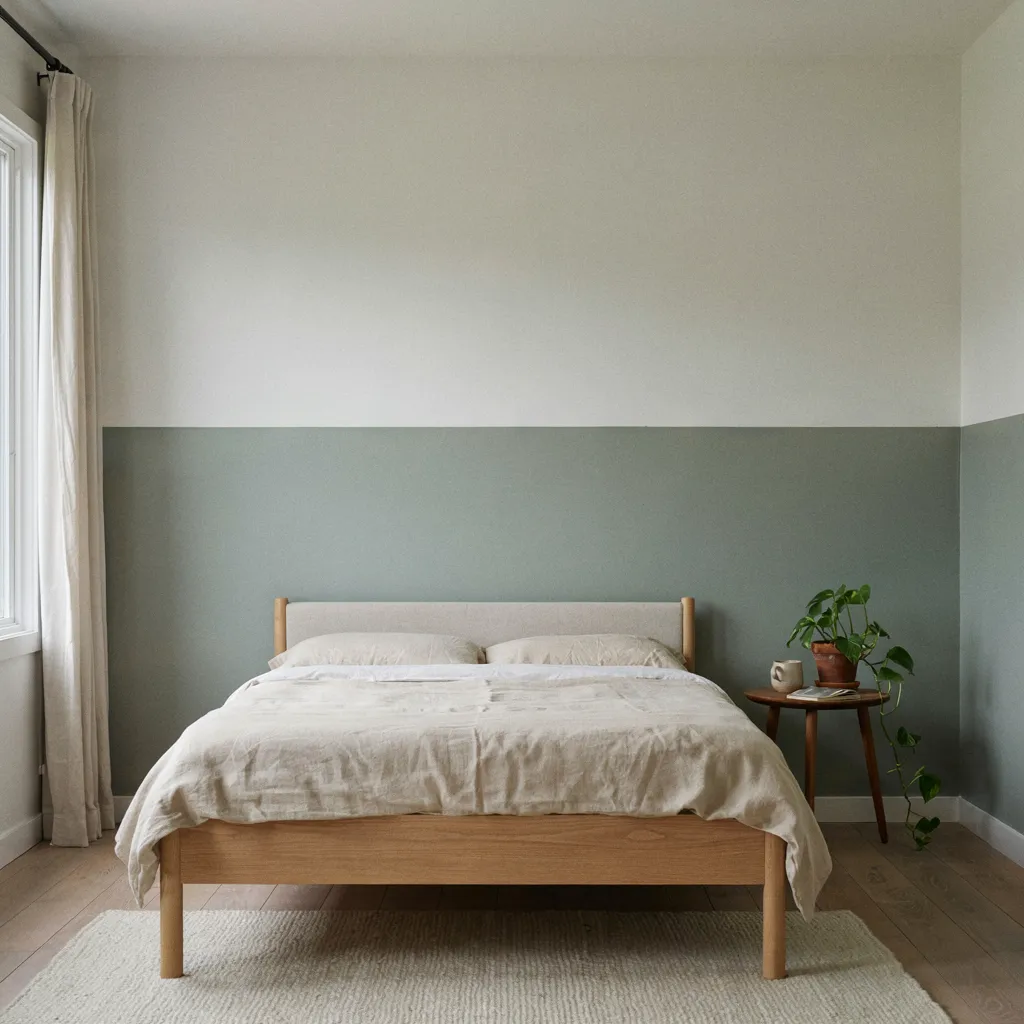
Painting only the lower portion of a wall in a saturated color creates the illusion of an elongated headboard plane, which helps lower the visual center of gravity in a room with higher ceilings. The crisp dividing line also introduces graphic structure to an otherwise plain wall.
Mark the line 54 inches up from the floor using painter’s tape rated for sharp edges. A gallon of quality interior paint for this project costs $50 to $70.
15. A Bouclé Upholstered Platform Bed
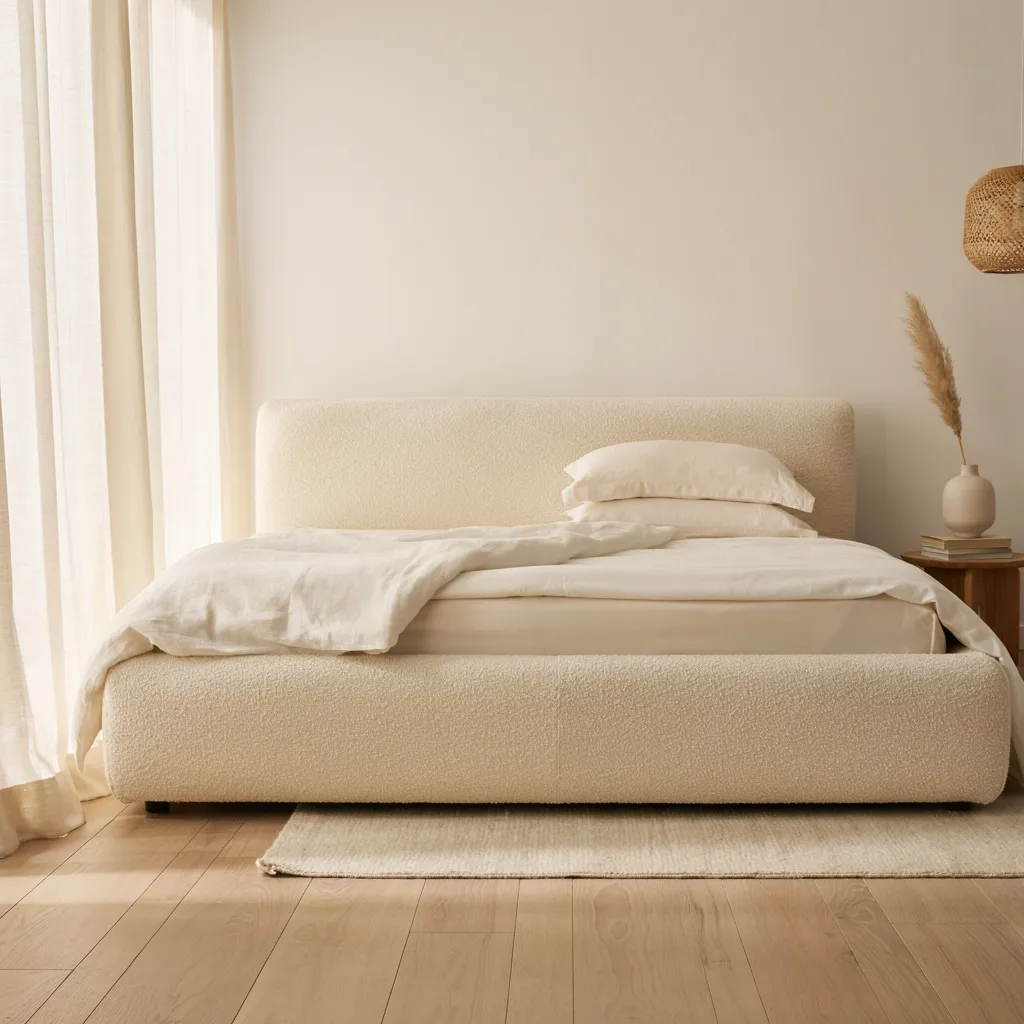
Upholstering the entire bed frame in bouclé rather than just the headboard panel gives the piece a softer, more tactile presence without breaking up the room’s clean lines. Keeping the headboard height low also preserves sightlines across nearby windows or artwork.
Confirm the fabric has a Martindale rub count over 30,000 for durability against daily wear. Bouclé upholstered queen frames run $500 to $1,100
16. A Bronze-Tinted Frameless Floor Mirror
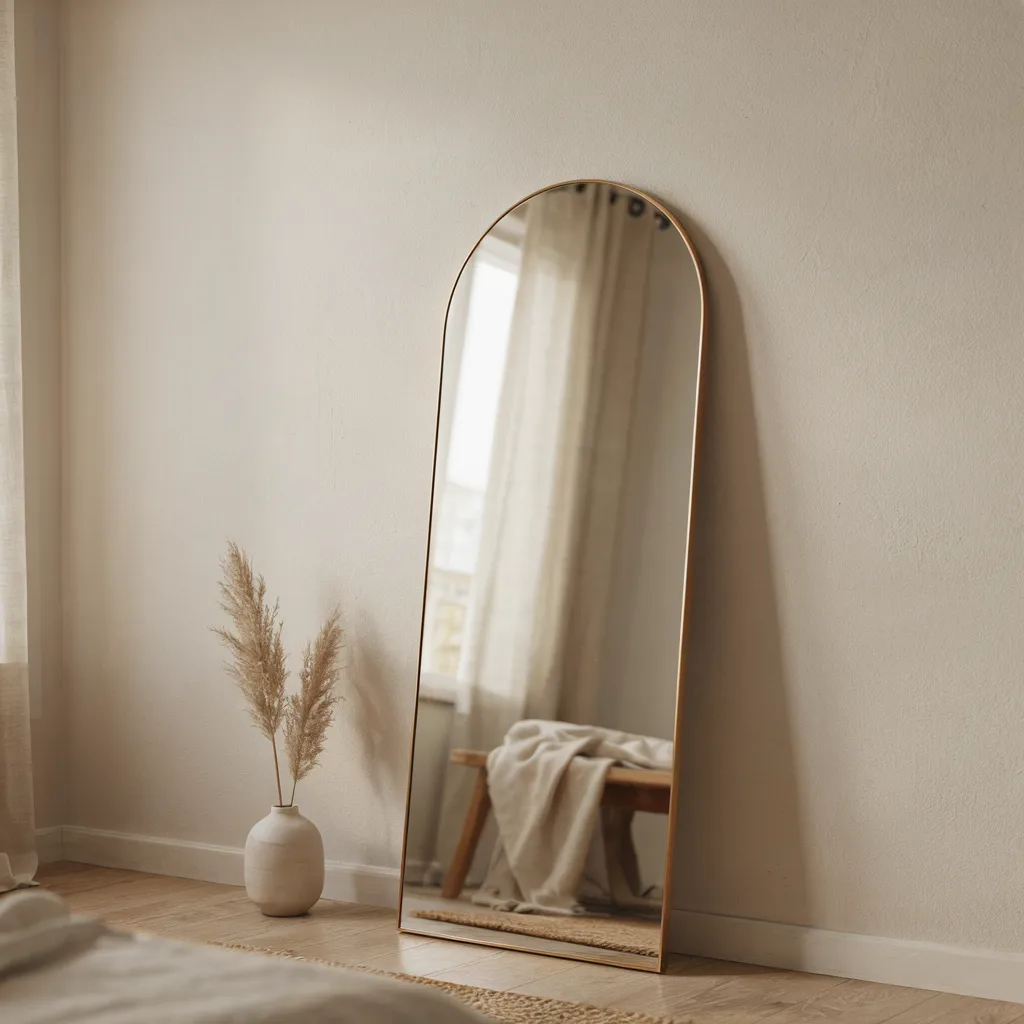
A tinted mirror softens reflections into muted tones instead of bouncing back the sharp brightness of a clear glass surface, which suits a bedroom meant to feel relaxed rather than clinical. Positioning it opposite a window also pushes daylight deeper into darker corners of the room.
Choose a 30-by-72-inch mirror with shatter-resistant backing film, secured to wall studs with anti-tip anchor straps. Large tinted floor mirrors run $180 to $400.
17. Monochromatic Layered Linen Bedding
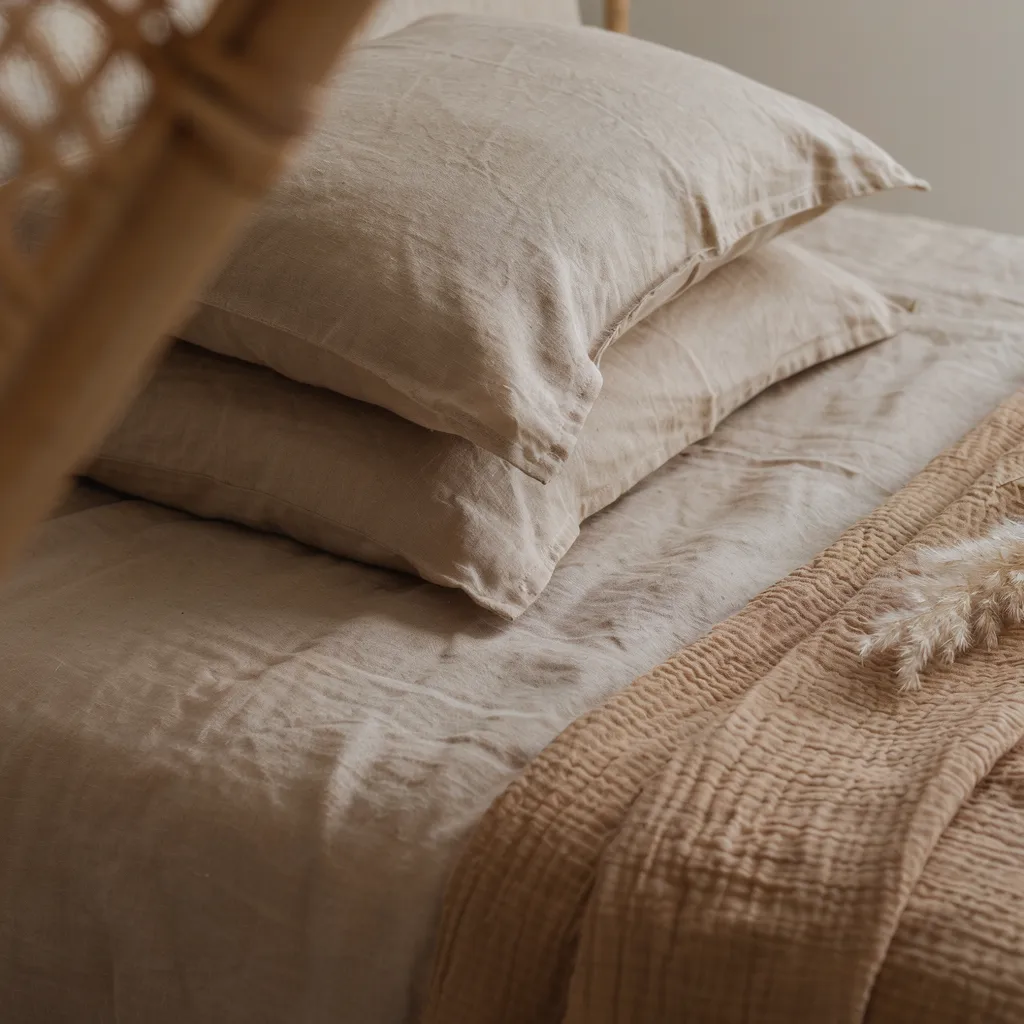
Sticking to a single color family across the duvet, sheet, and throw creates a refined, cohesive look through fabric weight and texture rather than pattern or contrast. Linen in particular develops a relaxed, slightly rumpled texture over time that reads as intentional rather than unmade.
Layer three tones of the same shade: a mid-tone duvet, a lighter fitted sheet, and a darker accent throw. Quality European flax linen queen sets run $180 to $320.
Final Thoughts:
None of these seventeen ideas require gutting the bedroom to make a real difference in how it looks and functions. Start with whichever detail solves your most obvious problem, whether that’s a cluttered nightstand, a flat headboard wall, or storage that never quite fits your closet. A single strong material choice, like a limewash wall or a fluted oak panel, tends to carry more visual weight than several smaller decorative additions layered on top of each other.
Measure carefully before ordering furniture, rugs, or lighting, since proportion is usually what separates a room that feels intentional from one that feels randomly assembled. Mixing textures, like bouclé against concrete or linen against walnut, does more to create depth than matching every piece to a single finish. Keep bold elements like color blocking or tinted glass contained to one feature so they read as deliberate rather than overwhelming the room. A bedroom built around a handful of genuinely considered materials can feel complete without touching every idea on this list.
Save your favorite combinations to our Pinterest boards before you shop so you can compare finishes side by side.
Frequently Asked Questions:
What’s the most impactful upgrade for a bedroom on a tight budget?
A horizontal color-blocked accent wall or a limewash finish are both relatively low-cost updates, generally under $100 in materials, that make a noticeable difference without new furniture.
How do I size a rug correctly under a platform bed?
Choose an 8-by-10-foot rug for a queen frame so it extends 24 to 36 inches beyond each side of the bed, stopping roughly 8 inches short of the nightstands.
Is limewash paint difficult to apply correctly?
It’s manageable for a confident DIYer using a wide block brush in loose cross-hatch strokes over a mineral primer, though hiring a professional ensures a more consistent texture on a large wall.
What height should bedside sconces be mounted at?
Mount the backplate 30 to 36 inches above the mattress rail so the adjustable arm reaches comfortably when you’re sitting upright in bed.
How much weight can a floating nightstand or picture ledge hold?
As long as the bracket is anchored into wall studs rated for at least 50 pounds, a floating shelf or ledge can safely hold a lamp, books, and everyday items.