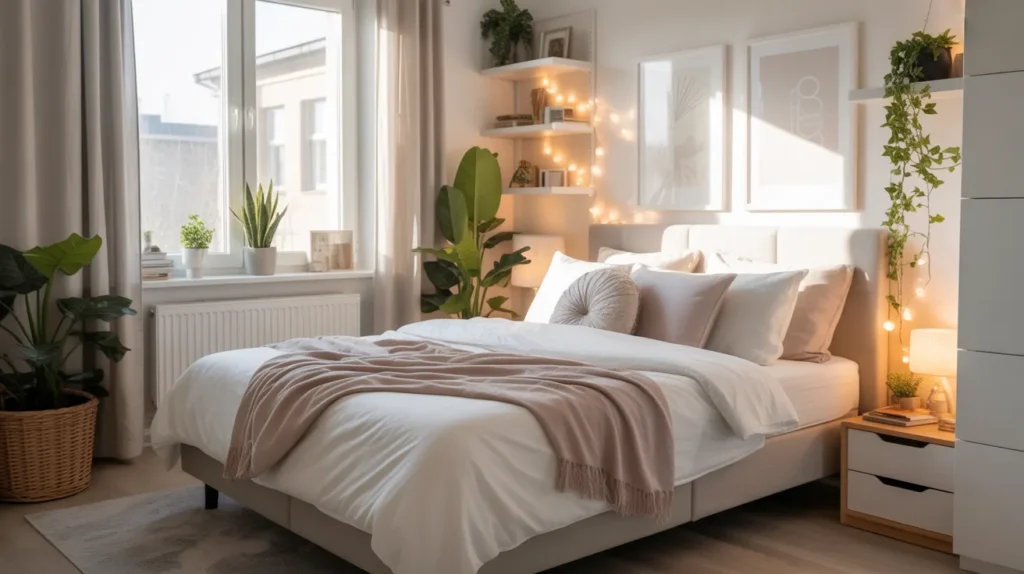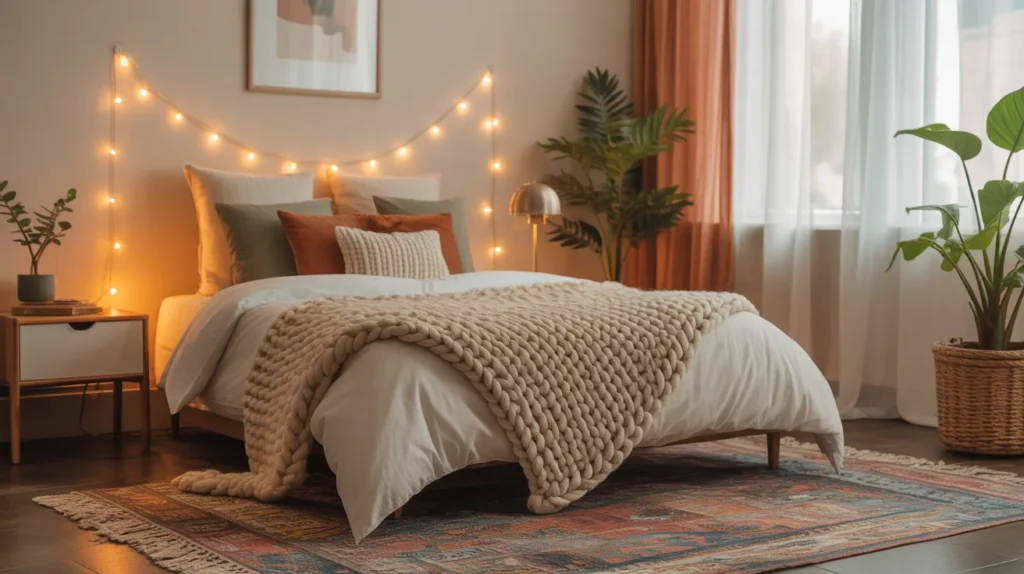
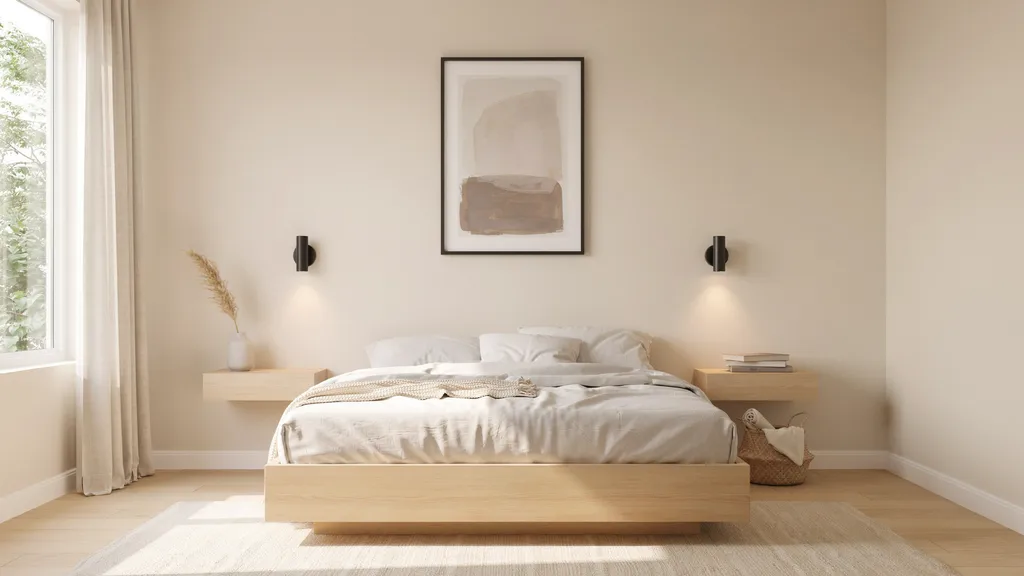
Paring down a small bedroom doesn’t mean settling for a cold, empty look — it means choosing fewer pieces that actually work harder, like a low-profile platform bed in raw white oak instead of a bulky frame with matching nightstands. These 15 minimalist bedroom design ideas focus on that kind of practical editing, not just bare walls.
The trick to a minimalist bedroom that feels intentional rather than sparse is anchoring the room around one structural detail — a wall-mounted matte black sconce above the bed, for instance, or a single floating nightstand. From there, sticking to two tones, like warm greige walls with crisp white bedding, does more to pull the room together than clearing every surface.
Whether you’re refreshing a compact guest room or your main bedroom, these minimalist bedroom design ideas stick to choices you can actually copy: exact bed frame proportions, hidden storage that doesn’t just relocate clutter, and how to layer one textured throw without breaking the clean look. No vague decluttering advice — just specific pairings pulled from the 15 ideas ahead.
1. Choose a Low-Profile Platform Bed
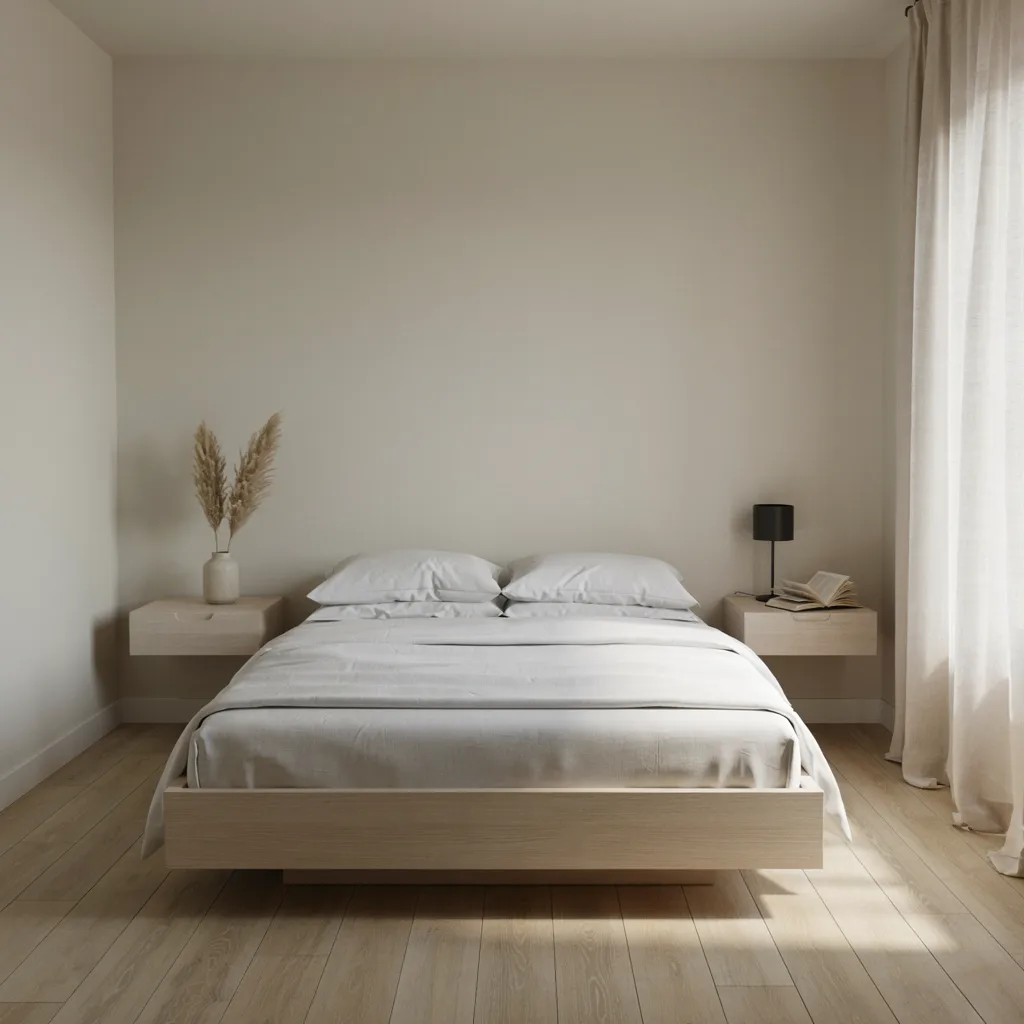
A platform bed sitting closer to the floor changes how a small bedroom reads more than almost any other single piece. Choose a frame 10-14 inches off the ground rather than the standard 16-18 inches — the lower silhouette opens up visual space above the bed and makes standard ceilings feel taller by comparison. Light oak, walnut, or ash finishes keep the wood grain visible without added shine.
Skip the matching headboard-and-footboard set that comes with most bedroom bundles. A frame with no footboard and a simple slatted headboard, priced around $400-$700 for a queen size, gives the room a cleaner line and pairs naturally with the neutral bedding covered later in this list.
2. Install Floating Nightstands Instead of Legged Ones
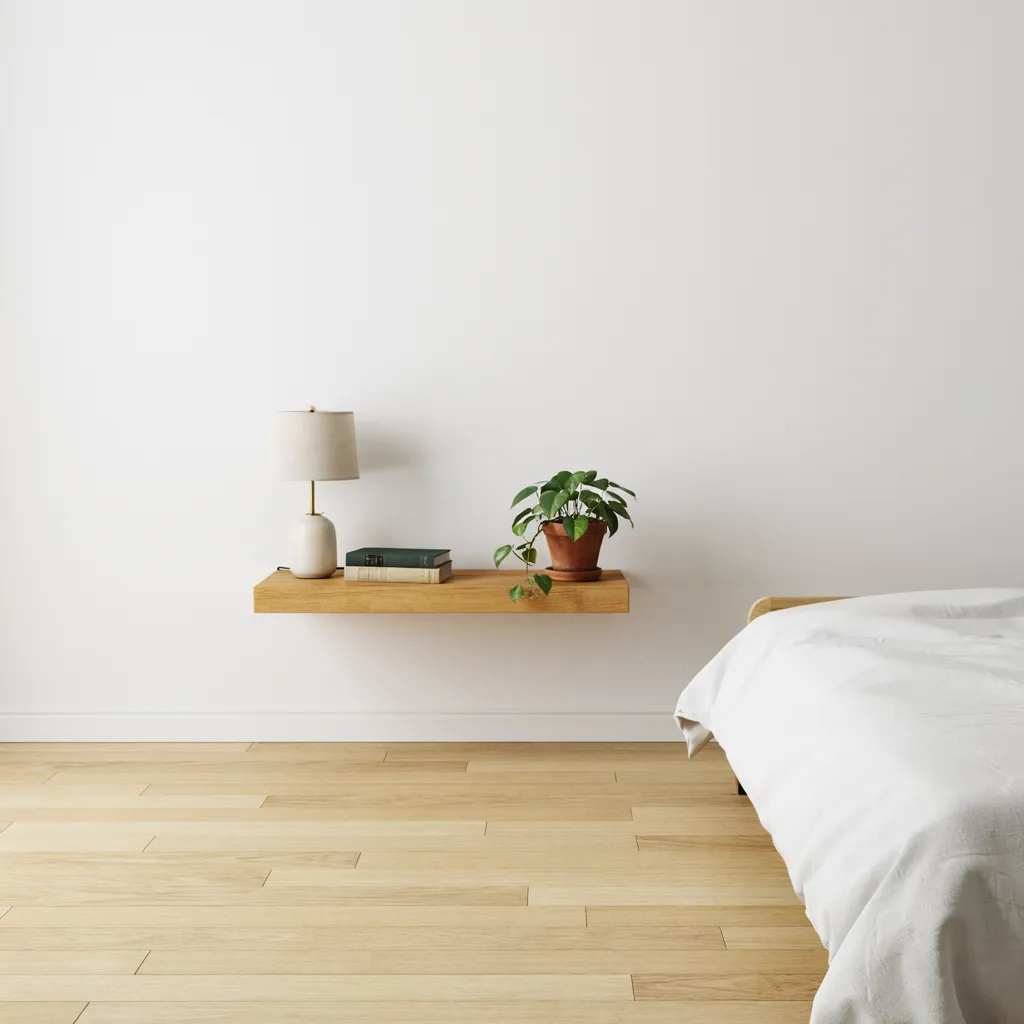
Floating nightstands keep the floor plane visible from corner to corner, which makes a small bedroom feel larger without changing a single wall. Mount each one 24-28 inches above the floor — roughly aligned with the mattress height — using a hidden French cleat or heavy-duty bracket secured into wall studs.
Choose a compact size, around 16-18 inches wide by 12 inches deep, just enough for a small lamp and one object. This built-in size limit keeps the surface from collecting daily clutter. Floating nightstands with a hidden drawer run $80-$150 per side, including mounting hardware.
3. Add a Storage Bench at the Foot of the Bed
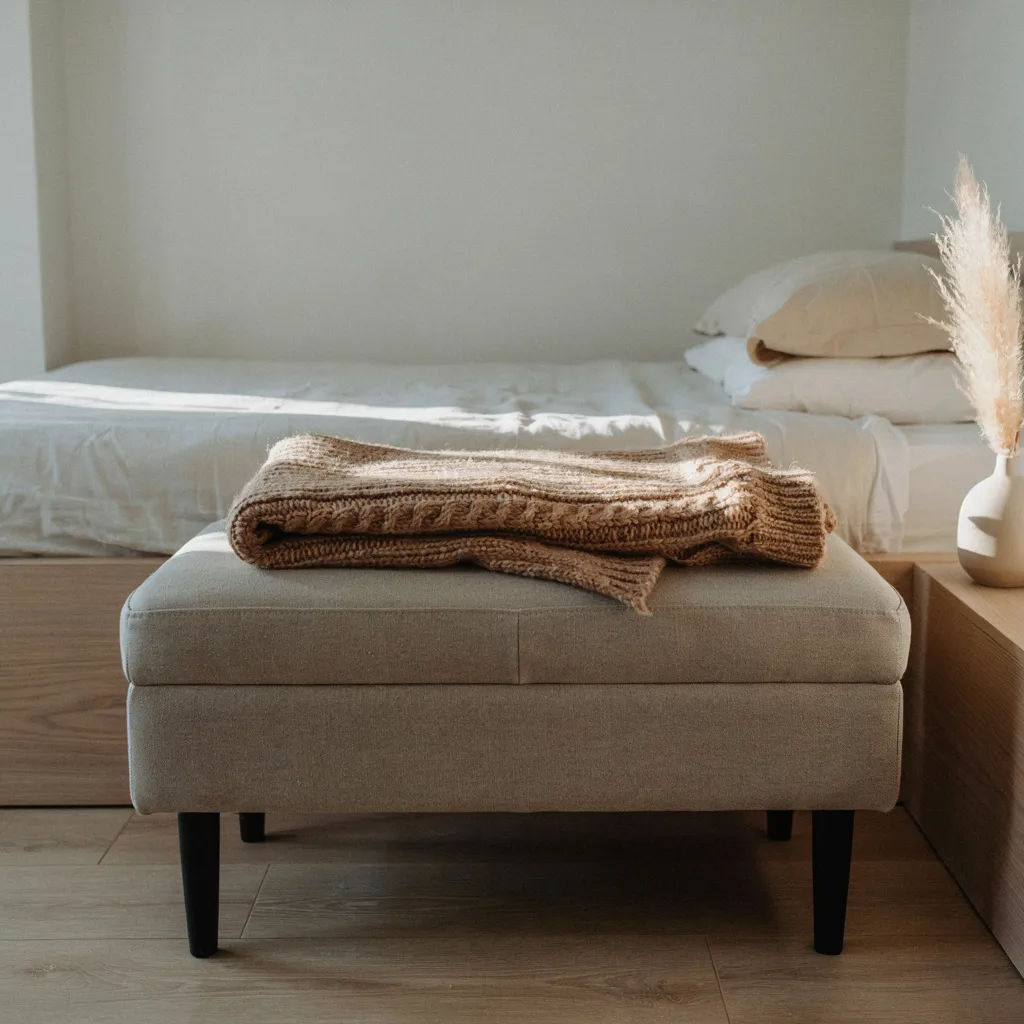
A bench at the foot of the bed adds function without adding clutter, especially with a lift-up lid instead of open shelving underneath. Size it to roughly two-thirds the width of the bed frame — around 48 inches for a queen — so it stays proportional rather than overwhelming the footboard area.
Linen upholstery in a neutral tone keeps the material palette consistent with the rest of the room. Storage benches in this style typically run $150-$300, and matte black metal legs pair well with either light or dark wood furniture without clashing.
4. Mix Natural Wood Furniture Instead of a Matching Set
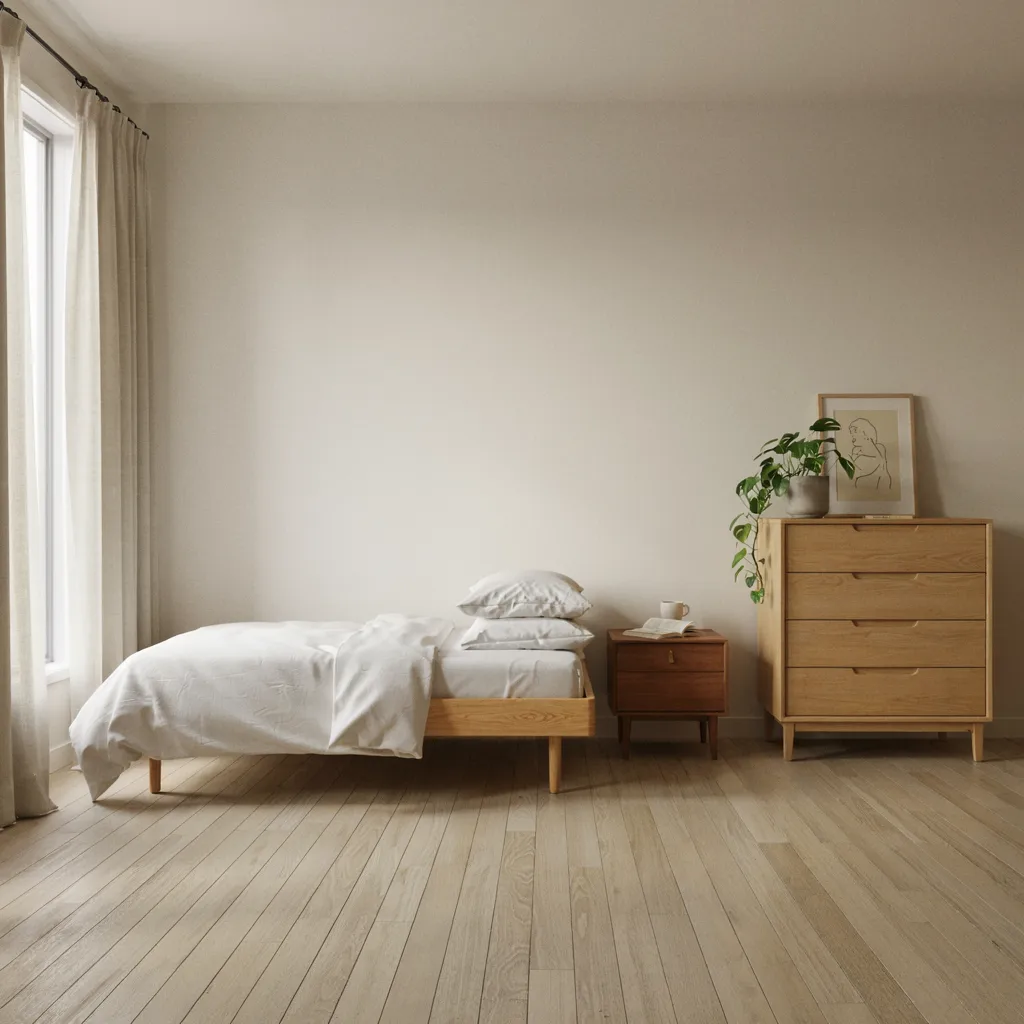
Buying an entire matching bedroom set often makes a room feel more like a showroom display than a lived-in space. Combine two or three wood pieces in complementary tones instead — an oak platform bed with a walnut dresser, for example — so the room reads as collected rather than boxed.
A solid oak or walnut dresser between 60-72 inches wide gives generous storage without dominating the wall. Keep the top surface to one or two objects, like a ceramic vase or a small stack of books, so the wood grain itself stays the visual focus rather than competing with decor. This warm-wood approach also lines up with the broader modern bedroom trends shaping 2026, where natural materials are taking over from painted finishes.
5. Build the Room Around Two Tones Only
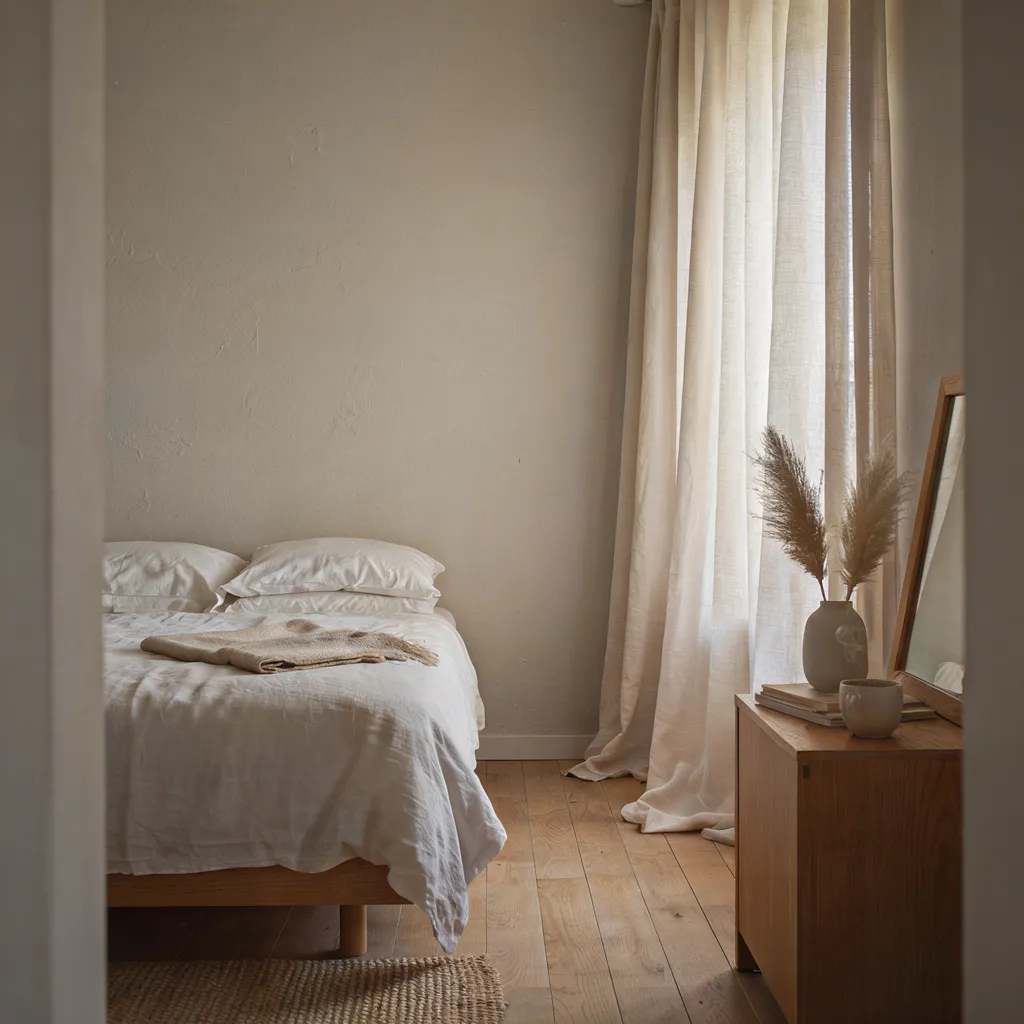
Color noise is usually the real reason a “simple” bedroom still feels busy. Limiting the palette to two tones — warm greige walls with crisp white bedding, for instance — does more to create a minimalist look than removing objects from the room. Every additional color introduced after that should repeat one of the two rather than adding a third.
A warm greige with a light reflectance value around 65-75 keeps the room bright without feeling stark, and pairs well with white oak or walnut furniture. A gallon of matte greige paint runs $45-$65 and covers roughly 350-400 square feet with one coat.
6. Mix One Wood Tone with Matte Black Hardware
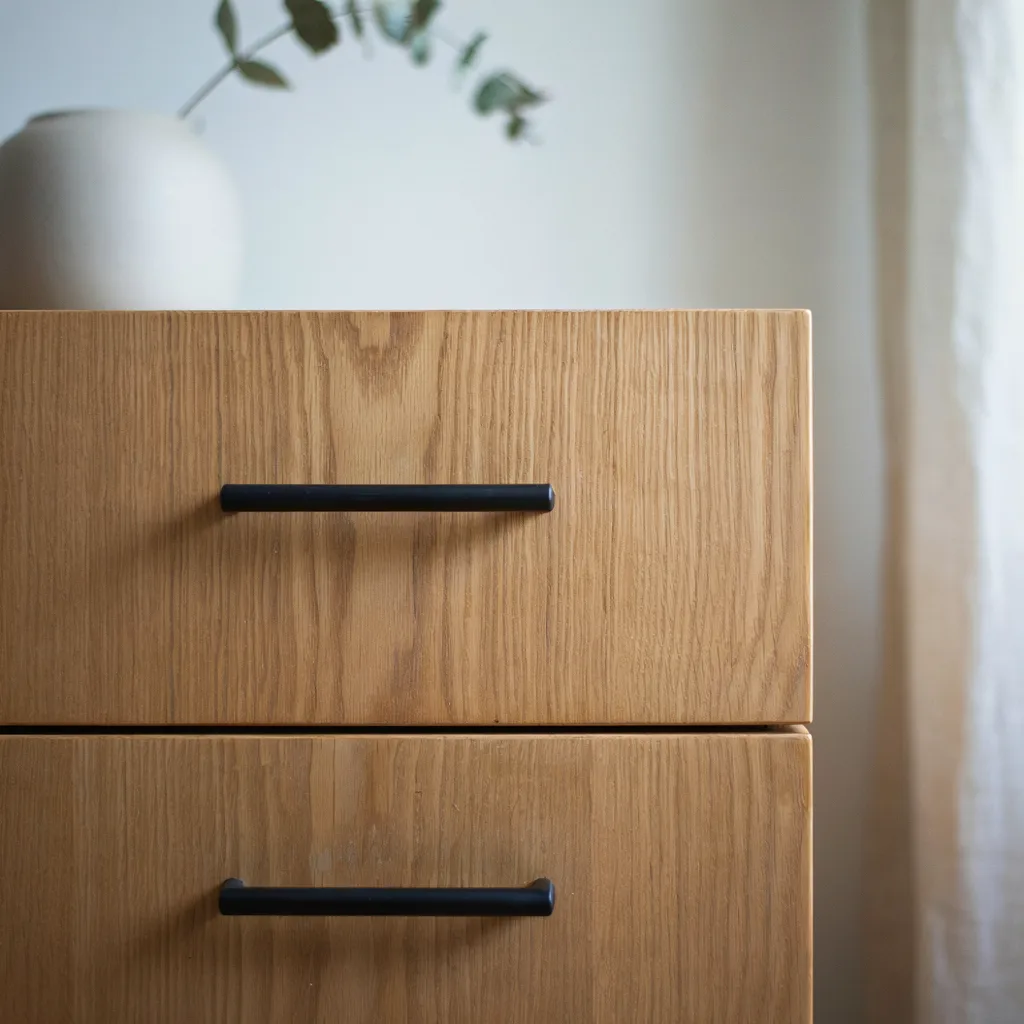
Metal finishes matter more in a minimalist room because there’s less other detail competing for attention. Pair one warm wood tone with matte black hardware throughout — drawer pulls, a lamp base, a curtain rod — repeating the black finish across at least three items so it reads as intentional rather than random.
Matte black hardware costs slightly more than standard brushed nickel, typically $3-$8 per drawer pull versus $2-$5, but the flat finish looks more deliberate against light wood and photographs well for Pinterest-style flat lays.
7. Choose Linen Bedding for Texture Instead of Pattern
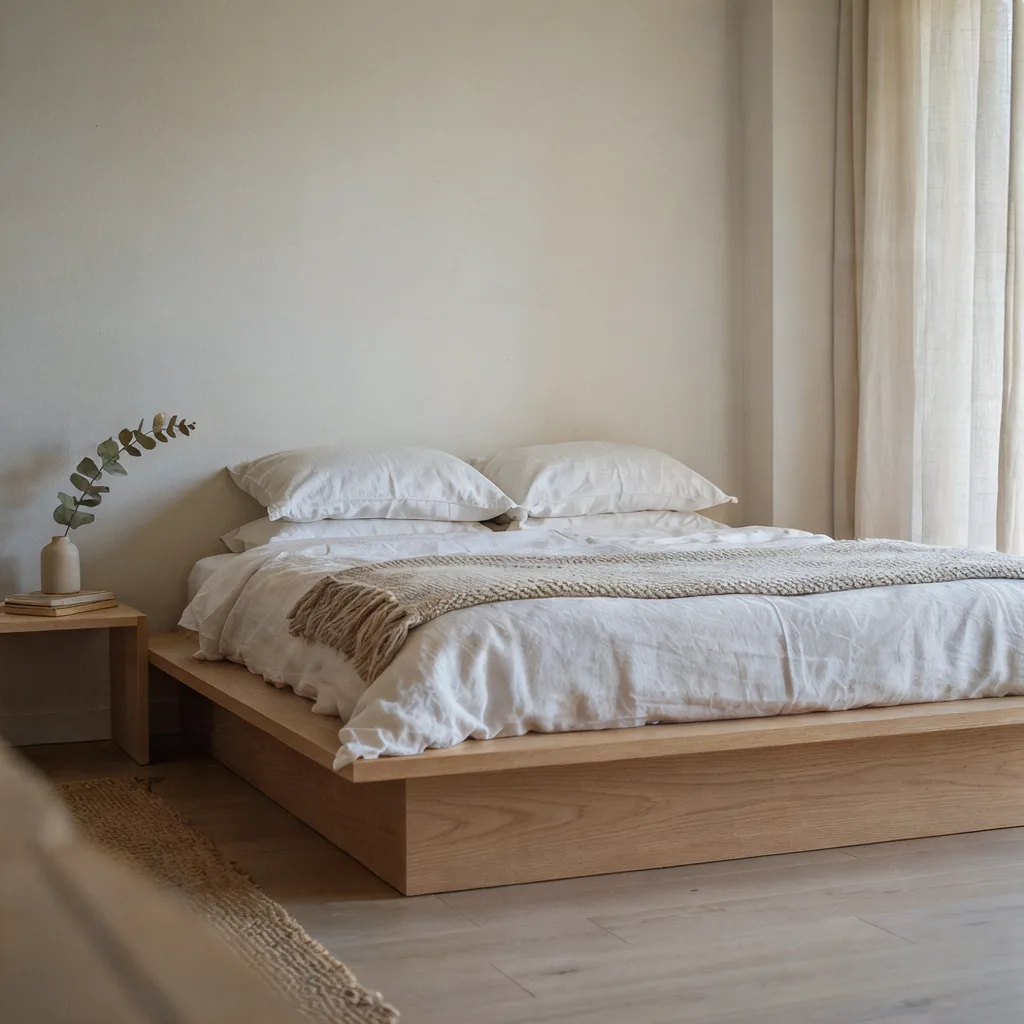
Linen bedding introduces natural texture without relying on pattern, which keeps a minimalist bedroom feeling layered rather than flat. Stick to white or a very light oatmeal as the base, then add exactly one textured element — a folded knit throw at the foot of the bed — instead of multiple decorative pillows.
Look for 100% European flax linen for the sheets, which breaks in softer over time than cotton-linen blends. A linen sheet set in queen size runs $90-$160, and a quality knit throw adds another $50-$90.
8. Mount Wall Sconces Instead of Table Lamps
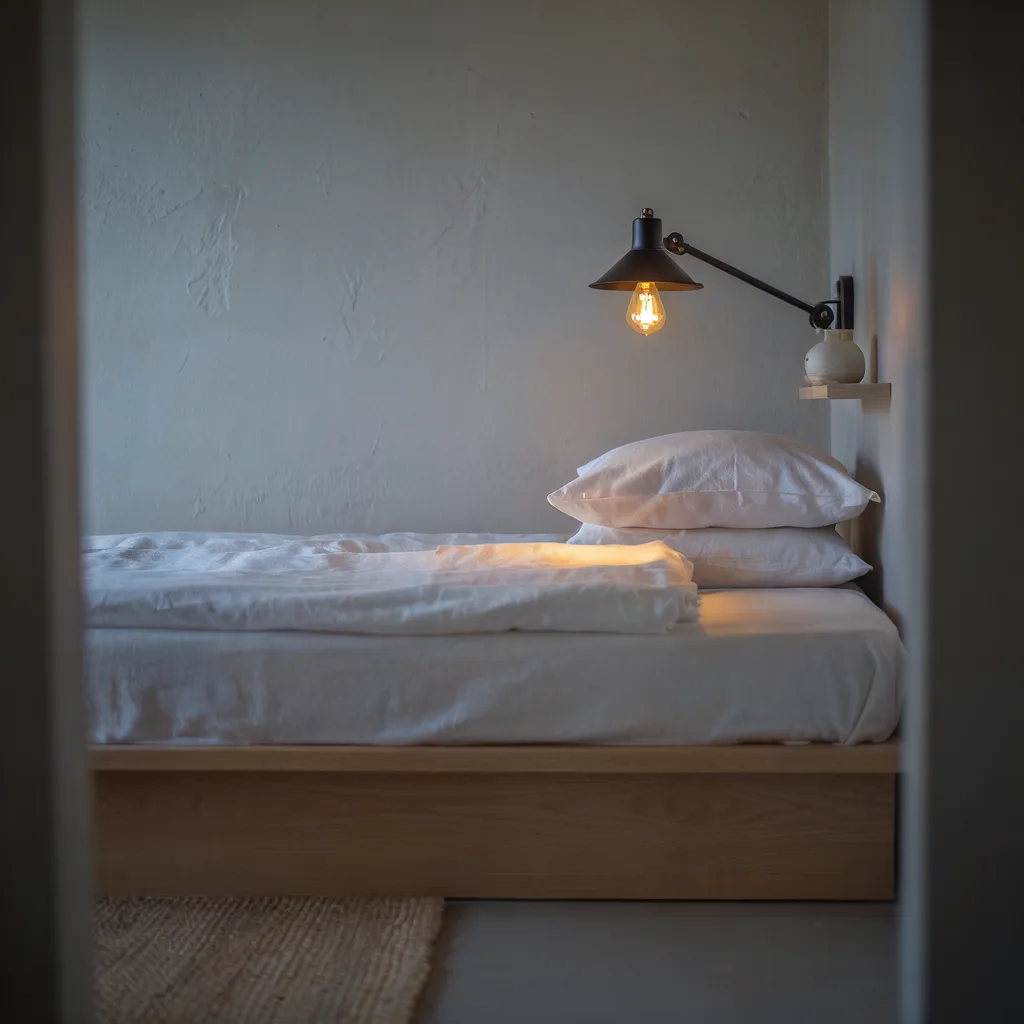
Wall-mounted sconces free up nightstand space entirely and give the room one clear lighting focal point instead of two competing table lamps. Mount each sconce 24-28 inches above the mattress top, with the arm extending 8-10 inches so the light reaches over a pillow for reading.
Matte black finishes read as more deliberate in a minimalist room than polished brass or chrome, which can look glossy against a plain wall. A quality swing-arm sconce runs $50-$120 per fixture, and installing one on each side of the bed creates natural symmetry.
9. Hang One Large Piece of Art Instead of a Gallery Wall
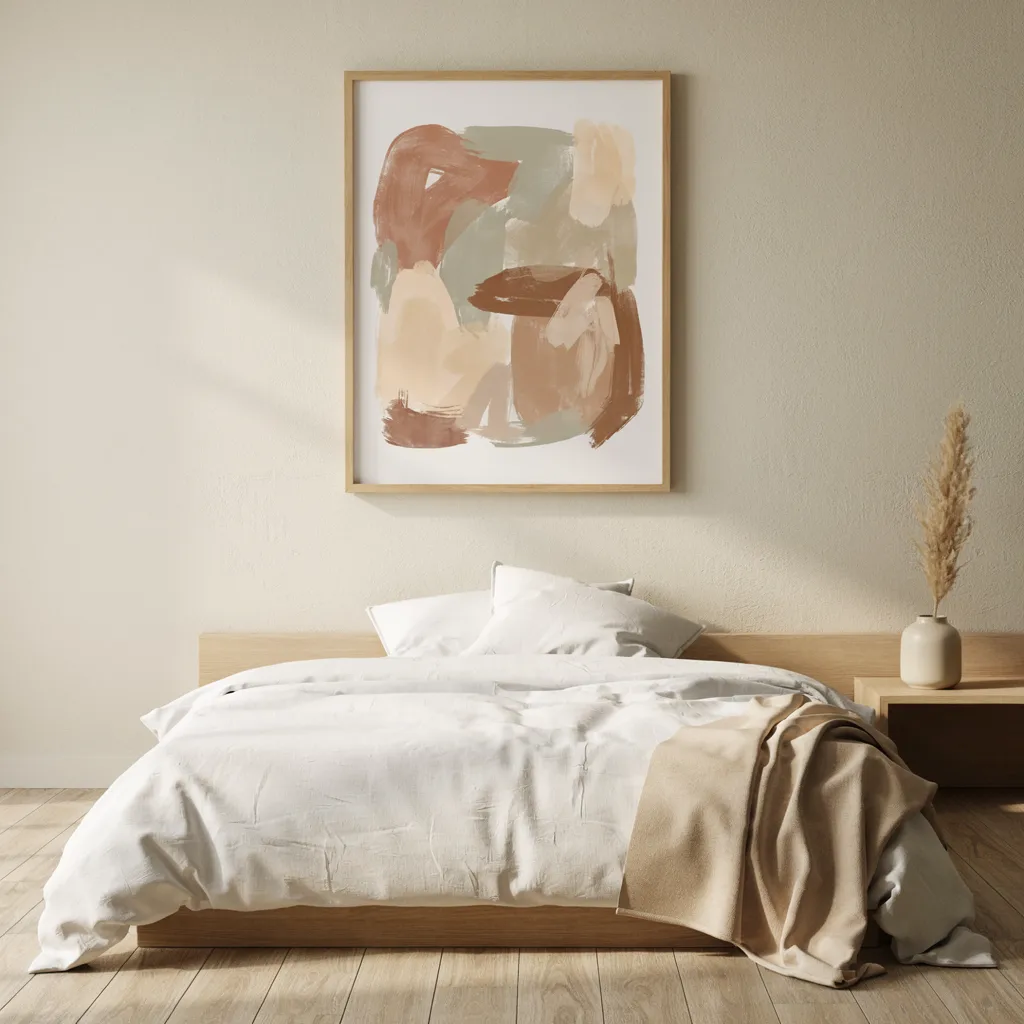
Multiple small frames tend to clutter a minimalist bedroom’s walls no matter how carefully they’re arranged. One large piece — sized to cover 50-60% of the wall width above the headboard — creates a stronger focal point and is easier to center than a gallery cluster.
For a queen or king bed, look for artwork in the 36×48 inch range, hung so the bottom edge sits 8-10 inches above the headboard. A framed print at this size typically costs $80-$200, less than most multi-piece gallery arrangements combined, and reads as more intentional in photos.
10. Use a Statement Pendant Light Instead of a Standard Fixture
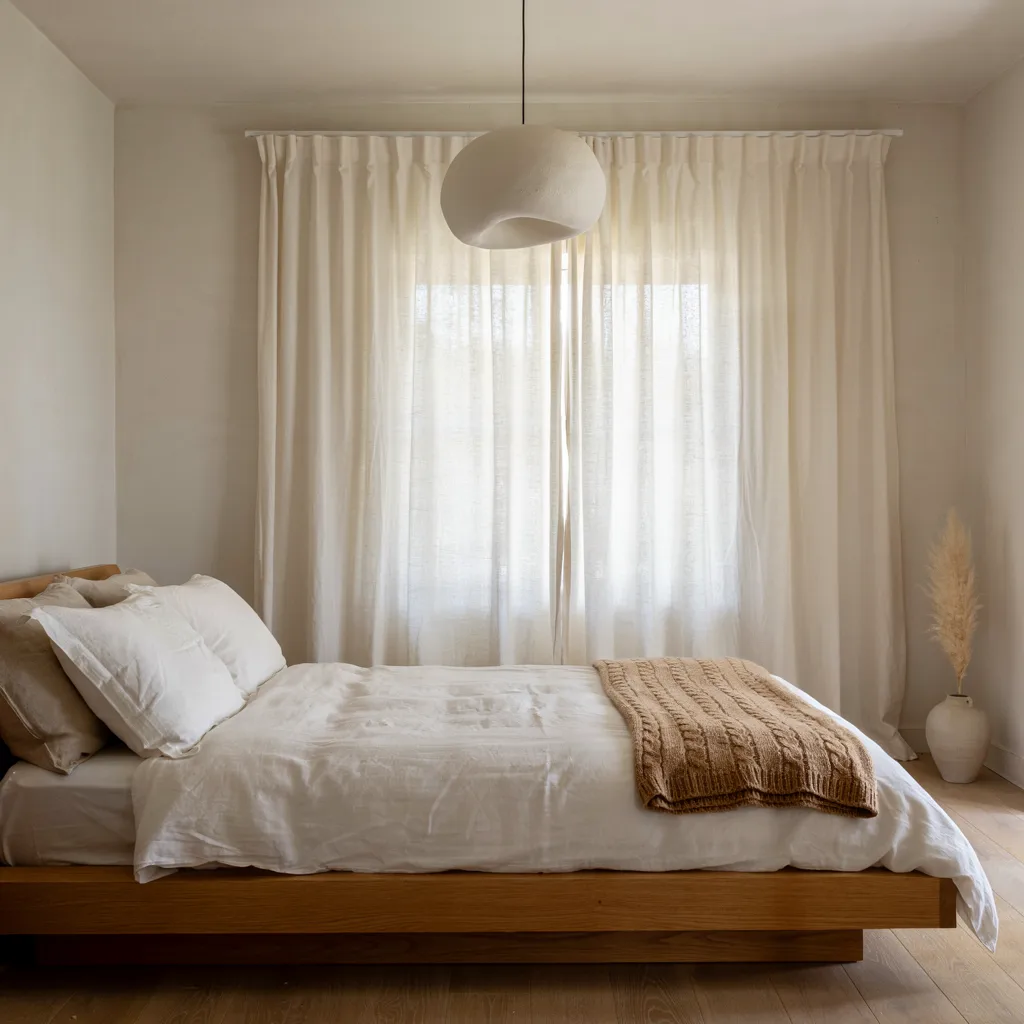
A sculptural pendant in frosted glass, matte metal, or woven paper adds character without cluttering a minimalist room the way multiple smaller fixtures would. Hang it so the bottom sits about 7 feet above the finished floor in a room with standard ceiling height, centered above the bed to anchor the layout.
Let the pendant handle ambient light while wall sconces or a small lamp cover reading light — this mix avoids relying on one harsh overhead source. Sculptural pendants in this style run $120-$300 depending on material and size.
11. Use Flush-Front Wardrobe Doors
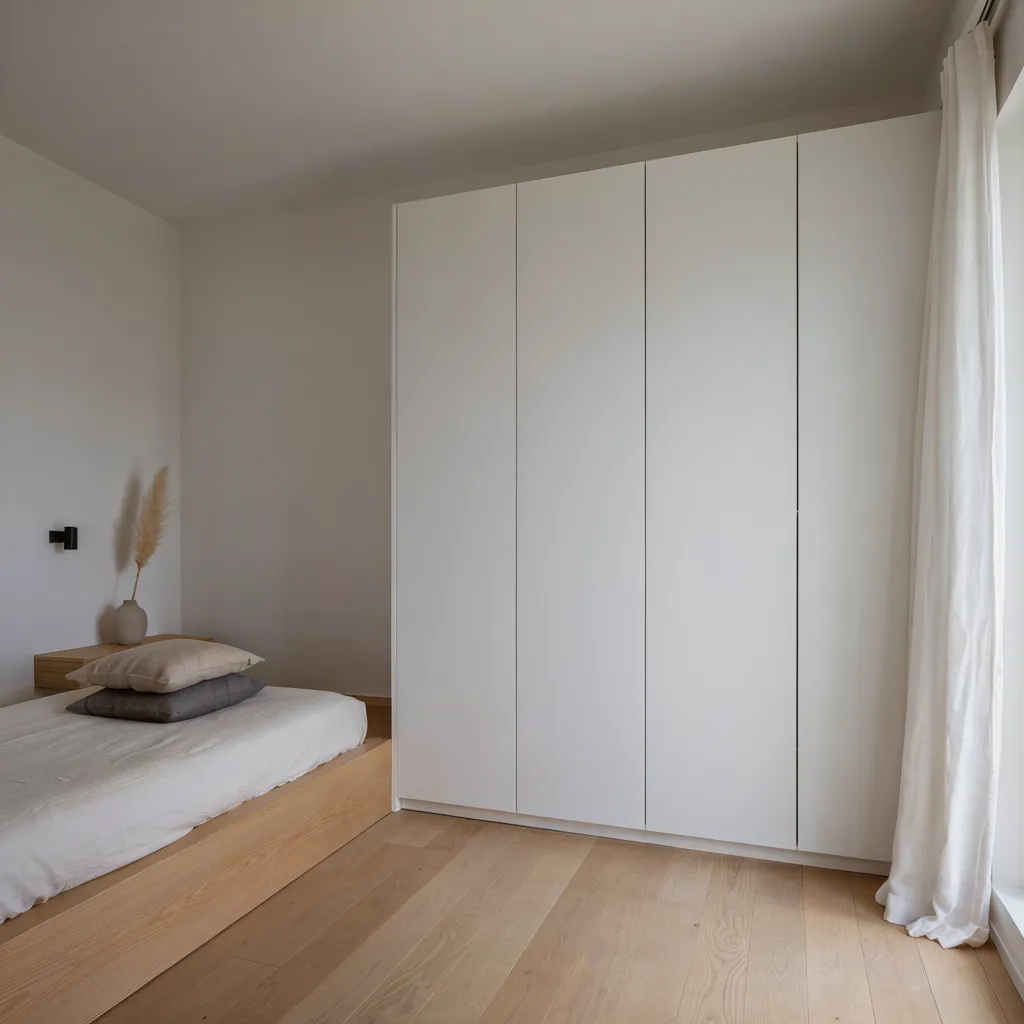
Visible hardware and paneled doors add busyness to a room that’s otherwise pared back. Flush-front wardrobe doors — flat panels with no raised molding — combined with push-to-open hinges instead of handles keep a full storage wall looking uninterrupted, especially when painted the same color as the surrounding wall.
Push-to-open hinge hardware adds roughly $15-$25 per door compared to standard hinges with handles, a small cost for the cleaner look. This detail works particularly well when the wardrobe spans an entire wall, since the lack of visible breaks makes the whole surface read as one plane.
12. Store Extra Linens in Underbed Drawers or Bins
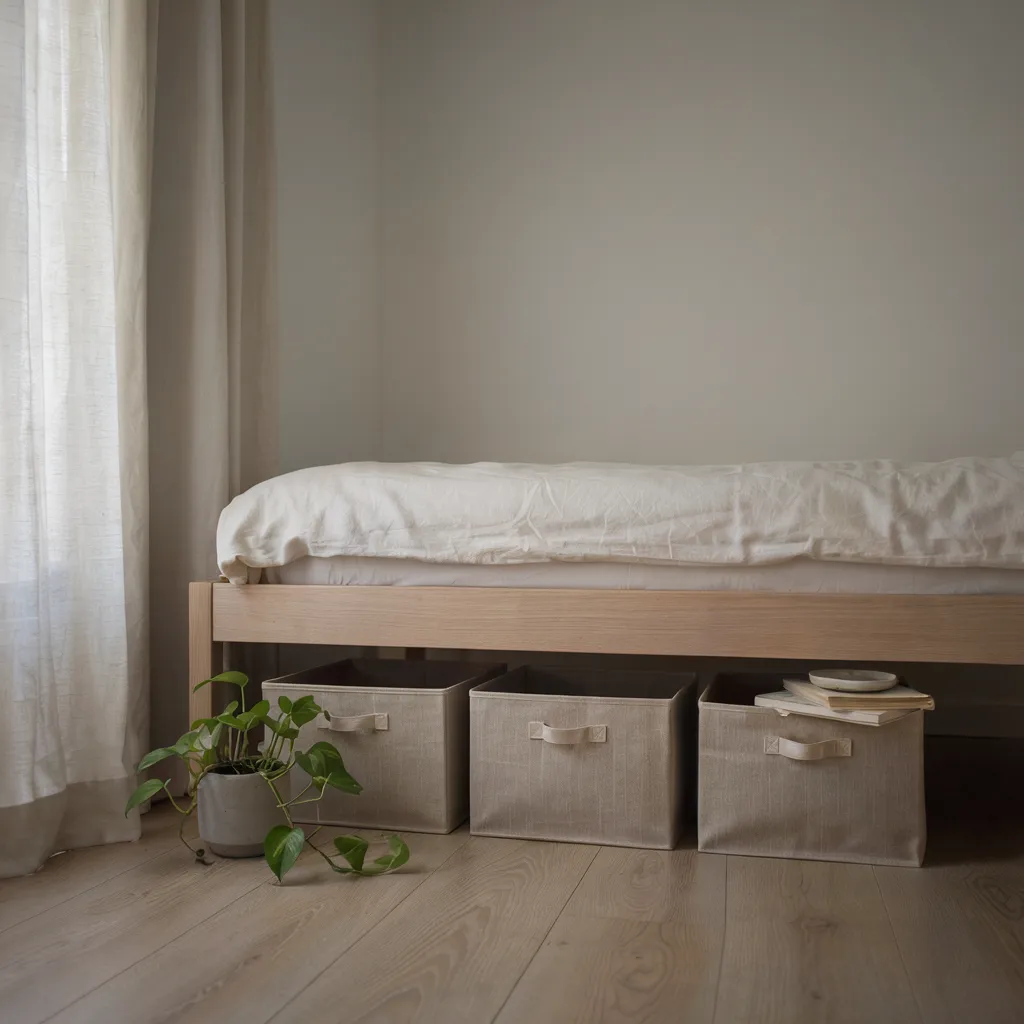
A platform bed’s low clearance can still fit slim storage if you measure before buying. Choose bins no taller than 6 inches to fit under most low-profile frames, in canvas or linen fabric rather than clear plastic, which reads as clutter even when tucked out of sight. If your budget allows, a platform frame with built-in soft-close drawers skips the bin question entirely.
Two to three fabric bins sized 24×16 inches hold a season’s worth of folded clothing or extra bedding without needing a separate dresser drawer, and run $20-$35 each — considerably less than a built-in drawer platform bed, which typically adds $200-$400 to the frame price.
13. Limit Nightstand Surfaces to Two Items
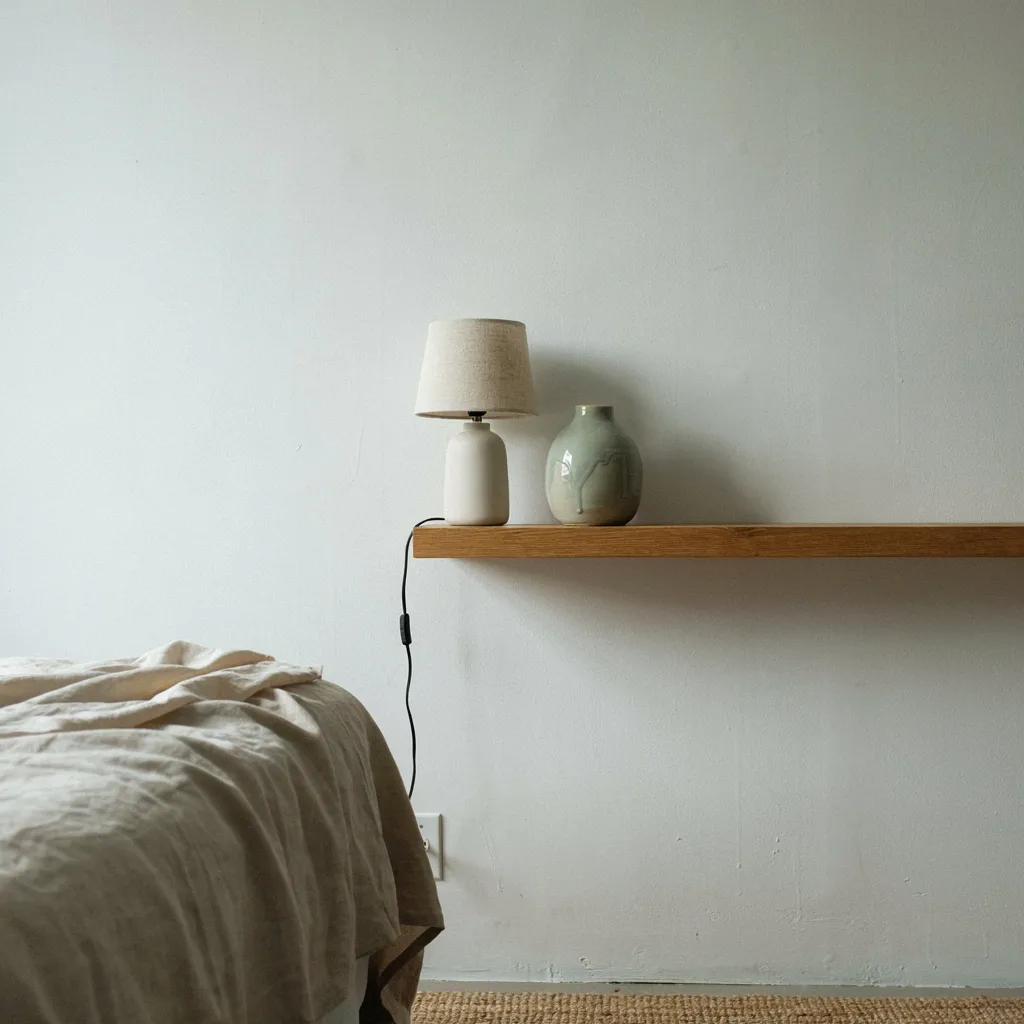
The easiest way to keep a nightstand from collecting clutter is setting a hard limit before it happens: one lamp, one object, nothing else. A small lamp under 14 inches tall paired with a single ceramic dish or small book keeps the surface functional without becoming a landing pad for daily items.
If a phone charger is a daily necessity, route the cord through a drilled hole in the shelf or a cord clip underneath so it stays out of view. This rule costs nothing to implement and often does more for a minimalist look than any furniture purchase on this list.
14. Choose a Low-Pile Rug in a Single Neutral Tone
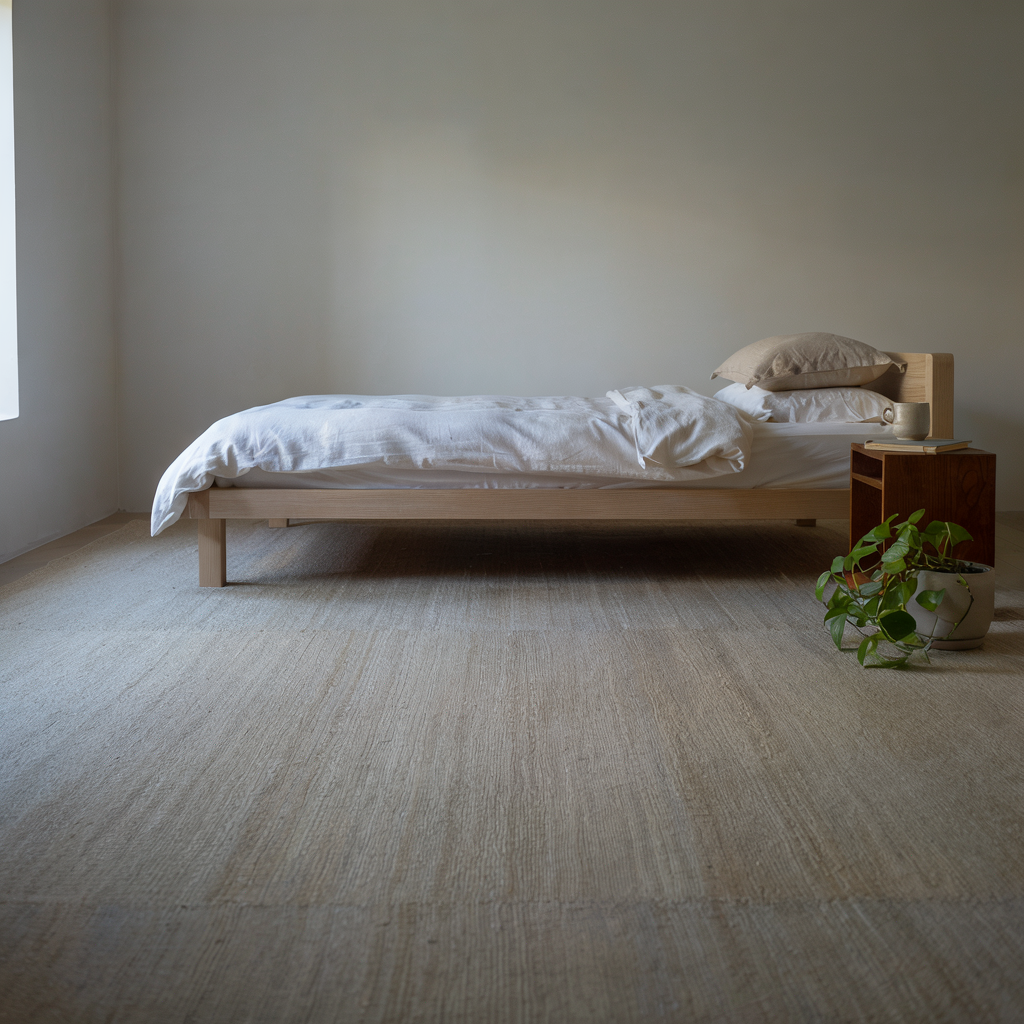
A rug in a minimalist bedroom should anchor the furniture without introducing pattern. A low-pile wool or wool-blend rug in one neutral tone — oatmeal, taupe, or soft grey — adds warmth underfoot without competing with the room’s two-tone color scheme, and shows vacuum lines less than a plush pile.
Size the rug so it extends at least 24 inches beyond each side of the bed frame for a queen-size layout, with the front two-thirds of the bed resting on it. An 8×10-foot wool-blend rug in this style typically costs $200-$350.
15. Style One Shelf with a Few Curated Pieces
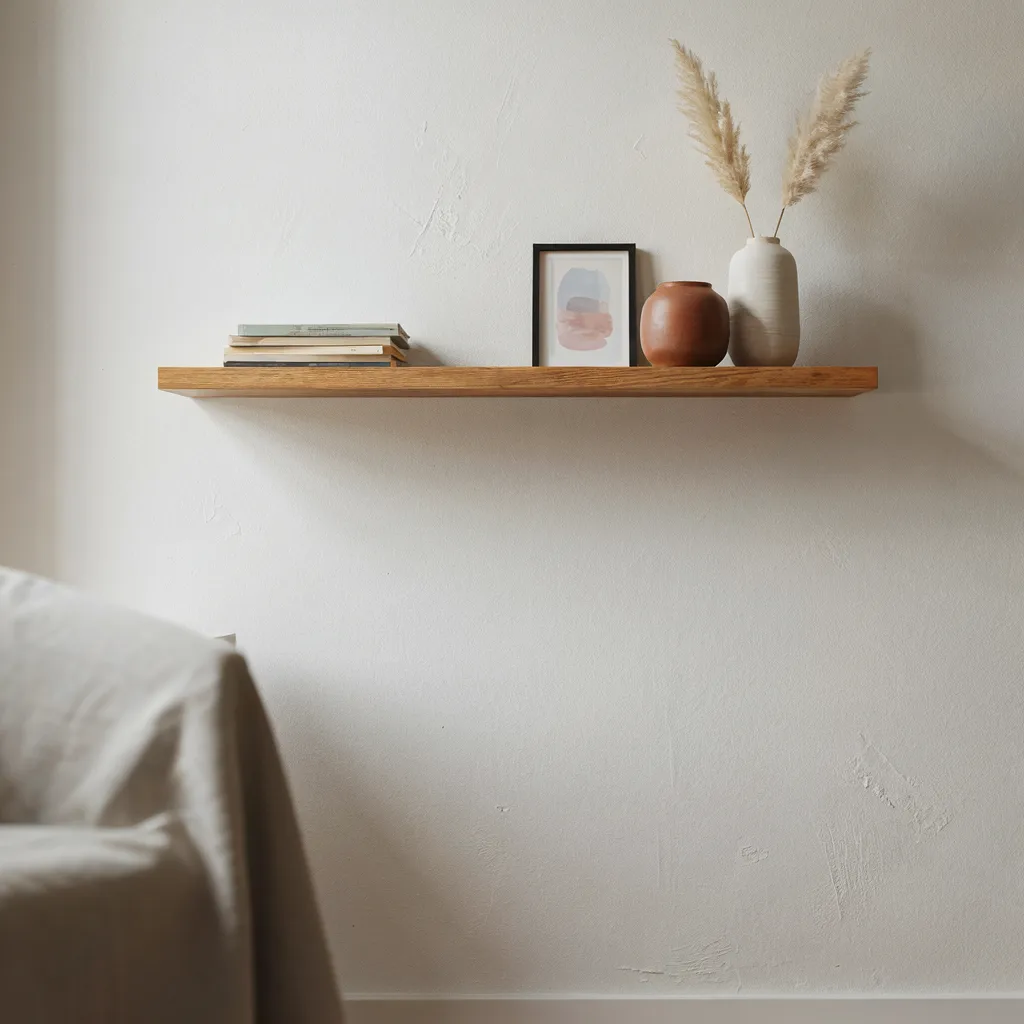
Minimalist decorating doesn’t mean removing every decorative object — it means choosing a few pieces that earn their place. A single floating shelf, roughly 36 inches wide, offers enough room for one small stack of books, two ceramic vases at different heights, and a small framed print, with visible space left between each item.
Group ceramics in odd numbers — three works better than two or four — and keep the palette to matte white, sand, or pale grey so texture carries the display instead of color. A set of three ceramic vases in this style runs $40-$90 total.
Final Thoughts:
Building a minimalist bedroom comes down to a short list of firm decisions rather than an ongoing decluttering project. Start with furniture: a low-profile platform bed and one multi-purpose piece, like a storage bench, do more work than five smaller items scattered around the room. Keep the palette to two tones and repeat one metal finish throughout, so nothing new competes for attention once the base layer is set.
Storage matters as much as furniture — flush wardrobe doors and slim underbed bins keep daily items out of sight without needing a bigger room. Most individual upgrades above fall in the $50-$400 range, so the look can be built one piece at a time. Keep textiles simple: linen sheets, one throw, one low-pile rug, and a single lighting focal point. The result isn’t an empty room — it’s one where every remaining piece was chosen on purpose.
The result isn’t an empty room — it’s one where every remaining piece was chosen on purpose. For more curated minimalist bedroom inspiration, follow Nestella Home on Pinterest.
FAQ:
What colors work best in a minimalist bedroom?
A two-tone palette works best — a warm neutral like greige paired with crisp white, repeated consistently across walls, bedding, and furniture rather than introducing a third color.
Is a minimalist bedroom expensive to put together?
Not necessarily. Changes like limiting nightstand items or choosing one lighting focal point cost nothing, while furniture upgrades like a platform bed or floating nightstands typically run $80-$700 depending on the piece.
How do I add storage without cluttering a small bedroom?
Use hidden storage like a lift-lid bench, flush-front wardrobe doors, and slim underbed bins rather than open shelving, which tends to collect visible clutter over time.
Can a minimalist bedroom still feel warm instead of cold?
Yes — natural materials like oak or walnut furniture, linen bedding, and a low-pile wool rug add warmth and texture without introducing pattern or extra color.
What’s the easiest first step for a minimalist bedroom makeover?
Start by limiting your palette to two tones and clearing nightstands down to one lamp and one object, both of which cost little to nothing before investing in new furniture.