
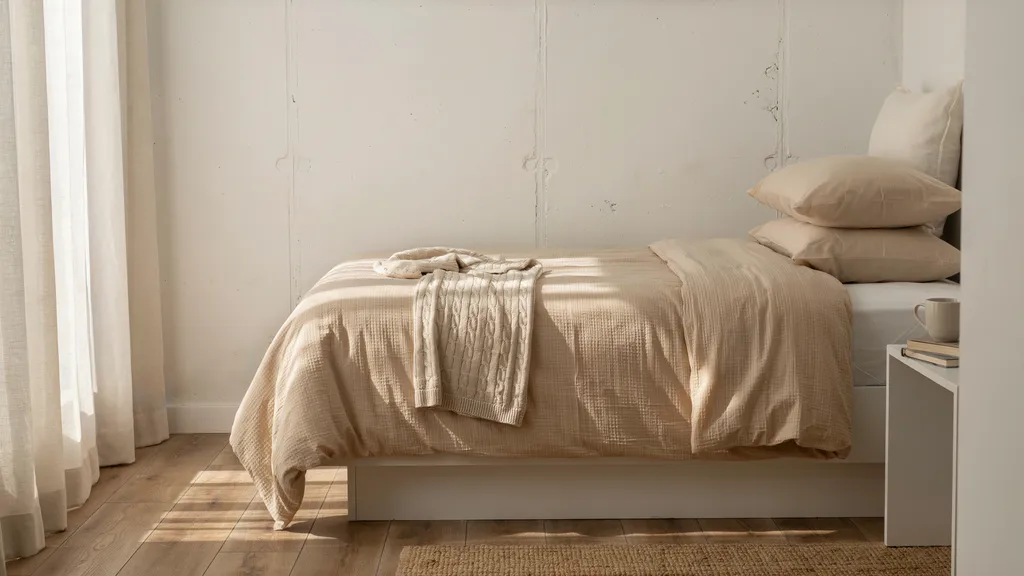
Most dorm beds look unfinished not because of the room itself but because the bedding choices default to whatever was cheapest at checkout — and that is exactly what these 11 dorm bedding ideas you’ll love for college are designed to fix. The one material detail making the biggest difference right now is a waffle-weave cotton duvet cover in warm oat or sage, which adds visible texture without requiring anything else on the bed to work.
These college dorm bedding ideas are not about buying the most expensive set — they are about layering the right textures in the right order. Start with a washed linen or breathable percale fitted sheet, add a duvet with real weight, then fold a chunky knit throw at the foot. That three-layer formula costs under $120 and makes a twin XL mattress look like it belongs in a styled apartment rather than a residence hall.
What separates dorm room bedding ideas that actually look put-together from ones that fall flat is one underrated detail — a tailored extra-long bed skirt that hides under-bed storage while keeping the layout looking clean and deliberate. The ideas ahead cover exact product types, color combinations, and placement rules so your dorm bed looks intentional from move-in day.
1. Waffle-Weave Duvet Cover in Warm Oat or Sage Green
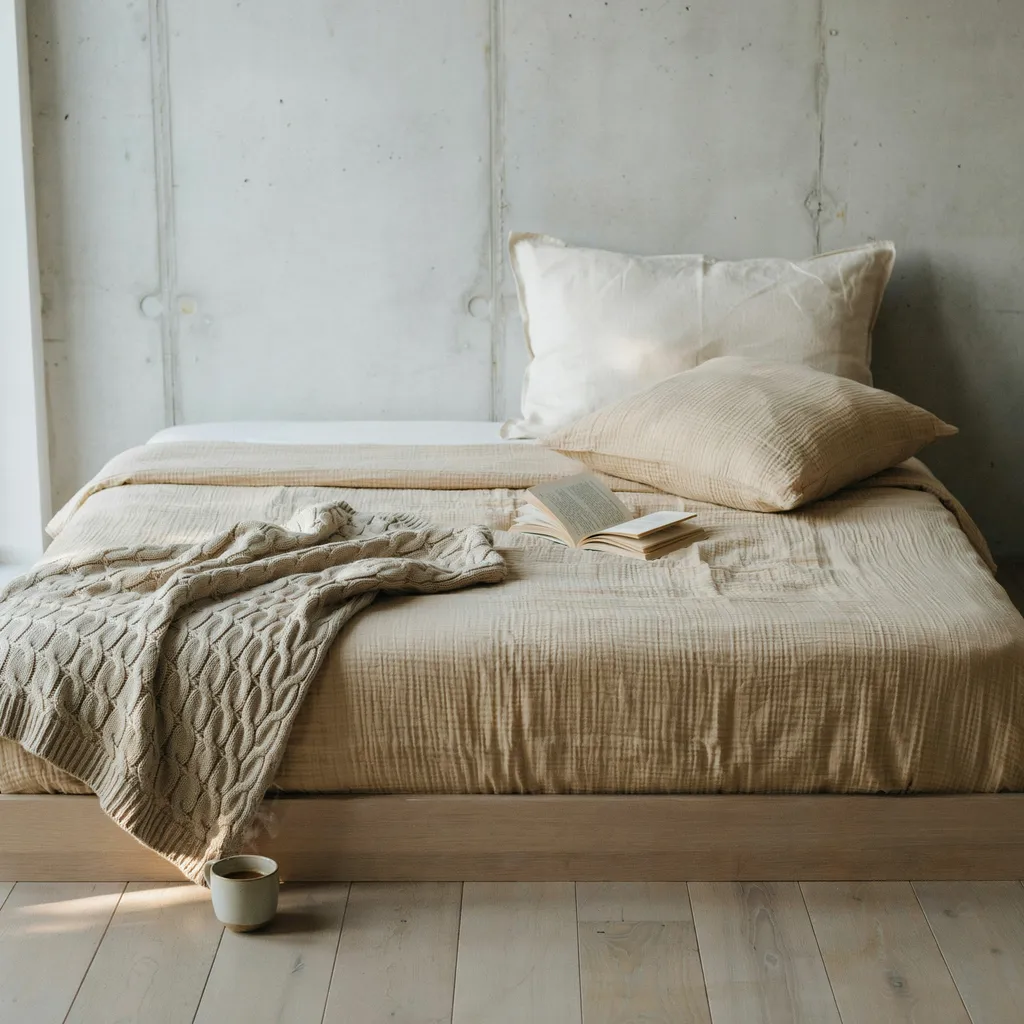
A waffle-weave cotton duvet cover in warm oat or muted sage green is the single highest-impact starting point for any of these dorm bedding ideas because the grid texture reads as intentional and layered even when nothing else on the bed is particularly styled. Unlike standard microfiber covers that flatten after the first wash, a 100% cotton waffle-weave holds its grid pattern through repeated commercial laundry cycles — which matters when shared dorm machines run hot and heavy. Look for a cover with interior corner ties to keep the insert from bunching, and expect to pay between $45 and $75 for a quality twin XL size.
Position one oversized Euro pillow measuring 26 by 26 inches directly against the wall in a matching oat linen case, then layer two standard sleeping pillows in front. This three-pillow arrangement gives the bed a structured, hotel-style silhouette without requiring a headboard — which most dorm beds simply don’t have. Fold the waffle duvet back slightly over the Euro pillow so the texture of both the cover and the pillowcase is visible at once, creating depth at the top of the bed that pulls the whole setup together visually from the doorway.
2. Tonal Layering With Three Shades of the Same Color
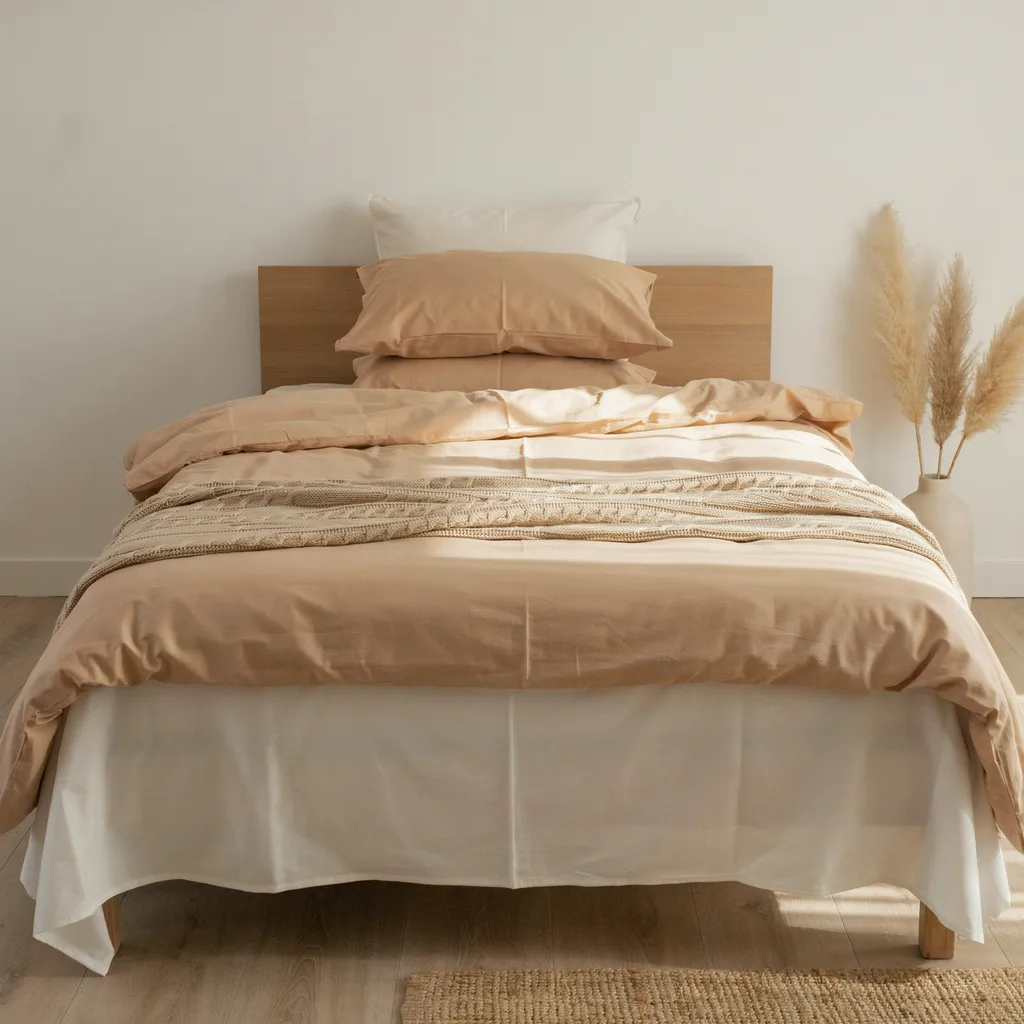
Tonal layering — using three or four shades of the same color across different bedding pieces — is the one styling approach that makes a dorm bed look professionally put together without requiring any color-matching decisions beyond the initial palette choice. The most forgiving color family for this in a dorm context is warm beige: cream fitted sheet at the lightest end, oat or warm sand for the duvet, and a caramel or terracotta tone for the throw at the foot. These shades all share the same warm undertone, which means even inexpensive pieces from different brands will read as coordinated rather than accidentally mismatched.
The key to making tonal layering work rather than look flat is ensuring each layer has a genuinely different texture — smooth percale sheet, matte waffle duvet, rough-knit throw, nubby boucle pillowcase — so the eye has something to move between even though the color palette stays consistent throughout. Avoid adding any pattern anywhere in the setup when using this approach, since a single stripe or print immediately breaks the tonal effect. This setup photographs exceptionally well in natural light because the subtle shifts between layers become more pronounced as the light moves across different textile surfaces during the day. For more warm-toned bedroom styling, explore these warm apartment aesthetic bedroom ideas that use the same tonal approach across a full room.
3. Washed Linen Fitted Sheet for a Lived-In Base Layer
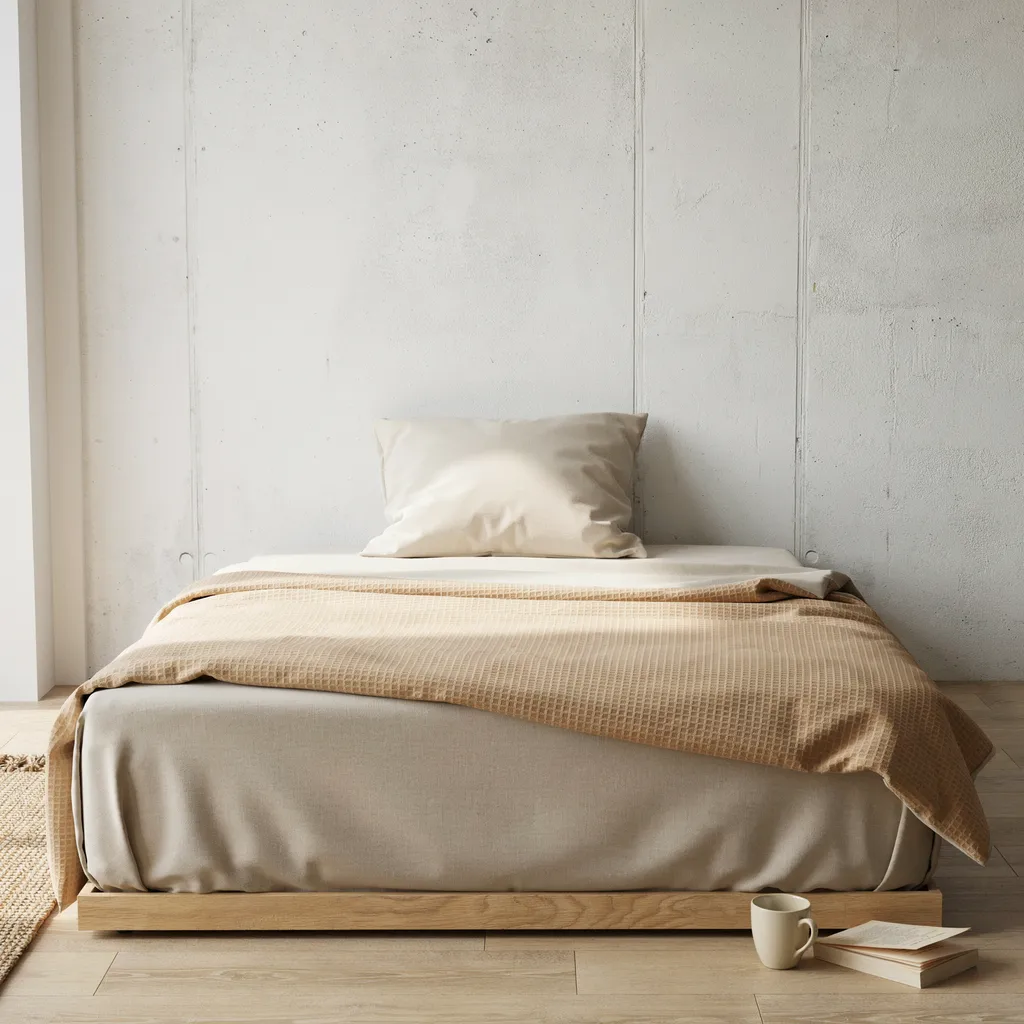
Washed linen fitted sheets look better after every wash rather than worse — the stone-washing process that gives them their slightly rumpled texture actually deepens and softens with each cycle, making them the most low-maintenance sheet choice for a dorm environment where bedding gets washed frequently and often at high heat. A 100% European flax linen sheet in warm sand or undyed natural retails between $35 and $65 for a twin XL size and fits mattresses up to 15 inches deep, covering most standard dorm mattresses with room to tuck cleanly on all sides.
The lived-in drape of washed linen means the fitted sheet corners don’t need to be perfectly smooth for the bed to look intentional — slight pulls and soft creases are part of the aesthetic rather than a problem to fix before class. Pair it with a crisper, more structured duvet cover so there is a clear textural contrast between the loose linen base and whatever sits on top. This contrast between one relaxed material and one more structured one is the specific layering detail that makes a dorm bed read as deliberately styled rather than simply unmade and left.
4. Chunky Knit Throw Folded at the Foot
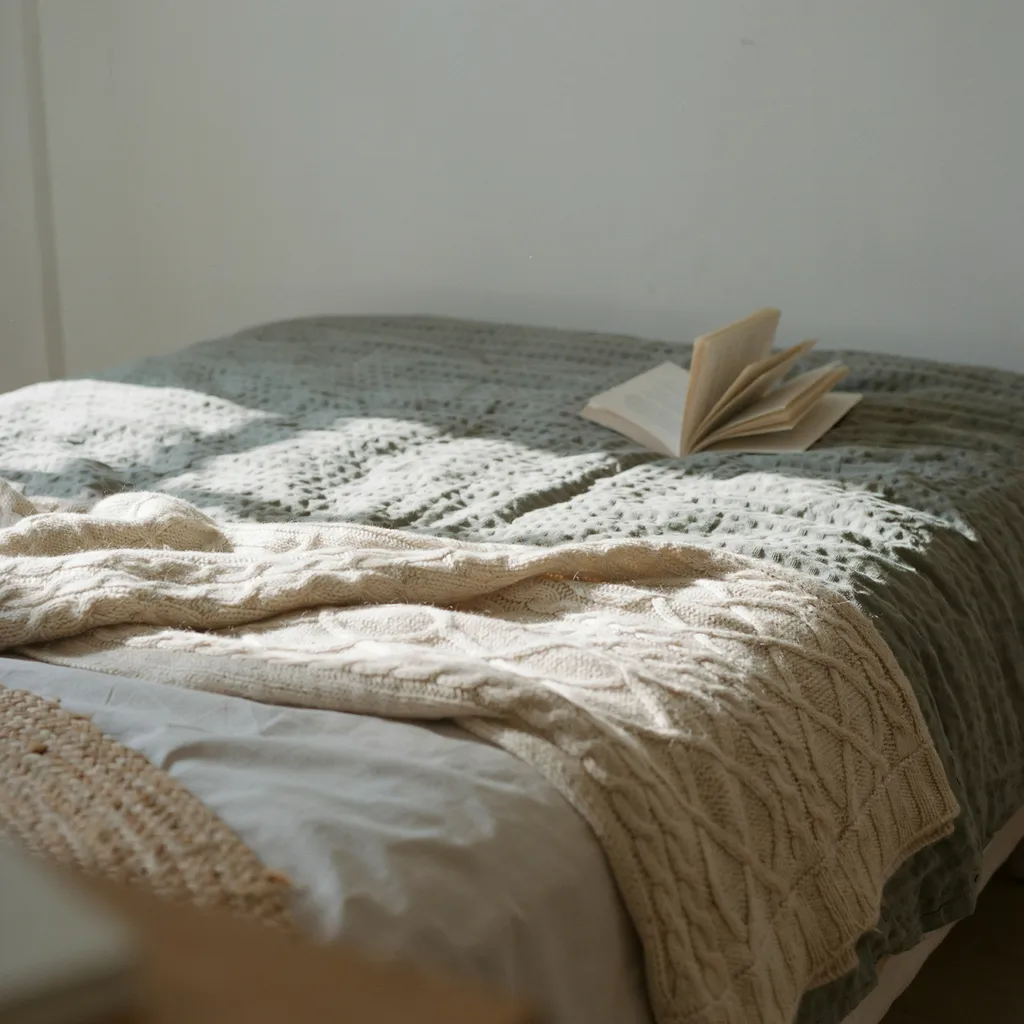
A chunky knit throw folded across the lower third of the bed is the one addition that consistently makes a plain dorm setup look layered and considered rather than bare and functional. The specific weave that does the most visual work is an open-loop hand-knit pattern in arm-weight yarn, typically measuring around 50 by 60 inches — large enough to drape generously across a twin XL without looking like a scarf dropped on a mattress. These throws retail between $28 and $55 at most home goods stores and hold their texture better than machine-knit versions after repeated washing at shared laundry facilities.
Fold it in thirds lengthwise first, then drape it loosely across the foot of the bed rather than tucking it under the mattress — the casual hang at the sides is what makes it look styled rather than placed. Choose a throw in a tone one shade warmer than the duvet cover so both pieces read as coordinated without matching exactly: a cream throw on an oat duvet, or a terracotta throw on a warm beige duvet, are combinations that work without requiring any additional color planning elsewhere in the room.
5. Reversible Comforter in Sand and Sage Green
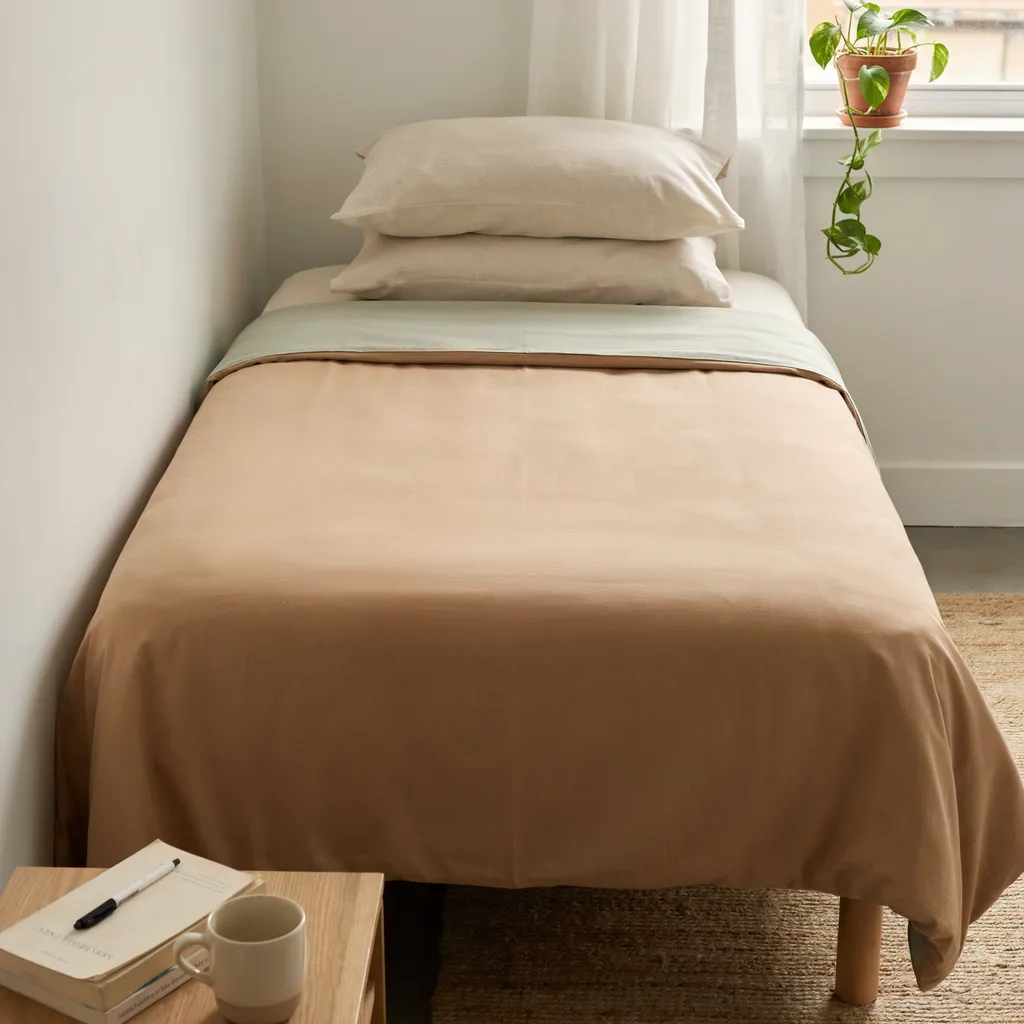
A reversible comforter with two coordinating neutral tones — warm sand on one side, muted sage on the other — gives a dorm bed two completely different looks without buying two separate pieces, which matters when storage space under the bed is already occupied by shoes and laundry bags. Look for a comforter with baffle-box construction rather than channel-stitched, since baffle boxes keep the fill evenly distributed and prevent the flat spots that make a made bed look lumpy from across the room. Twin XL reversible comforters in this construction typically run between $55 and $90.
The styling move that makes a reversible piece work visually is folding the top third back deliberately so both colors show at once — sand on the outside, sage lining at the fold, cream pillows in front of that. This three-tone reveal at the head of the bed creates visual interest using only one product and zero additional accessories. Keep every other textile in the room — throw, pillowcases, any floor mat — within the same sand-sage-cream range so the comforter reads as the clear anchor piece rather than a random color decision.
6. Striped Percale Sheet Set for a Graphic, Tailored Look
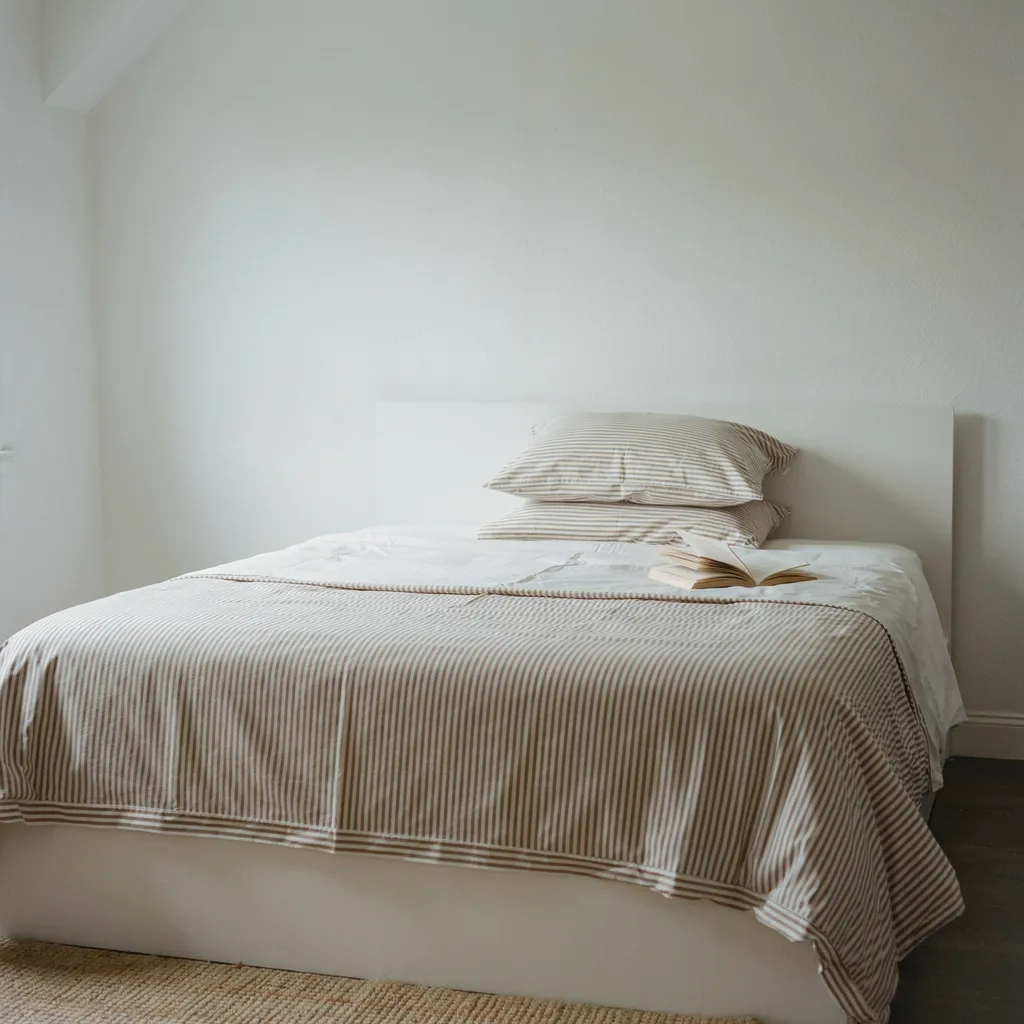
A thin-striped percale sheet set in two-tone white and sand brings a graphic, intentional quality to a dorm bed that solid-color sheets rarely achieve — the vertical lines give the mattress a more elongated, structured look and provide a visual baseline even when the duvet on top is soft and relaxed in texture. Percale specifically, rather than sateen, is the right choice for a dorm environment because the matte, crisp surface resists pilling better under the friction of frequent washing, and it does not show every small wrinkle the way a smooth sateen finish does. A thread count between 200 and 300 in percale is the practical sweet spot for both durability and feel across a full semester.
Pull the top sheet up and fold it back about 8 inches over the duvet at the head of the bed so the stripe pattern is visible as a contrasting border at the top edge — this hotel-fold detail adds a finished quality that takes about 10 seconds and requires nothing extra. Match the pillowcases to the sheet rather than the duvet so the stripe pattern frames the sleeping area rather than competing with the duvet cover texture. This setup also photographs cleanly from above, which is useful if the bed occasionally doubles as a backdrop for video calls or content creation.
7. Euro Pillow Against the Wall as a Faux Headboard

Most dorm beds are pushed against a wall with no headboard, which leaves the top of the bed looking cut off and unfinished — a single Euro pillow in a textured boucle or linen case propped against the wall solves that visual problem without requiring any installation, wall damage, or resident advisor approval. The standard Euro size is 26 by 26 inches, which is tall enough to read as a headboard substitute when propped upright rather than lying flat. A boucle pillow cover in cream or warm ivory in this size typically retails between $18 and $35, making this the cheapest single visual upgrade on this entire list for the impact it delivers.
Keep the Euro pillow in a case that has slightly more texture than the sleeping pillows in front of it — the contrast in surface quality between a boucle Euro and a plain percale standard pillowcase is what creates visual hierarchy at the head of the bed. Lean it directly against the wall at a slight backward angle rather than perfectly upright, since a perfectly vertical pillow tends to fall forward during the day while a slight lean keeps everything in place until the next morning. One Euro pillow is sufficient on a twin XL — two side by side on this bed size feels crowded rather than layered.
8. Textured Throw Pillow in One Accent Color
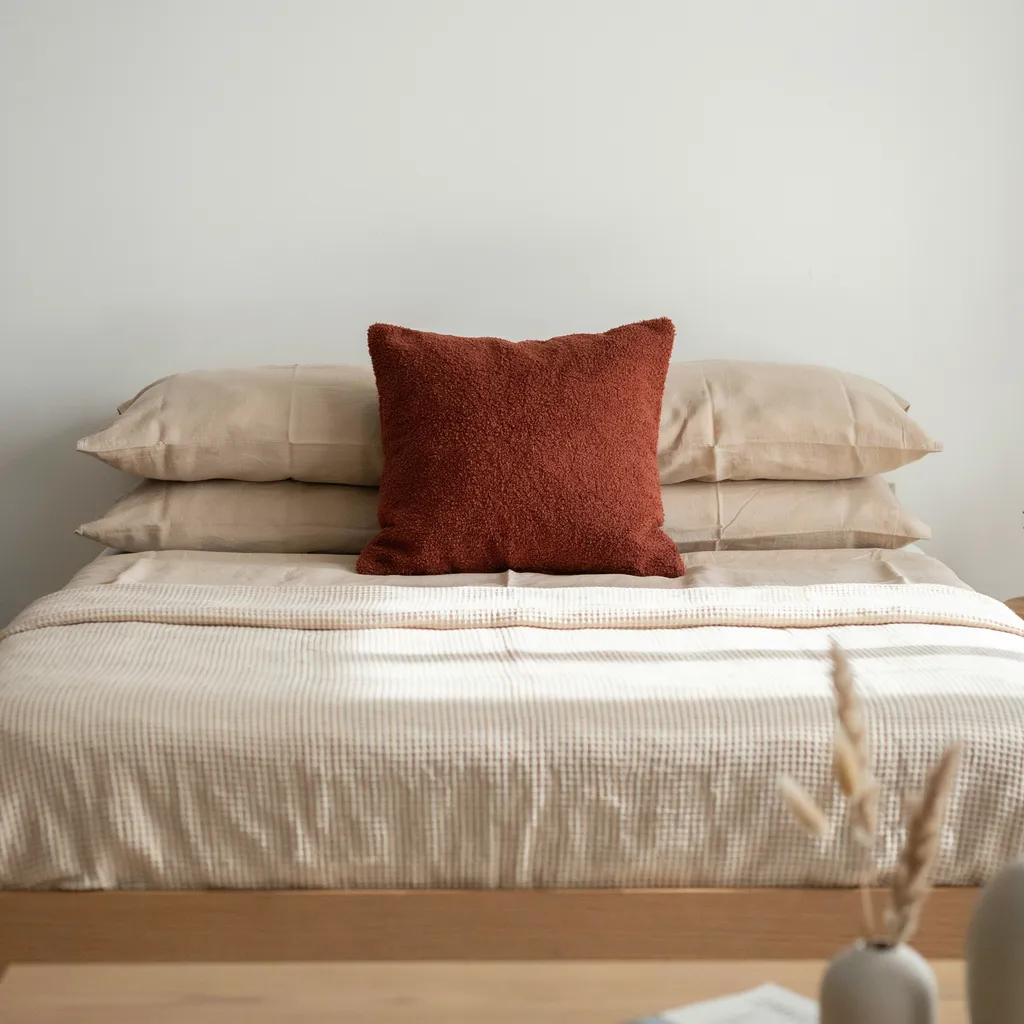
One textured throw pillow in a single accent color placed in front of the sleeping pillows is more effective than a set of three decorative pillows on a twin XL bed, where multiple accent pieces quickly crowd the limited surface area and make the bed look busy rather than considered. The specific material that does the most work in this position is boucle — the looped, nubby surface catches light differently at every angle, which means a single 18-inch square boucle pillow in deep terracotta or dusty sage reads as a deliberate design decision from across the room. Boucle throw pillows in this size typically retail between $15 and $30.
Place the accent pillow centered in front of both sleeping pillows rather than offset to one side — on a twin XL, centering keeps the bed visually symmetrical even though there is only one accent piece. Remove it before sleeping and set it on the desk chair or windowsill rather than on the floor, since boucle fabric picks up dust and lint faster than most other materials. One pillow in one accent color is the rule — adding a second throw pillow in a different color immediately shifts the setup from intentional to cluttered on a bed this narrow.
9. Bed Skirt to Conceal Under-Bed Storage
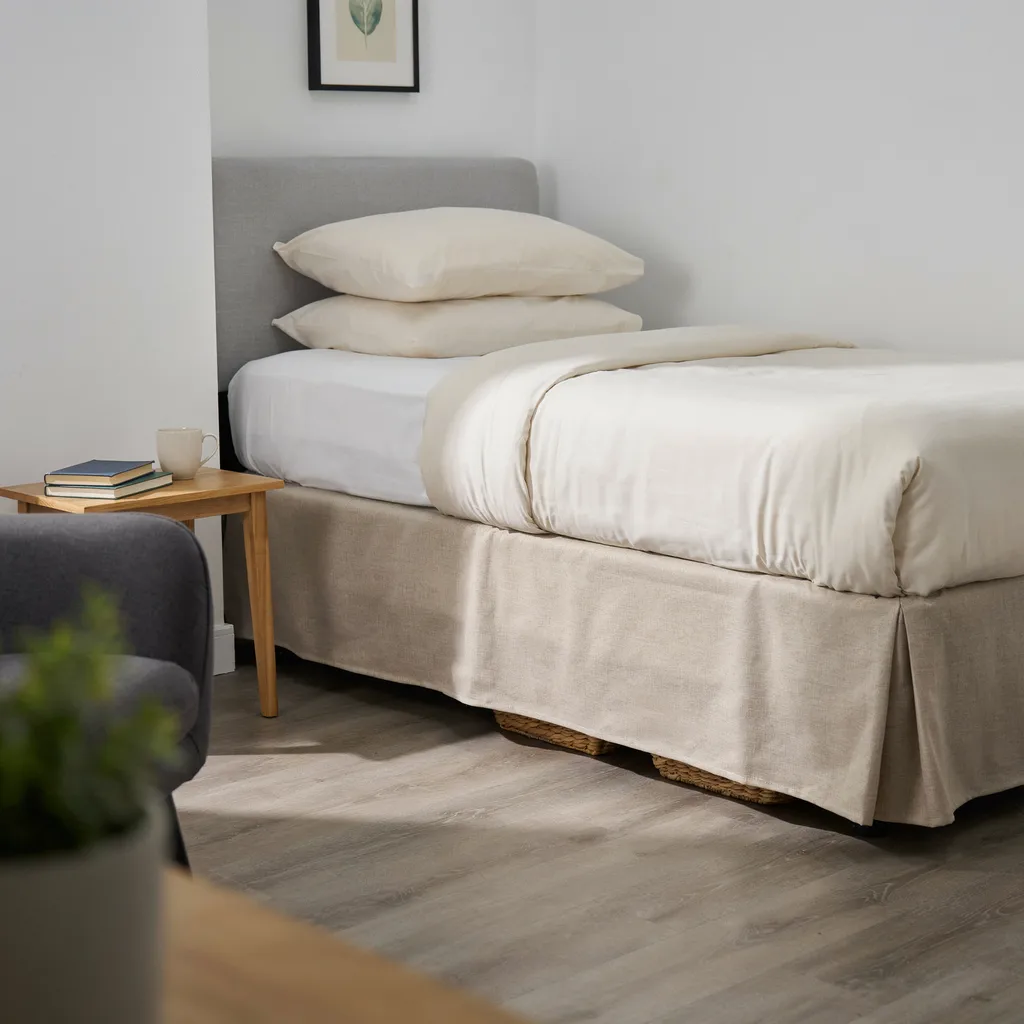
An extra-long flat-panel bed skirt dropping cleanly to the floor improves the visual appearance of the entire room rather than just the bed — by concealing the plastic storage bins, shoe boxes, and laundry bags that accumulate under a raised dorm mattress, it makes the whole room look tidier without any additional organizing required. Standard dorm bed frames typically sit between 26 and 30 inches off the ground, so always measure before ordering. Most standard bed skirts come with a 21-inch drop by default, which leaves a visible gap on most dorm frames — look specifically for an adjustable or extra-deep drop option at 28 to 30 inches.
Choose a flat-panel construction rather than a gathered ruffle — flat panels hang straight and read as deliberate in a modern dorm context, while gathered ruffles tend to conflict with more minimal bedding choices. A warm linen or cotton-blend skirt in cream or warm sand coordinates with almost every duvet color without becoming the focal point itself. Once installed, the bed reads as a real piece of furniture rather than a mattress sitting on an exposed metal frame, and that single visual shift makes the entire room feel more like an actual bedroom.
10. Matching Sage Green Duvet and Pillowcase Set
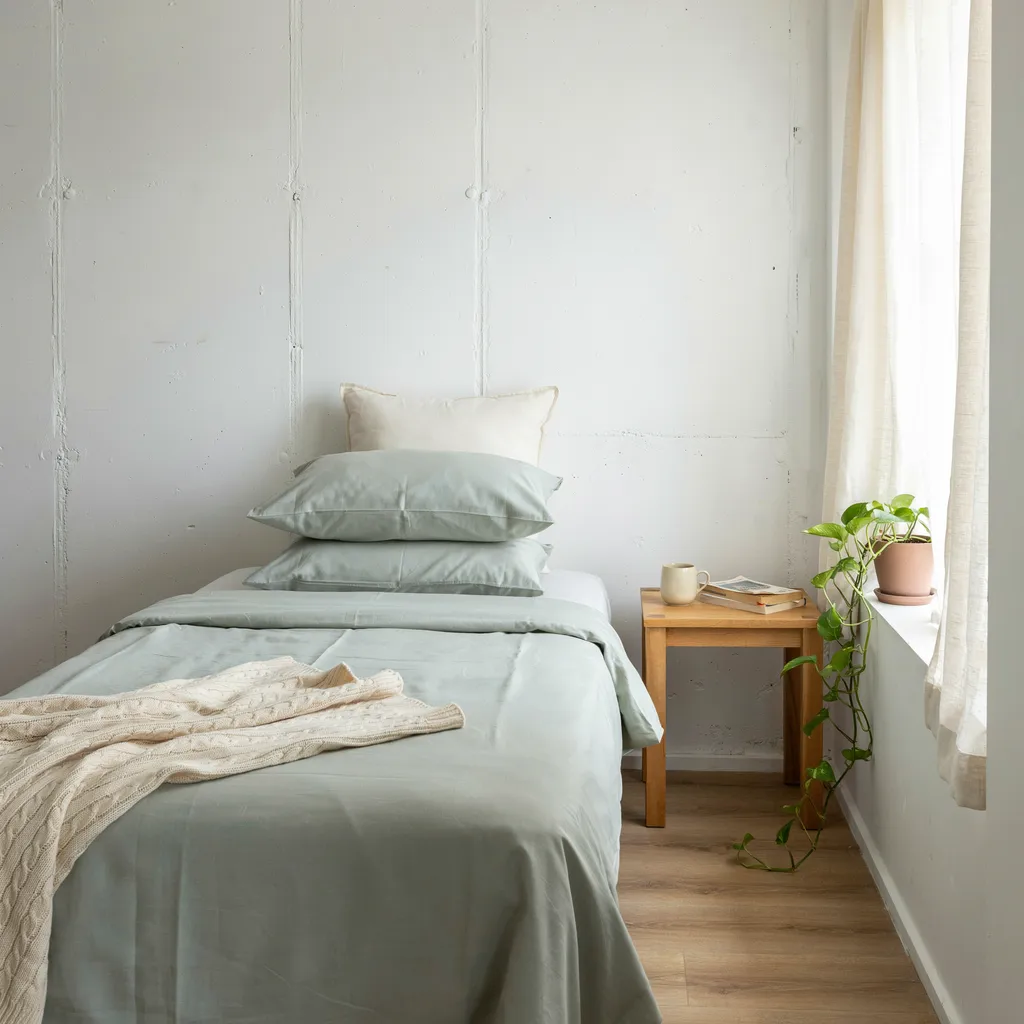
A matched duvet cover and pillowcase set in muted sage green is the most straightforward of these college dorm bedding ideas and also the most foolproof — when every main bedding piece is the same color, the only variables left are texture and layering, both of which are far easier to control than coordinating multiple colors from different sources. The specific sage that works best in a dorm context is a grey-leaning muted sage rather than a bright grass green, because the grey undertone keeps it neutral enough to work against white concrete walls, beige carpet, and the standard brown wood furniture that most campus rooms arrive with.
Add contrast through layering rather than color — a cream Euro pillow against the wall behind the sage sleeping pillows, and an ivory chunky throw at the foot, introduces three distinct tones without bringing in a new color anywhere. A matched sage cotton set typically retails between $50 and $85 for a twin XL duvet cover and two pillowcases, making this a complete solution in one purchase. This setup requires the fewest styling decisions at the store and the fewest adjustments once the bed is made, which makes it genuinely practical for a first-year student setting up a dorm room quickly under time and luggage constraints.
11. Contrast Piping on Pillowcases for a Tailored Finish
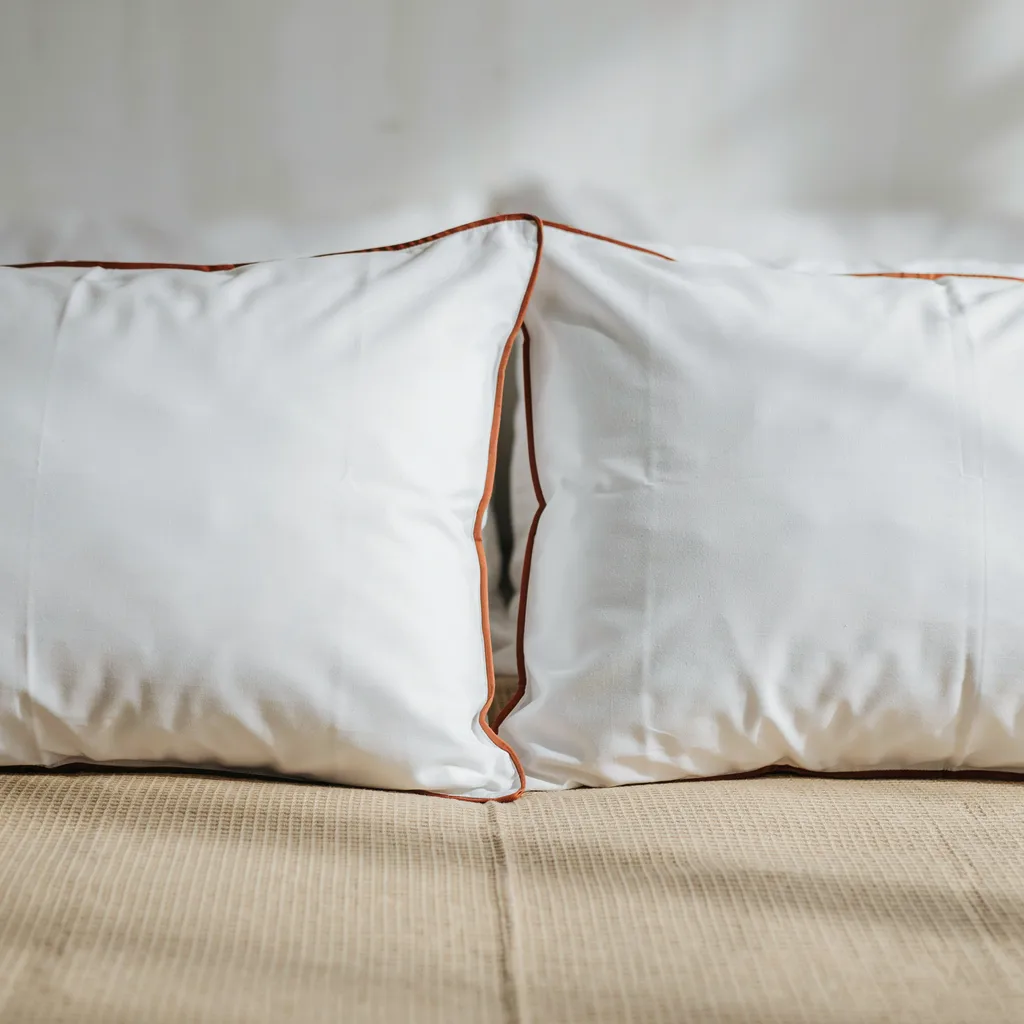
Contrast piping on a pillowcase — a thin strip of contrasting fabric stitched along the outer edge — is the one small detail that makes standard white pillowcases look like they came from a boutique bedding brand rather than a basic linen closet, and it costs almost nothing to implement. A white percale pillowcase with terracotta or dark brown piping around the border adds a tailored, intentional edge to the head of the bed that reads clearly even from the dorm room doorway. These cases typically retail between $12 and $22 per pair, making them one of the most cost-effective upgrades on this list relative to the visual impact they deliver consistently.
Use contrast-piped cases as the front-facing sleeping pillows only — the ones visible when the bed is made — and use plain matching cases for any backup pillows tucked out of sight. This keeps the piping detail as a specific styling choice rather than something repeated so many times it loses its effect. The piping color should echo one other element already present in the room — if the throw is terracotta, terracotta piping on white cases creates a thread of intentional color that ties the whole bed together without introducing a new tone that needs to be justified elsewhere.
Conclusion:
These 11 dorm bedding ideas you’ll love for college share one practical principle — a few deliberate material and layering choices do more for a dorm bed than a full matching set from a big-box store ever will. Start with the fitted sheet and duvet cover as the foundation, since those two pieces cover the most surface area and deliver the biggest visual impact per dollar spent.
A waffle-weave or washed linen duvet cover in any warm neutral gives you a base that holds up through repeated washing, coordinates with almost every accent color, and looks intentional without additional effort. Add the chunky throw third rather than first — it is the finishing layer, not the starting point, and placing it before the other layers are established usually results in a bed that looks piled-on rather than styled.
The bed skirt and Euro pillow are the two most underused additions on this list, and both solve specific dorm-room visual problems that extra throw pillows cannot address. Keep your accent color count to one throughout the entire setup — whether terracotta, sage, or dusty blue — and repeat it in just two places so it reads as a decision rather than a coincidence. Every idea here works on a twin XL within a student budget and requires no tools, no wall damage, and no permission from a resident advisor to execute. For more dorm bedding inspiration and styling ideas, follow NestellaHome on Pinterest at pinterest.com/nestellahome.
Frequently Asked Questions:
Q1. What size duvet cover fits a college dorm bed?
Most dorm beds use a twin XL mattress measuring 38 by 80 inches. A twin XL duvet cover typically measures 68 by 90 inches, which provides enough overhang on the sides without dragging on the floor. Always confirm the specific dimensions before ordering since sizing varies between brands — and never buy a standard twin cover for a twin XL mattress, as it will fall 5 inches short at the foot.
Q2. What drop length do I need for a dorm bed skirt?
Measure from the top of the bed slats down to the floor before ordering. Most dorm frames sit between 26 and 30 inches high, which means a standard 21-inch bed skirt will leave a visible gap. Look for an adjustable or extra-deep drop option specifically labeled at 28 to 30 inches for most campus bed frame heights.
Q3. Is waffle-weave or percale better for a dorm duvet cover?
Waffle-weave adds more visible texture and looks styled with minimal effort, making it the stronger choice purely for aesthetics. Percale is crisper, more breathable, and holds up slightly better through heavy-use washing cycles. For a dorm environment where the cover gets washed frequently, a percale duvet in a warm neutral is the more durable long-term investment — but waffle-weave will photograph better from day one.
Q4. How many decorative pillows should go on a twin XL dorm bed?
One Euro pillow against the wall and one textured throw pillow in front of the sleeping pillows is the arrangement that looks most intentional without crowding a twin XL. More than two decorative pillows on this bed size almost always reads as overcrowded rather than layered — less is consistently more on a narrow mattress.
Q5. What bedding material survives commercial dorm laundry best?
100% cotton percale and washed European flax linen are both excellent choices because they improve with washing rather than degrading. Percale resists pilling under friction and dries quickly, while washed linen softens and develops better drape with every cycle. Avoid microfiber polyester for duvet covers specifically — it flattens permanently after repeated high-heat commercial washing and loses its surface texture within the first semester.