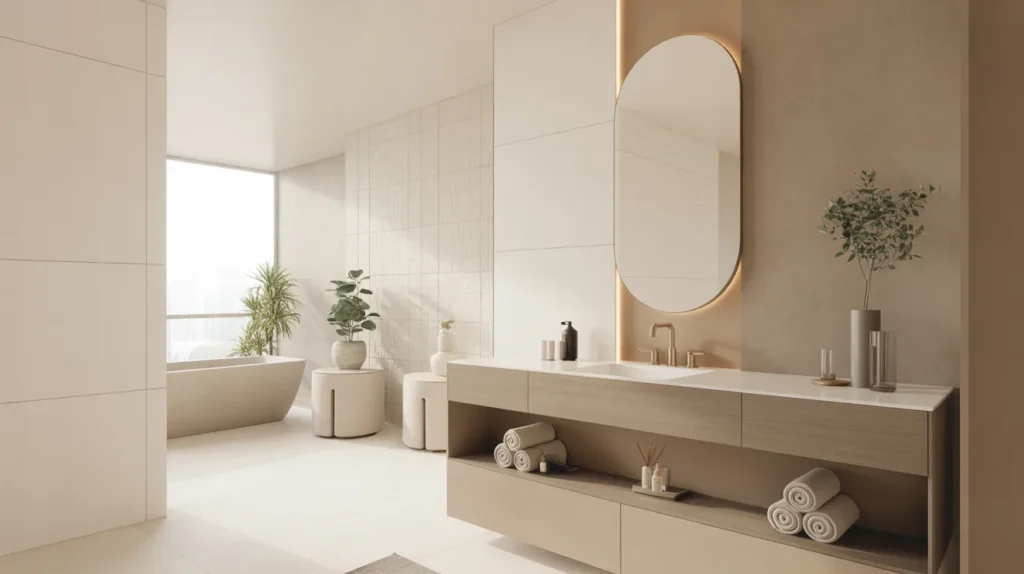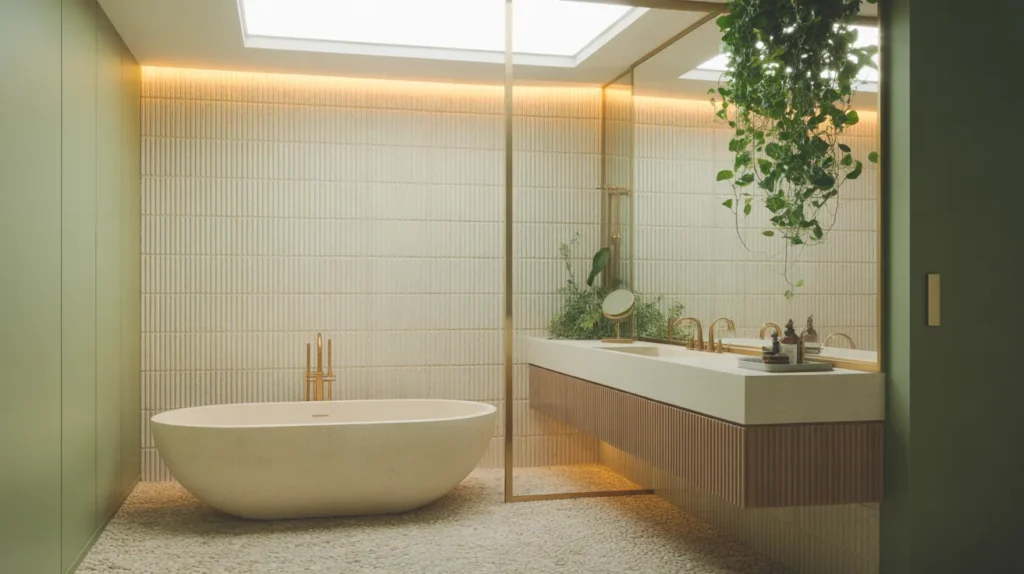
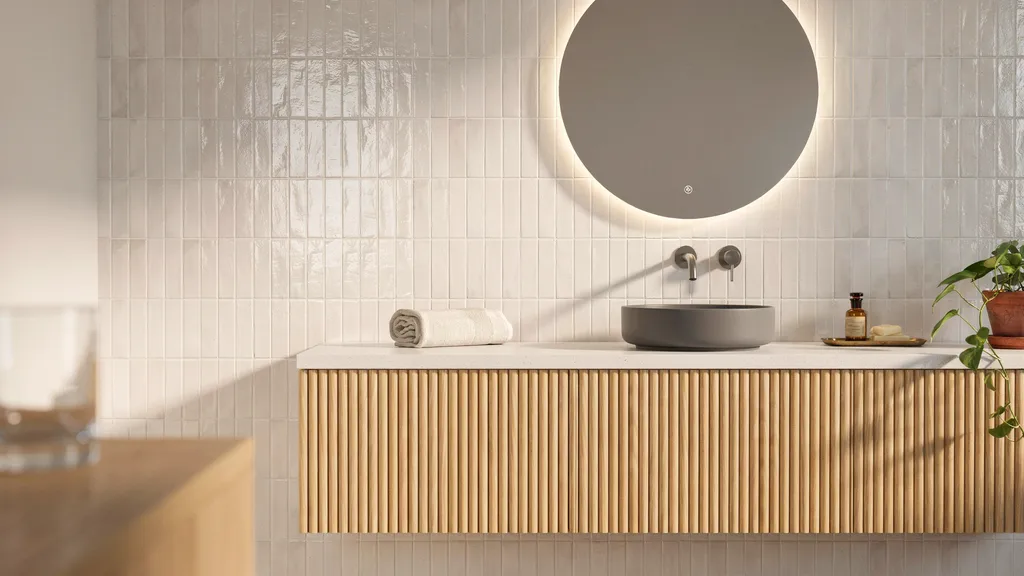
A bathroom doesn’t need a full gut renovation to feel like part of a stylish modern home — sometimes it just needs one material swap that actually changes the room’s character. These 11 bathroom design ideas for a stylish modern home lean into that approach, swapping standard chrome faucets for brushed gunmetal hardware and trading plain white subway tile for stacked cream zellige squares, the kind of textured backdrop that instantly reads as more considered.
What ties these bathroom design ideas together is restraint with materials, not more of them. A single fluted oak floating vanity, one oversized mirror, or a recessed wall niche that hides shampoo bottles from view does more visual work than five matching accessories ever could, and that’s the difference between a bathroom that looks staged and one that looks like someone actually designed it on purpose.
None of this requires committing to a single aesthetic everywhere — a stylish modern home usually pairs one warm, tactile material against something sleek and current, like rich walnut accents against large-format porcelain tile or a microcement floor. The ideas ahead walk through exactly which materials, sizes, and price points make that contrast work in a real bathroom, not just a showroom.
1. A Fluted White Oak Floating Vanity
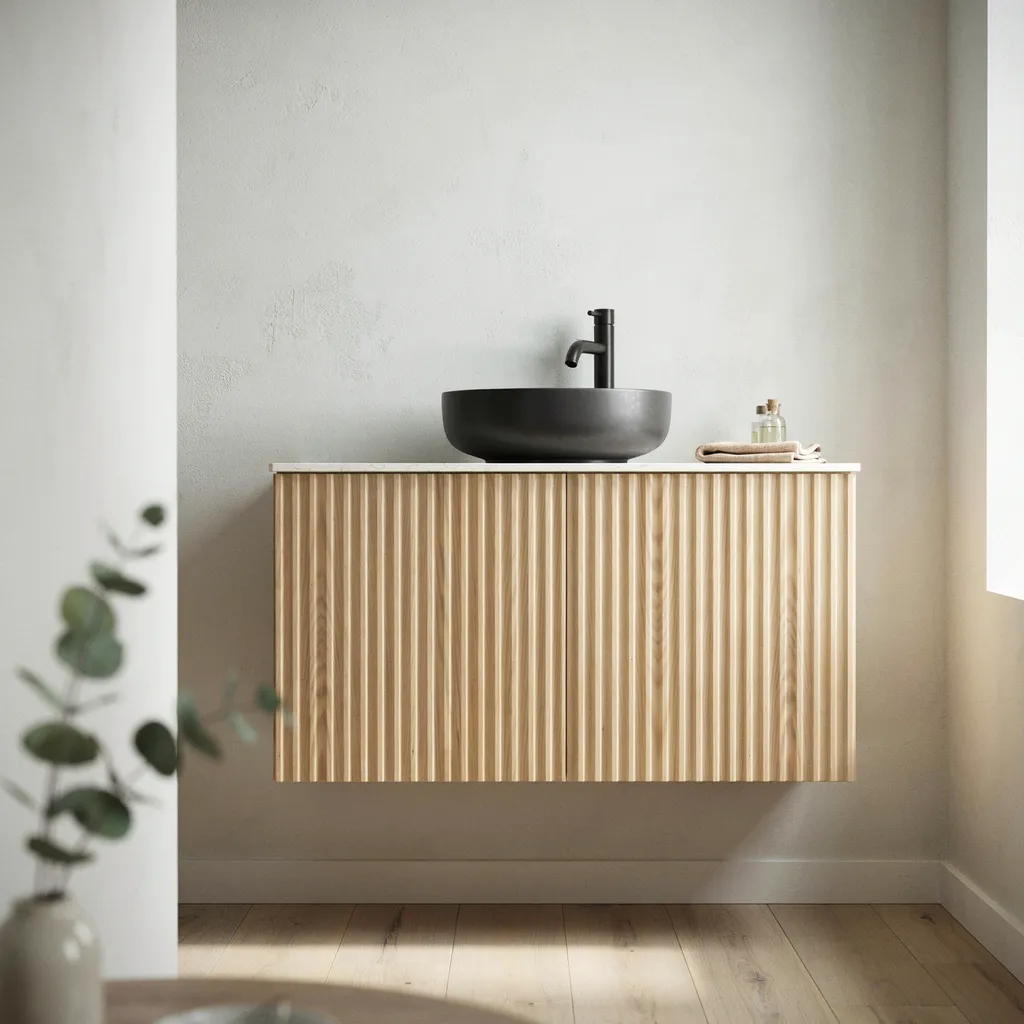
Suspending the main vanity off the floor instead of letting it sit on legs is what makes a small bathroom read as more open, since the visible floor underneath tricks the eye into perceiving more square footage. Choose a 36 to 48-inch white oak console with precision-milled vertical fluting — the honey-toned grain softens the coldness of a stone counter sitting right above it. Position the bottom edge about 12 inches above the finished floor, which leaves enough clearance for cleaning underneath without the gap looking awkward.
This needs to anchor into double wood studs with heavy-duty structural screws, since a thick quartz top and ceramic sink add real weight that drywall anchors alone can’t support safely. A vanity and counter combination at this size typically runs $700 to $1,500 depending on stone choice, and most bathrooms can swap one in over a weekend if the plumbing lines up with the existing layout.
2. Vertically Stacked Zellige Tile
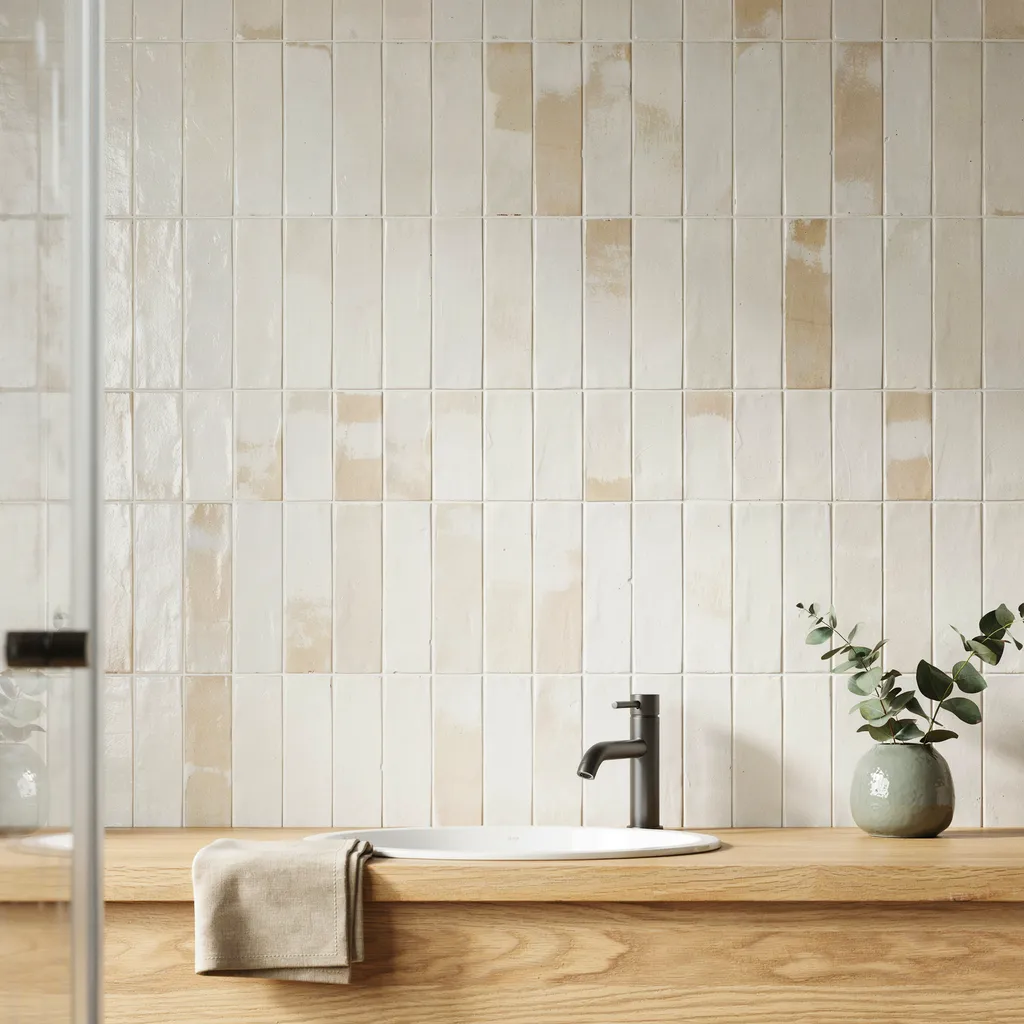
Stacking zellige tile vertically instead of in the usual horizontal brick pattern is a simple trick that makes a standard 8-foot ceiling feel taller, since the vertical lines pull the eye upward. Authentic 4×4-inch Moroccan zellige carries small, hand-chiseled irregularities that flat, machine-pressed tile never has, and a warm cream or pale biscuit tone keeps the wall from reading like a clinical lab rather than a bathroom. The glossy glaze also catches light differently throughout the day, which gives the wall a subtle shifting quality that uniform tile can’t replicate.
Budget $12 to $20 per square foot installed, more than basic ceramic, but the texture is the entire point of choosing it. Skip plastic tile spacers and butt the pieces tightly together for a traditional groutless look, or use a minimal 1/16-inch gap filled with grout that matches the clay tone closely, so the eye stays on the tile’s natural variation rather than a grid of grout lines.
3. A Recessed Niche With Contrasting Tile
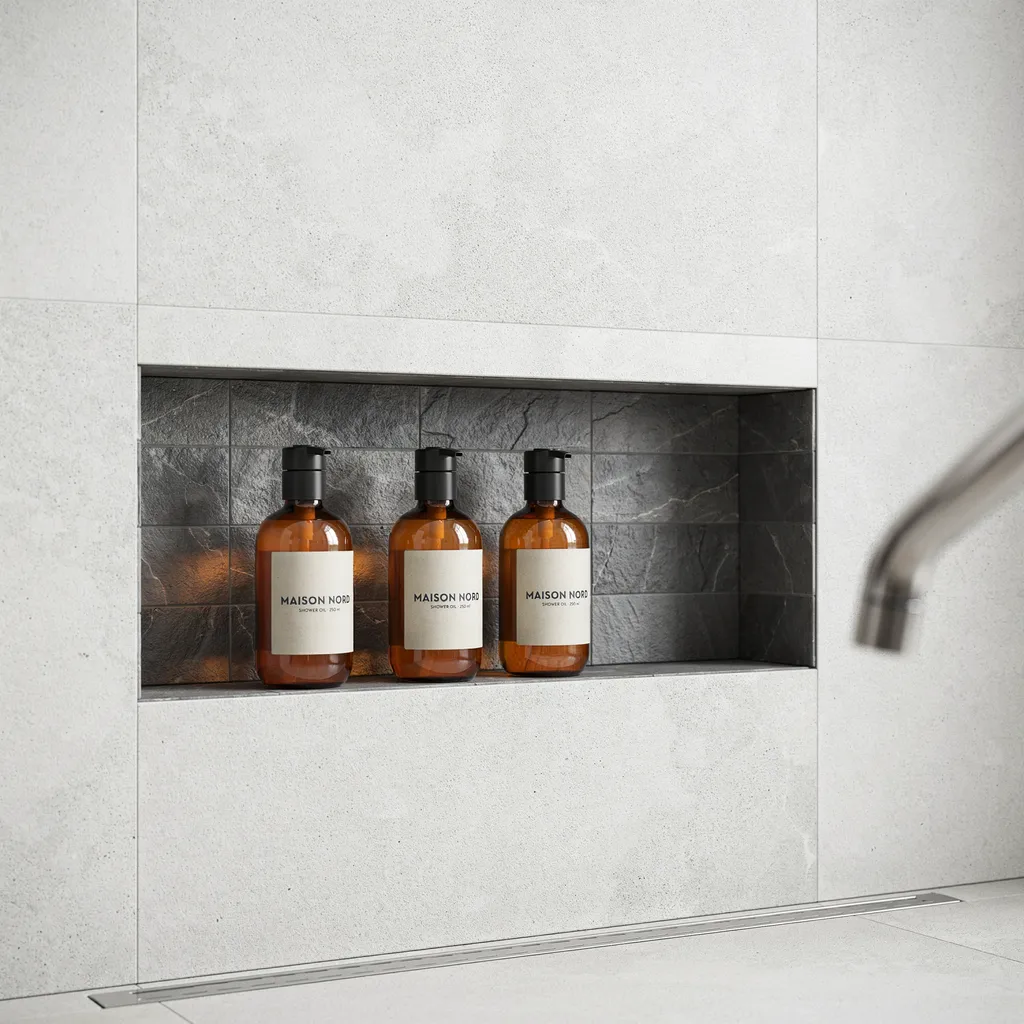
A built-in recessed niche solves the cheap-looking plastic shower caddy problem permanently, and lining the interior in a tile that contrasts with the surrounding wall — dark slate against a lighter field tile, for instance — turns basic storage into an actual design feature. Build the opening at 12 inches high by 24 inches wide, positioned so the bottom shelf aligns with an existing horizontal grout line on the surrounding wall, which avoids awkward sliver-sized tile cuts during installation.
Angle the bottom shelf with a slight 1/8-inch slope toward the shower floor so water drains out instead of pooling and leaving soap residue behind. This is a renovation-stage addition since it goes in before the surrounding tile, typically running $150 to $400 for the niche kit and contrasting tile, not including labor. Once finished, keep contents to two or three matching bottles so it reads as styled rather than overflow storage.
4. An Oversized Round Mirror
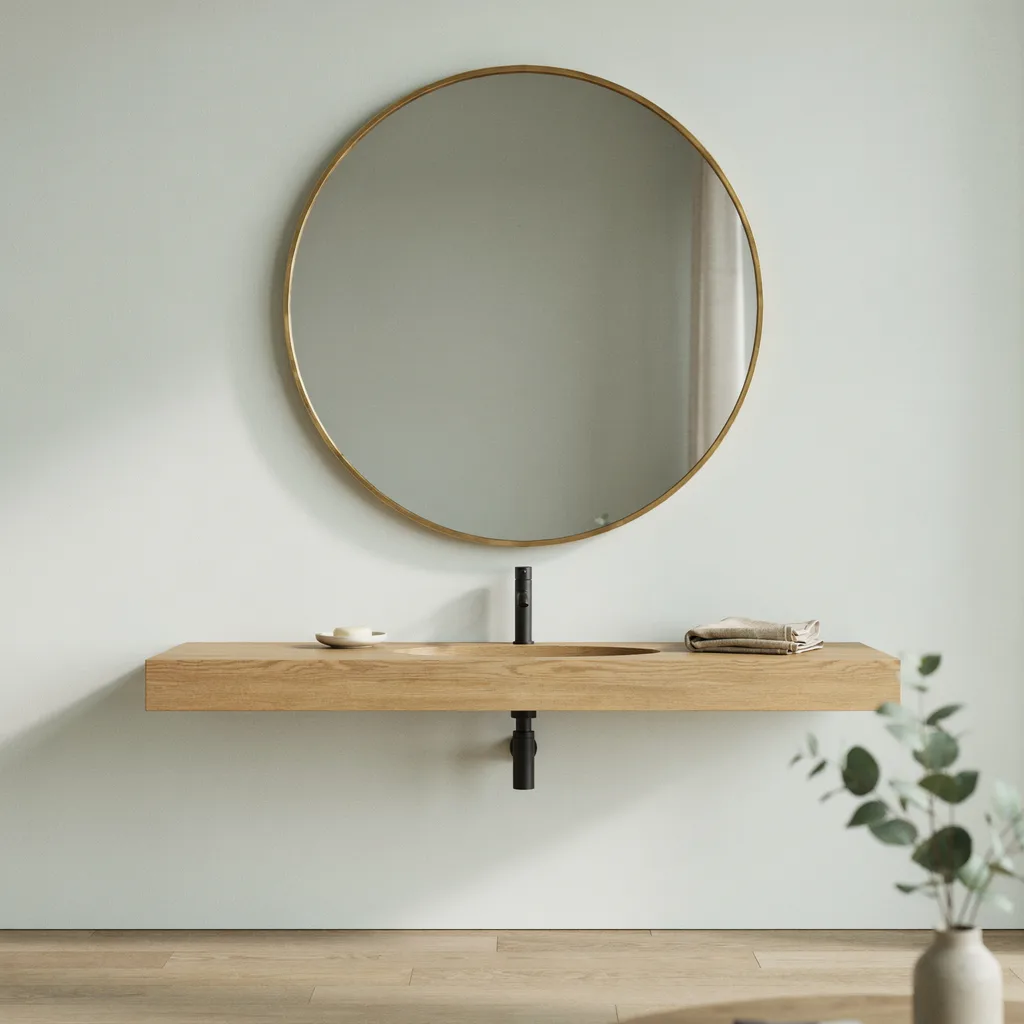
A single oversized mirror does more for a small bathroom than two smaller ones ever could, since one continuous reflective surface bounces light across the entire room instead of breaking it into separate framed sections. Look for a round mirror between 32 and 36 inches in diameter with a thin metal frame, no wider than half an inch, so the frame stays secondary to the reflection itself.
Hang it with the center point at standard eye level, roughly 60 inches from the floor, positioned slightly wider than the sink rather than perfectly centered over it, which reads as more deliberate. A mirror at this size in brass or matte black typically costs $150 to $300. Skip a second decorative mirror elsewhere in the room — one large mirror is the statement, and a second competes with it rather than supporting it.
5. Brushed Gunmetal Hardware Throughout
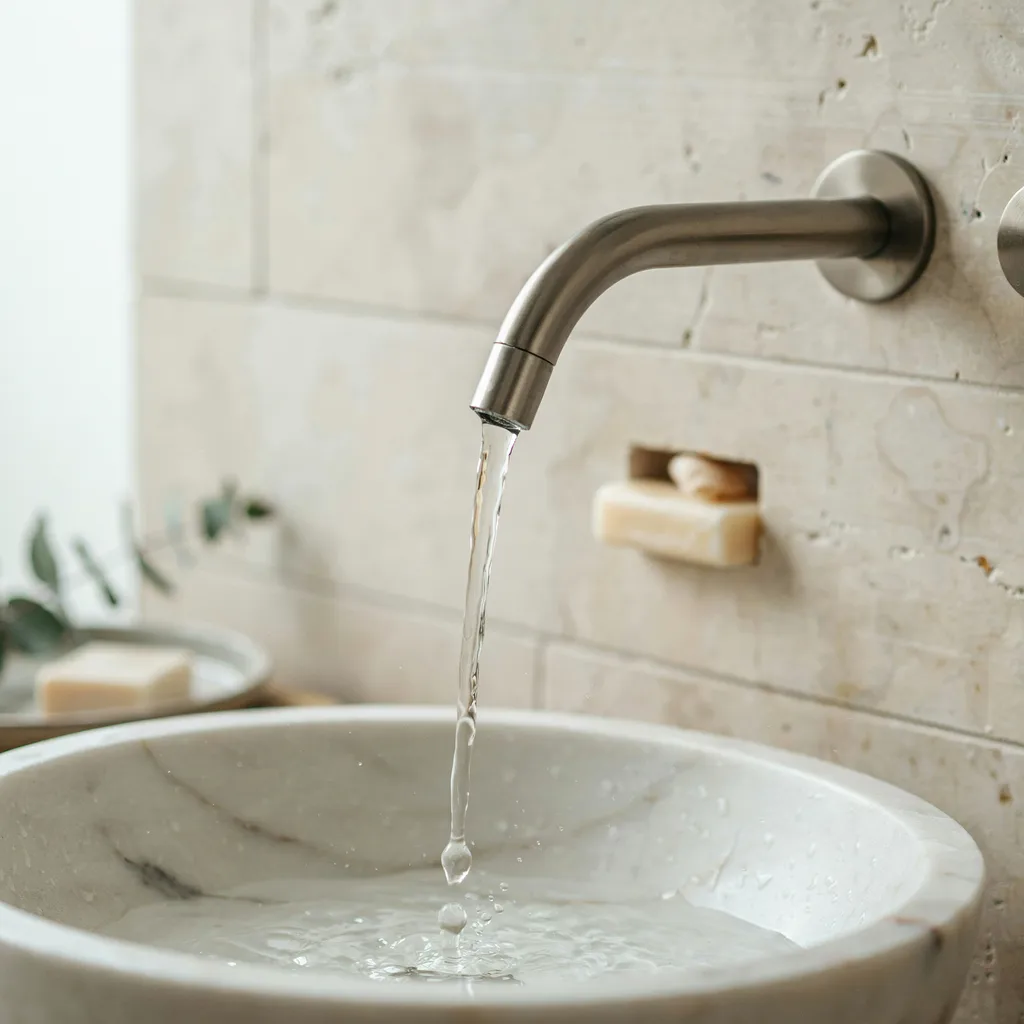
Brushed gunmetal sits between the high-maintenance shine of polished chrome and the starkness of matte black, with subtle horizontal brush marks that diffuse light and hide fingerprints and water spots far better than either alternative. The deep charcoal tone pairs well against white marble or light plaster walls without feeling harsh, and it works equally well with cool industrial textures or warm wood accents.
When sourcing fixtures, look specifically for a PVD (Physical Vapor Deposition) coating rather than a basic powder-coated finish — PVD fuses the gunmetal layer into the metal underneath, so it won’t chip or peel over years of daily use the way a sprayed-on finish eventually does. A full fixture set in this finish for a single vanity runs $400 to $900 installed. Commit to one dark metal throughout the room rather than mixing gunmetal with matte black or nickel, since even small tonal differences become obvious once every fixture is dark.
6. Large-Format Porcelain Tile
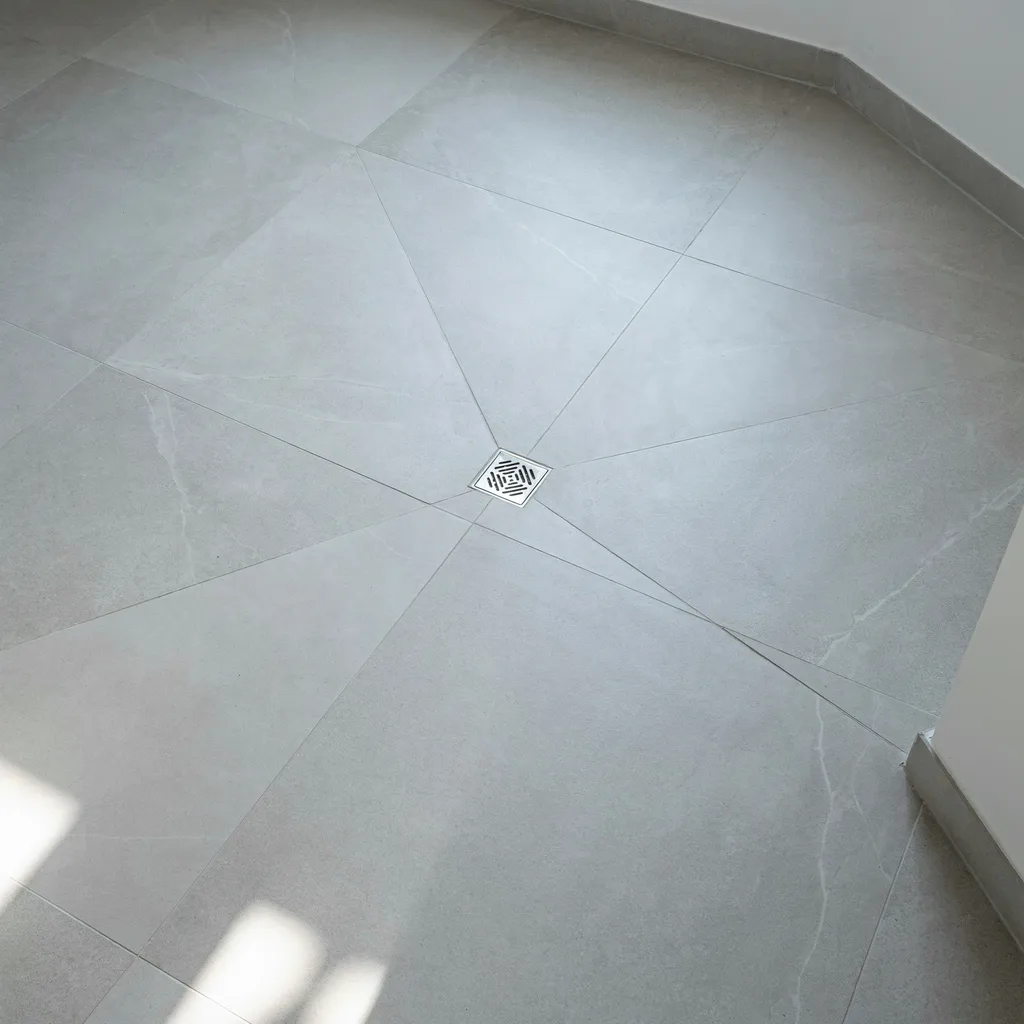
Standard 12×12-inch tile creates a visible grid of grout lines across a floor, while large-format porcelain — typically 24×48 inches — covers the same area with a fraction of the seams, which makes a small bathroom floor read as one continuous surface instead of a checkerboard. Stone-look porcelain in particular gives the visual richness of real stone while staying easier to maintain and far more resistant to staining.
This size does require a flatter subfloor than smaller tile tolerates, since large pieces crack over an uneven base that smaller tile would handle fine. Material runs $4 to $9 per square foot, with installation costing somewhat more than standard tile due to the precision the larger format demands. Match the grout color closely to the tile rather than contrasting it, which keeps the surface looking as seamless as possible.
7. A Microcement Shower Floor
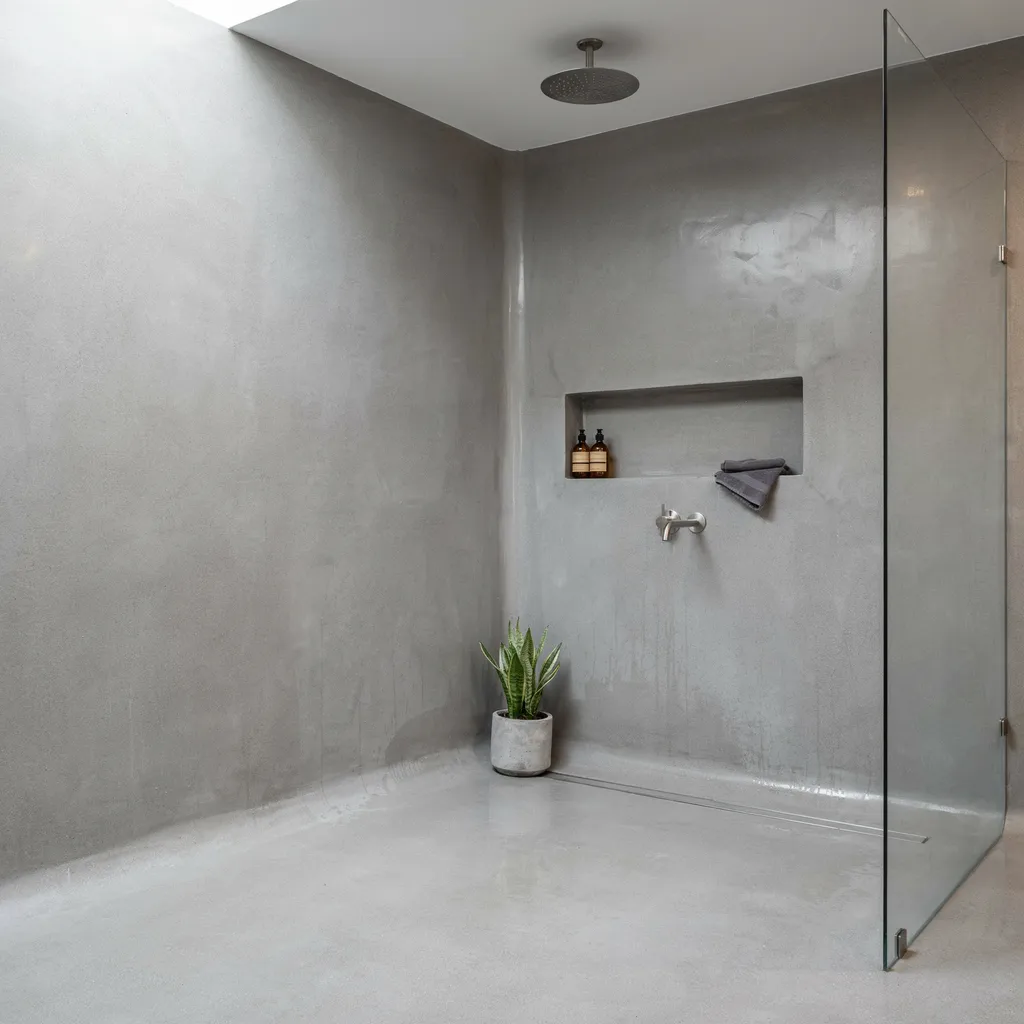
A hand-troweled microcement floor eliminates grout lines entirely, replacing tile’s segmented look with one continuous surface that slopes toward the drain without a single visible seam — and unlike a full tile tear-out, microcement can often go directly over an existing subfloor or old tile, which saves significantly on demolition costs. The material goes down in two ultra-thin coats over a primed, reinforced base layer.
Seal the cured surface with three thin coats of matte polyurethane to create a non-slip barrier that resists water, oils, and staining from daily use. This is a job for a trained applicator, not a DIY weekend project, since uneven trowel work shows far more on a smooth surface than it ever would under tile. Material and labor together typically run $20 to $35 per square foot for a standard shower floor.
8. Walnut Accents Against Cool Surfaces
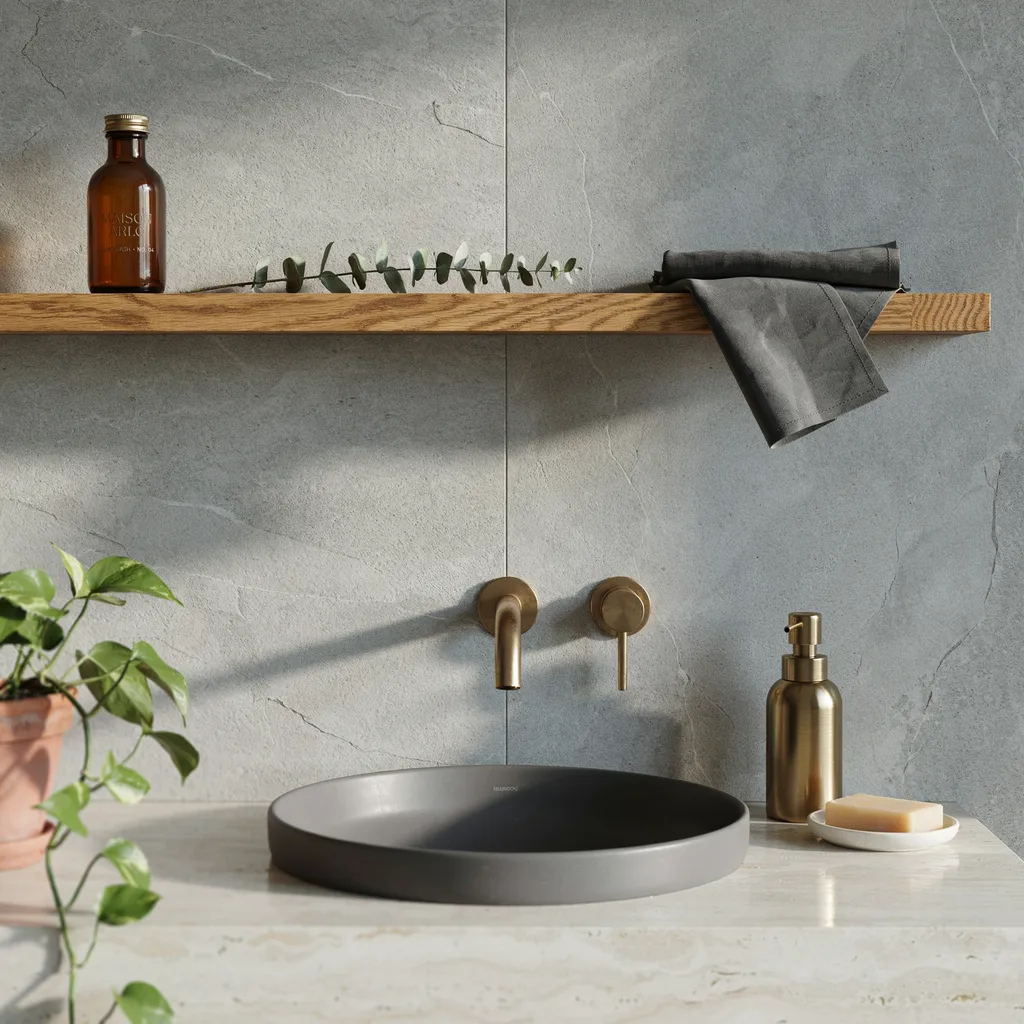
Pairing dark walnut wood with cool-toned stone, concrete, or microcement creates the kind of material contrast that keeps an all-neutral bathroom from feeling flat or clinical. A single walnut floating shelf around 24 inches wide, mounted against a grey stone or cement wall, gives the room one warm anchor point without needing wood worked in anywhere else.
Seal raw walnut with the same marine-grade polyurethane used on vanities, since an open shelf sits closer to water exposure than most people expect. A solid walnut shelf this size runs $40 to $80 depending on thickness. Keep it styled with two or three objects max — a folded towel, a small ceramic dish — so the wood grain stays the visual focus rather than competing with whatever sits on top of it.
To layer this shelf beautifully, you can also incorporate rustic stoneware accessories like these 12 Affordable Clay Tray Ideas to Elevate Your Bathroom to hold your smaller essentials.
9. A Frameless Glass Shower With a Linear Drain
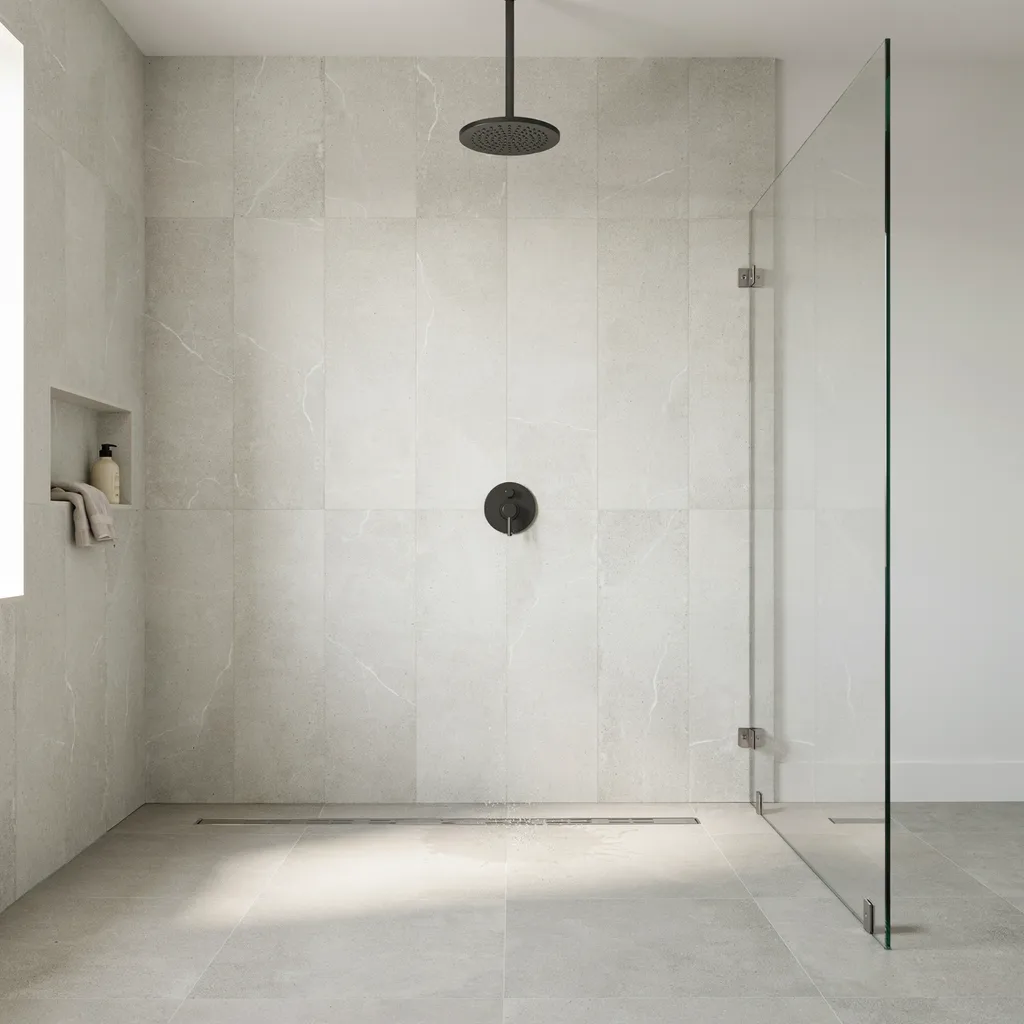
A frameless glass panel keeps tilework and fixtures fully visible instead of breaking the room up behind a framed enclosure, which makes the whole bathroom feel more open even when the actual square footage hasn’t changed. Choose tempered glass at least 10mm thick for stability, and pair it with a linear floor drain rather than a center drain, since a linear drain only requires the floor to slope in one direction — which means you can finally run large-format tile straight into the shower without small mosaic cuts.
Treat the glass with a factory hydrophobic coating to cut down on water spots, and keep a small squeegee mounted nearby for a quick wipe after each use. A frameless panel this size with a 32-inch linear drain typically runs $1,000 to $2,200 installed, more than a standard sliding door, but the seamless sightline is hard to replicate any other way.
10. A Backlit Round Vanity Mirror
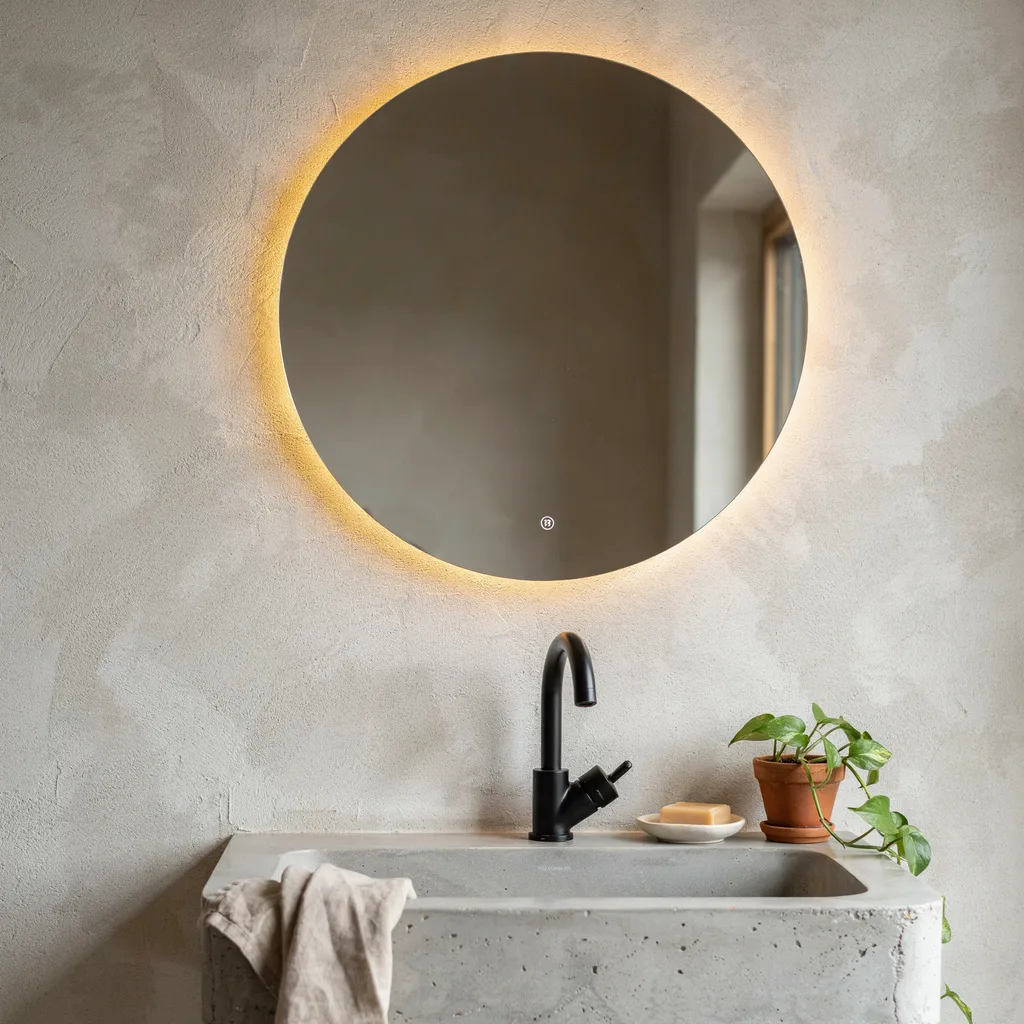
A backlit mirror solves the harsh shadow problem standard overhead vanity lights create, since the light comes from behind the glass and washes evenly across the wall instead of casting shadows downward. A 32 to 36-inch circular mirror with an integrated LED strip also softens the rigid square lines most vanities are built around.
Look specifically for an LED strip with a Color Rendering Index of 90 or higher and a warm 3000K color temperature — this combination renders skin tones and makeup shades accurately, rather than the slightly blue or yellow cast cheaper strips often produce. Wire it to a dedicated dimmer switch so you can drop the brightness for late-night use. A quality backlit mirror at this size runs $200 to $450, plus electrician time if the wall isn’t already wired for it.
11. One Bold Stone, Used Sparingly
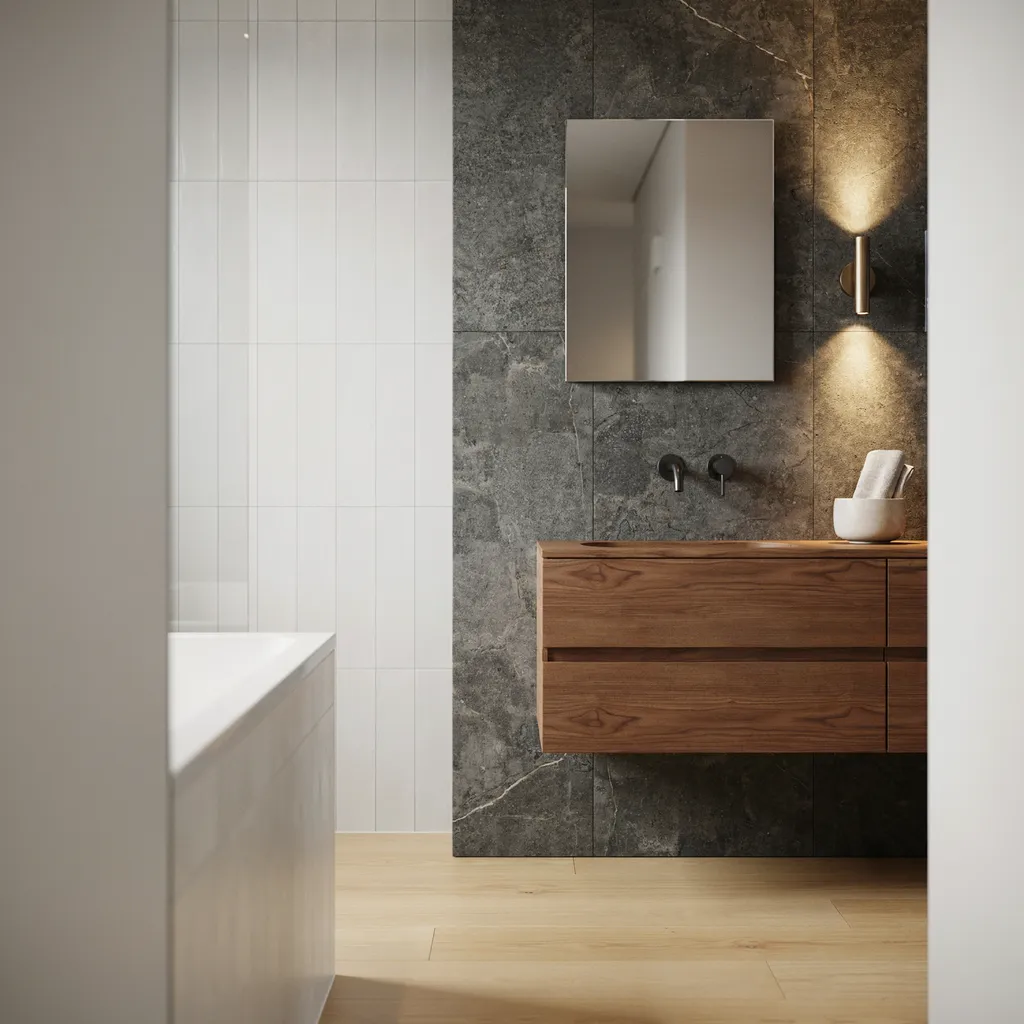
Choosing one genuinely bold natural stone — a heavily veined marble, a rich travertine, a deep terracotta tile — and using it in exactly one spot does more for a bathroom’s character than spreading several moderate materials across the whole room. A 3/4-inch thick stone countertop with a simple, unfussy edge profile keeps it reading as modern rather than overly traditional, and pairing it with handleless cabinetry lets the stone’s natural pattern stay the focal point.
Keep every other material in the room intentionally quiet — plain white tile, a simple white counter — so the one bold choice actually has room to register. Pricing varies enormously by stone type, but a single accent application like this typically adds $300 to $800 to a standard bathroom budget, a fraction of what covering the entire room in the same material would cost.
Conclusion:
These 11 bathroom design ideas for a stylish modern home share one underlying principle: a handful of considered material choices does more than a room full of accessories ever could. A fluted oak vanity, one bold stone accent, a recessed niche instead of open shelving — each idea solves a specific visual problem rather than adding another object to an already busy room. Some of these are weekend-scale swaps, like fixtures, a mirror, or a walnut shelf, while others — the microcement floor, the recessed niche, the frameless glass shower — need to happen during a renovation since they involve plumbing or wall work.
Budget accordingly: fixture and hardware swaps generally land under $1,000, while anything structural climbs higher once labor is factored in. The contrast principle carries through every idea here, pairing warm materials like walnut or oak against cool stone, concrete, or porcelain. Start with whichever change addresses the part of your bathroom that feels most dated right now. The rest of the room tends to follow naturally once that first material decision is in place.
For more visual styling blueprints and daily interior inspiration, follow our board updates on Pinterest.
Frequently Asked Questions:
Q1. Which of these 11 bathroom design ideas can I do without a full renovation?
Fixture swaps, an oversized mirror, a walnut accent shelf, and a backlit mirror are the most achievable without major construction. The recessed niche, microcement floor, and frameless glass shower with a linear drain need to happen during a renovation since they involve plumbing or wall work.
Q2. How do I anchor a floating vanity safely if there’s no wall stud in the right spot?
The cabinet’s hanging bracket needs to fasten into solid wood studs or blocking, not drywall anchors alone. If a stud isn’t positioned where the vanity needs to go, a contractor can open the wall and add wood blocking between studs at the right height before the wall gets closed back up.
Q3. Can I install large-format tile in a shower without a linear drain?
Technically yes, but a standard center drain requires the floor to slope in four directions, which forces small mosaic tiles or cut pieces near the drain. A linear drain along one wall lets the floor slope in a single direction, which is what allows large-format tile to run straight into the shower without those cuts.
Q4. What LED specifications matter most for a backlit vanity mirror?
Look for a Color Rendering Index of 90 or above and a color temperature around 3000K. Together, these ensure skin tones and makeup colors look accurate in the mirror, rather than skewing too warm or too cool the way lower-quality LED strips often do.
Q5. How do I keep mixed metal finishes from looking inconsistent?
Commit to one dark metal finish — gunmetal or matte black, not both — and repeat it across every fixture in the room, including towel bars and cabinet pulls. Mixing two similar dark metals is often more noticeable, and more obviously mismatched, than people expect.