A clay tray is one of the cheapest ways to make a bathroom counter look intentional instead of cluttered, and these 12 affordable clay tray ideas show exactly how to do it without spending more than $20 on any single piece. Unglazed terracotta with a slightly wavy rim has taken over bathroom counters this year, replacing the plastic organizers most people default to without thinking twice.
What makes these clay tray ideas worth copying is how well they pair with materials already in your bathroom: a rough terracotta tray sits naturally beside polished travertine, brushed brass fixtures, or a plain oak shelf, picking up warmth from each without matching any of them exactly. None of the styling here requires anything custom-made; most of these trays cost less than a takeout order and show up at almost any home goods store.
Whether your counter is white marble, beige laminate, or builder-grade tile, a single clay tray in sandy beige or charcoal black gives it texture that matching ceramic dishes never quite manage. The ideas ahead cover exact sizes, price ranges, and what to actually place inside each tray from a bar of soap to a small glass dropper bottle — so styling one takes minutes, not guesswork.
If you’re planning bigger changes beyond the counter, our guide to 13 Bathroom Decor Ideas You’ll Want to Copy in 2026 covers the rest of the room.
1. A Matte Terracotta Ring Dish by the Faucet
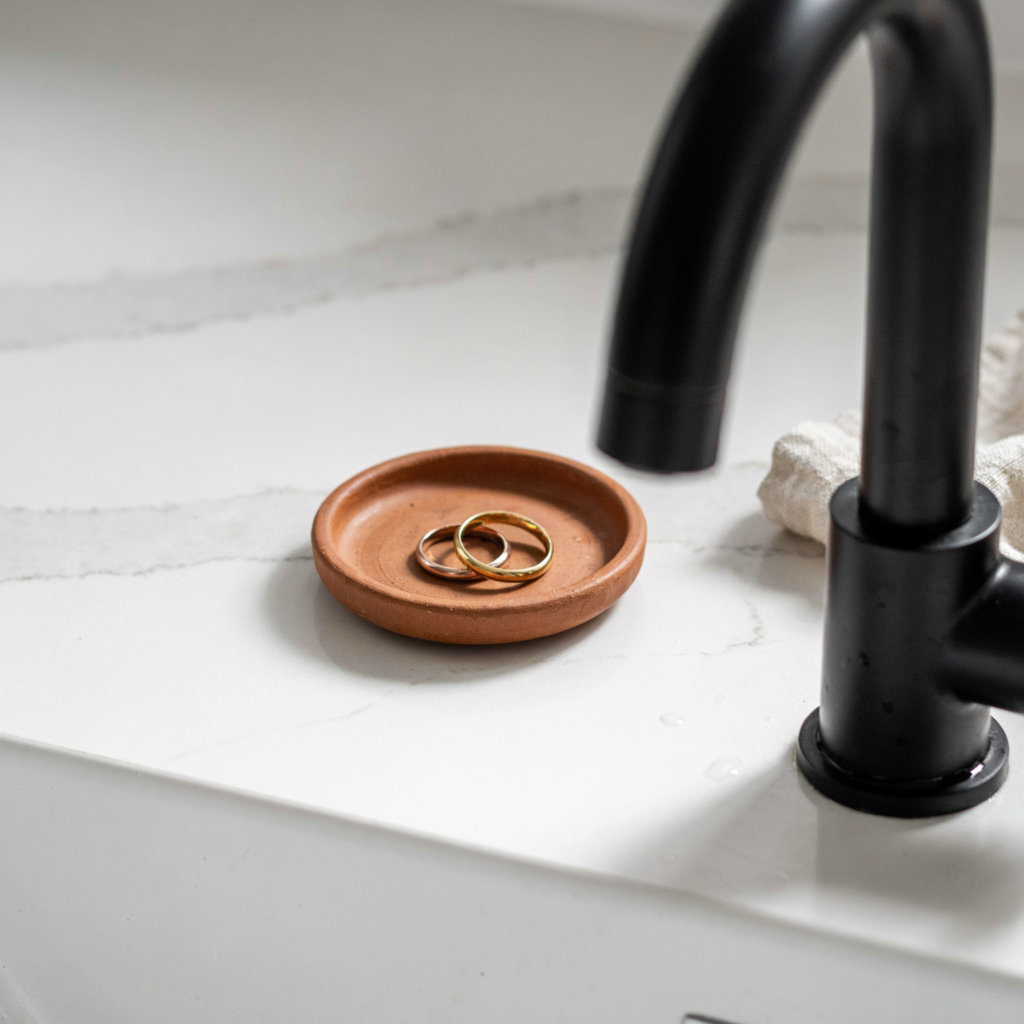
Rings and bracelets coming off before a shower tend to land wherever’s closest, which usually means scattered across the counter by the end of the week. A small 4-inch round dish in unglazed reddish-brown clay gives jewelry one consistent spot at the corner of the sink basin, where the rough texture also creates a nice contrast against polished chrome or matte black plumbing. These dishes run under $8 at most craft markets, making this one of the cheapest single additions on this list.
Apply a thin coat of clear, water-resistant acrylic sealer to the interior base before using it daily, since unglazed clay left unsealed near a faucet will eventually develop water rings. Let it cure a full 24 hours before placing anything inside. Keep the dish to jewelry only — rings, a thin chain, a watch — rather than letting it become a catch-all for loose hair ties.
2. A Speckled Oval Platter on a Floating Shelf
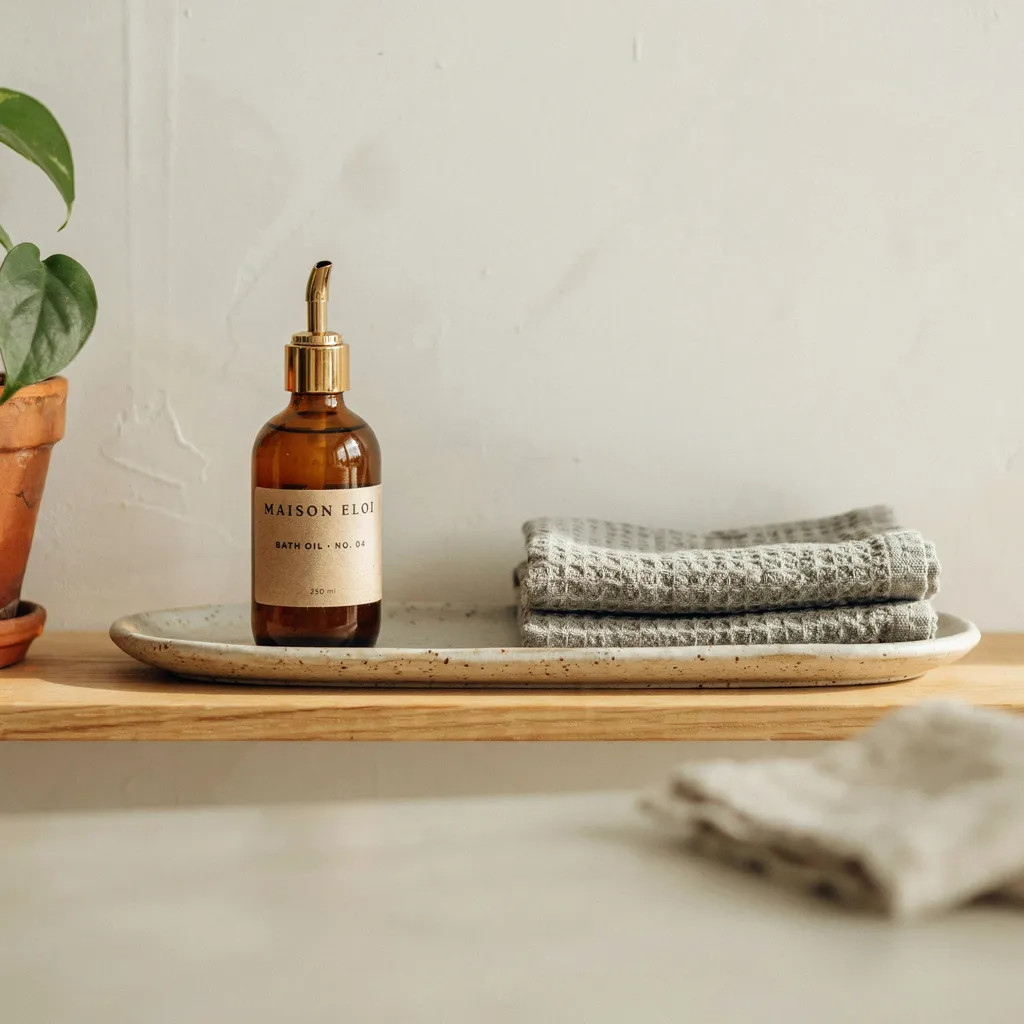
An elongated oval shape breaks up the rigid lines of standard cabinetry and square wall tiles, and a cream base flecked with dark iron spots gives off a boutique-hotel feel without the boutique-hotel price. This works especially well on narrow floating shelves where deeper storage units don’t fit against the wall. The speckled finish also hides water spots better than a plain matte glaze, which matters on a shelf that gets touched constantly.
Use a strict rule of three on a 10-inch platter to keep it from looking cluttered: one amber glass bottle on the left, a rolled charcoal hand towel in the center, a small nail brush on the right. This dimensional layout — left, center, right — gives every item a fixed spot so things stop drifting around every time someone grabs the towel.
3. A Sage Green Scalloped Dish for Soap
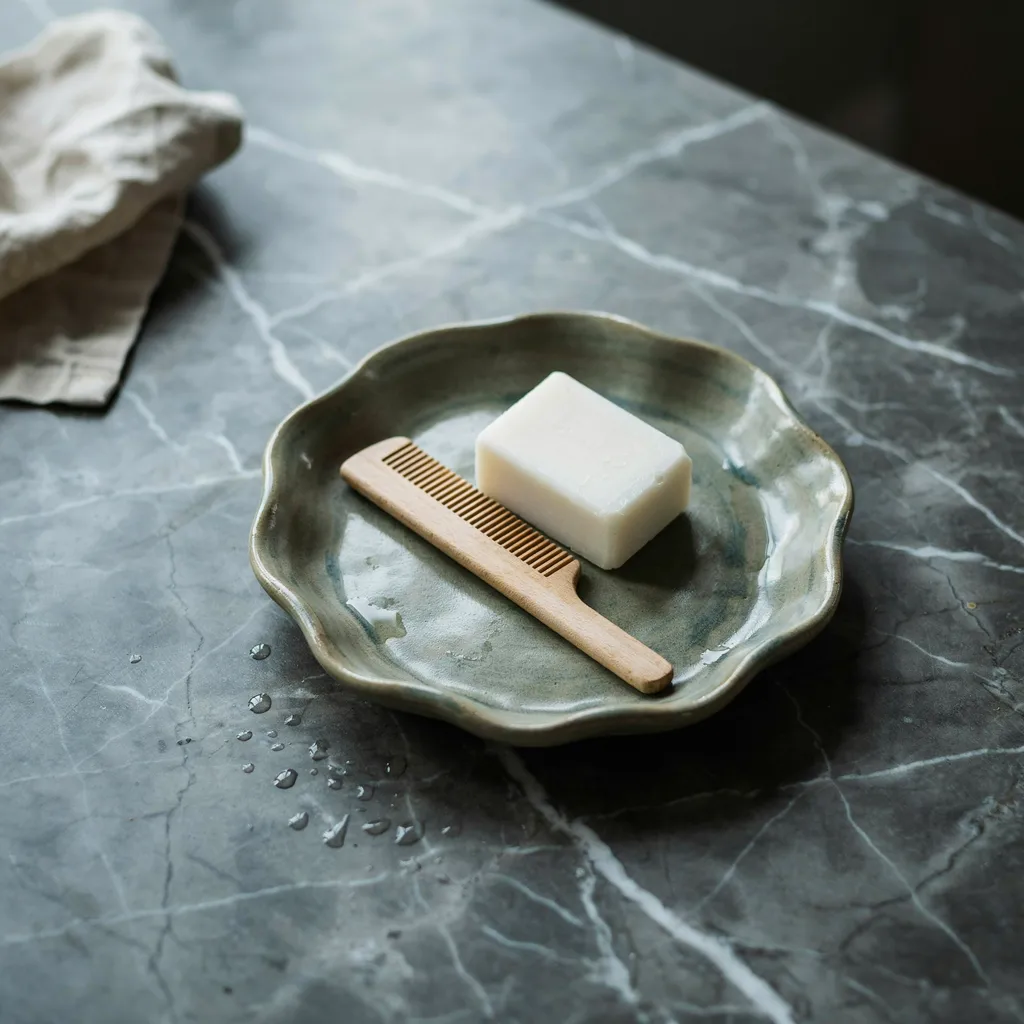
A pale sage green glaze with a soft, undulating scalloped border softens the hard lines of large mirrors and glass shower enclosures, and the mid-toned green reads especially well against dark charcoal marble or black granite. It’s a small color detail that most bathrooms skip entirely in favor of plain white or beige dishes. Look for a dish around 8×5 inches, large enough to hold an oversized bar soap without it overhanging the scalloped edge.
Tuck a small square of natural sisal mesh into the bottom of the dish before adding the soap — this keeps a wet bar from sticking to the glaze and melting into a puddle, which extends how long a bar actually lasts. Rest a wide-tooth wood comb along the curved rim afterward for a finishing touch that doesn’t add visual weight.
4. A Charcoal Black Geometric Block for Grooming Tools
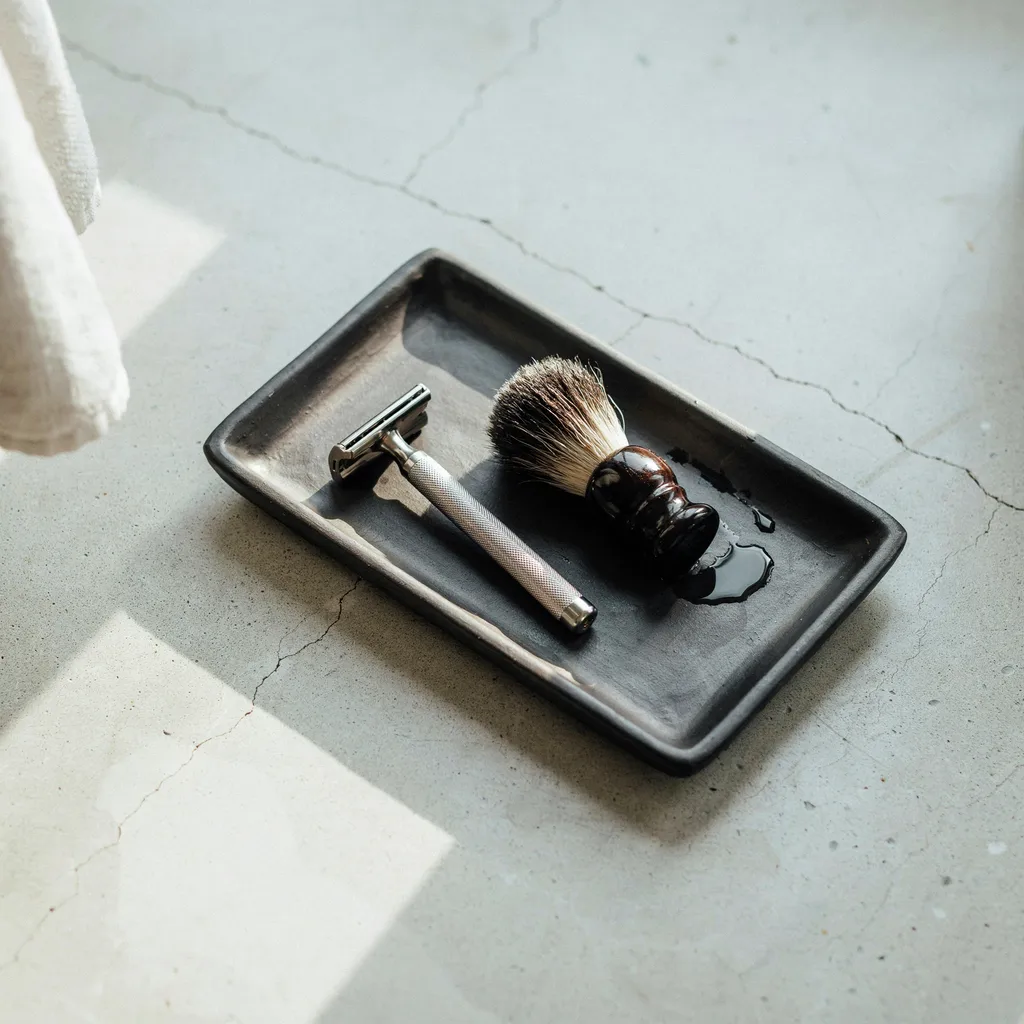
A sharp-edged rectangular block in dense, dark dyed clay brings an industrial edge to a vanity that’s otherwise all soft curves and pale tones. The crisp 90-degree corners and heavy matte black finish work especially well against light concrete counters or subway tile with dark grout lines, where the tray’s weight visually anchors lightweight steel tools. A 12-inch surface is enough for a razor and a shaving brush without crowding either one.
Leave at least a third of the tray’s surface completely empty — that visible gap is what makes a dark, heavy-looking object read as deliberate rather than overcrowded. Since the clay itself is dense and can scratch stone counters, stick four small adhesive felt pads to the underside corners before setting it down permanently.
5. A Terrazzo-Flecked Coaster for a Candle
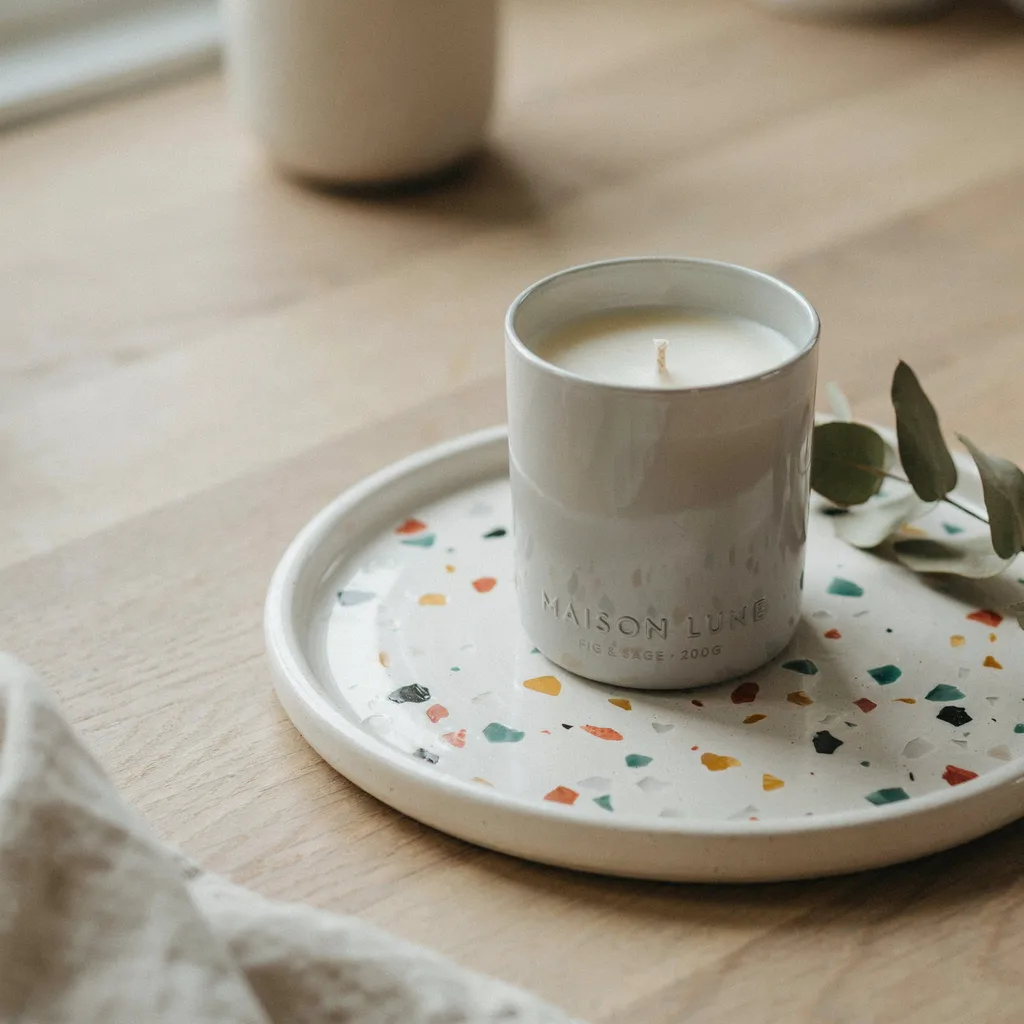
Terrazzo-flecked clay — a white base embedded with small chunks of quartz, jasper, or black basalt — gives a counter a subtle, multi-tonal texture without committing to one bold solid color. It pairs especially well with light oak cabinetry, since the white base keeps things bright while the colored flecks tie into whatever towel or paint color is already in the room. A round dish in this finish runs under $10, making it one of the more affordable statement pieces here.
Center a single brushed silver or matte tin candle directly on the terrazzo surface rather than off to one side — the thick clay base doubles as a heat barrier, which protects wood or laminate counters from scorch marks as the candle burns down. One candle is the whole point here; adding a second object usually crowds the terrazzo pattern out of view.
6. A Wabi-Sabi Tray With One Dried Branch
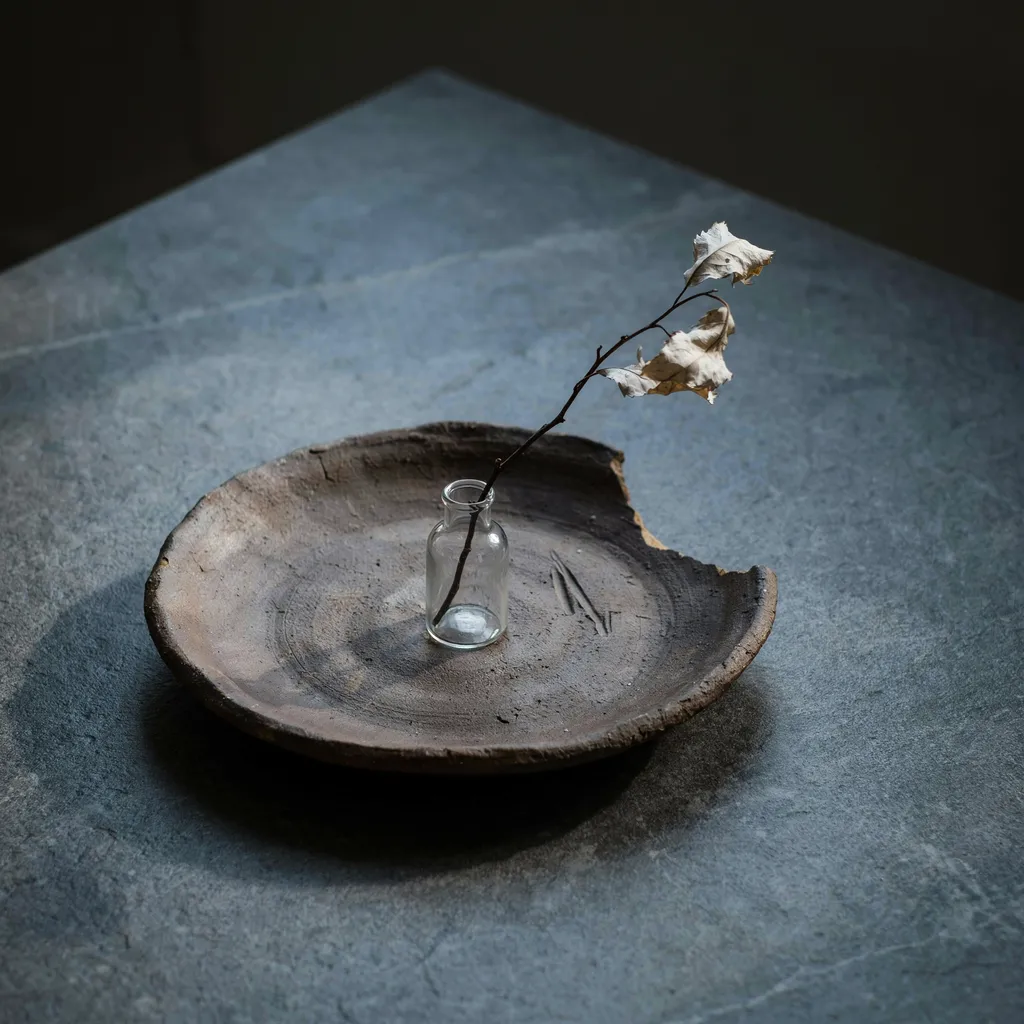
An intentionally uneven, hand-formed tray with visible finger ridges and irregular edges brings a raw, collected feeling that a perfectly symmetrical dish can’t replicate — this is the wabi-sabi design principle, where the imperfection itself is the point rather than a flaw to fix. The unglazed chocolate-brown clay pairs well against ultra-smooth dark slate or soapstone counters, creating real textural contrast between rough and polished surfaces. No two of these trays look exactly alike, since the firing marks vary piece to piece.
Keep styling sparse here — one dried botanical stem in a small glass vial is enough, since the shape of the tray itself is meant to be the focal point. Adding more than one object competes with the asymmetry instead of highlighting it.
7. A Tiered Pedestal Stand Between Double Sinks
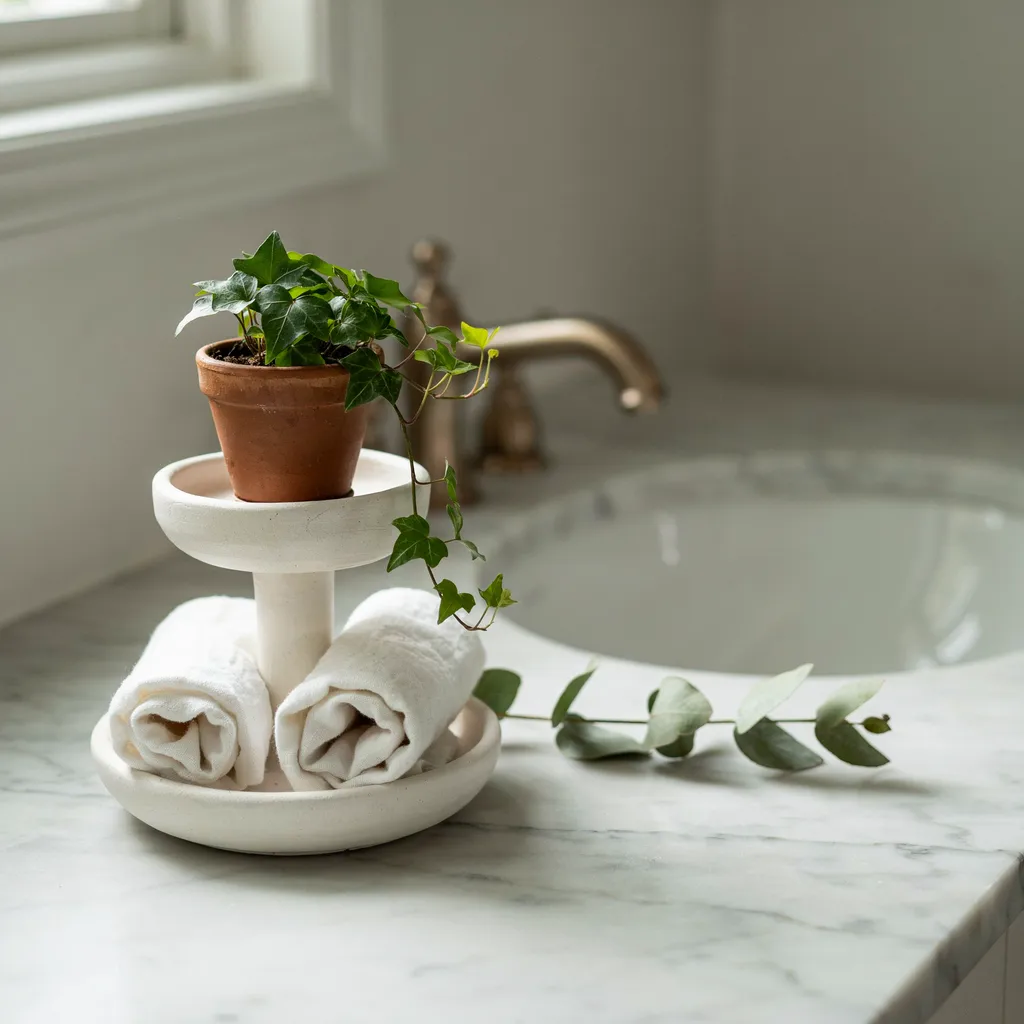
When flat counter space runs out, building vertically with a two-tiered stoneware stand solves the problem without taking up any more footprint than a single tray would. A crisp white glaze on both circular tiers reflects light well, which makes the whole vanity area look brighter even before anything’s placed on it. This layout works particularly well centered between double sinks, giving each side a defined, separate level.
Use the larger bottom tier — typically around 8 inches across — for rolled cotton washcloths tied with a strip of jute twine, and reserve the smaller top tier for one elevated object like a tiny potted ivy. Check that the central metal support rod is fully tightened before loading either tier, since a loose rod lets the plates tilt under any real weight.
8. A Long Trough Tray for the Toilet Tank
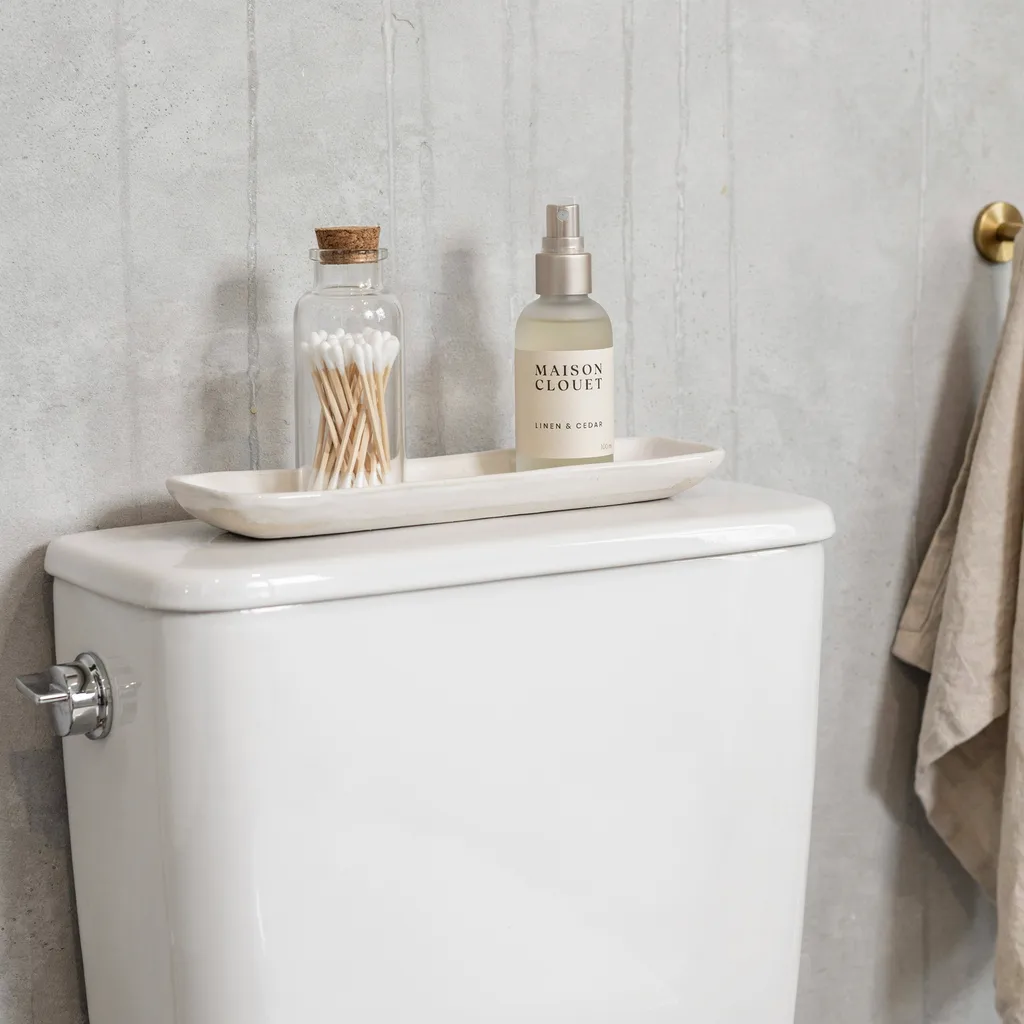
The flat space on top of a toilet tank is almost always wasted, yet a long, narrow trough tray around 14×4 inches fits the lid perfectly without overhanging either edge. A clean white finish blends into the porcelain instead of standing out as an obvious add-on, which makes the whole setup feel built-in rather than improvised. This turns an awkward gap into one of the more functional small-storage spots in the room.
Line items up horizontally rather than stacking them, so nothing blocks the flush mechanism — a glass jar of cotton swabs next to a small aluminum room spray works well. Stick a few adhesive rubber bumpers to the base before setting it down permanently, since stoneware resting directly on a porcelain tank lid will rattle every time the toilet’s used.
9. A Hand-Pressed Ribbed Coaster Pair
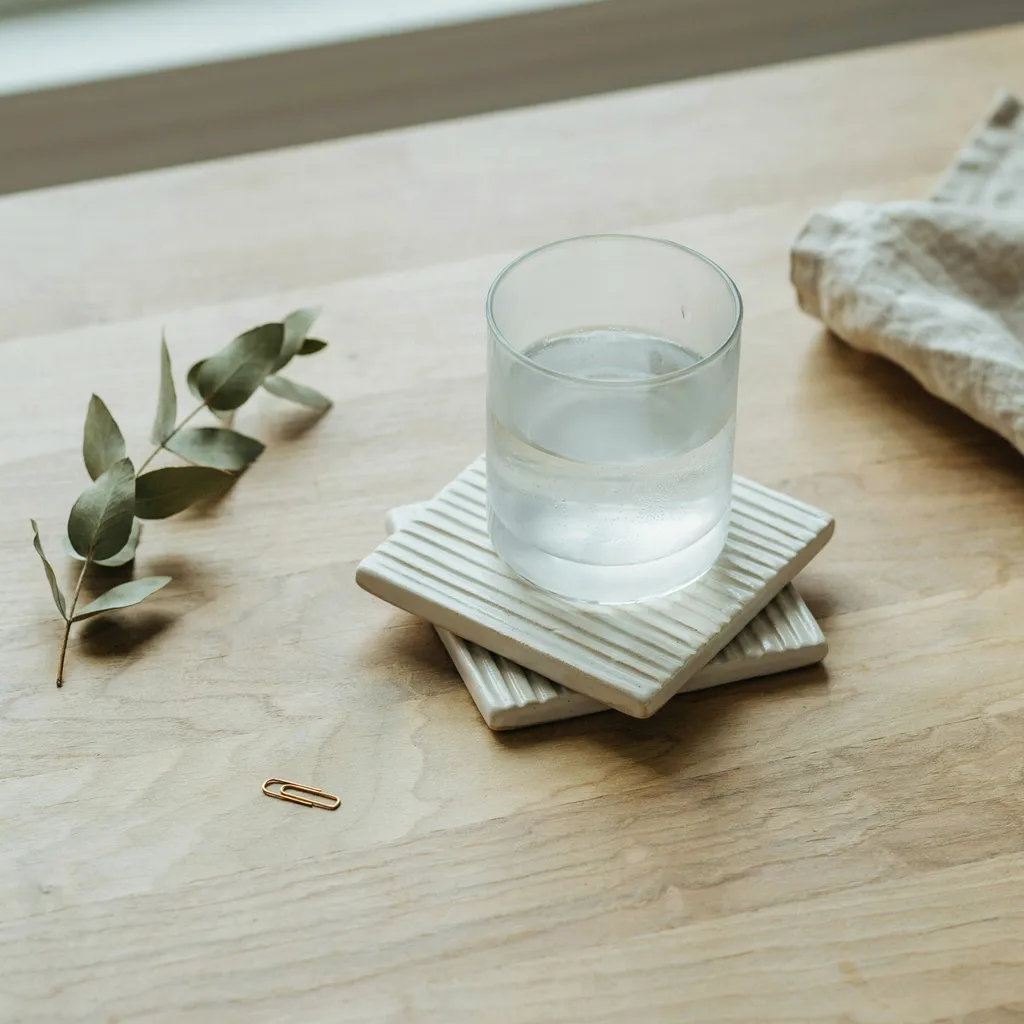
When counter space around the plumbing is too tight for one large tray, a pair of small square coasters with deep, hand-pressed ribbed grooves solves the same problem in modular form. The ridges catch shifting morning light in a way flat clay doesn’t, which makes plain white stoneware look more custom than its price suggests. Each square runs about 4 inches, small enough to stack or stagger depending on how much space is actually free.
The grooves serve a real function here, not just a visual one — they catch condensation drips from a cold water glass or a wet toothbrush before the water pools on the counter and stains a wood vanity or etches into natural stone. Scrub the ridges occasionally with an old toothbrush and warm soapy water, since buildup collects in grooves faster than on a flat surface.
10. A Checkerboard-Painted Square Tray
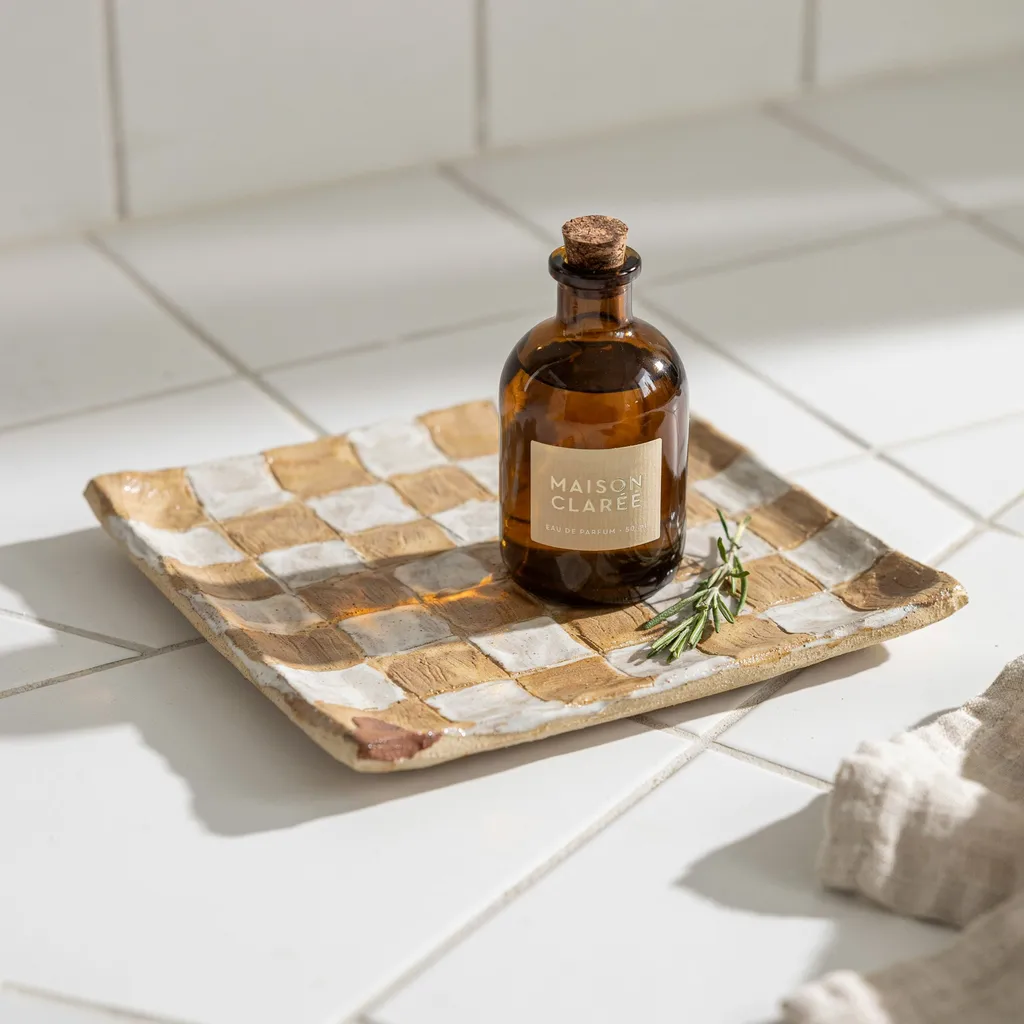
A square clay tray hand-painted in a simple tan-and-cream checkerboard brings a retro, graphic personality into a bathroom that’s otherwise all white subway tile and matching fixtures. The two-tone pattern reads as playful without tipping into novelty, especially when the paint finish stays matte rather than glossy. It’s proof that a basic material can carry an editorial-style look without the editorial-style price tag.
Pair the patterned tray with completely plain amber glass bottles so the checkerboard stays the visual focus rather than competing with another busy surface. If painting it yourself, use low-tack painter’s tape to keep the grid lines crisp, and seal the finished piece with a matte polyurethane spray so the pattern survives daily splashes without chipping.
11. A Heavy Slotted Stoneware Soap Dish
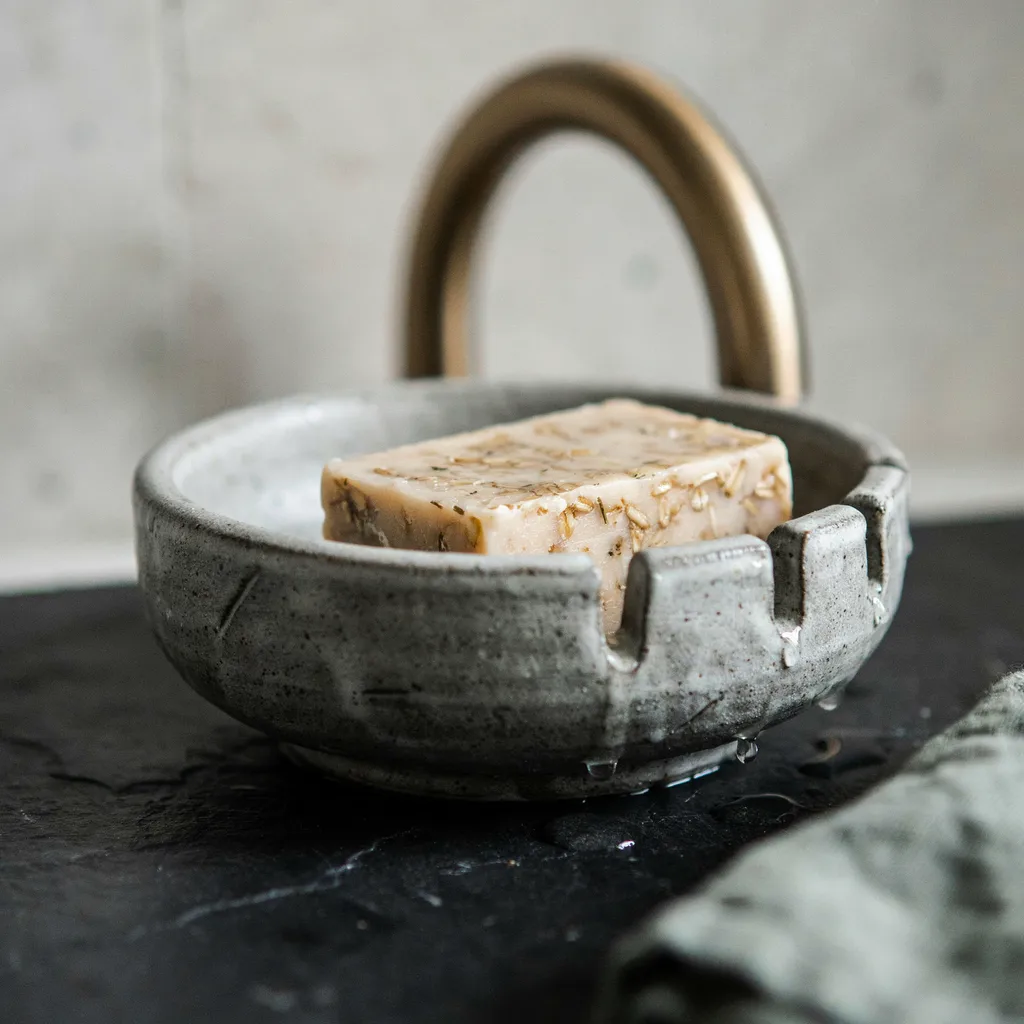
A thick-walled gray stoneware dish with carved drainage slots solves the one real complaint people have about decorative soap dishes — that they look nice but leave the soap sitting in a puddle. The dense clay’s weight keeps the dish anchored on slippery porcelain ledges, and the dark, granite-like coloring hides soap scum far better than a pale glaze does. Raised ridges let air move freely under the bar, which keeps it from turning soft and mushy between uses.
Slide a small flexible silicone mat underneath the dish to catch any runoff before it reaches a stone countertop, since drainage slots still let water drip through eventually. Rinse the mat separately under running water once a week — that’s the entire maintenance routine this setup needs.
12. A Mismatched Trio in One Color Family
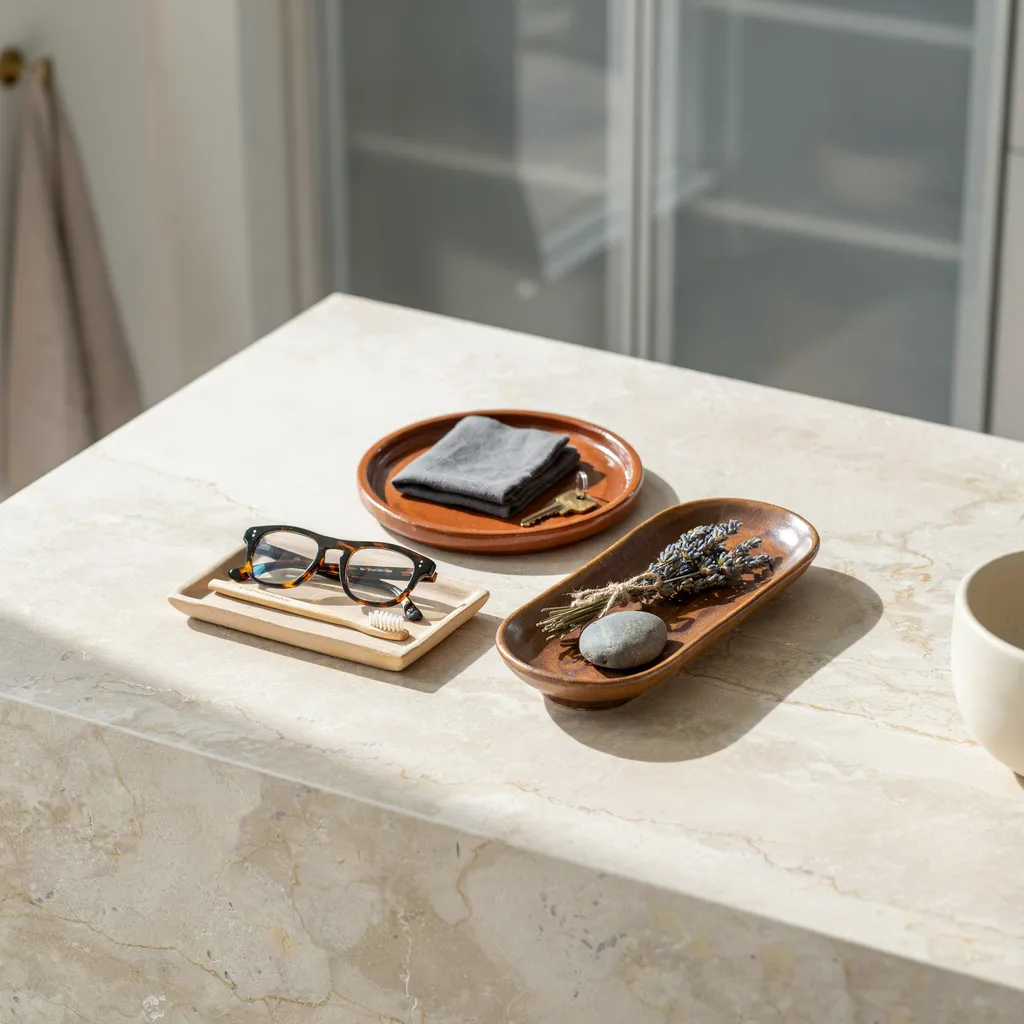
Instead of buying one tray, grouping three different shapes — a round dish, a rectangular tray, an oval platter — within the same general clay color family creates a cluster that looks deliberately collected rather than randomly purchased over time. The shapes should vary, but the palette needs to stay tight, sticking to shades of terracotta and sandy beige so the grouping doesn’t drift into looking mismatched in the wrong way.
A set of three pieces like this typically runs $25 to $40 when bought separately, often less as an actual matched trio set. Arrange them with the largest piece toward the back and the smallest toward the front so each stays visible instead of overlapping. This works best as a single styling moment on one section of counter rather than spread thin across the whole vanity.
Conclusion:
Clay trays work as bathroom decor because they solve an actual problem — loose bottles, scattered jewelry, a bare toilet tank, a tub ledge with nothing on it — rather than just adding another object to a surface that’s already busy. Most of the ideas here cost under $30, several well under $10, which makes this one of the cheapest ways to change how a bathroom counter looks without touching fixtures or tile. The material itself does most of the work: unglazed terracotta, speckled stoneware, and terrazzo-flecked clay all bring texture that matching plastic or glass organizers can’t replicate.
Start with whichever spot bothers you most, whether that’s a cluttered sink edge or an empty toilet tank lid. Stick to two or three objects per tray so nothing turns into a catch-all. Mixing shapes within one tight color family, as in the final idea, is the easiest way to make several inexpensive pieces look like a coordinated set. None of these require tools, installation, or more than one trip to a store.
Follow us on Pinterest @nestellahome for daily bathroom inspiration, styling formulas, and the latest home decor ideas curated just for you.
Frequently Asked Questions:
Q1. Is unglazed terracotta safe to use directly on bathroom counters?
Yes, though unglazed clay is porous and will show water rings over time on certain stone counters. A thin coat of clear acrylic sealer on the interior, cured for 24 hours, prevents most marks from setting in.
Q2. What size clay tray works best on a standard toilet tank?
Roughly 12 to 14 inches long and no more than 4.5 inches wide is the safe range, with tray walls under 2 inches tall so the lid stays low-profile and doesn’t interfere with the flush button.
Q3. Can I use regular felt pads on the bottom of a tray that gets wet often?
Standard felt pads absorb moisture and can develop mildew in consistently damp spots. Clear rubber or silicone bumpers work better near sinks since they don’t absorb water and still keep heavy stoneware from sliding.
Q4. How do I clean soap scum off a glazed clay tray without scratching it?
Soak the tray in warm water with a few drops of dish soap for about ten minutes to loosen the residue, then wipe with a non-scratch microfiber cloth or soft nylon brush. Avoid steel wool, which will dull a glazed finish.
Q5. How many trays is too many for one bathroom counter?
More than three or four trays on a single counter usually starts looking cluttered instead of styled. It’s better to spread them across separate zones — the sink edge, the tub ledge, the toilet tank — than to cluster several on one surface.