Most bathtubs sit in a bathroom that was decorated once and never touched again and that is exactly why the tub area is always the fastest place to add real design personality without touching a single tile. These 14 stunning bath tub decor ideas for a luxurious bathroom skip the usual empty ledge and half-empty shampoo bottles entirely, replacing them with structured styling formulas you can set up this weekend using pieces already available for under $30.
The strongest bath tub decor trend pulling attention right now is unlacquered brass hardware paired with a honed travertine tray on the tub deck not polished chrome, specifically honed travertine because the matte stone surface absorbs light instead of reflecting it, giving the whole bathroom a quieter, more intentional feel. Pair that with a matte black bath caddy, ribbed glass containers for daily essentials, and neatly folded waffle-weave towels on one side, and the tub zone immediately reads as designed rather than assembled.
What separates luxurious bathtub decorating ideas that actually look expensive from ones that look random is one rule: keep the tub deck to three objects maximum and let the material of each one do the visual work. Whether your tub is a freestanding statement piece anchored by a weathered concrete stool, a built-in alcove styled with a thick slate slab tray, or a compact bathroom tub dressed with handcrafted clay accessories and warm beige tones, these stunning bathroom decor ideas give you exact object combinations, finish pairings, and placement rules so you know precisely what goes where and why it works.
If you’re also planning to update the surfaces around your tub, pair these styling ideas with our guide to 14 Aesthetic Bathroom Tile Trends You’ll Want in 2026 for backdrops that complement every material on this list.
1. A Live-Edge Wood Caddy Spanning the Tub
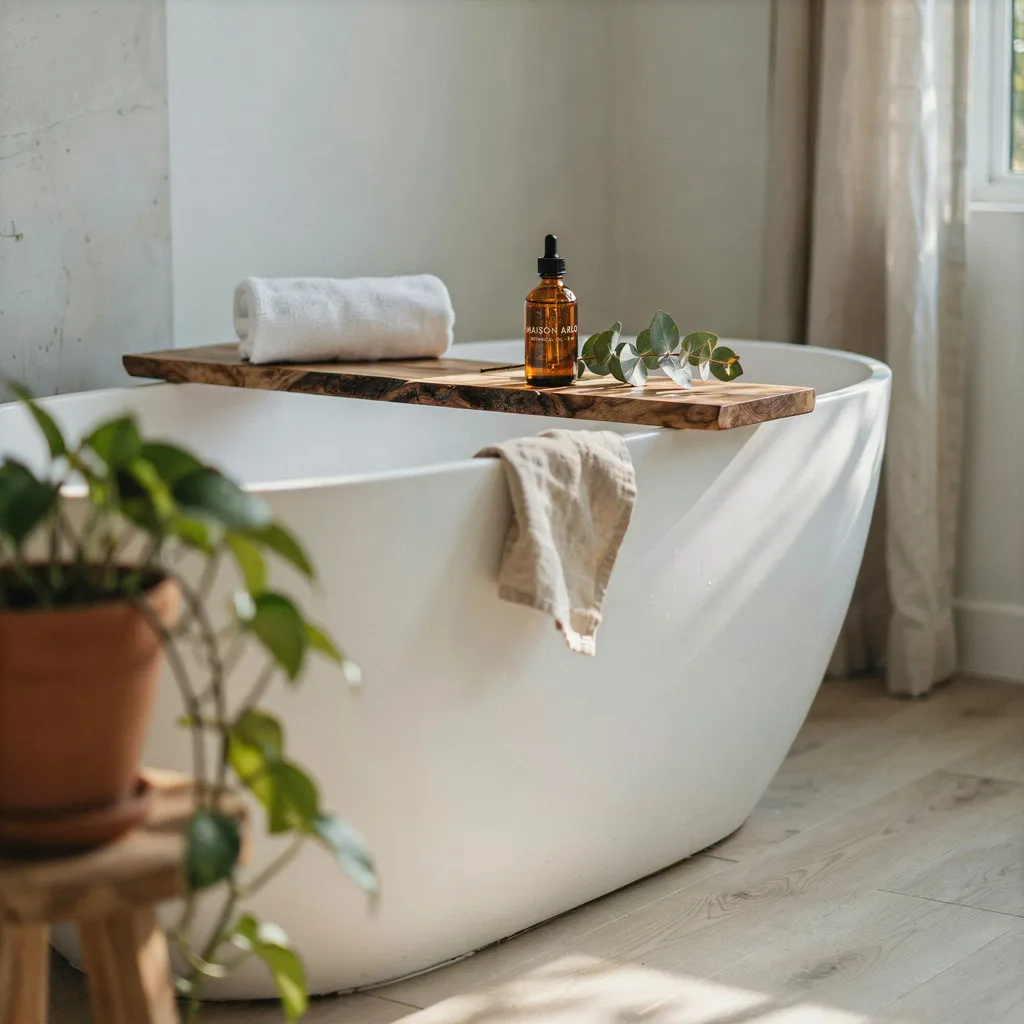
A thick, live-edge walnut plank resting across the rims of a freestanding tub instantly breaks up cold porcelain with warm, organic grain. Measure your tub’s outer width and choose a plank that extends about 2 inches past each side — that overhang is what keeps it stable.
Seal raw wood with two to three coats of marine-grade polyurethane so steam doesn’t warp the grain over time. Keep the top simple: one rolled waffle-weave towel on one side, a single amber glass bottle on the other. Dark walnut against white porcelain becomes an instant architectural anchor without adding clutter.
Cost range: $35–$90.
2. A Honed Travertine Tray as Your Styling Anchor
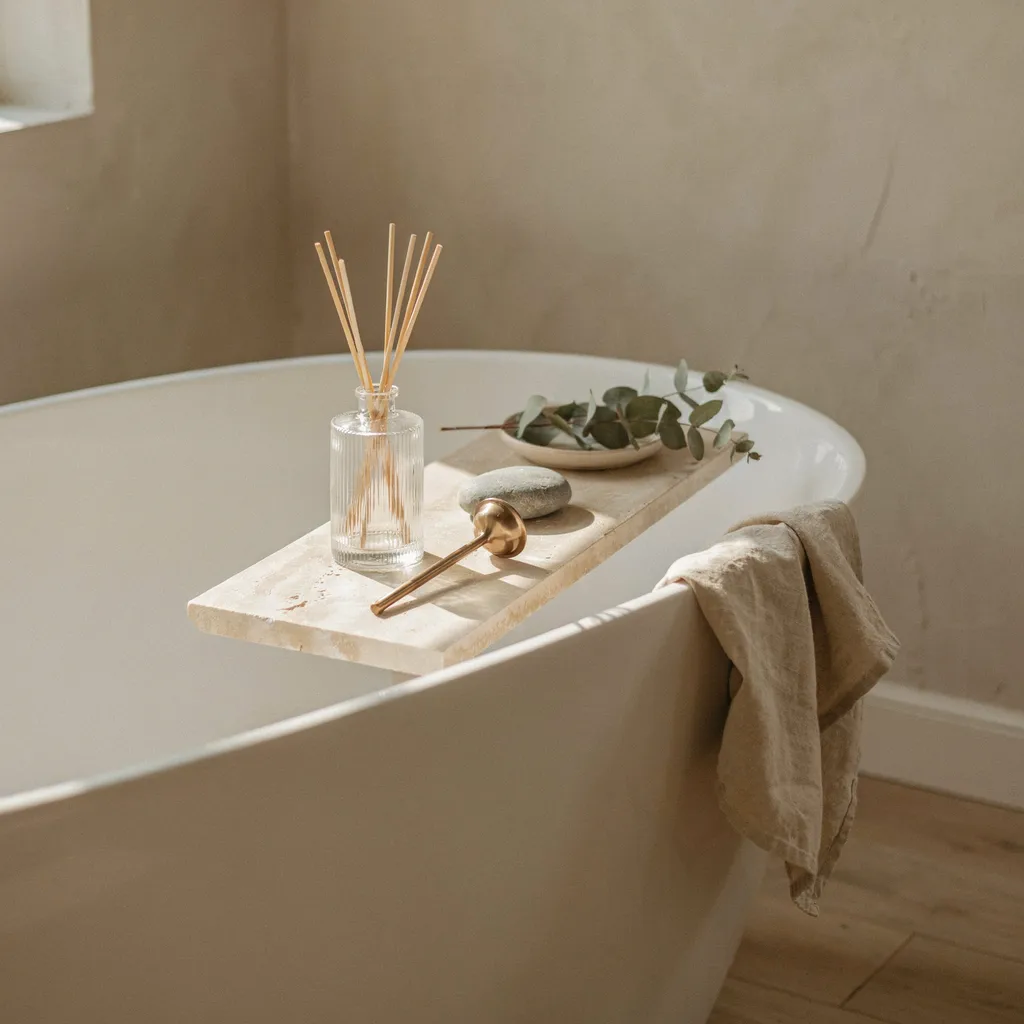
Skip polished stone — honed travertine has a matte finish that absorbs light instead of bouncing it back, giving the whole bathroom a calmer, more deliberate feel. Place the tray slightly off-center on the tub deck (about a third of the way from one edge, never dead-center) and use it to corral two or three small objects: a ribbed glass diffuser, a brass candle snuffer, a single smooth stone.
Keeping everything inside the tray’s boundary is what makes the cluster read as styled instead of scattered.
Cost range: $25–$55, and it pairs with almost any hardware finish.
3. A Fluted Concrete Stool Beside a Freestanding Tub
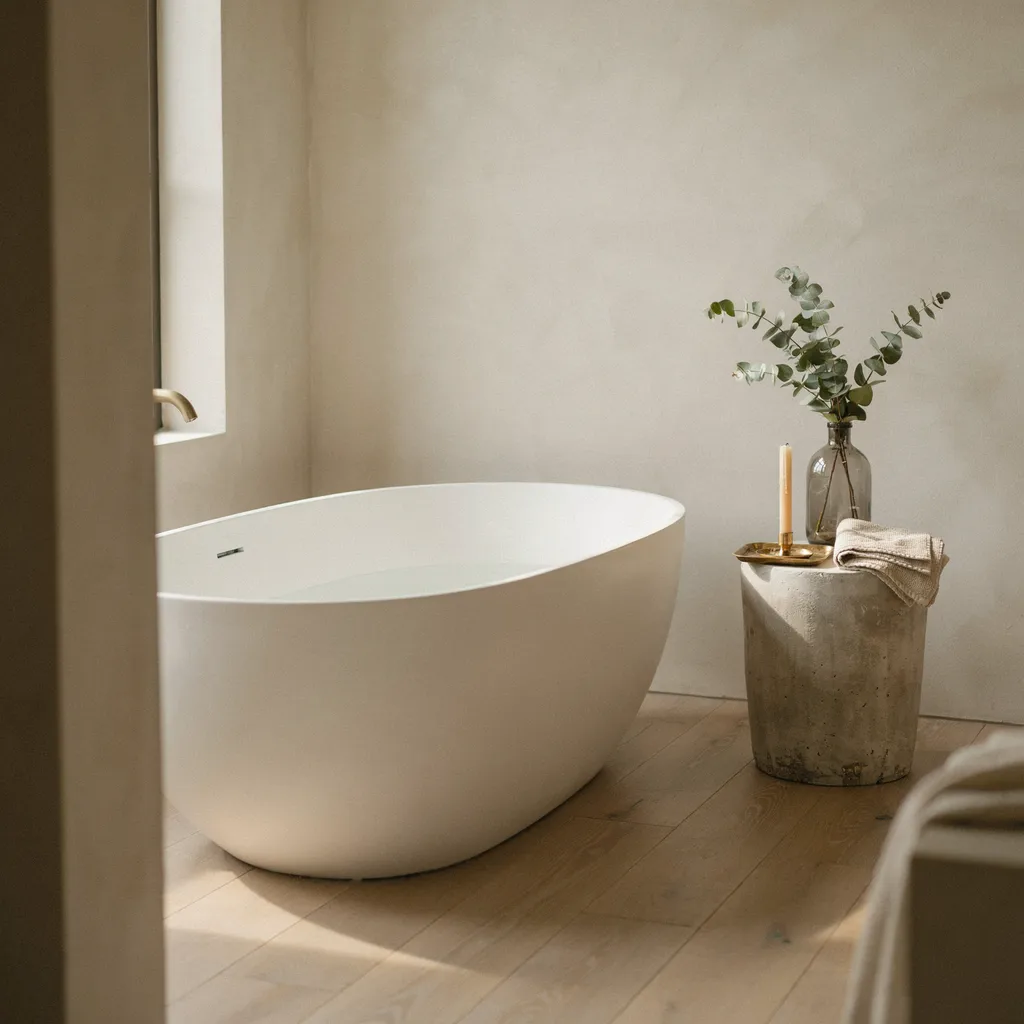
The floor space next to a freestanding tub is part of your styling zone — leave it empty and the tub looks like a fixture someone installed rather than a feature someone designed. A low, fluted concrete stool (16–22 inches tall) positioned at the foot of the tub gives you a sturdy, fully waterproof surface for anything too heavy for the tub rim itself.
Top it with a tall smoked-glass jug holding dried eucalyptus, a small brass tray with a taper candle, and one folded linen towel. If your floor is delicate marble, stick felt pads to the base so the concrete doesn’t scratch it when moved.
Cost range: $60–$95.
4. Unlacquered Brass as the One Finish That Ties Everything Together
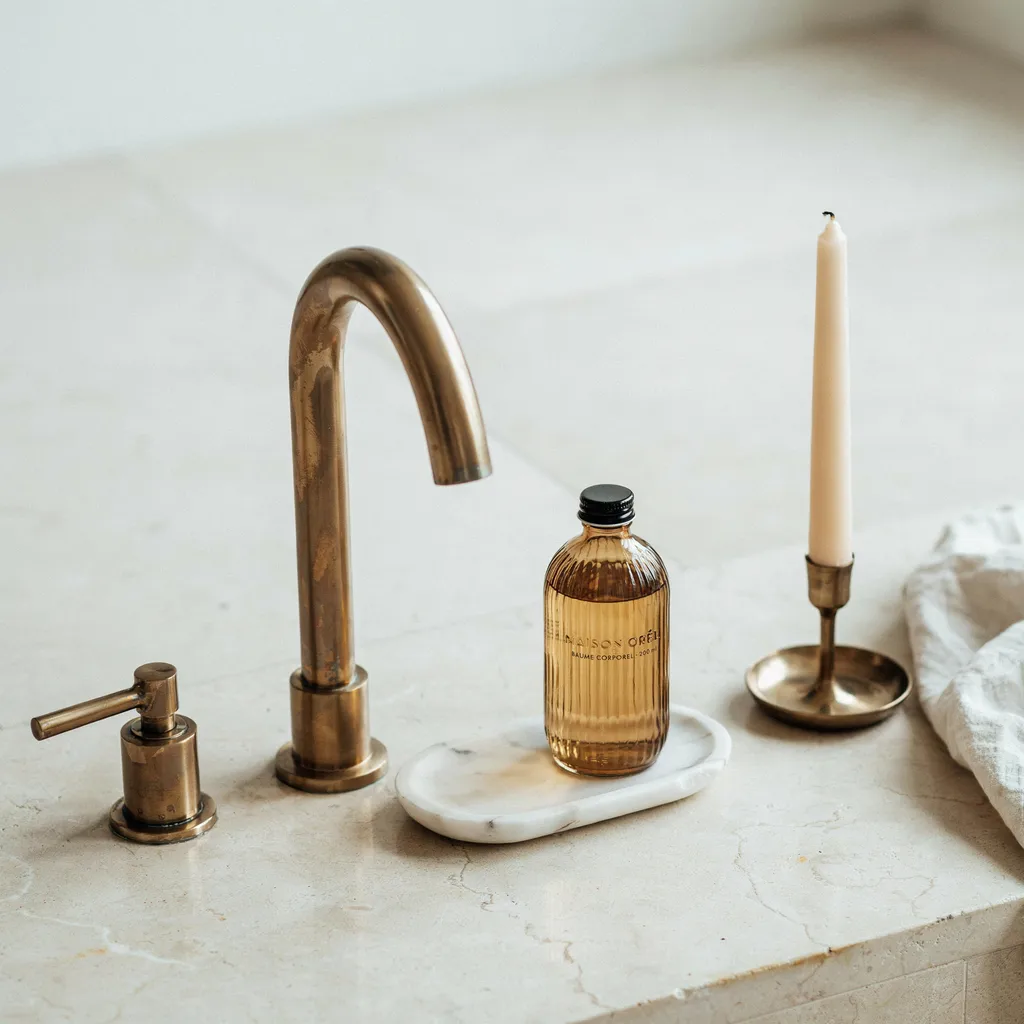
Unlacquered brass develops a real patina over months of use — it ages naturally instead of just tarnishing, which is exactly what separates it from the flatter look of polished chrome or coated “antique brass.” Once your tub filler is in this finish, repeat it everywhere else on the deck: a brass candle holder, a brass soap dish, a brass tray.
Committing to one metal tone across every object — instead of mixing brass, chrome, and matte black — is the single detail that most reliably makes a tub zone look professionally designed.
Cost range: $180–$450 for an unlacquered brass tub filler; small accessories run $15–$40 each.
5. Graduated Ribbed Glass Containers Along the Ledge
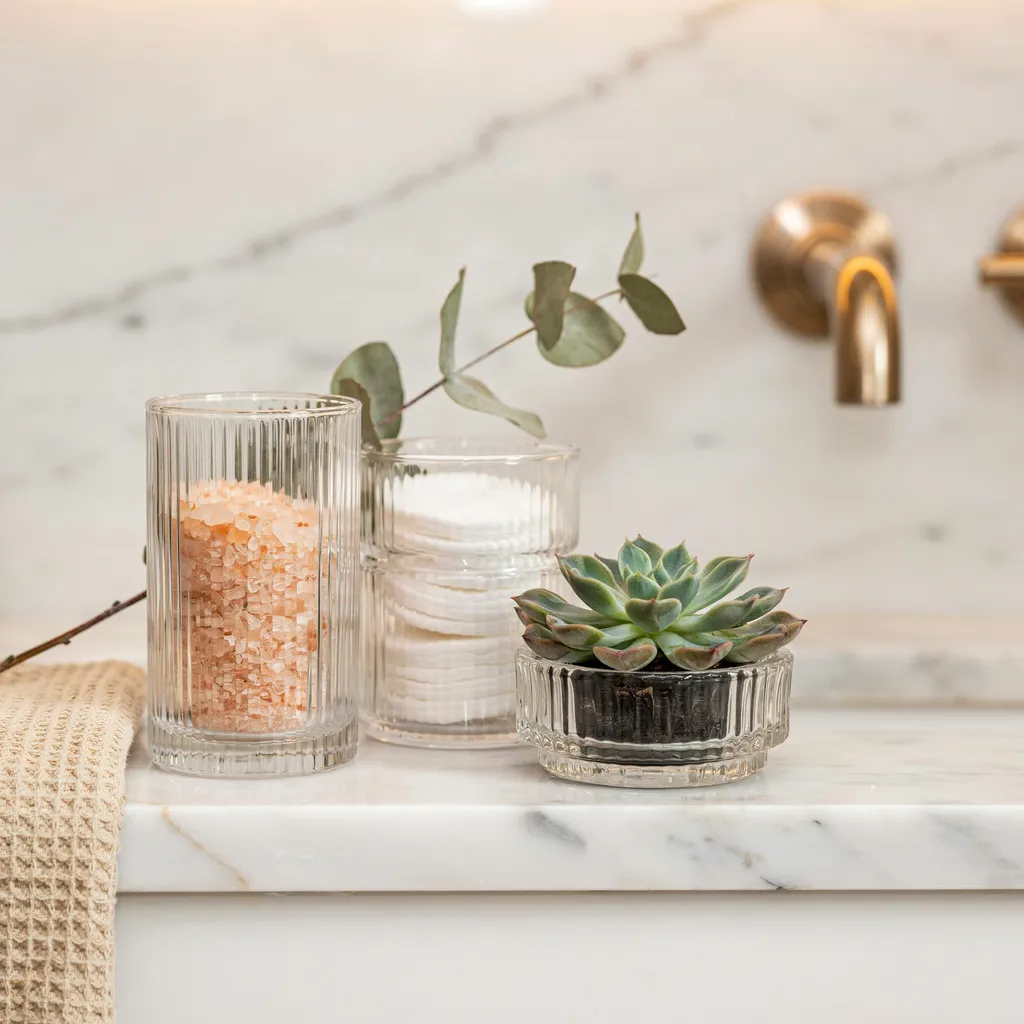
Ribbed glass catches light at every angle, so it stays visually interesting even when it’s just holding cotton rounds. Use three containers in three different heights — a tall cylinder (around 8″), a medium jar (around 5″), and a low wide dish (2–3″) — clustered tightly rather than spread along the whole ledge.
Dedicate each vessel to a single material: bath salts in the tall one, cotton rounds in the middle, a small succulent or stone in the low dish. One material per container is what keeps the grouping looking edited rather than thrown together.
Cost range: under $35 for a set of three.
6. A Leaning Arched Mirror Beside the Tub
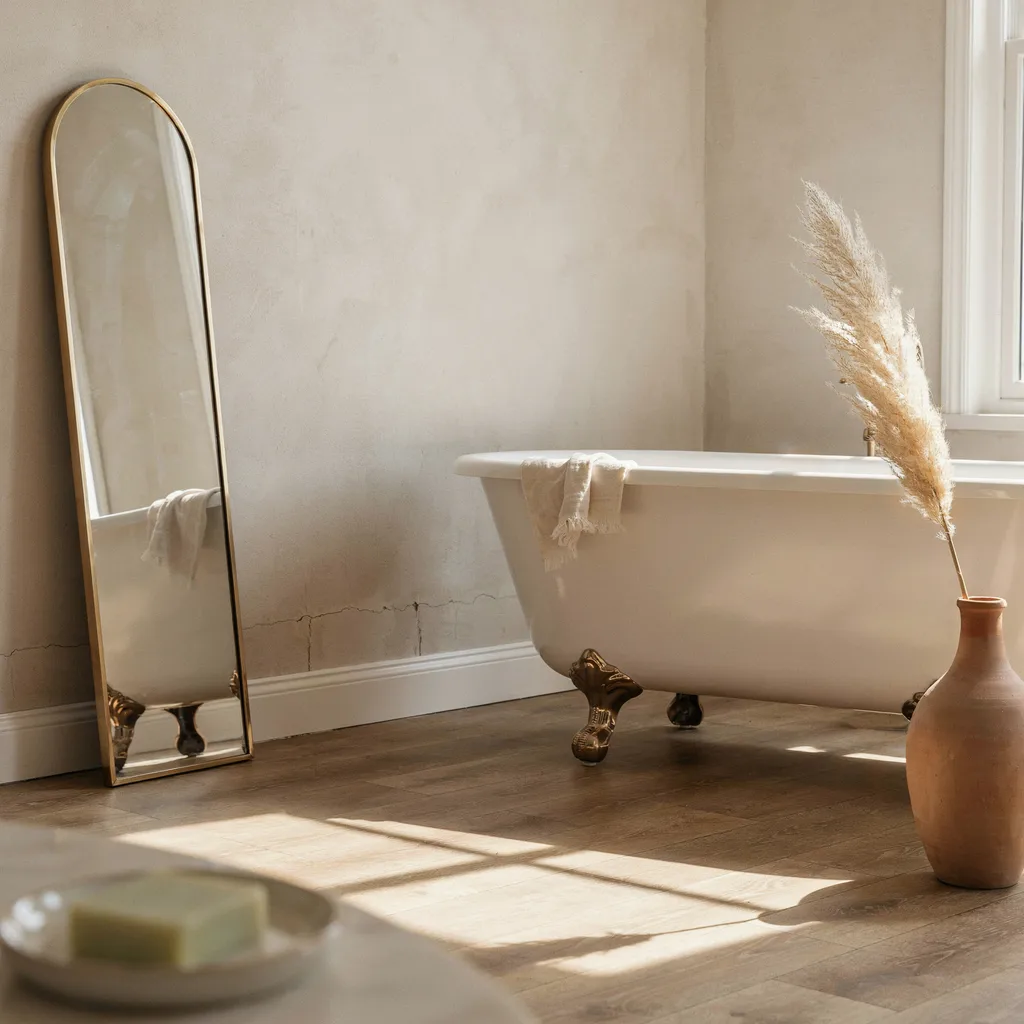
A tall arched mirror (65–72 inches) leaning against the wall — no mounting required — bounces light across the room and adds an architectural silhouette that makes even a small bathroom feel bigger. Choose a thin brass or matte black frame, no wider than an inch, so it doesn’t compete with the tub.
Balance it with a tall terracotta vase of dried pampas grass on the opposite side. Reflective surface on one side, organic texture on the other — that asymmetry is what makes the whole zone feel finished from every angle.
7. Handcrafted Clay Trays for Texture and Imperfection
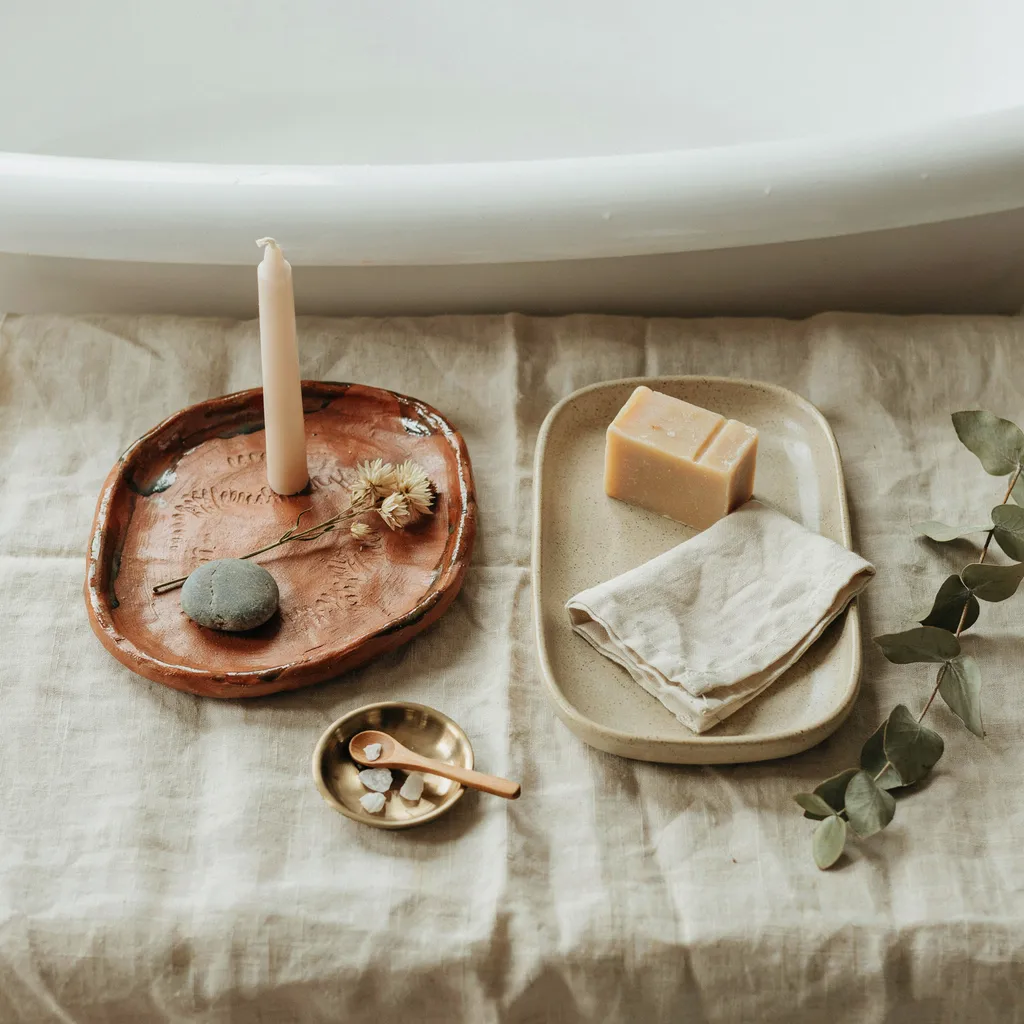
Machine-made trays are too perfect — the slight irregularities in a handmade terracotta tray (uneven glaze, visible clay edges) are what signal “handmade” rather than “store display.” Use two trays of different sizes: a larger oval (around 10″) as your main cluster, a smaller round dish (around 5″) for one single object like a bar of soap.
Unglazed terracotta also naturally absorbs minor water drips, which keeps slimy soap residue from building up on your grout lines — a small practical win on top of the look.
Cost range: $18–$45.
8. One Oversized Print on the Wall Above the Tub
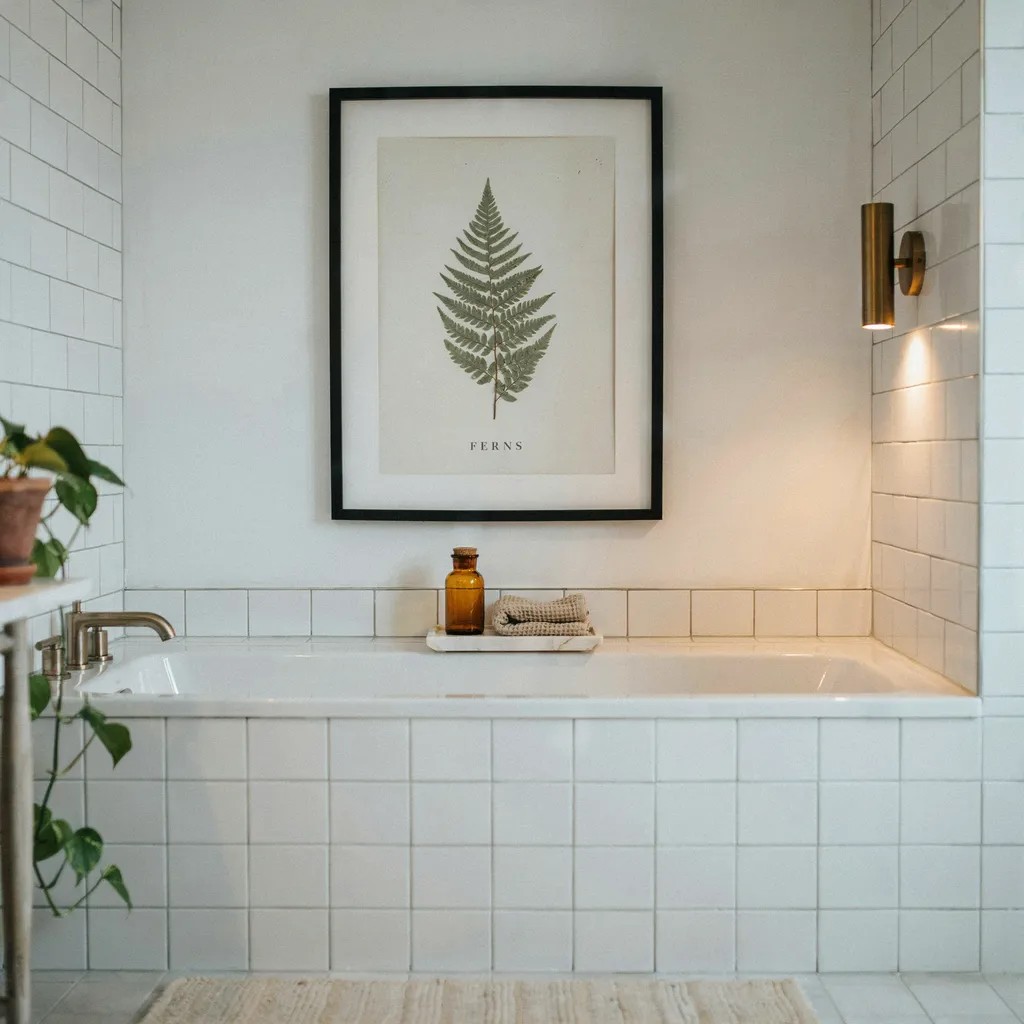
The wall above a built-in tub is the most underused surface in most bathrooms. A single framed piece — minimum 20″x24″ — placed so its top edge sits within 6 inches of the ceiling line does more visual work than a gallery wall ever could here, because tile surrounds leave no negative space to separate multiple small frames.
A botanical line drawing in a simple black frame is the safest, most versatile choice across tile colors. Center it above the tub to reinforce the tub’s own symmetry rather than fight it.
Cost range: $25–$60 unframed, plus $20–$30 for a frame.
9. A Leaning Wood Towel Ladder Instead of a Wall Bar
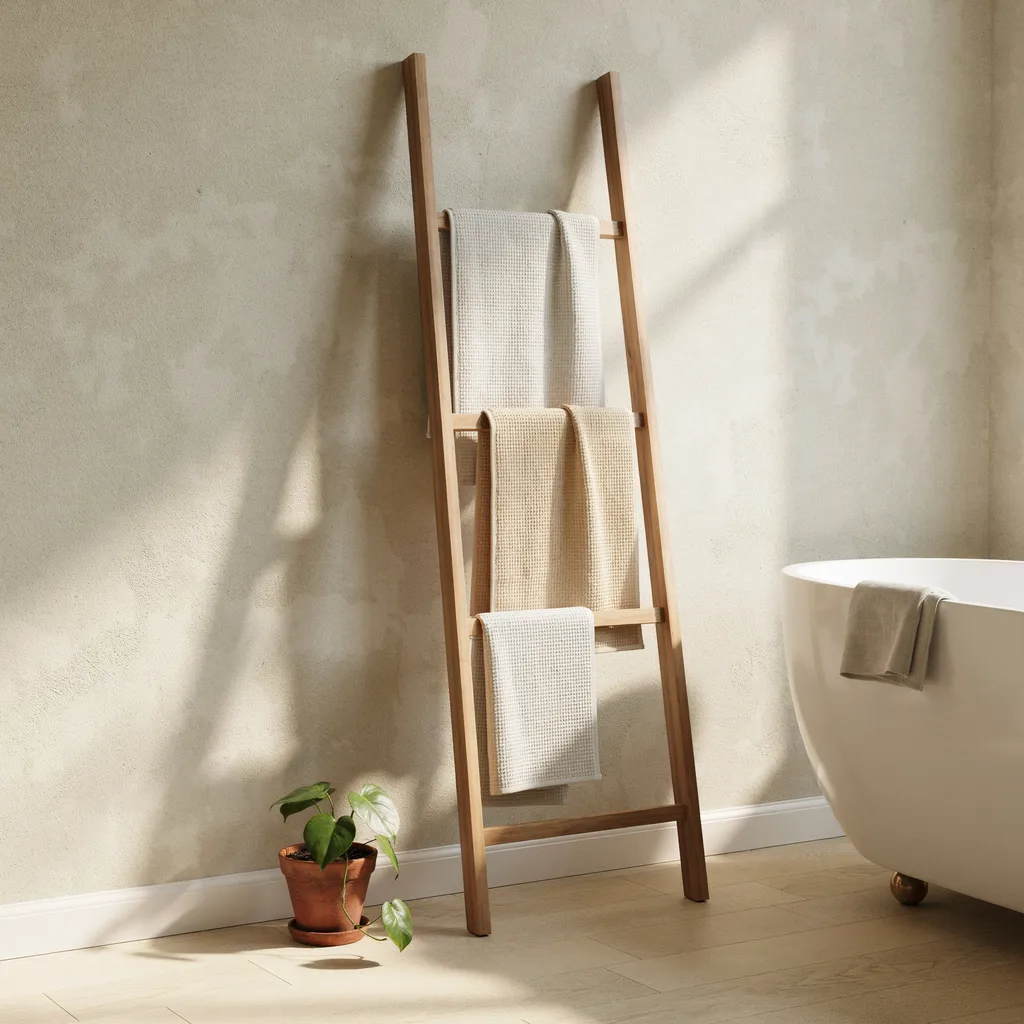
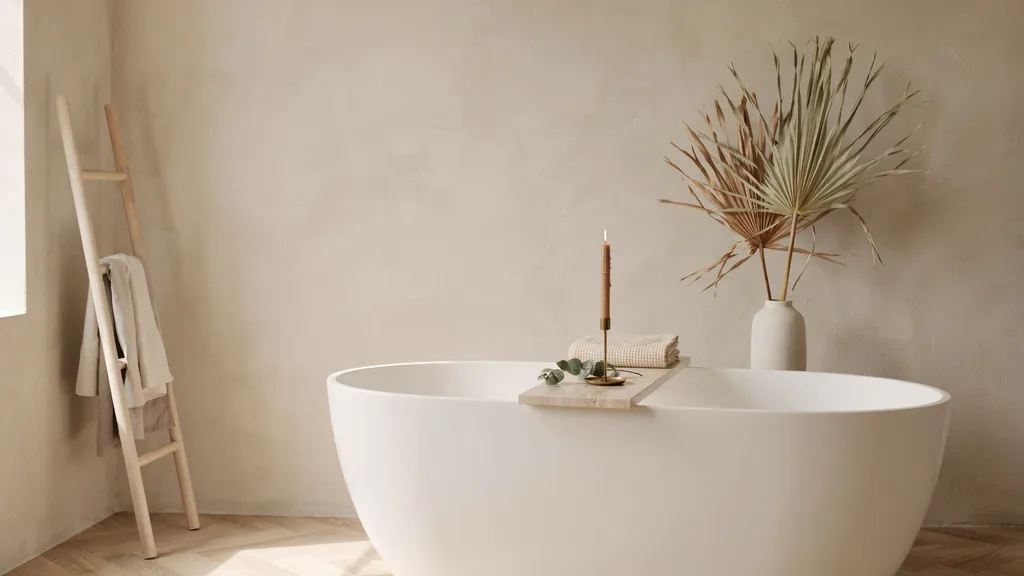
A wooden ladder (60–72″) leaning against the wall beside a freestanding tub adds height and a relaxed, editorial feel that a flat wall-mounted bar can’t replicate — and it needs zero drilling, which makes it ideal for renters. Natural oak or ash with a matte finish works best.
Drape three waffle-weave towels at three different heights on the rungs rather than folding them all the same way. Waffle-weave specifically — the grid texture reads as intentional even when the towel is just hanging there, unused.
Cost range: $45–$90.
10. A Floor Vignette Beside a Clawfoot Tub
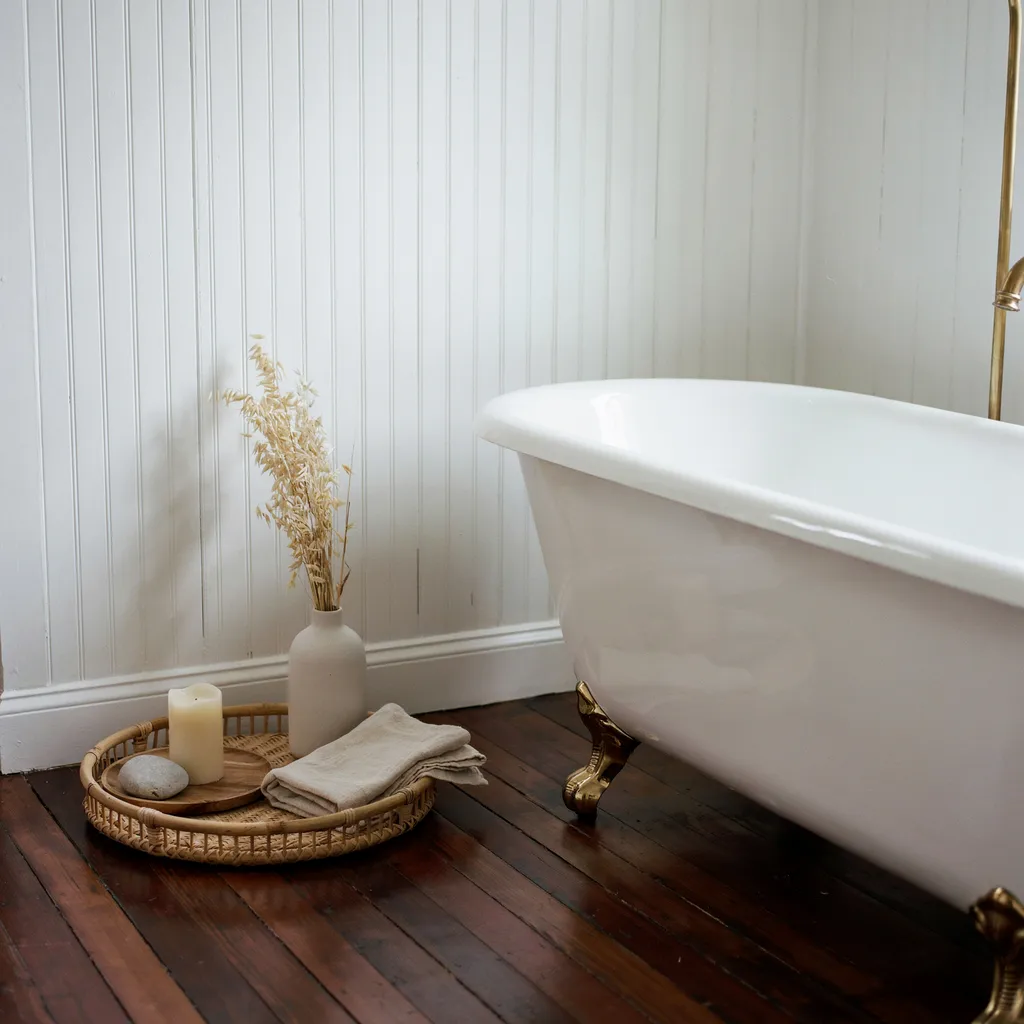
The gap created by a clawfoot tub’s raised legs naturally draws the eye to whatever sits on the floor beside it. A round rattan tray (about 8″ from the tub base) holding a candle and a smooth stone anchors the spot. Beside — not on — the tray, place one tall ceramic vase (14–16″) with dried wheat stems or a single pampas plume.
A linen towel draped over the tub edge directly above ties the floor grouping back up to the tub, so it reads as one connected styling moment instead of two separate ones.
11. A Plug-In Brass Wall Sconce for Layered Light
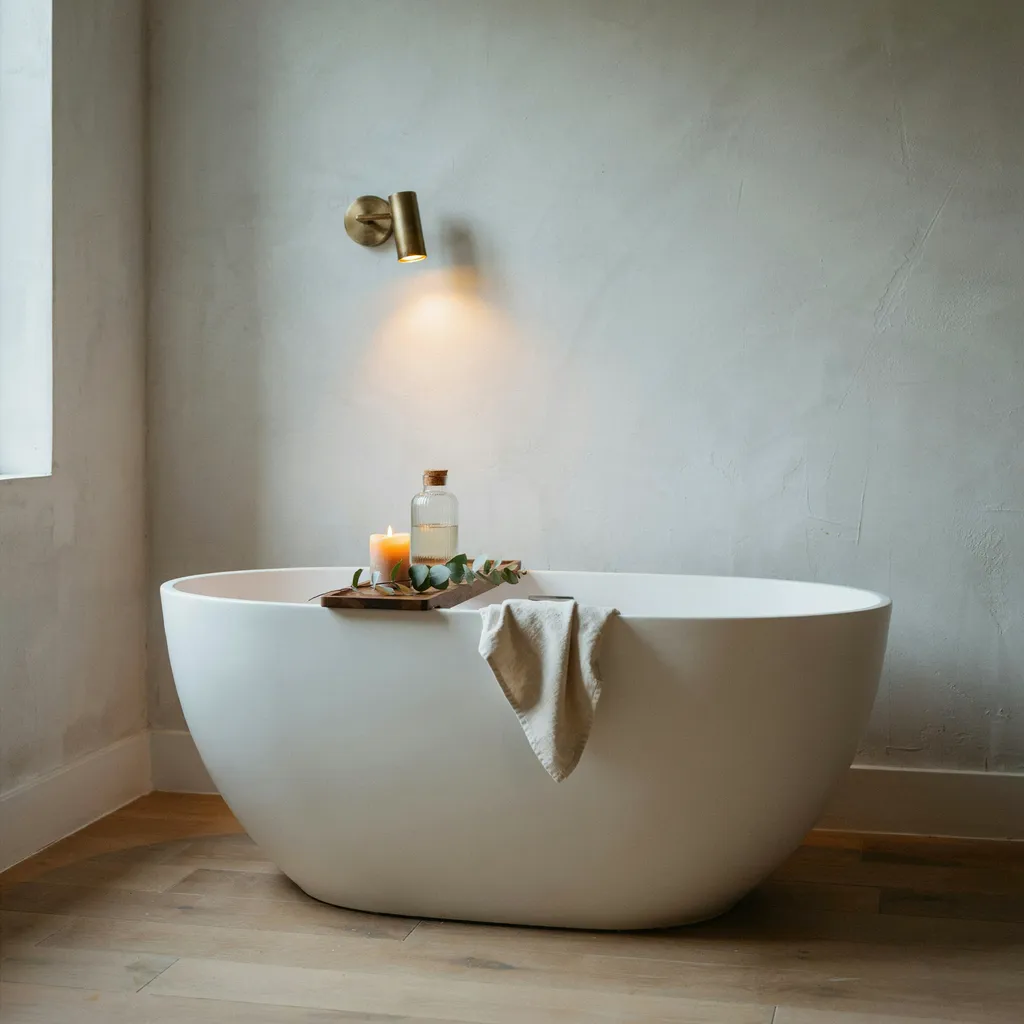
Overhead lighting flattens everything — it’s why objects under a ceiling light alone look flat rather than dimensional. A single wall sconce mounted 60–64 inches up, about 12 inches from the tub’s edge, throws warm, directional shadows across the tub deck, the same trick high-end hotel bathrooms use.
Choose an unlacquered brass arm with a frosted glass shade for a diffused glow rather than a harsh point of light. Plug-in versions with a fabric-covered cord need only two screws — no electrician required.
Cost range: $65–$140.
12. Matching Honed Marble Accessories at the Faucet End
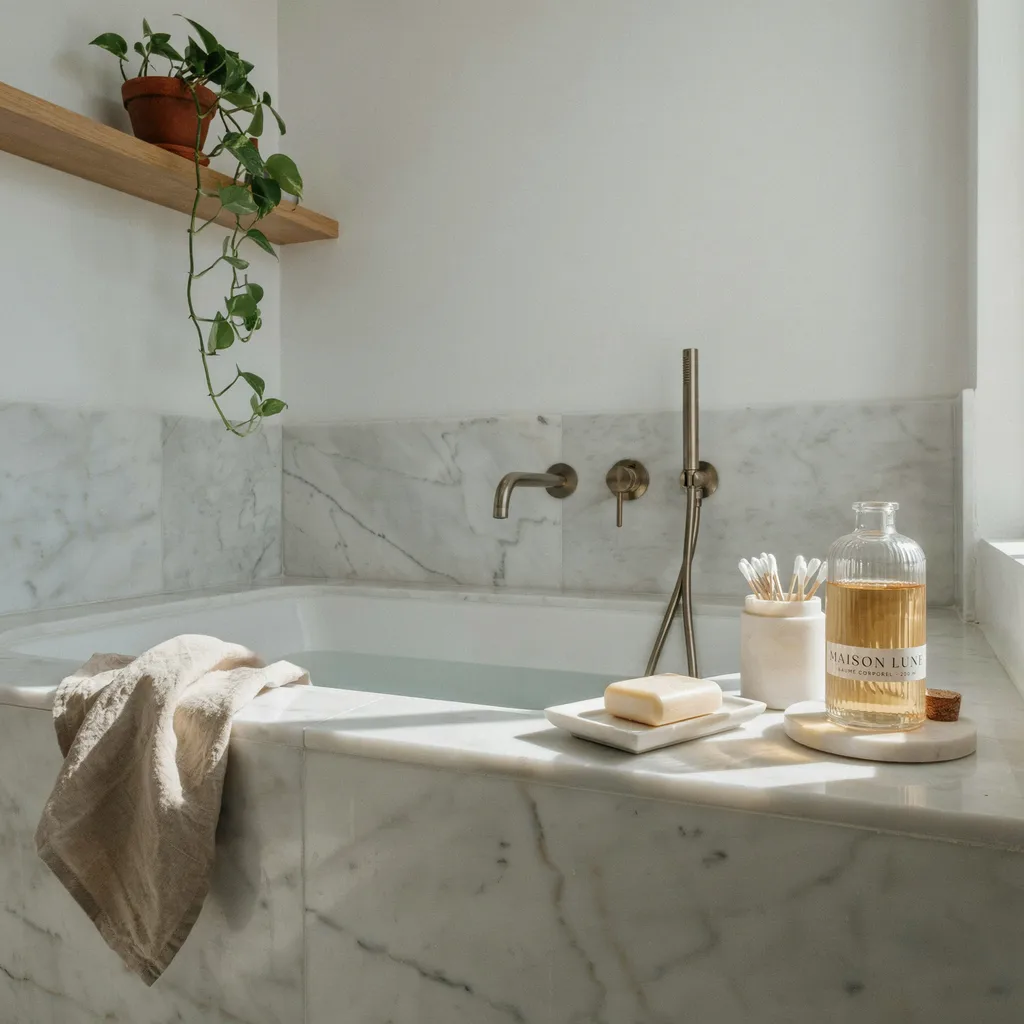
Repeating one stone across several small objects (a soap dish, a small tray, a coaster under a bottle) signals intention the same way a matched hardware finish does. White honed marble specifically — not polished — works against tile in white, grey, beige, or cream without fighting any of them.
Three matching marble pieces, grouped at the faucet end of the ledge rather than spread out, reads as one composed vignette from the doorway instead of three random purchases.
Cost range: $35–$75 for a three-piece set.
13. A Tall Vessel of Dried Palm Spears at the Foot of the Tub
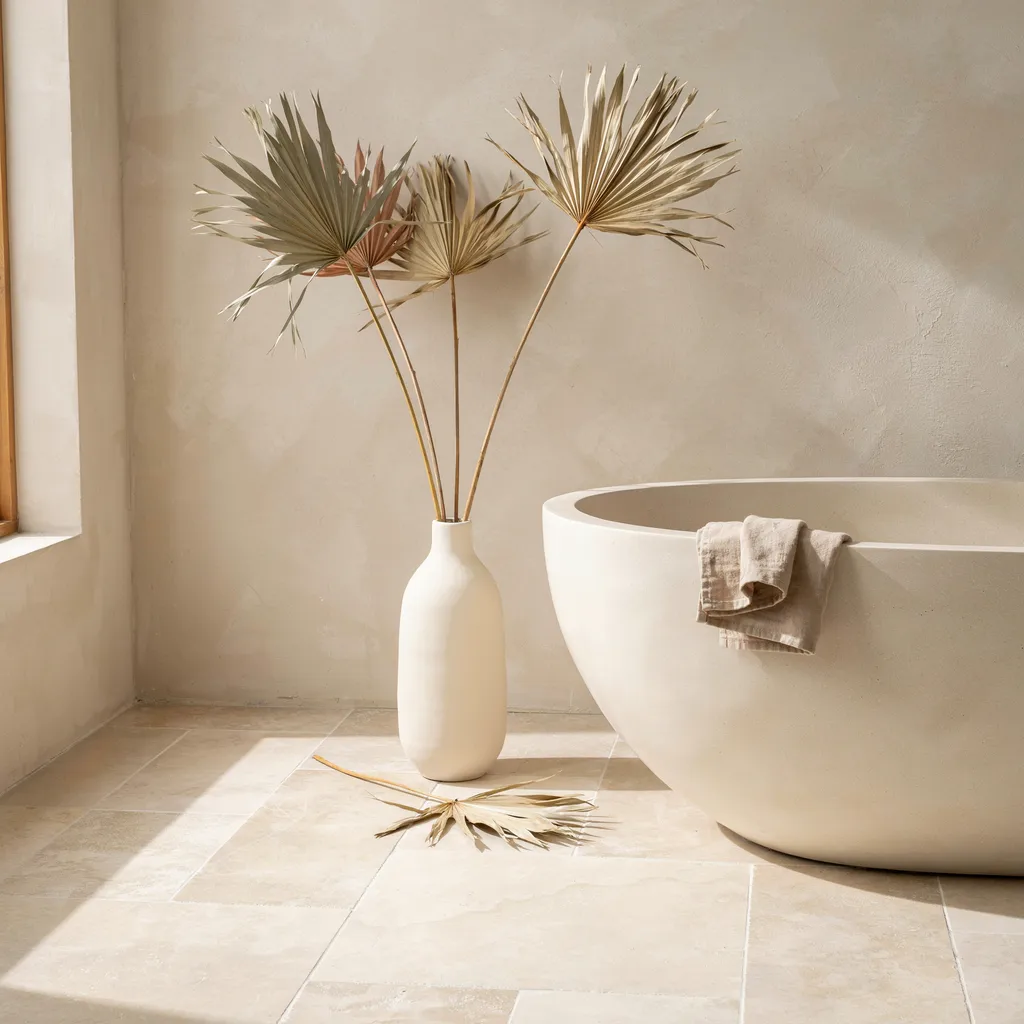
Dried botanicals beat fresh flowers beside a tub in every practical way — no water, no weekly replacing, and they hold their shape for six to twelve months. Palm spears specifically have sharp, geometric folds that catch light and cast strong shadow lines, giving a more sculptural look than softer stems like lavender.
Place four spears in a slim ceramic vase (16–20″) on the floor at the foot of a freestanding tub, where the full length of the stems stays visible.
Cost range: $12–$22 for a bundle of four to six stems.
14. The Three-Object Rule — Apply It to Every Surface
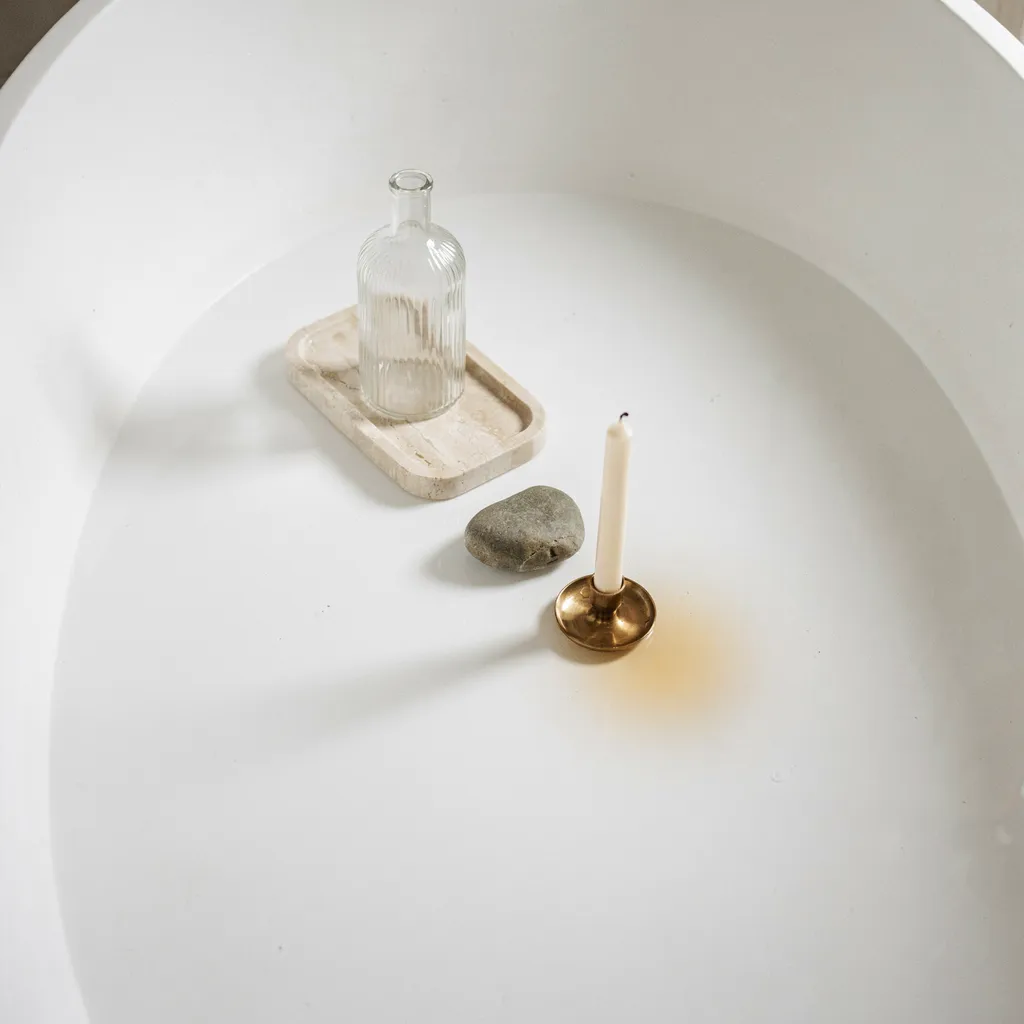
This is the principle behind every idea above: never put more than three objects on one surface. Three creates a triangle the eye can move between comfortably; four or more start to compete for attention, no matter how nice each individual piece is.
One tray as your base layer, one taller object (6–10″) as the mid layer, one low flat accent (a stone, a folded cloth, a small dish) — that’s it. The empty space around the cluster isn’t wasted space; it’s negative space, and it’s what makes the three objects you did choose actually register as deliberate.
Conclusion:
What separates a tub zone that looks expensive from one that looks like clutter isn’t budget — it’s restraint and material choice. A honed travertine tray, an unlacquered brass faucet, three graduated glass containers: each one costs under $90 on its own, but together they read as deliberately designed.
Start with the tub deck — it’s the first thing visible from the doorway and gives you the most visual impact per dollar. Then move to the floor zone, add one tall element and one low one, and stop. The wall above the tub comes last, and one well-scaled print will always outperform a cluttered gallery in that spot.
Every idea here can be done in a single weekend, with no renovation and no permanent installation.
Follow us on Pinterest @nestellahome for daily bathroom inspiration, styling formulas, and the latest home decor ideas curated just for you.
Frequently Asked Questions:
Q1. What’s the best material for a tub deck tray?
Honed travertine. The matte surface resists water spotting better than polished stone, adds texture no manufactured tray can match, and works with brass, black, or nickel hardware equally well.
Q2. How many objects should sit on a bathtub ledge?
Three, maximum. One base layer (a tray), one mid-height object (6–10″), and one low accent. That’s the visual triangle the eye reads as styled rather than cluttered.
Q3. What towel material works best beside a freestanding tub?
Waffle-weave cotton in ivory or warm linen tones. It drapes better than thick terry cloth and adds texture even when it’s just hanging, unused.
Q4. Can I add a wall sconce without hiring an electrician?
Yes — plug-in sconces with a fabric-covered cord are widely available in brass and matte black finishes and only need two screws to mount.
Q5. How do I protect a wood caddy from warping?
Apply two to three coats of marine-grade polyurethane to all sides, and refresh with a thin coat of tung oil once a year to keep moisture out.
Q6. Can I use a concrete stool if my bathroom has delicate marble flooring?
Yes — stick four self-adhesive felt pads onto the base of the stool. This creates a soft cushion so the heavy concrete won’t scratch or chip the marble when moved.
Q7. What’s the best indoor plant to hang or place near a bathtub?
Moisture-loving plants like English ivy, Boston fern, or golden pothos. They thrive in bathroom humidity as long as there’s some natural light nearby.