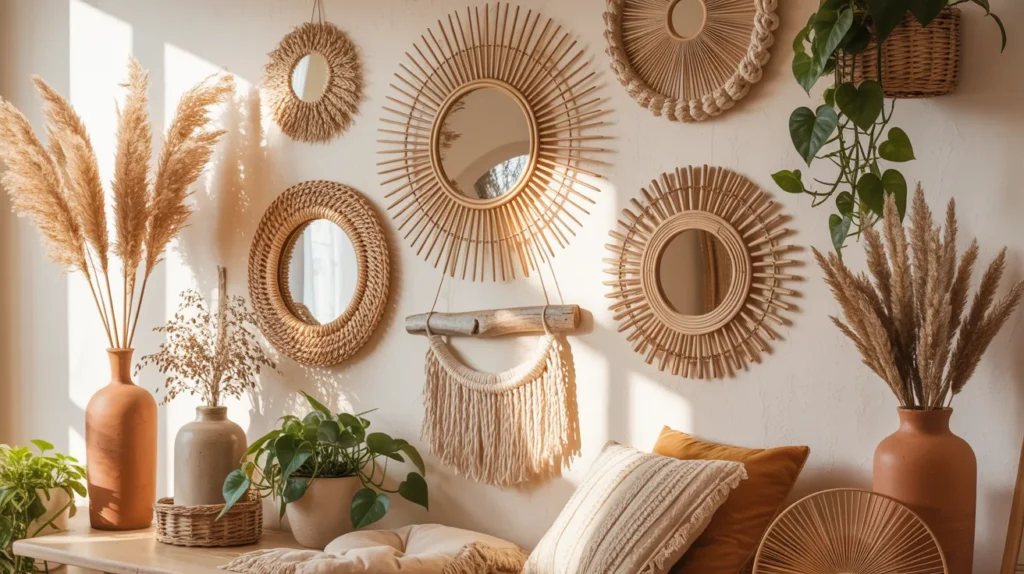
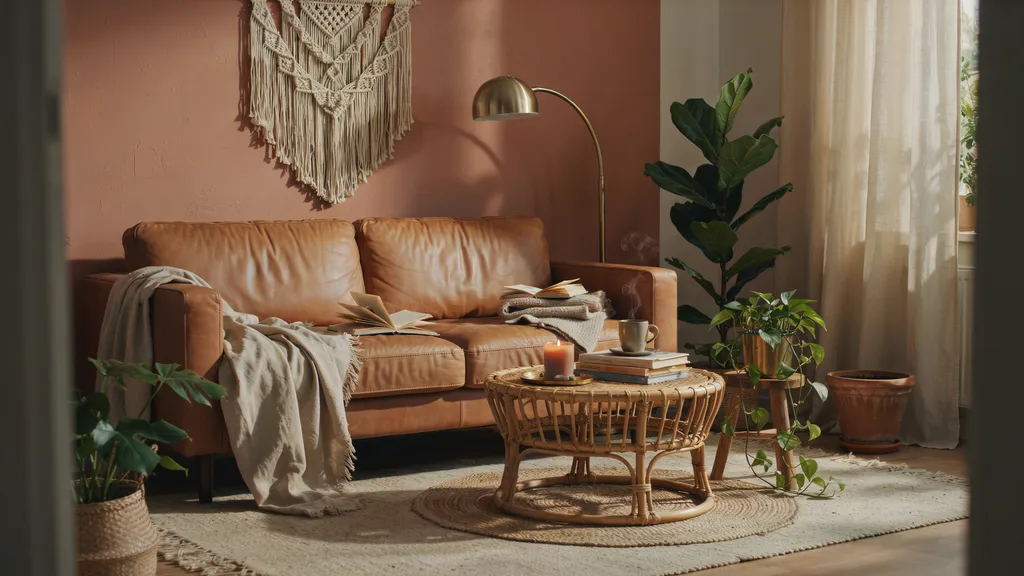
Plain white drywall and matching furniture sets can leave a living room feeling flat — that’s exactly what these 21 boho living room ideas fix. Instead of generic clutter, the focus here is on real material pairings: hand-woven jute rugs layered under vintage kilims, unglazed terracotta pottery, and rattan furniture with actual texture and history.
The trick to a bohemian living room that doesn’t look chaotic is anchoring the space around one focal element — a macramé wall hanging above a caramel leather sofa, for instance, or a rattan pendant light centered over a low coffee table. From there, mixing structural vintage finds with a few crisp modern pieces keeps the eclectic look grounded instead of random.
Whether you’re working with a small apartment corner or a full-size lounge, these boho living room decor ideas stick to combinations you can actually recreate: mustard velvet cushions against raw rattan, warm terracotta walls with brass accents, patterned textiles layered with restraint. No vague mood boards — just specific pairings pulled from the 21 ideas ahead.
1. Layer a Jute Rug Under a Vintage Wool Rug
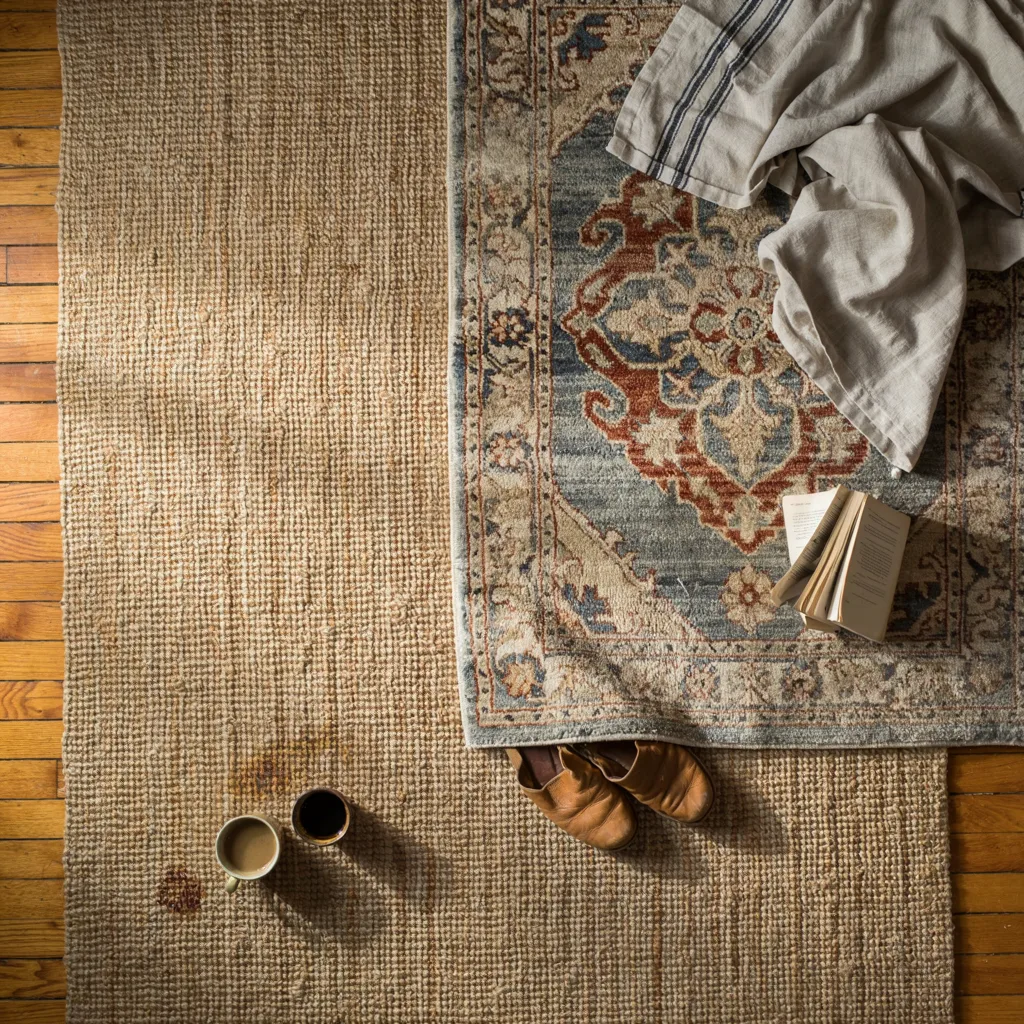
Layering two rugs instead of using one gives a boho living room instant depth without buying new furniture. Lay a 9×12-foot jute rug as your base to cover the full seating area, then place a smaller 5×7-foot vintage-style wool rug on top, angled slightly off-center rather than perfectly straight. Leave the jute border visible on every side instead of covering it completely.
The coarse jute texture keeps the softer wool rug from sliding underfoot, so a rubber gripper pad between the two layers is optional rather than essential. Budget $150-$200 for the jute base and $150-$250 for the vintage-style rug — a combination that reads as curated without the cost of one oversized designer piece.
2. Connect Rooms with a Faded Runner
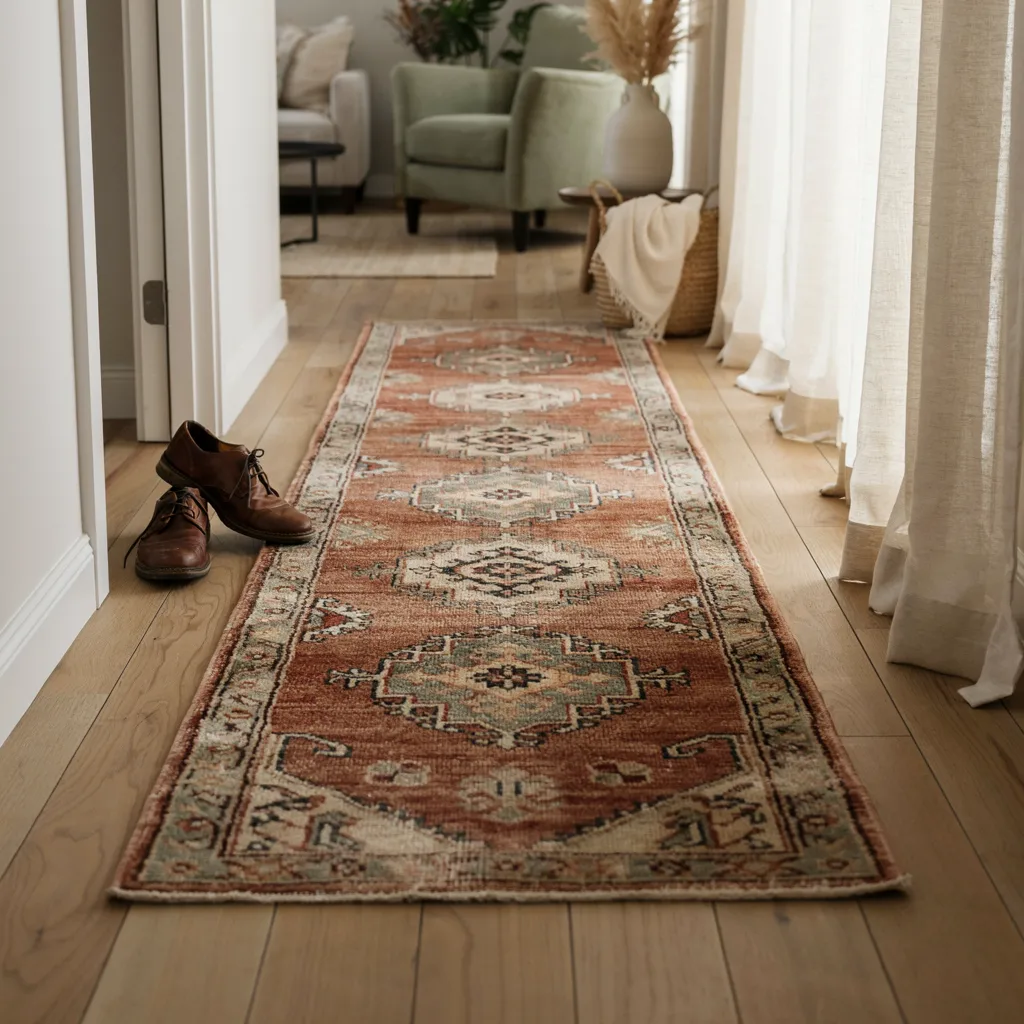
A worn-looking runner rug is an easy way to carry a boho living room’s palette into a hallway or entryway, tying the spaces together instead of leaving them visually disconnected. Look for a 2.5×10-foot wool or wool-blend runner in a faded medallion or geometric pattern, which handles foot traffic better than a flat-weave cotton version.
Anchor it with a thin non-slip pad underneath to keep it from bunching on hardwood or laminate. Runners in this size and style typically run $80-$180, making them one of the more affordable transitional details on this list — and one that’s easy to overlook until the hallway suddenly feels disconnected from the room it leads into.
3. Center the Room on a Round Rattan Coffee Table
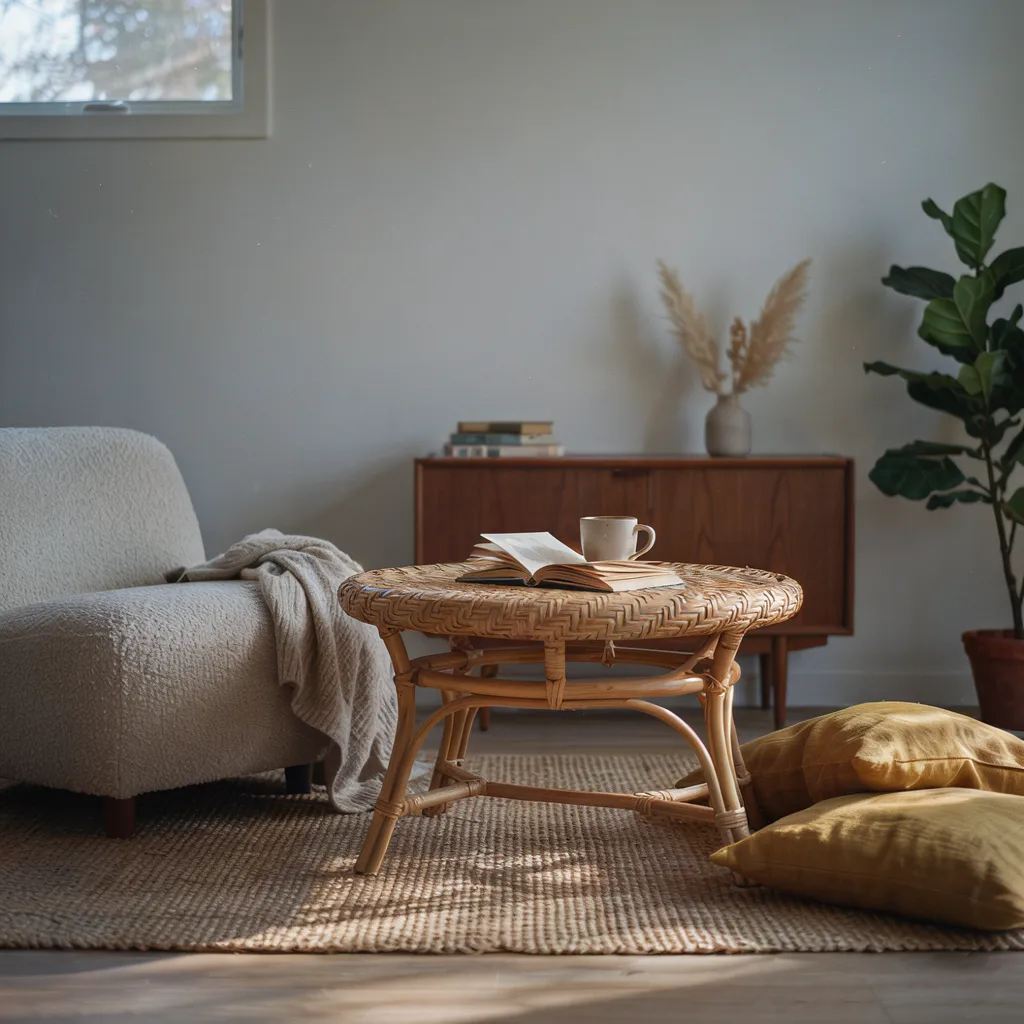
Rattan furniture is one of the clearest visual signals of a bohemian living room, and a round coffee table is the easiest entry point. Choose a table 30-32 inches in diameter and 16-18 inches tall — low enough to keep sightlines open, round enough to soften a room full of straight-edged sofas and chairs.
Check the weave density before buying: tightly woven rattan holds its shape for years, while a loose weave sags and frays faster. A light coat of matte sealer protects the fibers from drink spills. Expect to pay $150-$350 depending on whether the frame is solid rattan or a rattan veneer over a wood base, the latter being the more budget-friendly option.
4. Choose a Curved Sofa as the Room’s Anchor
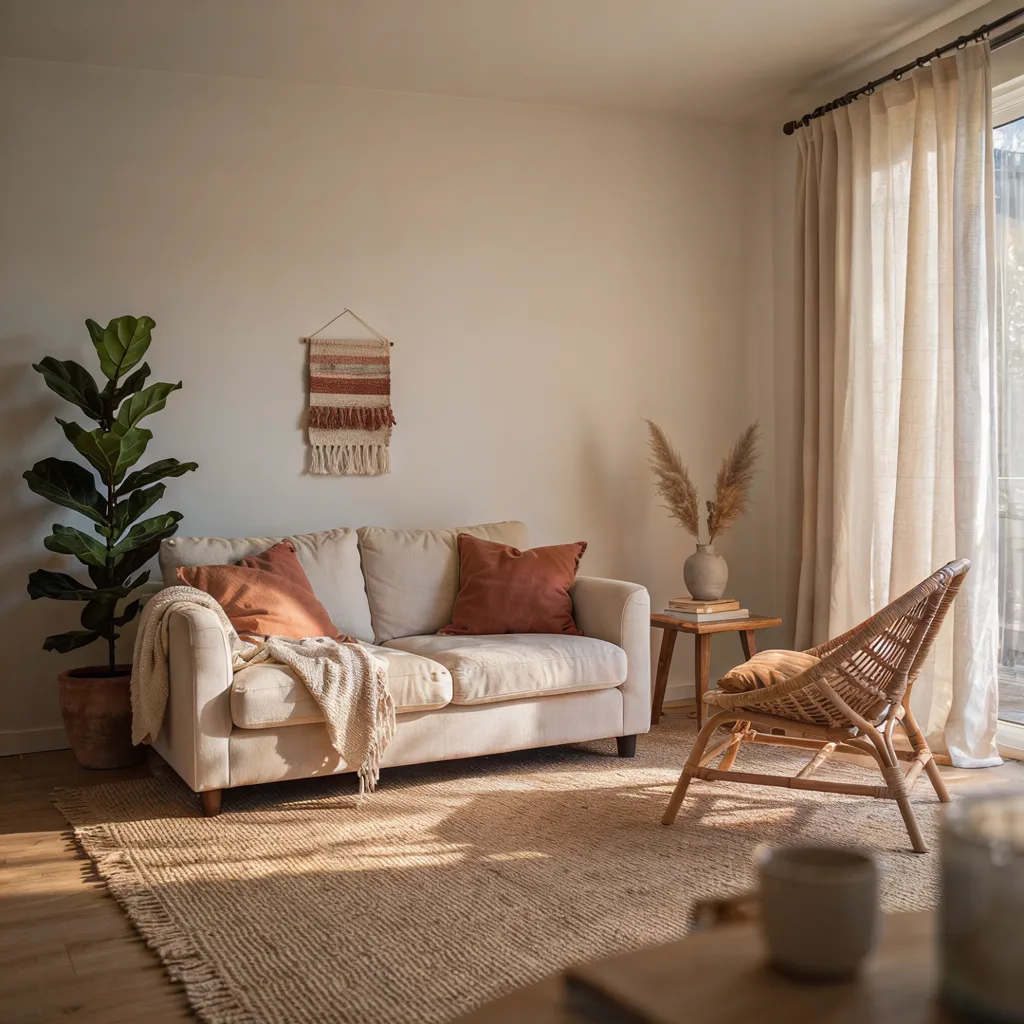
Instead of relying on artwork or lighting to be the star, let the sofa itself anchor the room. A curved silhouette softens hard architectural corners and gives an eclectic mix of furniture something calm to build around. Keep the upholstery neutral — ivory, oatmeal, or a soft grey — so patterned cushions and vintage accents can do the visual work instead.
A linen-blend curved sofa in this style typically runs $900-$1,600 depending on size and fill quality. Pair it with a walnut or reclaimed-wood side table and one boucle or cane accent chair rather than a matching set, which keeps the room from reading as a single furniture-store purchase.
For more overall layout inspiration, see our 17 Living Room Interior Design Ideas guide.
5. Mix Cane Chairs with a Solid Wood Table
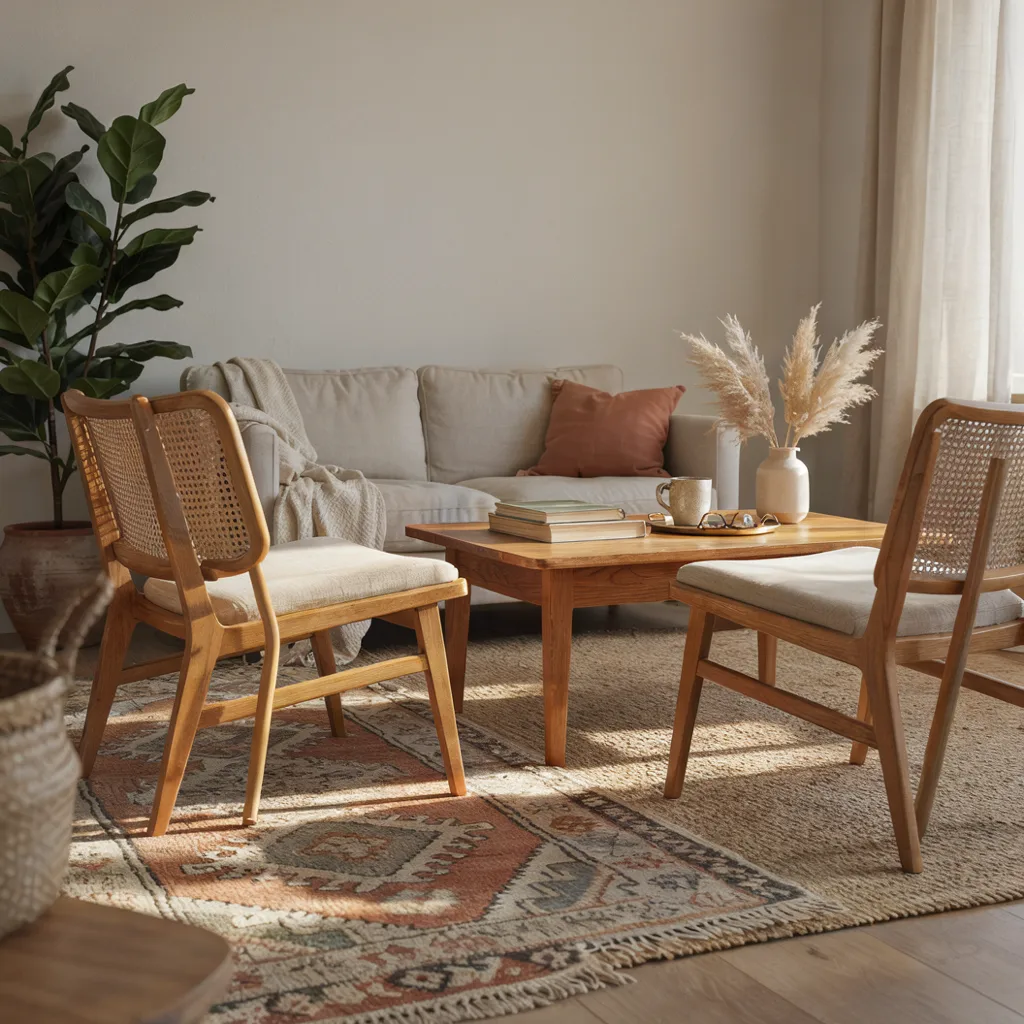
Furniture made from different natural materials creates more visual interest than an identical matching set. Cane chairs bring lightweight texture; a solid wood table adds the visual weight needed to ground the seating arrangement. Together they read as collected rather than coordinated.
Choose an oak or walnut coffee table around 42-48 inches long for a standard three-seat sofa, and place two cane accent chairs across from it rather than beside each other, which keeps conversation flow natural. A solid wood table in this range runs $180-$350; cane accent chairs typically cost $150-$300 each, more affordable in pairs from secondhand or vintage sources.
6. Bring in a Reclaimed Wood Coffee Table Instead of New
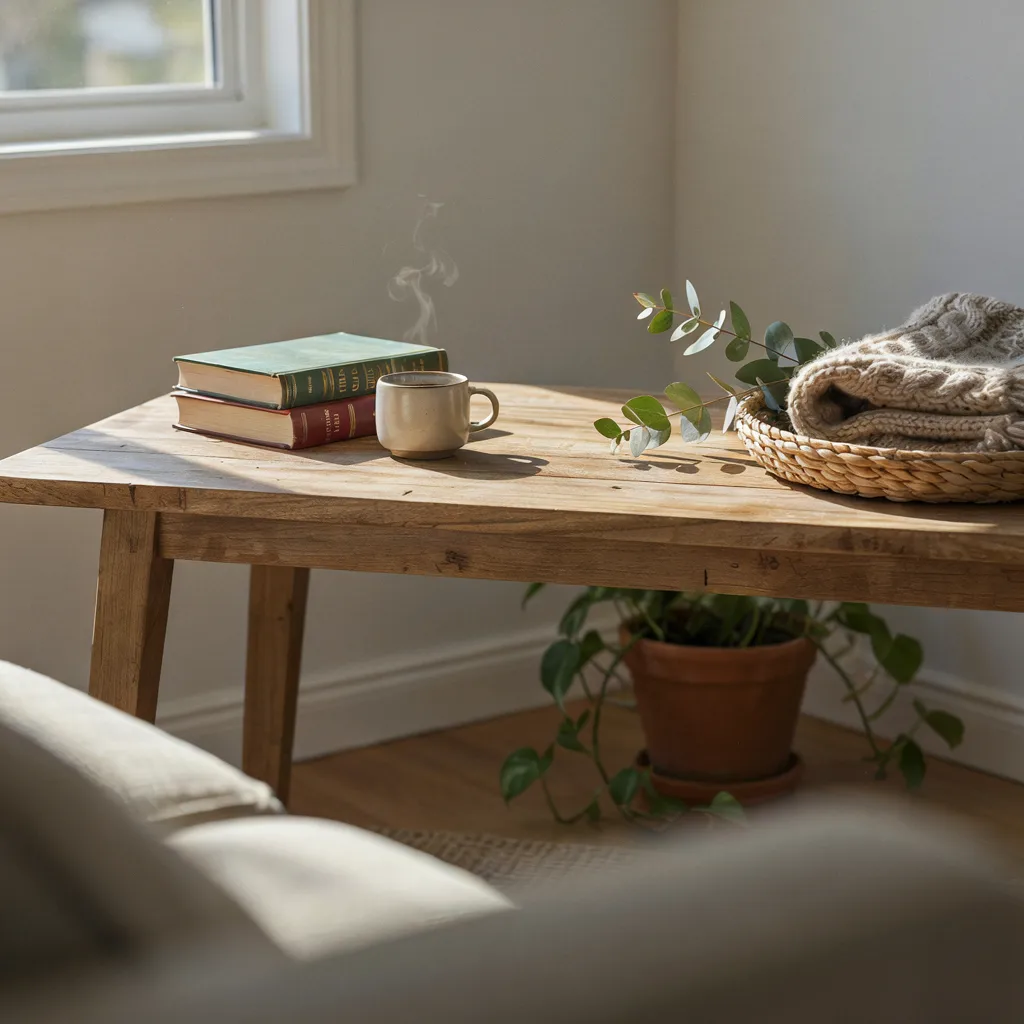
Reclaimed wood brings in the imperfect, collected-over-time quality boho rooms rely on, and it’s often cheaper than new solid wood because the material is repurposed rather than freshly milled. Look for visible saw marks, uneven staining, or old nail holes — these details are the appeal, not flaws to sand away.
A reclaimed wood table in the 40-48 inch range typically costs $200-$400, depending on wood species and whether the legs are also reclaimed or new hairpin metal. Pair it with newer upholstered seating so the room doesn’t tip into full antique-shop territory while still staying grounded in natural, weathered material.
7. Add One Statement Vintage Piece
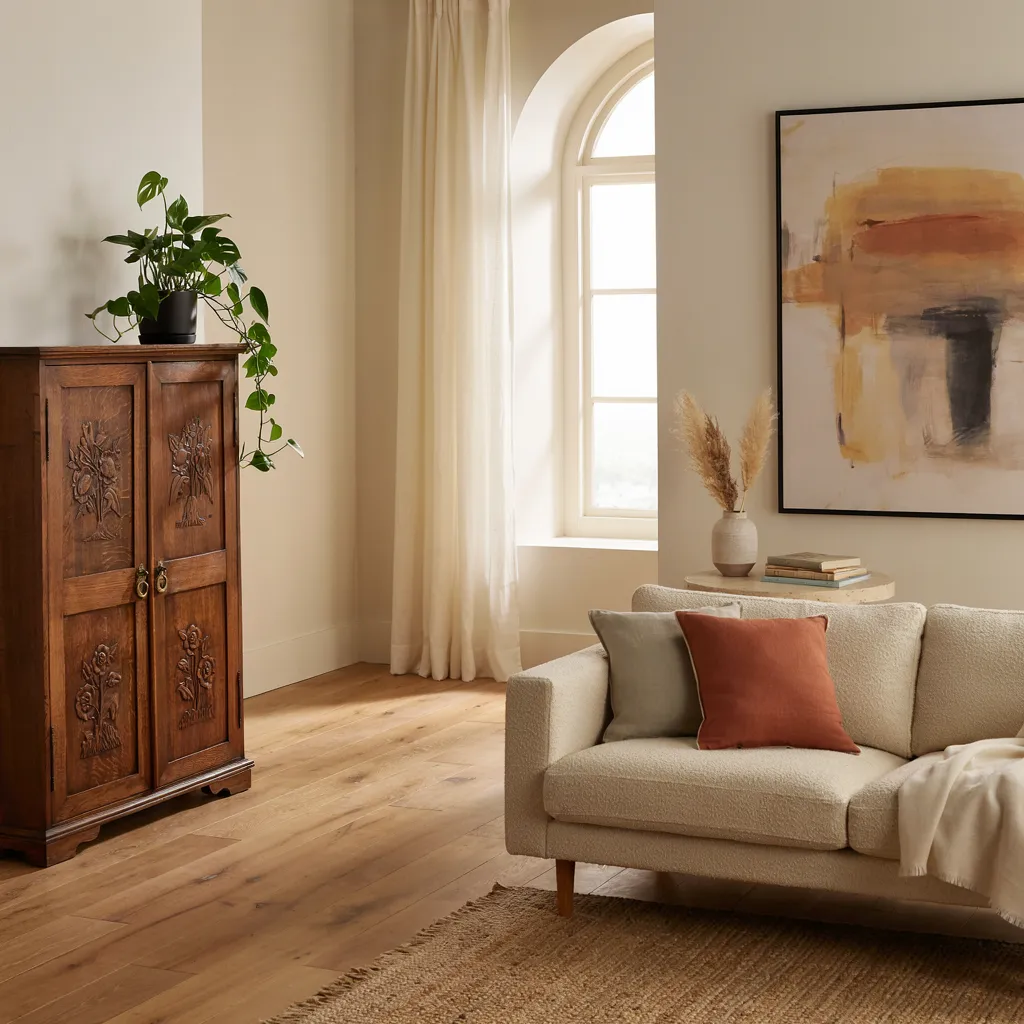
A room becomes memorable when one older piece shares space with mostly modern furniture. A carved wood cabinet, a reclaimed bench, or an antique trunk introduces craftsmanship that contrasts with a clean-lined sofa instead of blending into it. This single contrast does more work than five smaller vintage accents scattered around the room.
Check local antique markets and thrift stores with a flexible list rather than searching for one exact item — the best finds are rarely the ones you planned for. A solid wood vintage cabinet in decent condition typically runs $200-$500, often with more character than a new equivalent at the same price.
8. Style a Low-Slung Reading Corner
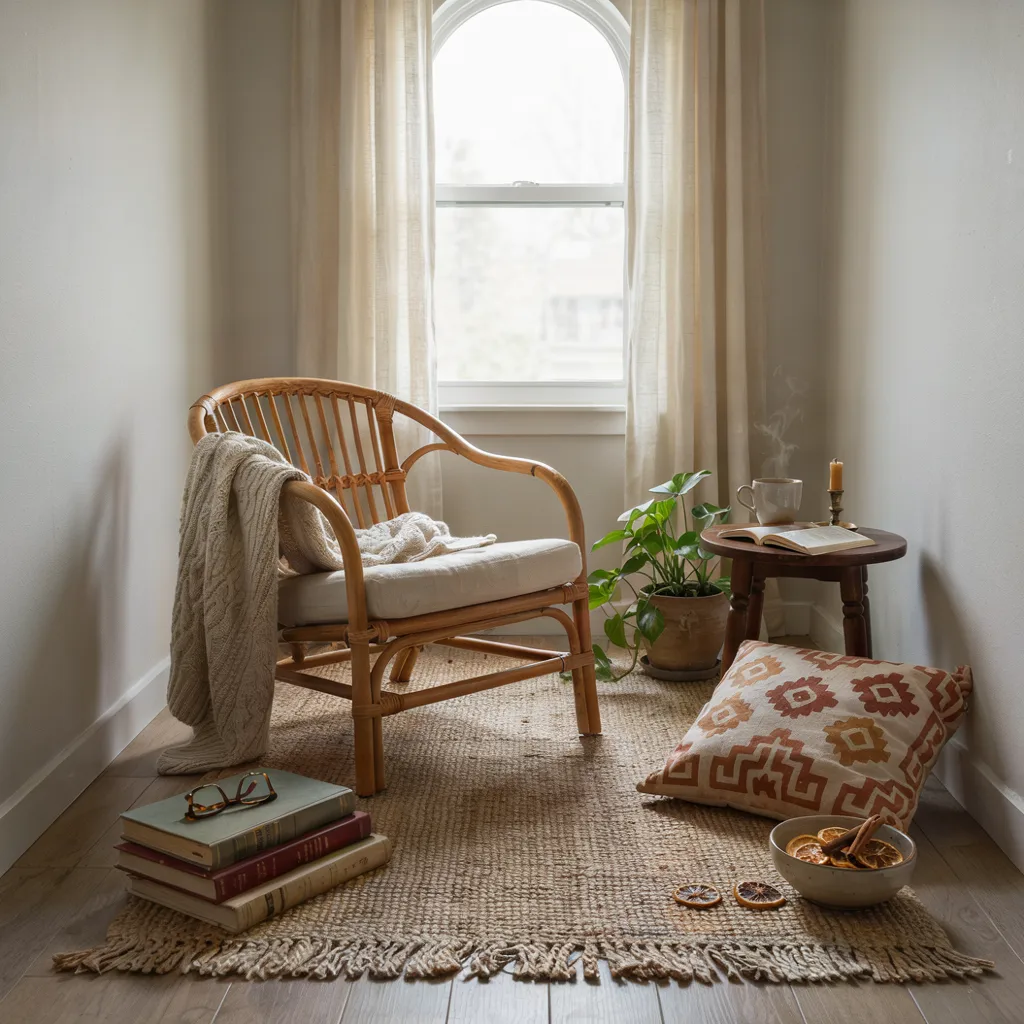
A dedicated reading corner keeps a busy living room from feeling like one continuous seating block. Give it its own woven lounge chair, a compact round side table around 16-18 inches in diameter, and a textured throw, rather than squeezing in another chair that matches the main sofa.
Add a woven basket underneath for extra blankets or magazines, and finish with one patterned cushion that echoes the main rug’s colors so the corner ties back into the rest of the room instead of feeling separate. A rattan lounge chair in this style runs $250-$450; the side table and basket together typically add another $60-$100.
9. Paint One Wall in Warm Terracotta
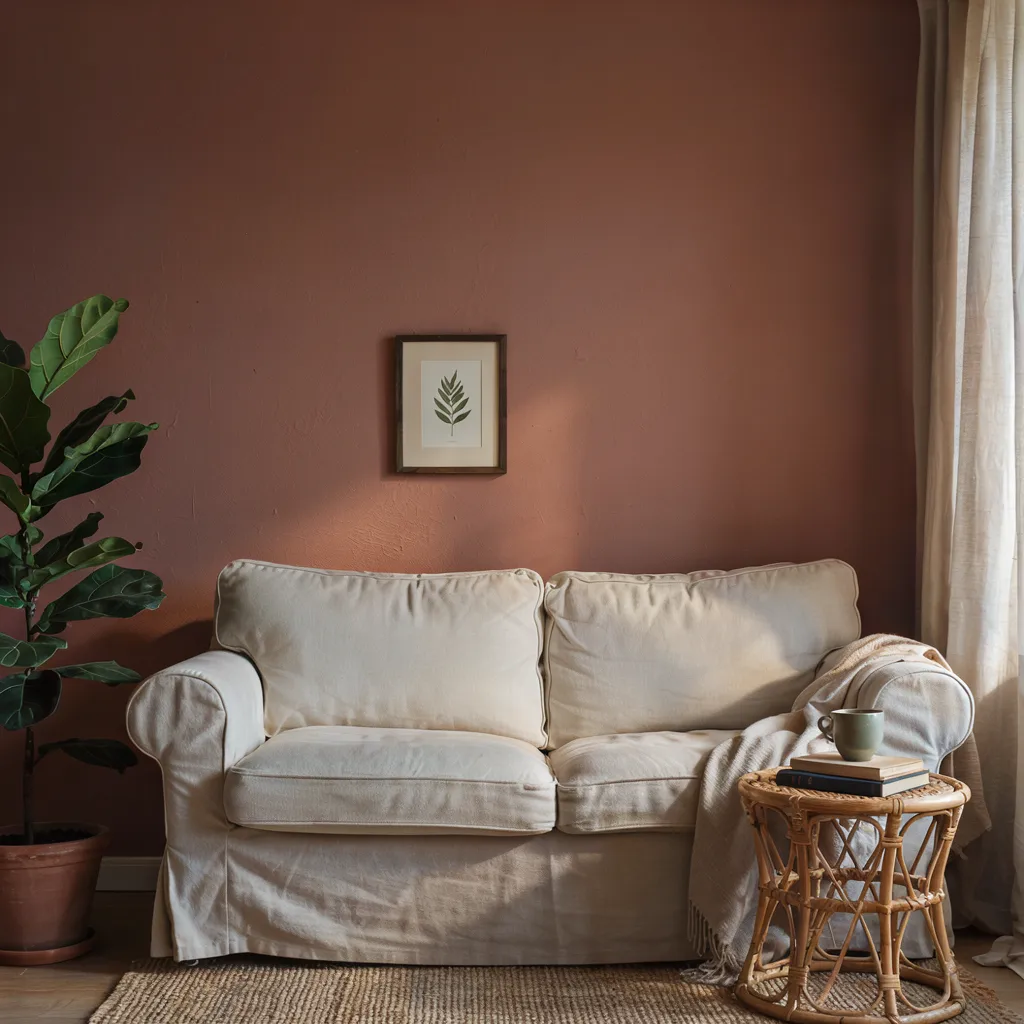
Terracotta is one of the defining colors in boho living room decor, but it works best as a single accent wall rather than wrapped around the whole room. Paint the wall behind the sofa or a media console, and choose a matte or lime-wash finish over eggshell — matte absorbs light instead of reflecting it harshly, which suits the earthy tone better.
A gallon of clay-based or lime-wash paint runs $50-$80 and covers roughly 350-400 square feet with one coat. Pair the wall with cream, rust, or olive textiles elsewhere in the room so the color reads as intentional warmth rather than competing with the furniture in front of it.
10. Build a Gallery Wall with Mismatched Frames
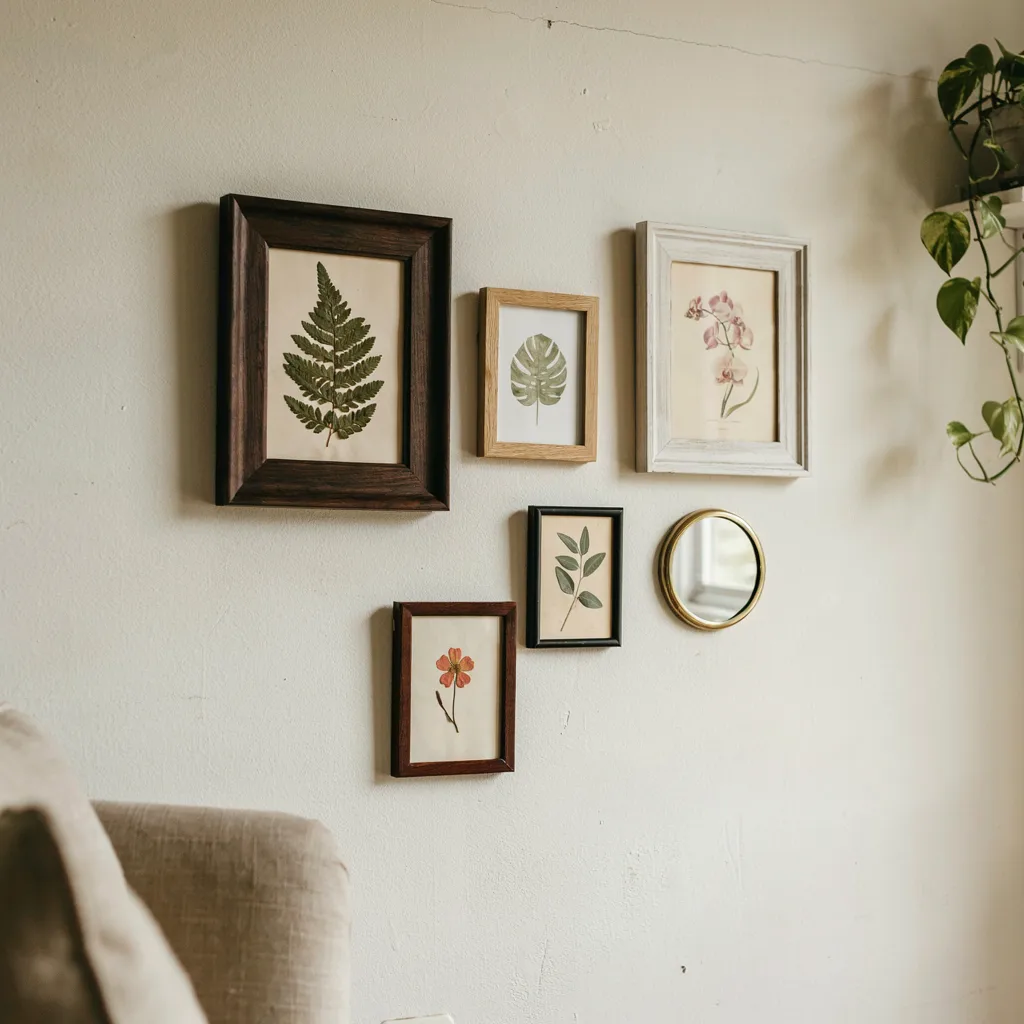
A boho gallery wall works best when the frames themselves are part of the mix — combine natural wood, black metal, and one vintage gold frame instead of a matching set. Include a small mirror in the arrangement to break up the flatness of framed prints and reflect light back into the room.
Lay everything out on the floor first, keeping 2-3 inches of spacing between frames before hanging. A mixed gallery of eight to ten pieces, sourced partly from thrift stores and partly new, typically costs $80-$200 total — considerably less than one large statement art piece, with more texture to show for it.
11. Repeat Two Metal Finishes Throughout the Room
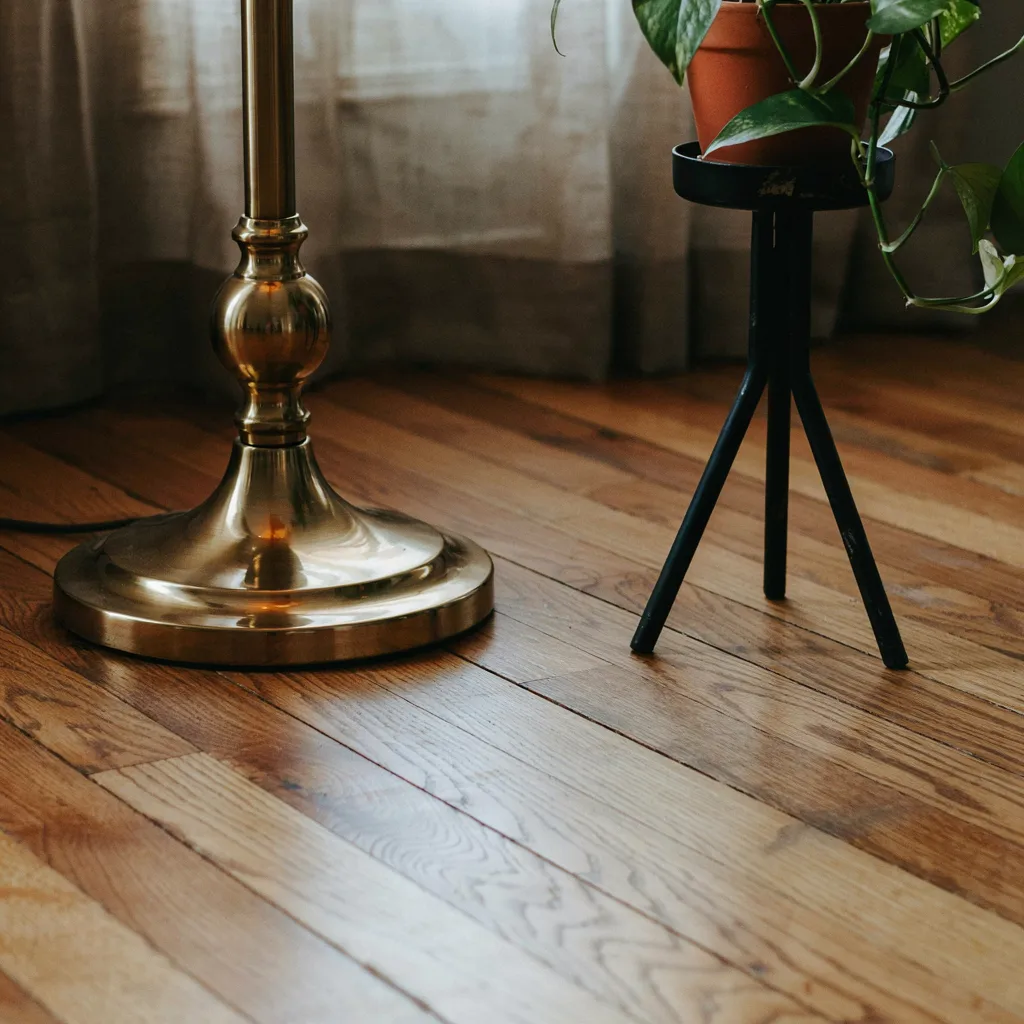
Matching every metal finish in a boho living room flattens the eclectic look. Instead, pick two — brass and black iron is a reliable pairing — and repeat each across at least three different pieces: a lamp base, drawer pulls, a plant stand, a picture frame. Repetition across categories reads as intentional; one mismatched piece just reads as random.
Unlacquered brass costs more than lacquered — typically $40-$120 more per fixture — but develops a soft patina over time instead of staying shiny, which suits the collected-over-years feel these rooms aim for. Black iron pieces are widely available secondhand, often under $30.
12. Combine Two Pattern Families, Not More
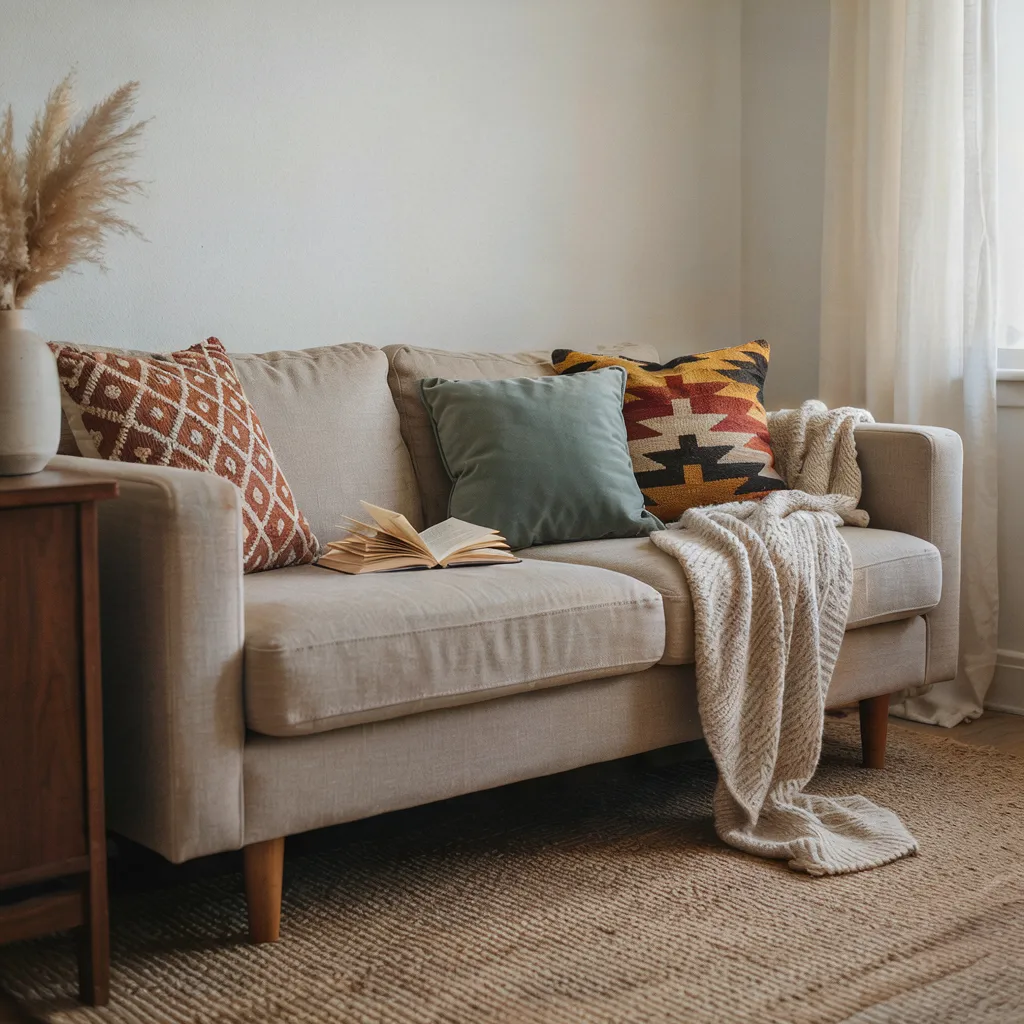
Mixing patterns is central to boho living room styling, but rooms go wrong fast when too many patterns compete. Stick to two families — Moroccan diamonds and Southwestern stripes, for example — and use a solid-color cushion or throw to break up the space between them.
A useful ratio is roughly 60% pattern to 40% solid across pillows and throws. On a standard three-cushion sofa, that might mean two patterned pillows, one solid, and a textured throw draped over one arm rather than folded flat. Cushion covers in these patterns run $15-$35 each, making this one of the cheapest ways to test the look before committing to larger furniture.
13. Drape an Oversized Knit Throw Over the Sofa
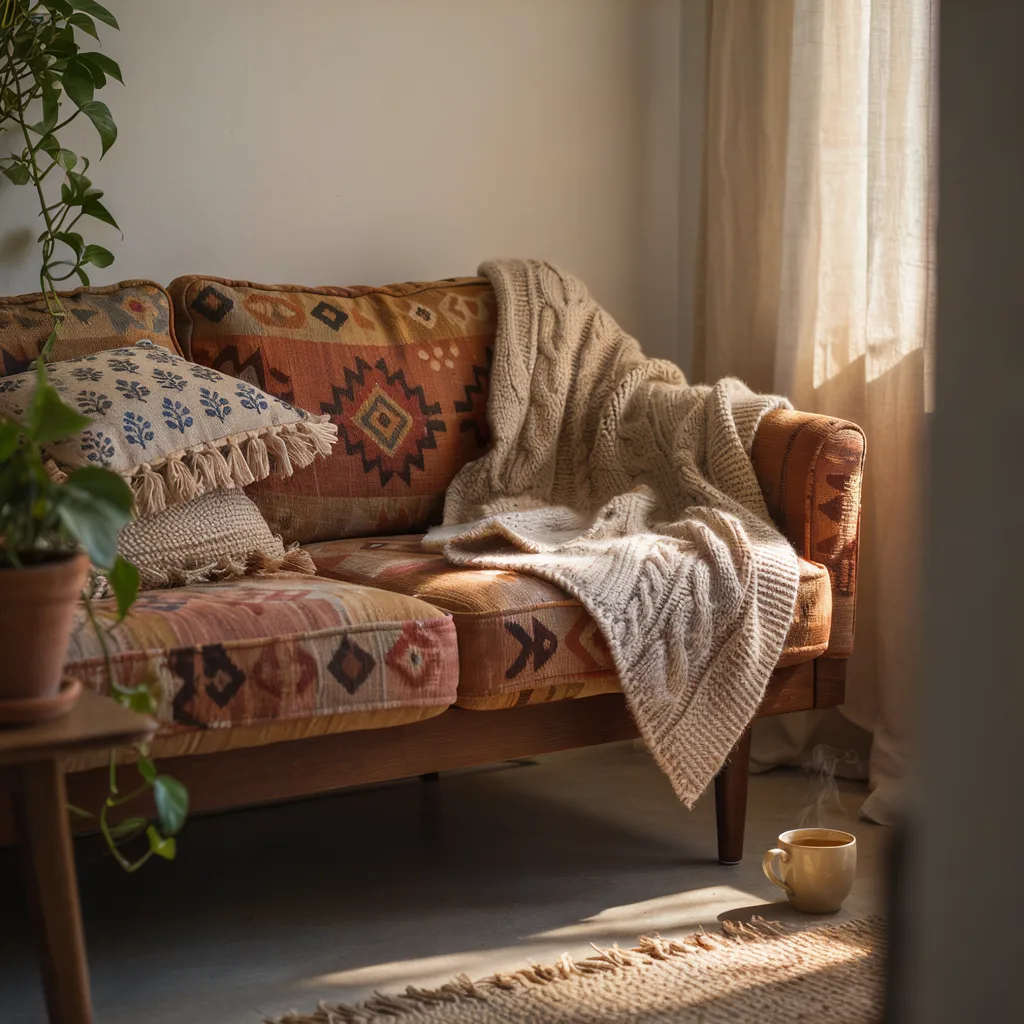
If the sofa itself already carries a bold pattern, add a solid, heavily textured throw rather than another print. A chunky knit throw in cream or oatmeal breaks up a busy sofa without competing with it — the contrast between smooth print and nubby knit is what gives the layering depth.
Look for a throw in the 50×70 inch range so it drapes without dragging on the floor, and fold it loosely over one arm rather than laying it flat across the back for a more lived-in look. Chunky knit throws run $40-$90, with hand-knit versions costing more but carrying a looser, more irregular texture that suits the style better than a machine-made one.
14. Dress Windows with Natural Fiber Shades
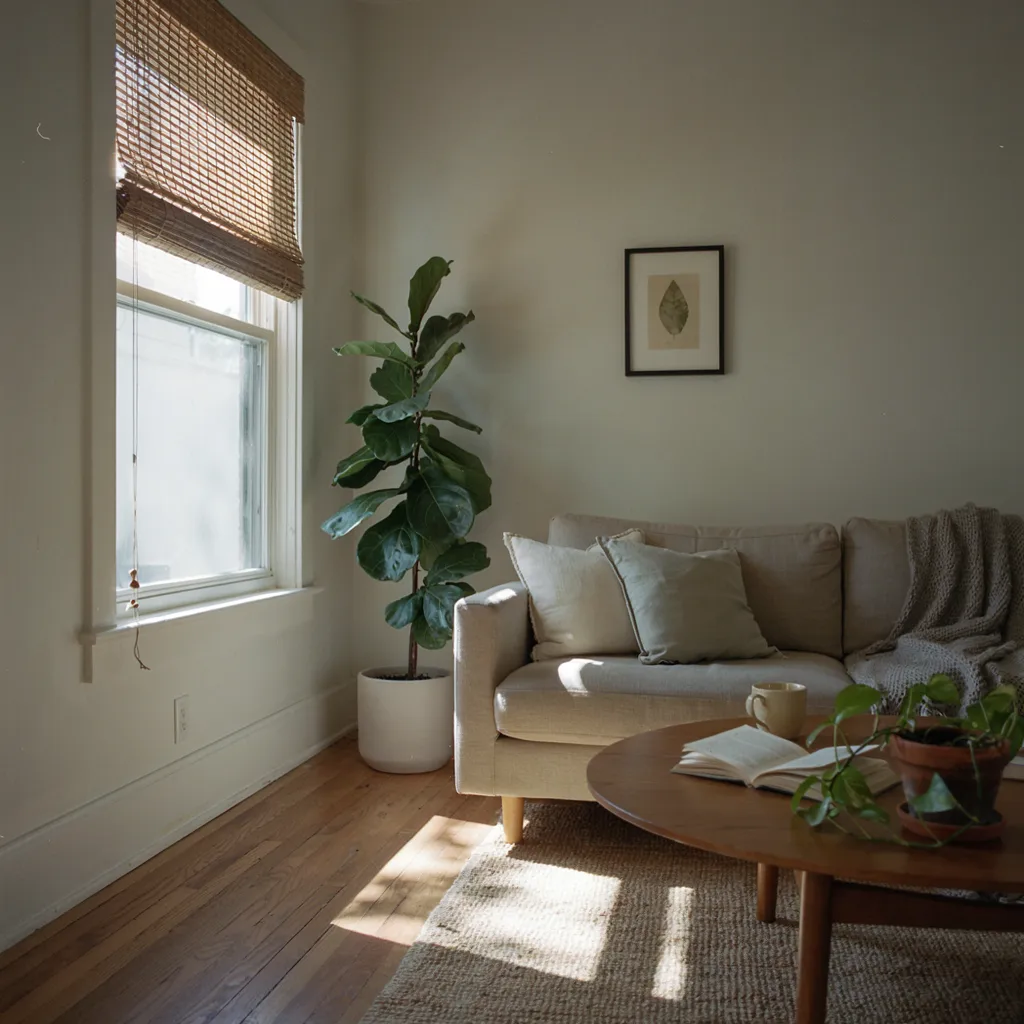
Heavy drapery can work against a boho living room’s airy feel, so consider woven bamboo or rattan roller shades instead — either alone or layered under a simple linen curtain panel. Partially raised, these shades cast soft striped light across the floor without any extra styling effort.
Measure your window’s exact width and add 1-2 inches on each side for mounting hardware to avoid gaps. Bamboo shades typically cost $40-$100 per window, a fraction of custom drapery, which can run several hundred dollars per window for the same coverage.
15. Hang a Woven Rattan Pendant Light
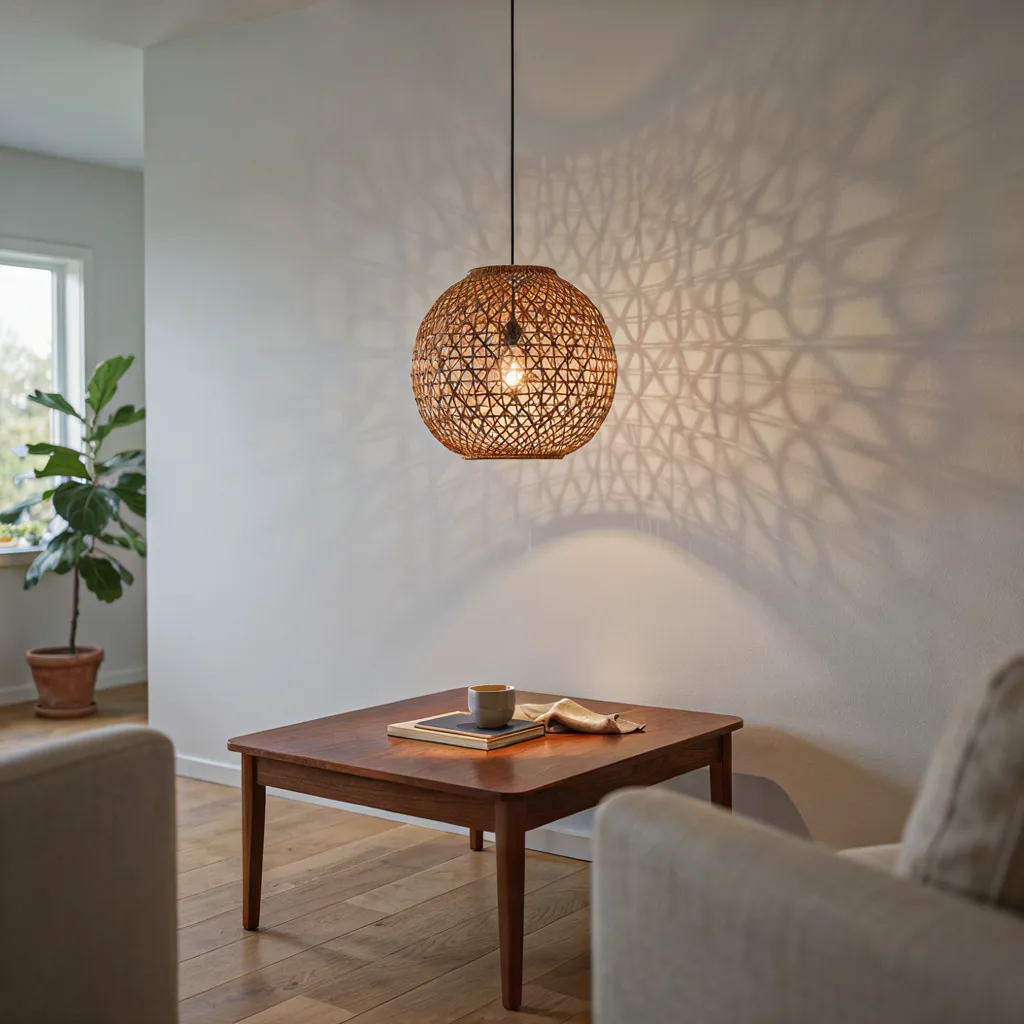
Overhead lighting is easy to overlook in a boho living room, but a woven rattan or bamboo pendant adds texture at eye level that furniture alone can’t. Hang it 30-32 inches above a coffee table, or slightly higher in a room with 9-foot-plus ceilings, so it doesn’t interrupt sightlines across the seating area.
Rattan pendants range from $60 for a smaller drum shade up to $250 for larger, more intricately woven designs. Since the fixture casts dappled shadows on the walls and ceiling when lit, position it where that shadow play is visible from the main seating spot rather than tucked behind a doorway.
16. Anchor the Sofa with One Large Wall Hanging
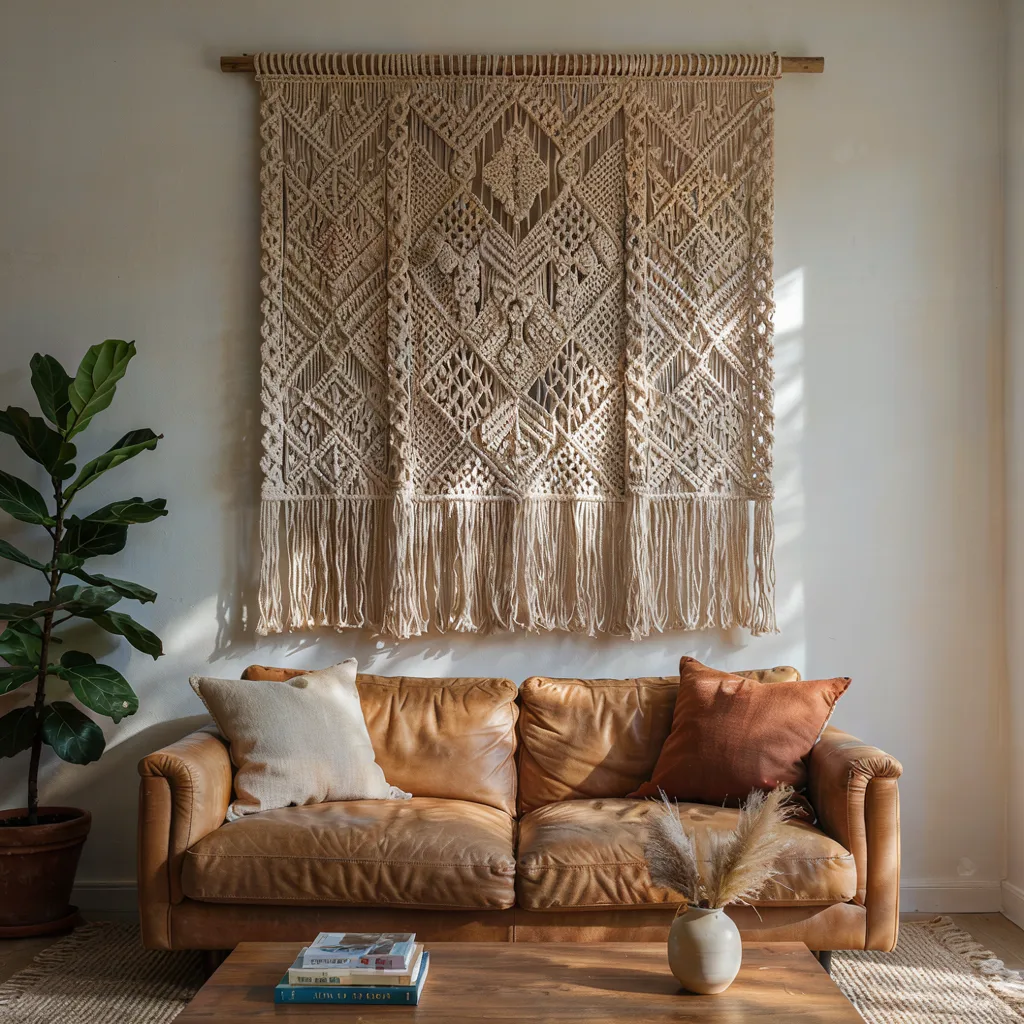
Several small macramé pieces scattered across a wall tend to look busy rather than intentional. One large piece — sized to cover roughly 60-70% of the wall’s width above the sofa — creates more impact and is easier to style around than a cluttered mix of smaller hangings.
For a standard 6-foot sofa, look for a macramé piece in the 48-60 inch width range, hung about 6-8 inches above the sofa back. Large statement pieces run $80-$200 — more than several small ones combined, but the cleaner result usually justifies it for a main focal wall.
17. Group Woven Baskets as Wall Art
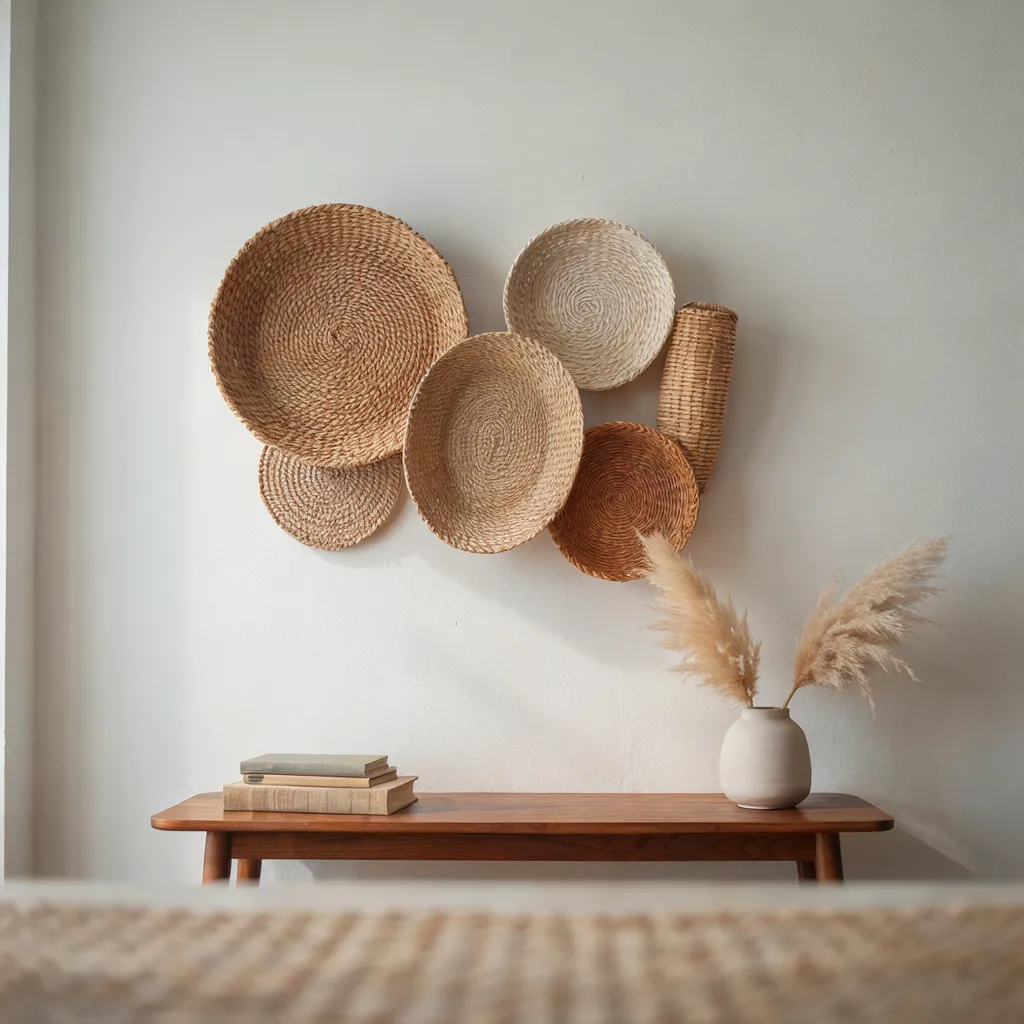
Woven baskets used as wall art cost less than framed prints and add dimensional texture flat art can’t. Arrange five to seven baskets in mixed sizes — 8-inch, 12-inch, and 16-inch diameters — in a loose organic cluster rather than a symmetrical grid, which suits the style’s relaxed feel better.
Space baskets 2-3 inches apart at their closest points, using removable adhesive hooks rated for at least 5 pounds if you’re renting. A full cluster of five to seven baskets typically costs $60-$150 total, sourced from home goods stores or secondhand shops.
18. Group Plants at Three Different Heights
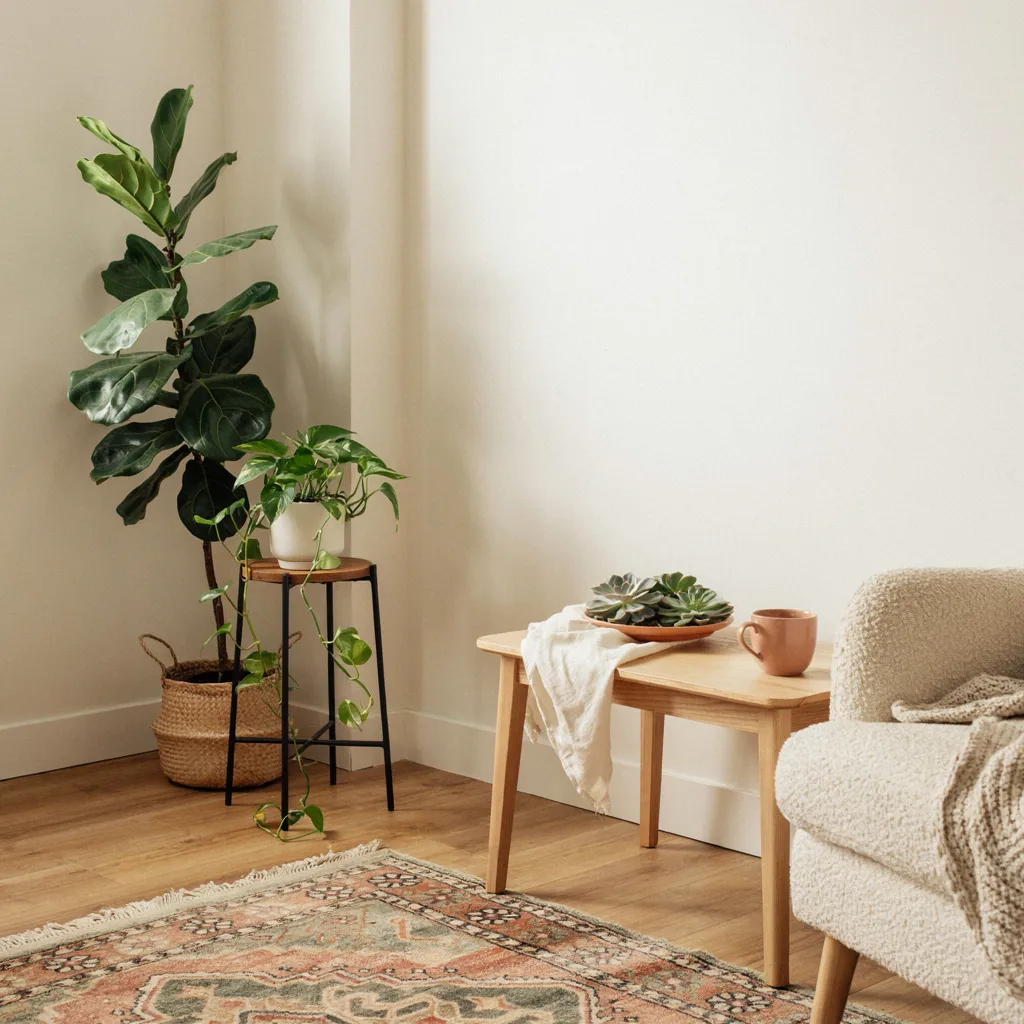
Plants are a staple of boho living room decor, but the layout matters more than the plant choice. Group three at different heights — a tall floor plant around 4-5 feet, a mid-height plant on a stand around 2-3 feet, and a small tabletop plant — rather than lining them up at the same level, which reads flatter.
House the tallest plant in a woven seagrass or rattan basket planter instead of a plastic nursery pot, tying the greenery back into the room’s material palette. A basket planter for a floor plant runs $20-$45 — a small cost that noticeably upgrades the finished look
19. Choose Multi-Use Furniture in Tight Layouts
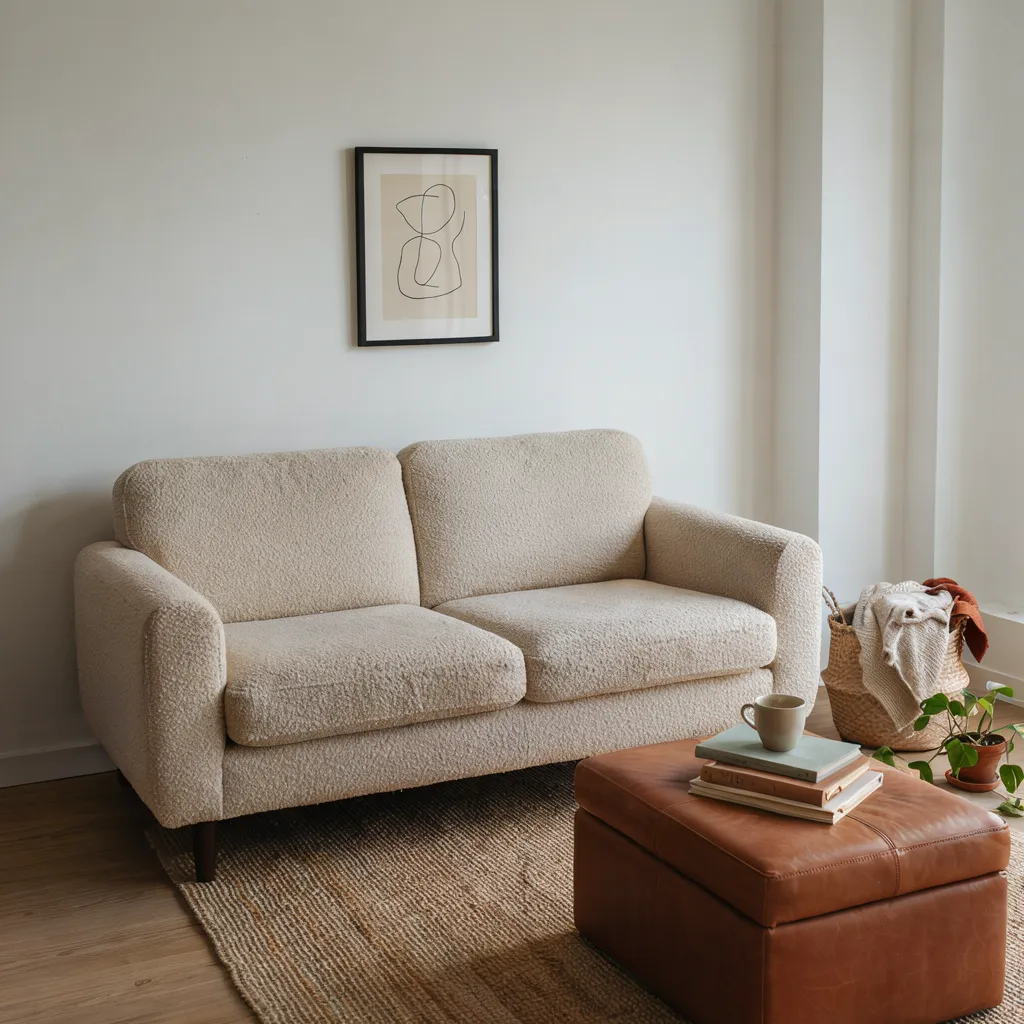
In living rooms under 200 square feet, boho styling tips into clutter fast if every piece serves one purpose. Swap a standard coffee table for a storage ottoman with a removable tray top, giving you a surface plus hidden storage for blankets or magazines in one 30-36 inch footprint.
Storage ottomans with a tray top run $80-$180, similar to a standalone coffee table but with added function. Pair it with a woven floor basket for throws instead of a separate storage piece, keeping the room’s footprint smaller while still layering in texture.
20. Add Floor Cushions Instead of a Second Chair
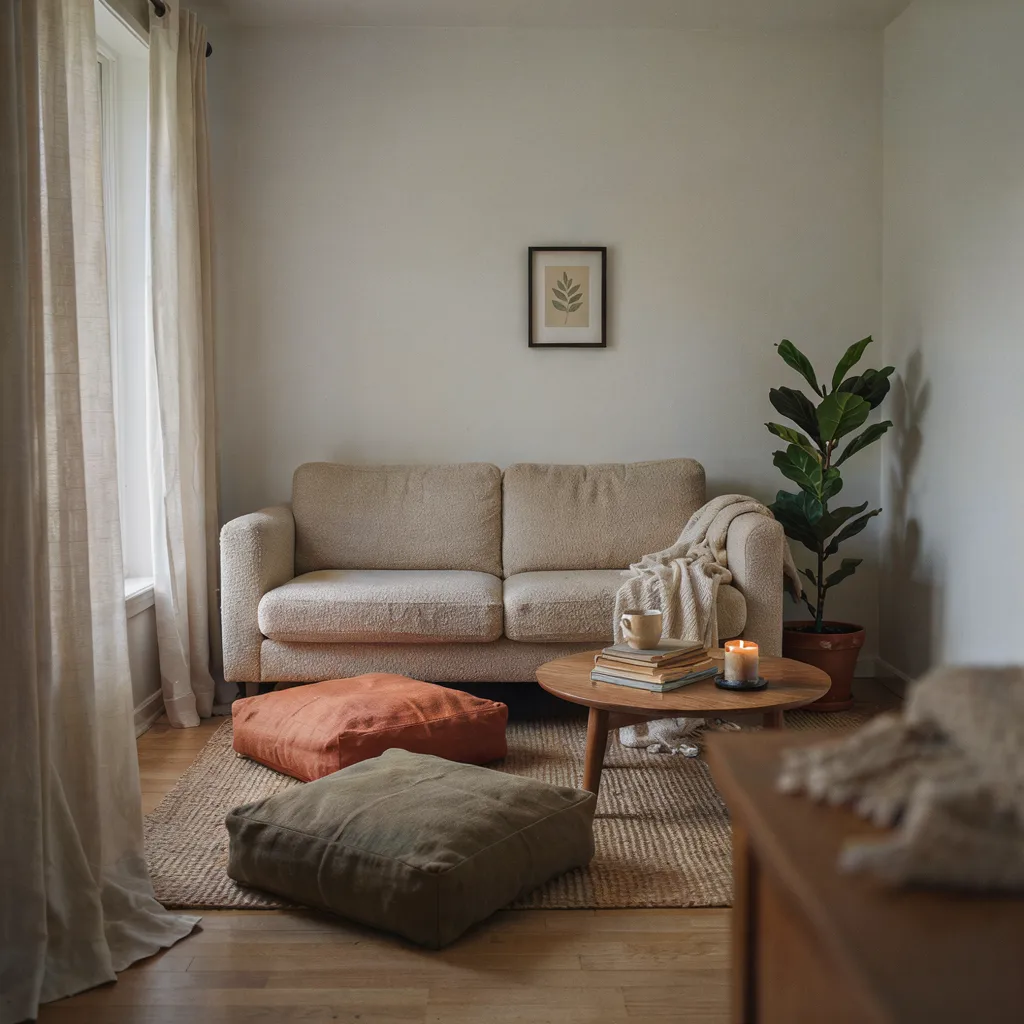
When a full second sofa won’t fit, floor cushions or a low pouf add seating capacity without the visual bulk of another large piece. Two 24-inch floor cushions in earthy tones can seat two extra people and tuck against a wall or under a console table when not in use.
This works especially well in a living room that doubles as a reading nook or occasional guest space. A pair of floor cushions with removable, washable covers runs $50-$100 — less than a single accent chair, and considerably more flexible for tight square footage.
21. Anchor a Small Room with One Earthy Palette
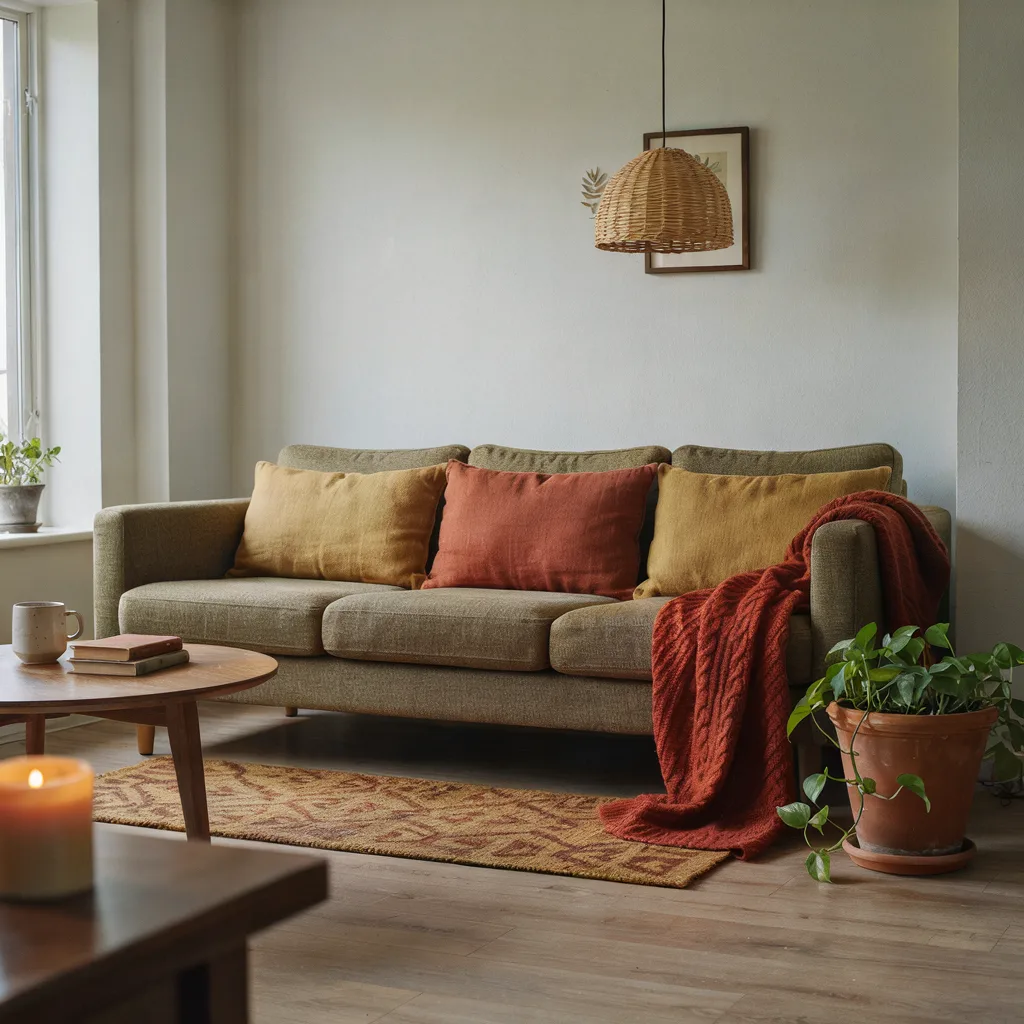
Small spaces read as chaotic faster than large ones when too many colors compete for attention. Limit a compact boho living room to one core earthy palette — mustard, rust, and olive is a reliable combination — repeated across textiles, a rug, and one or two accent pieces.
Apply a rough 60-30-10 split: about 60% of the room in a neutral base like cream or oatmeal, 30% in the main earthy tone, and 10% in an accent color for contrast. This keeps a small room cohesive rather than cluttered, even while still layering in the pattern and texture mixing central to boho style.
Final Thoughts:
Pulling together a bohemian living room comes down to a handful of repeatable decisions rather than chasing one look. Pick two or three materials — rattan, jute, and reclaimed wood are a solid starting trio — and repeat them across furniture, lighting, and accents so the room reads as planned rather than random. Layer textiles with restraint, using a ratio like 60% pattern to 40% solid, and anchor the space around one focal point instead of spreading attention across every wall.
Small, specific choices — sizing a rug to the seating area, spacing baskets 2-3 inches apart, hanging a pendant at the right height — matter more than chasing a broad aesthetic trend. Most of the ideas above fall in the $20-$400 range per piece, so a full room refresh is realistic in stages rather than all at once. Start with one element — a rug layer or a focal wall piece — and build outward from there. The goal isn’t a themed room; it’s a collected, livable space with real texture behind every choice.
For more curated boho living room inspiration, follow Nestella Home on Pinterest.
FAQ:
What colors work best for a boho living room?
Earthy, warm tones — terracotta, mustard, rust, and olive — paired with a neutral base like cream or oatmeal, typically applied in a 60-30-10 ratio across walls, furniture, and accents.
Is boho style expensive to achieve?
Not necessarily. Many defining elements — woven baskets, floor cushions, secondhand frames — cost $20-$100 individually, so the look can be built gradually instead of furnishing a room all at once.
How do I mix patterns without it looking messy?
Limit yourself to two pattern families at a time and break them up with a solid-color piece, aiming for roughly 60% pattern to 40% solid across cushions and throws.
Can a small living room still work with boho style?
Yes — multi-use furniture like storage ottomans, one cohesive color palette, and floor cushions instead of bulky chairs all help boho styling work in rooms under 200 square feet.
How high should I hang a pendant light or wall hanging above the sofa?
Hang a pendant light so the bottom sits 30-32 inches above a coffee table, and hang a macramé or wall piece 6-8 inches above the sofa back so both stay in proportion with the furniture below them.