A washroom is one of the smallest rooms in most homes, which makes it the easiest place to commit to a bold material choice without second-guessing it for years. These 7 washroom design ideas for modern homes move past basic white porcelain toward richer finishes, like matte terracotta slabs, fluted oak vanities, and zellige-lined shower niches that hold up daily against heavy moisture.
If your bathroom still has a builder-grade vanity and plain white tile, a few targeted swaps can shift the whole feel without touching the plumbing layout. Think a floating concrete-look sink paired with a wall-mounted brass spout, or a frameless glass shower with a hidden drainage track instead of a standard curb — small, specific choices that separate a genuinely modern washroom from a merely updated one.
What actually makes a washroom feel current usually comes down to restraint in material choice rather than more fixtures or accessories layered on top. A single strong surface, like a honed terrazzo floor or floor-to-ceiling zellige feature wall, tends to define the room’s character more than five smaller decorative touches ever could, whether the project is a compact guest bath or a spacious primary ensuite.
1. A Floating Vanity With a Terrazzo Top
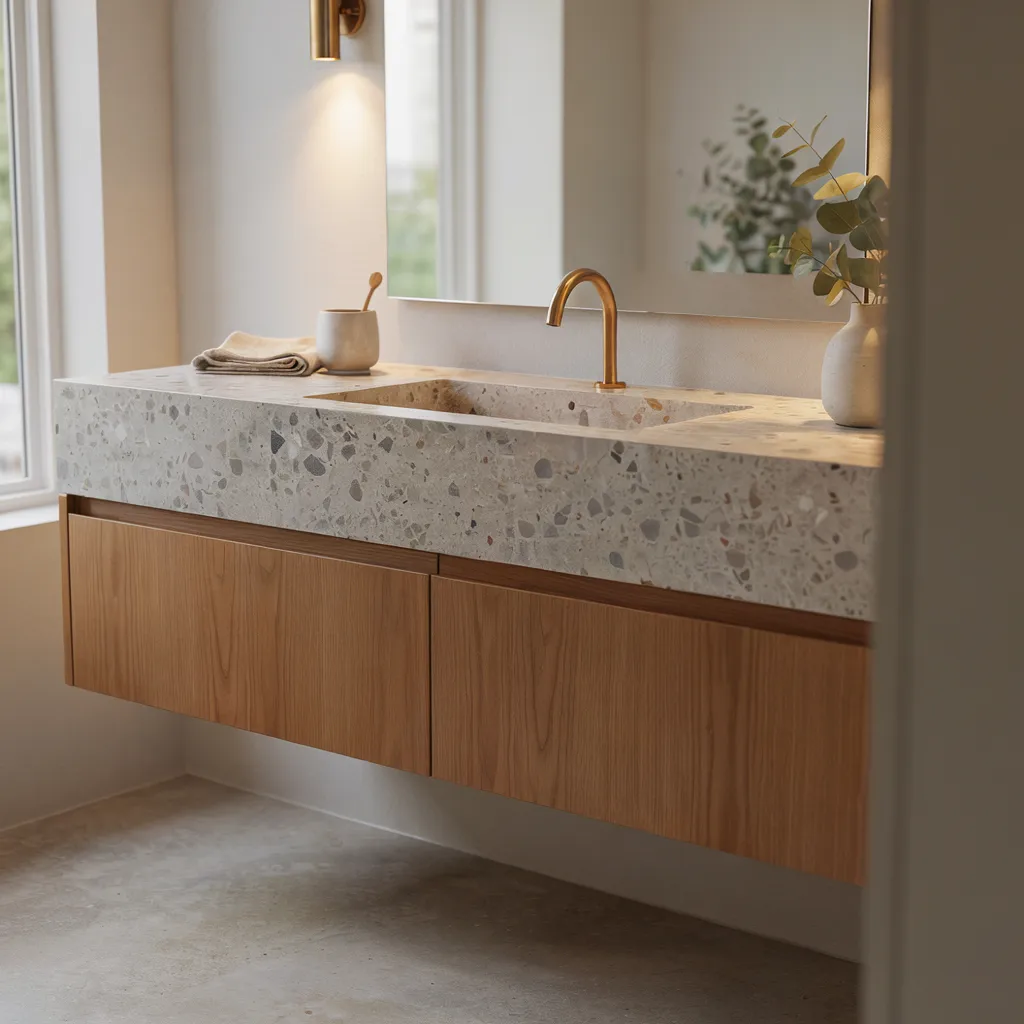
Mounting the vanity directly to the wall instead of resting it on the floor makes a small washroom read as noticeably larger, since the exposed floor underneath keeps sightlines open across the room. Pairing that floating base with a honed terrazzo top adds texture without marble’s heavy veining, which keeps the whole look lighter and more current than a solid stone slab.
Secure the mounting brackets into wall studs using 3-inch lag screws rated to hold at least 100 pounds, since the full weight of the cabinet hangs entirely on the wall. Terrazzo slabs with a fine aggregate pattern run $50 to $80 per square foot fabricated, on par with mid-range quartz.
2. Fluted Oak Vanity Cabinetry
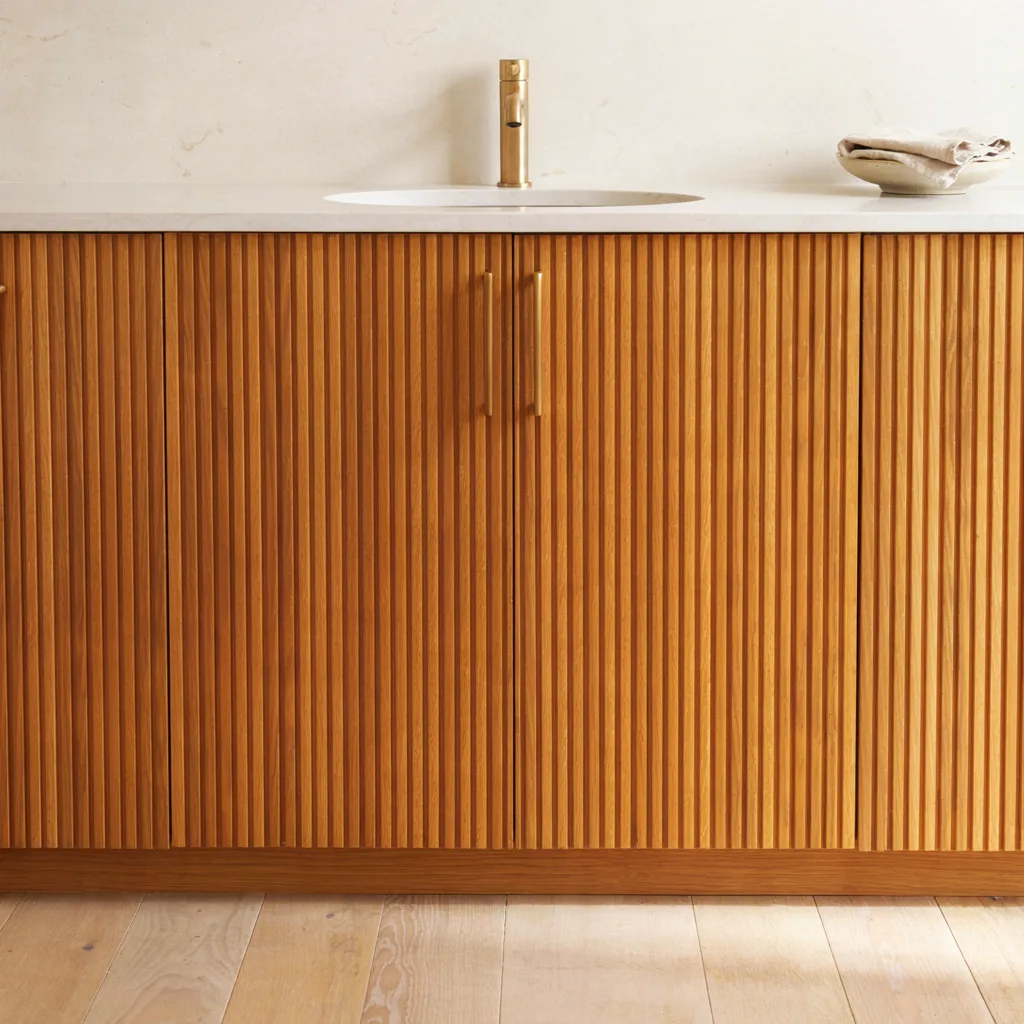
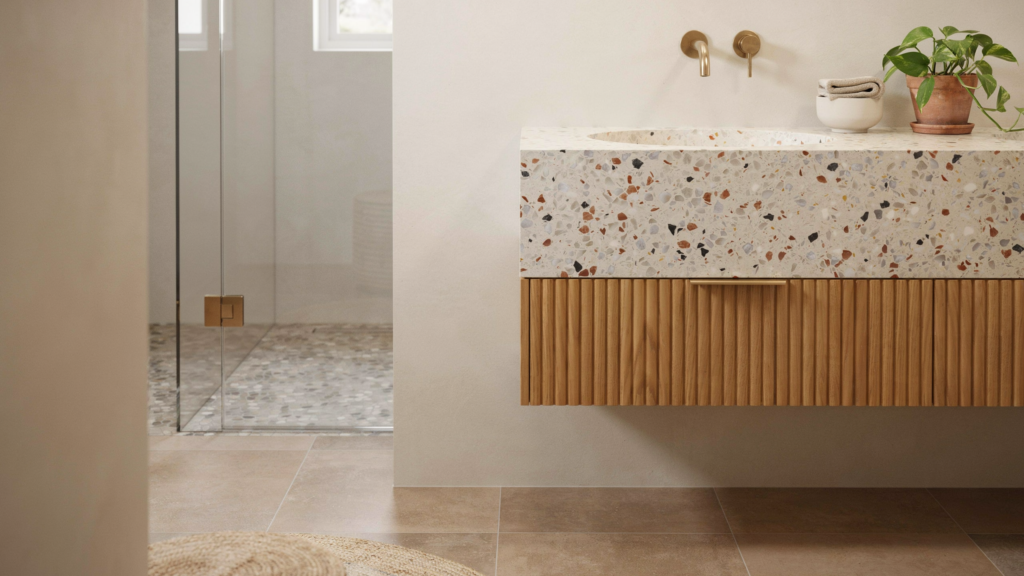
Fluted wood paneling adds a subtle vertical rhythm that flat cabinet doors don’t offer, and the grooves catch light differently depending on the time of day, giving the room a slightly different character morning versus evening. This detail works especially well on a single vanity run, where the repeated lines draw the eye upward and make a lower ceiling feel taller than it actually is.
Order fluted oak panels with a groove depth of about 1/4 inch, which reads as detailed without trapping grime during daily cleaning. A custom fluted vanity front from a semi-custom cabinet shop typically adds $200 to $350 per linear foot over a flat-panel equivalent.
For more vanity and layout options, check our 11 Bathroom Design Ideas for a Stylish Modern Home guide.
3. Matte Terracotta Floor Tile
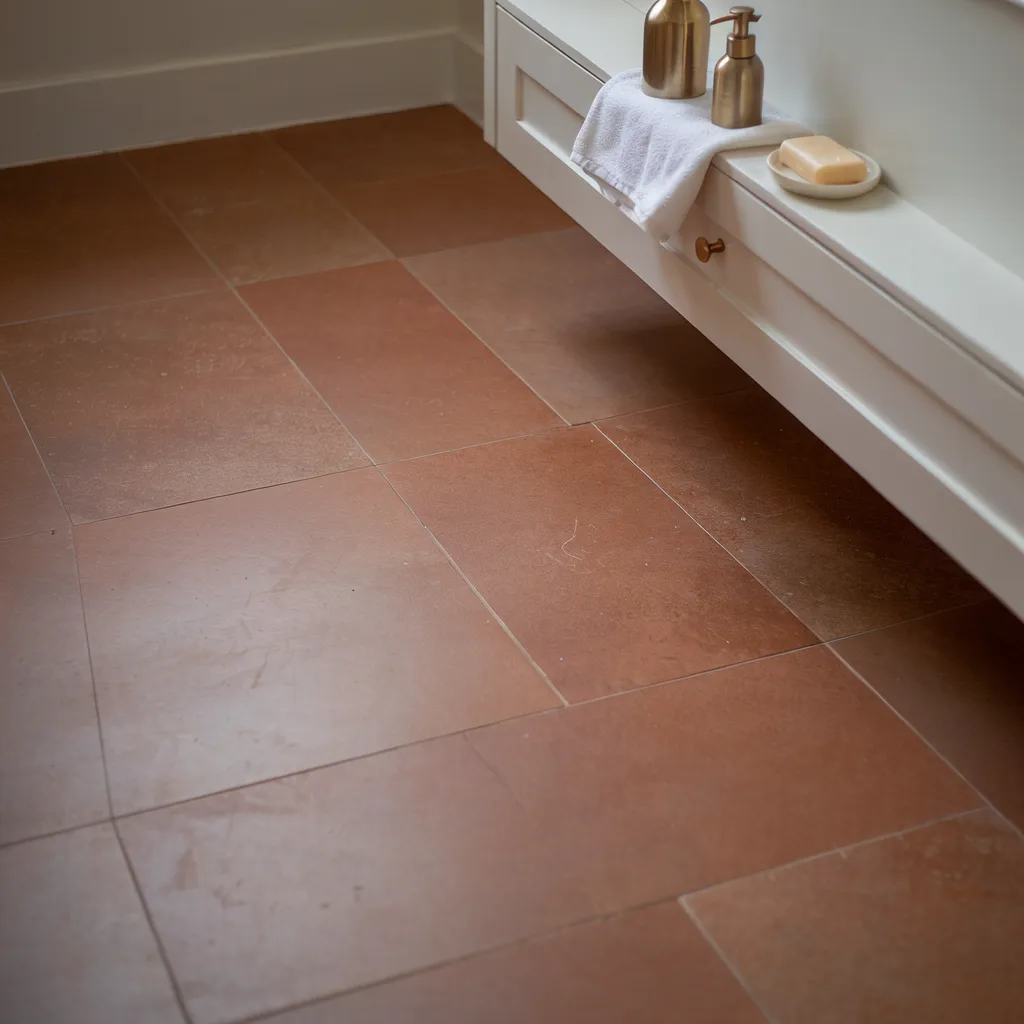
Terracotta tile brings warmth to a washroom floor that grey or white stone-look tile can’t replicate, and a matte, unglazed finish specifically avoids the overly rustic, glossy look older terracotta installations were known for. Laid in a simple grid rather than a busy pattern, it reads as intentional and current rather than dated.
Apply two coats of a penetrating silane-siloxane sealer immediately after installation, since unsealed terracotta absorbs grout haze and water permanently. Authentic terracotta runs $8 to $14 per square foot, and plan on resealing roughly once a year to maintain its water resistance.
4. A Frameless Glass Shower With a Hidden Linear Drain
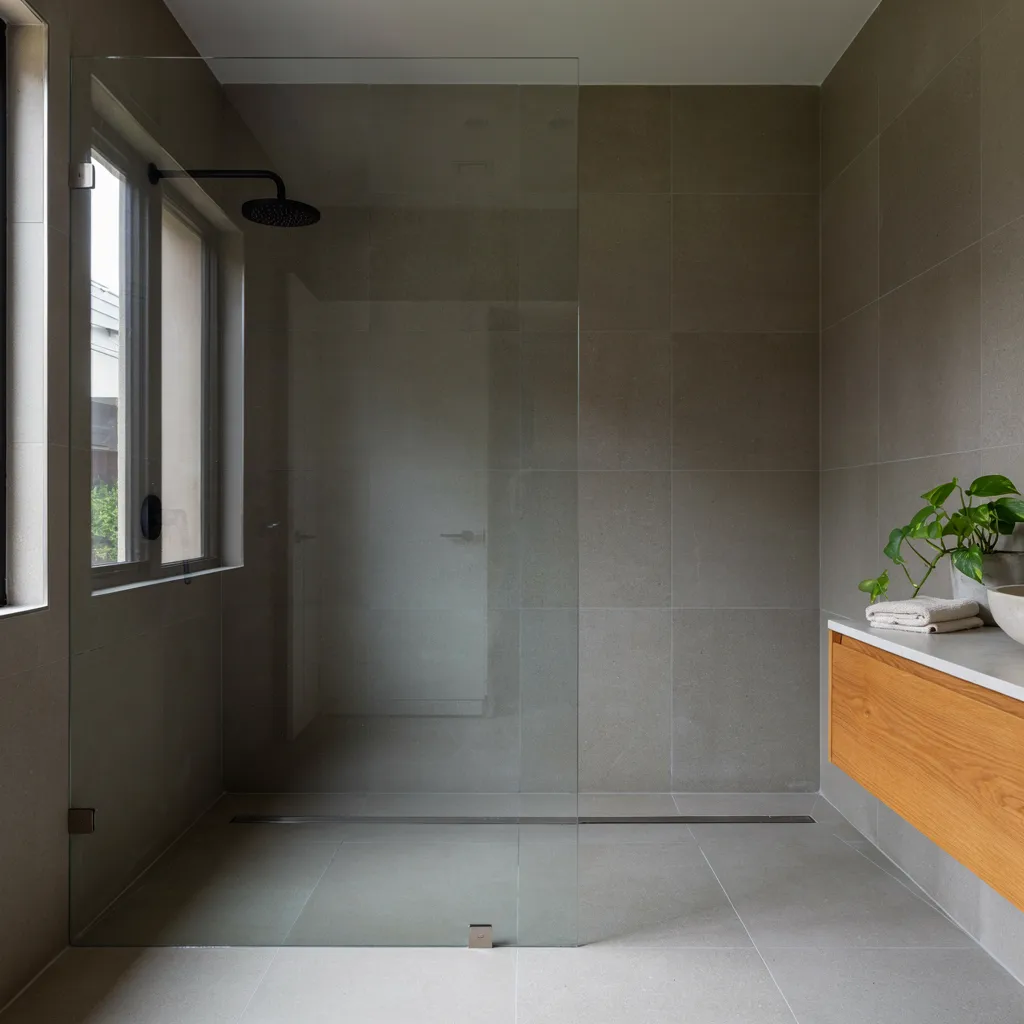
Removing the metal frame around a shower enclosure and swapping a raised curb for a hidden linear drain creates a shower that reads as part of the room rather than a separate compartment. The floor slopes almost imperceptibly toward the drain, so the transition from bathroom floor to shower floor happens without a visible step or lip.
Specify a 24-inch stainless steel linear drain and maintain a floor slope of 1/4 inch per foot toward the channel for reliable drainage. A 10 mm tempered glass panel with minimal hardware runs $900 to $1,600 installed, with the drain assembly adding another $400 to $700.
5. A Zellige-Lined Shower Niche
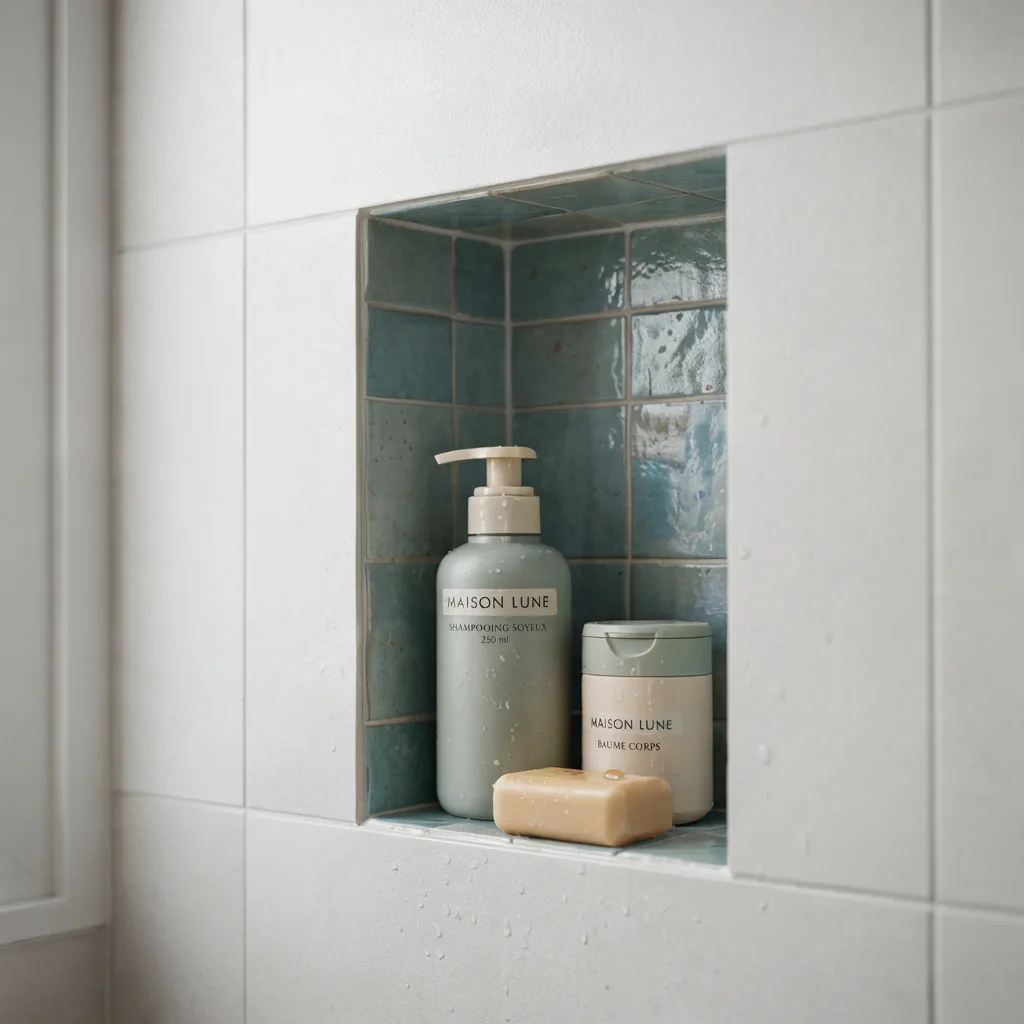
Lining just the niche in zellige tile instead of tiling the whole shower in it lets you introduce color and texture in a contained, budget-friendly way. Because zellige is hand-formed and individually glazed, the small surface area of a niche shows off its natural variation without the cost of covering an entire wall in it.
Frame the niche opening at 12 inches wide by 24 inches tall, deep enough at 4 inches to fit standard product bottles comfortably. Budget $150 to $250 for zellige tile and waterproofing membrane for a niche this size, plus standard tile-setting labor.
6. A Wall-Mounted Minimalist Brass Faucet
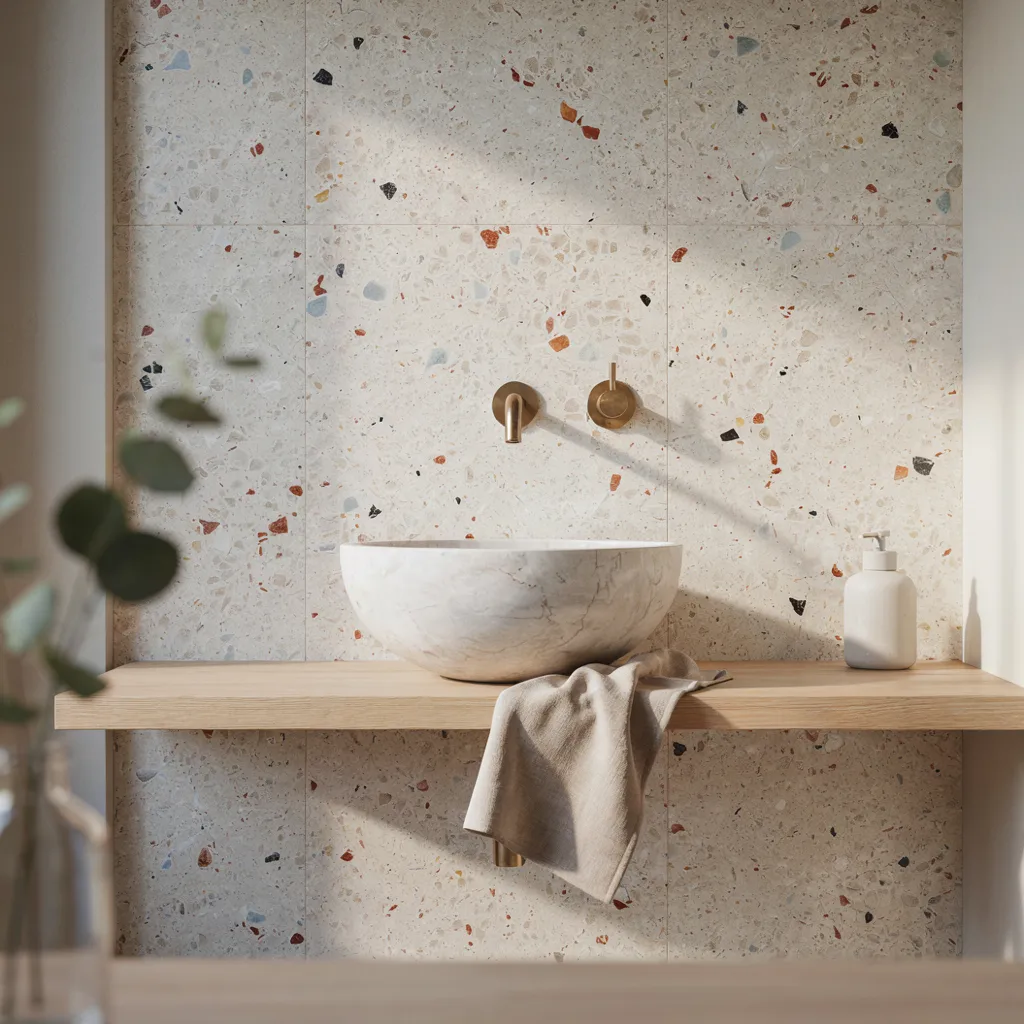
Moving the faucet off the countertop and onto the wall clears clutter around the sink and gives the vanity top a cleaner, more sculptural look, especially paired with a simple vessel or trough-style basin. Unlacquered brass develops a soft patina over months of use, adding a sense of age that a fixed chrome finish never will.
Position the rough-in water supply outlet exactly 8 inches above the finished basin rim for comfortable clearance without excess splashing. Wall-mounted faucets need this plumbing set during a full renovation rather than a quick swap, and a quality unlacquered brass model runs $300 to $550.
7. A Monolithic Concrete Vessel Sink
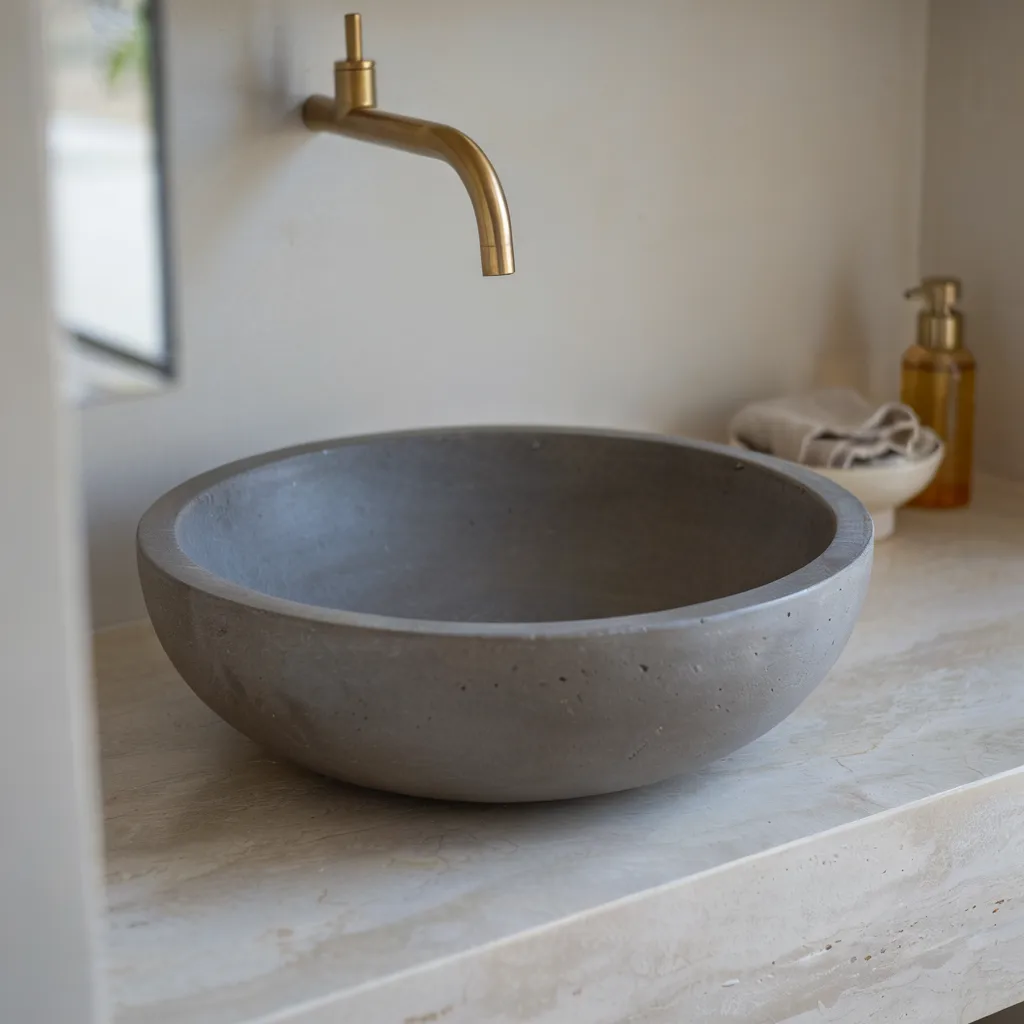
Swapping a standard drop-in ceramic basin for a surface-mounted concrete bowl adds an industrial edge that contrasts sharply against smooth stone or terrazzo countertops nearby. The raw, matte texture gives the sink a sculptural quality, shifting the room’s focal point toward the basin itself rather than the surrounding cabinetry.
Choose a concrete sink sealed with a commercial-grade polyaspartic coating, which prevents water spotting and etching from toothpaste or soap without needing homeowner resealing. Custom concrete vessel sinks typically run $300 to $550 depending on tint and shape.
Final Thoughts:
None of these seven ideas require gutting the entire washroom to make a real difference in how the space looks and functions. Start with whichever detail solves your most immediate frustration, whether that’s a cluttered countertop, a dated floor, or a shower that feels closed off from the rest of the room. A single strong material choice, like a terrazzo vanity top or a zellige-lined niche, tends to carry more visual weight than several smaller updates spread across the space.
Keep practical considerations in mind too, since moisture exposure and daily wear are constants regardless of how refined the finishes look. Measure carefully and confirm plumbing rough-in locations before ordering glass panels or wall-mounted fixtures, since those details are costly to change later. A washroom built around one or two genuinely distinctive materials can feel just as considered as any other room in the house.
Save your favorite combinations to our Pinterest boards before you shop so you can compare finishes side by side.
Frequently Asked Questions:
What’s the easiest washroom upgrade to start with on a limited budget?
Swapping standard cabinet doors for a fluted oak front or adding a zellige-lined niche are both relatively low-cost updates that make a noticeable difference without touching plumbing.
Is a frameless glass shower harder to maintain than a framed one?
It requires more frequent squeegeeing to prevent water spots since there’s no metal frame to catch drips, but it has fewer grout lines and crevices where grime builds up.
How often does terracotta tile need to be resealed?
Most matte terracotta floors need resealing about once a year in a washroom, since the porous surface absorbs moisture and can stain without a fresh sealant layer.
Can a wall-mounted faucet be added during a minor bathroom refresh?
Not easily, since it requires rough-in plumbing set at a specific wall height, which makes it a better fit for a full renovation than a quick fixture swap.
How do I clean a concrete vessel sink without damaging the sealer?
Use a soft cloth with a mild, pH-neutral soap and warm water, and avoid abrasive pads or acidic cleaners like vinegar, which can break down the protective coating over time.