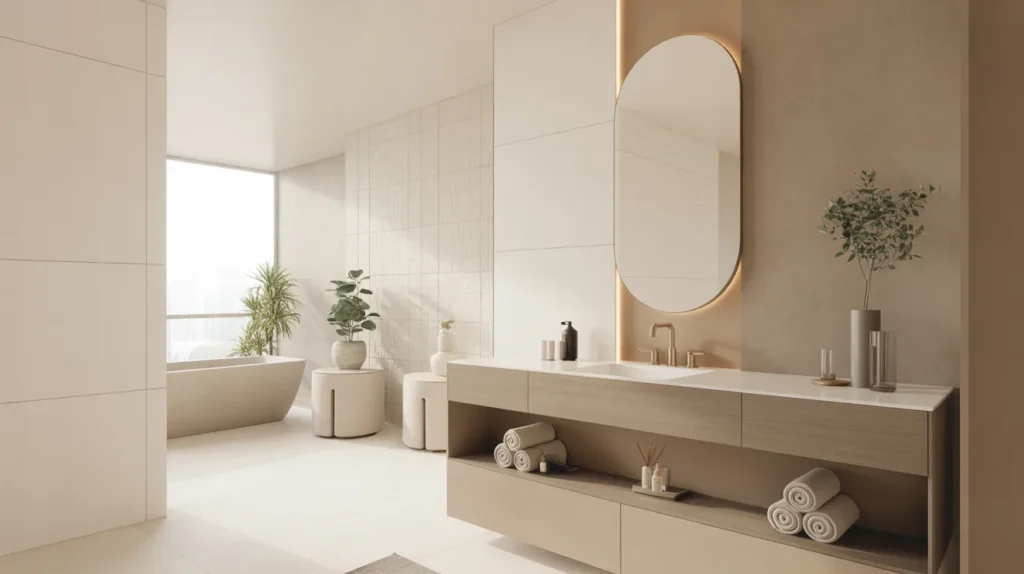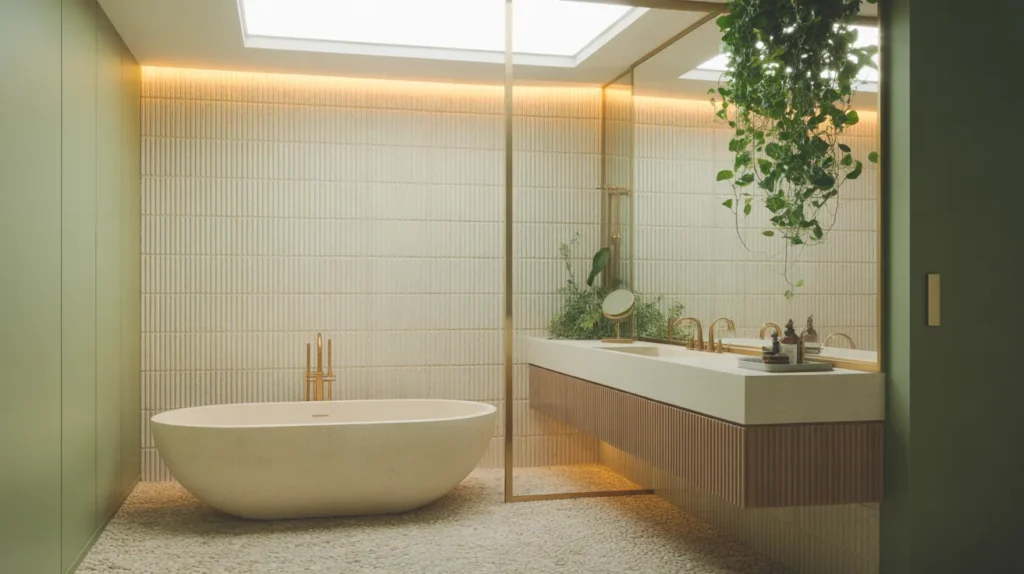
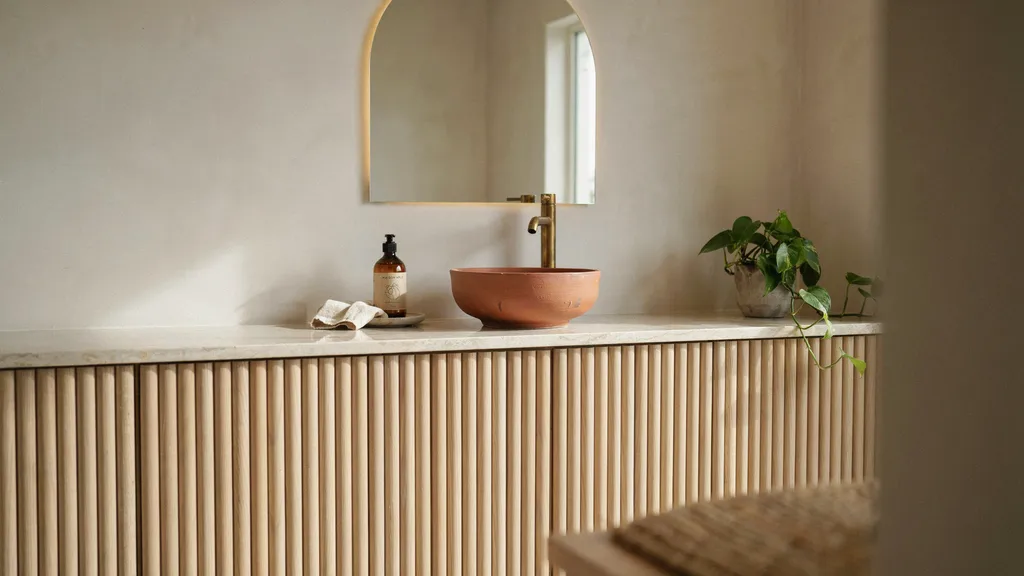
The bathroom is the one room most people redecorate last and that is exactly why these 13 bathroom decor ideas you’ll want to copy in 2026 hit differently. They are built around finish combinations actually showing up in newly designed bathrooms right now, not recycled trends. The detail pulling the most attention currently is warm putty-toned plaster walls paired with unlacquered brass fixtures and it works in bathrooms as small as 40 square feet without a single structural change.
These 2026 bathroom decor ideas are not about stacking more accessories on every surface. The bathrooms that look most considered right now use three materials doing all the work: ribbed oak vanity fronts, honed limestone countertops, and matte black hardware is one specific combination that reads as genuinely current without requiring a designer or a renovation budget.
What makes these bathroom decorating ideas for 2026 practical is that every one is organized around a decision you can make this weekend: a hardware swap, one accessory addition, or a surface edit that removes two objects and replaces them with one better one. Every visible object should earn its place, and these 13 ideas give you the exact framework to get there.
1. A Fluted Wood Vanity With a Stone Counter
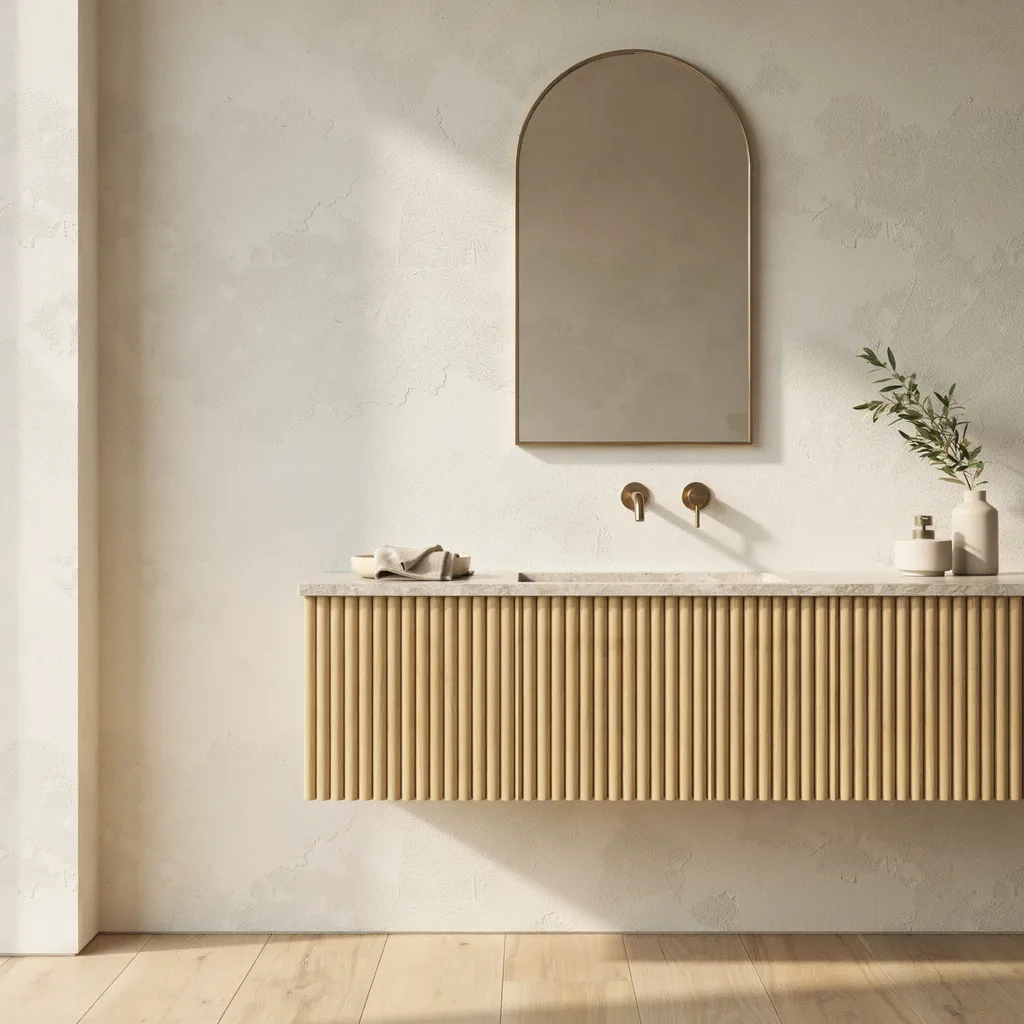
A vanity with deep, vertical wood-slat fluting breaks up the flat, sterile expanse of tile and porcelain that dominates most bathrooms, grounding the room in organic texture instead. A floating installation — mounted to the wall rather than sitting on the floor — keeps the floor visible underneath, which makes a small bathroom footprint feel more open. Source a 36-inch white oak vanity with 3/4-inch fluted detailing, and finish raw wood with a clear marine-grade polyurethane sealant to protect against warping from daily steam.
Pair the textured wood base with a honed stone counter — quartz or a matte travertine — rather than anything polished, since the contrast between rough wood grain and smooth stone is what makes the combination read as designed rather than coincidental. This pairing typically runs $600 to $1,400 for the vanity and counter together, depending on stone choice and vanity width. It’s a weekend install if you’re replacing an existing vanity of similar dimensions, longer if plumbing needs to move.
2. An Off-Center Recessed Shower Niche
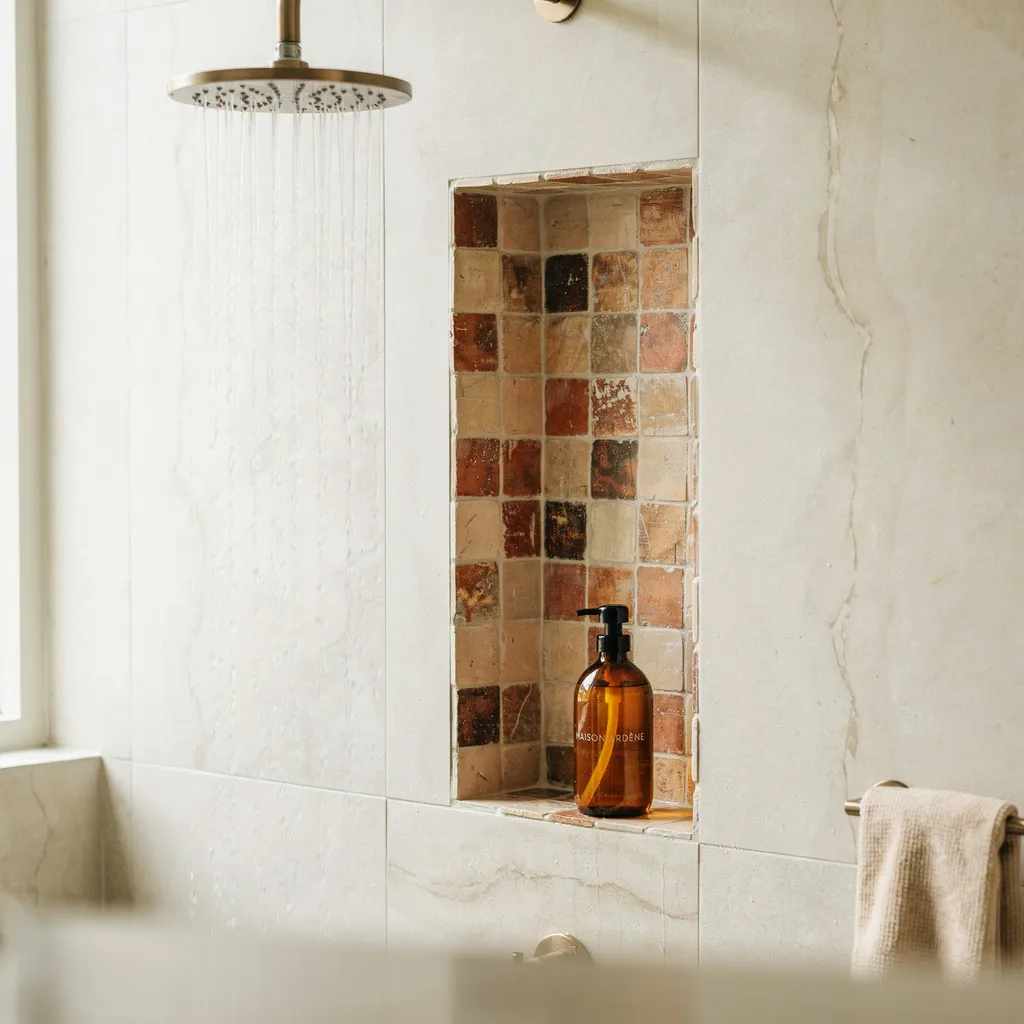
A standard centered shower shelf gets ignored visually; an elongated niche placed off-center and lined in a tile that contrasts with the surrounding wall turns the same storage function into an actual design feature. Build the opening at 12 inches wide by 24 inches high, positioned 48 inches above the shower floor so everything inside stays within easy reach without bending. Clad the interior in glossy handmade terracotta or zellige tile rather than matching the surround tile — the difference in finish is what draws the eye in.
This is a renovation-stage addition since it requires cutting into the wall before tiling, not a retrofit. Budget $150 to $400 for the niche kit and tile, not including labor. Once it’s finished, keep contents to two or three objects max — one bottle, one soap dish — so the niche reads as a designed display rather than overflow storage that happened to get a nicer frame.
3. An Arched Crittall-Style Shower Screen
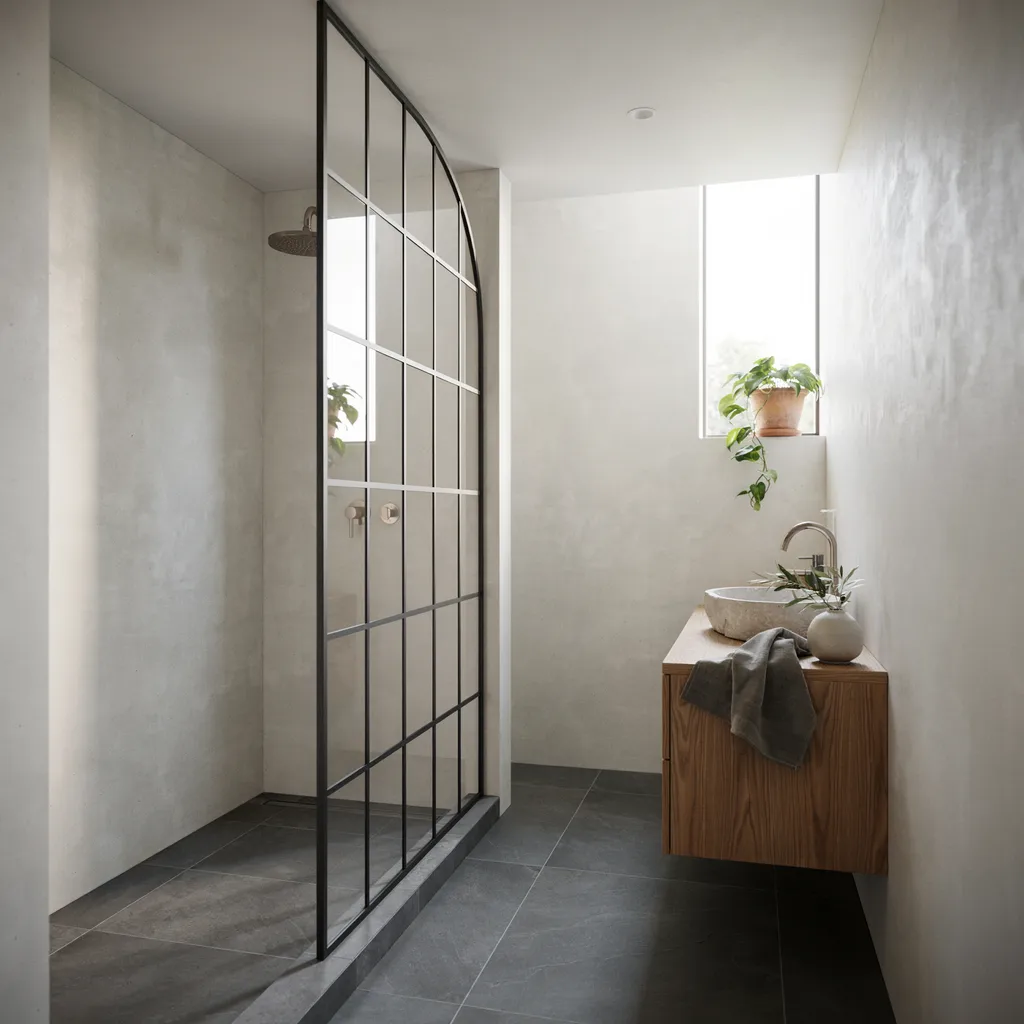
Swap a generic frameless glass panel for a matte-black gridded screen with a curved top edge, and the shower stops being something you visually edit out of the room. The contrast between the soft arched silhouette and the sharp geometric grid lines gives the screen genuine architectural presence, which is rare in a fixture that’s usually treated as purely functional. Standard panels in this style run 34 inches wide by 78 inches tall, with fully tempered glass and an anti-limescale coating to keep water spots from dulling the black grid finish.
This is a contractor-level installation — the metal frame needs to anchor directly into wall studs with heavy-duty screws to handle daily use safely. A panel at this size and finish runs $700 to $1,500 installed, more than a standard sliding door, but the black grid becomes a real focal point rather than glass you’re trying to make disappear.
4. A Microcement Wall Finish
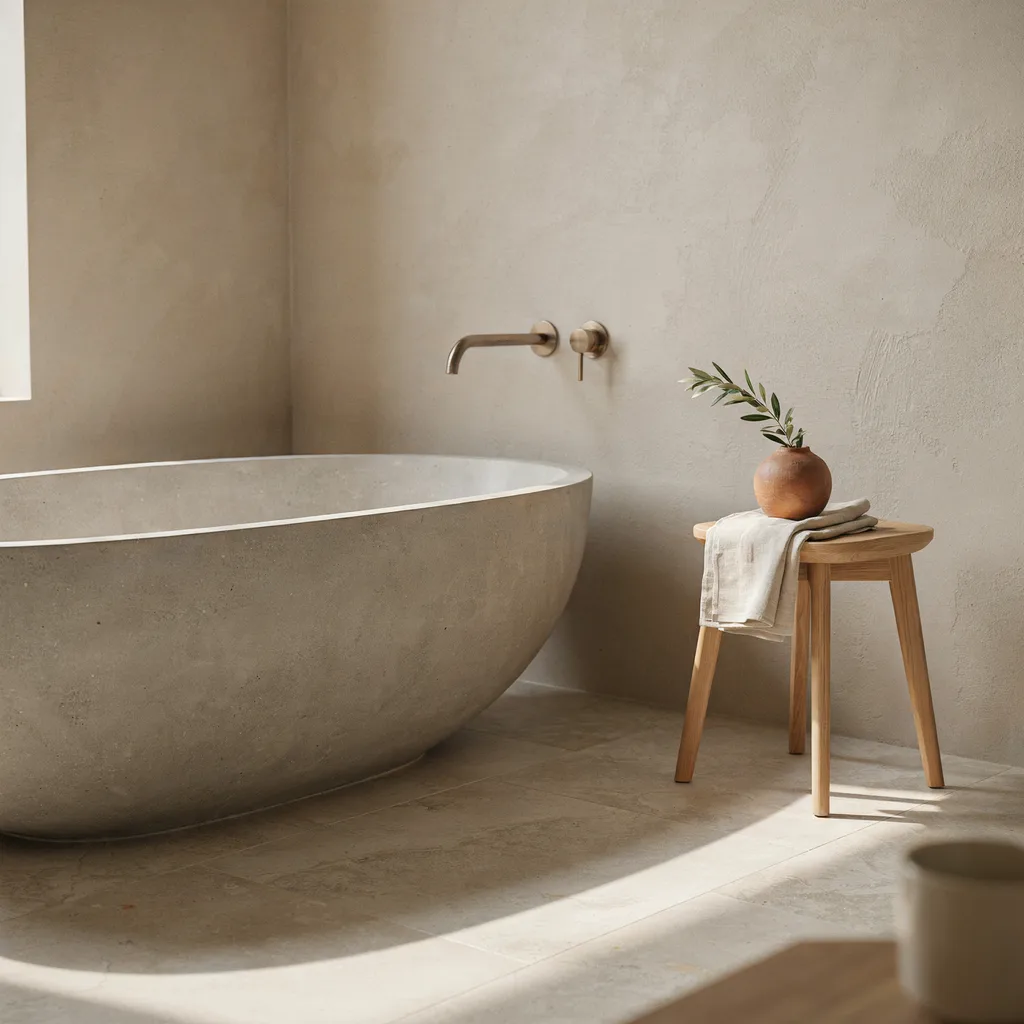
Covering grout lines and dated tile with a continuous, hand-troweled cement coating eliminates the broken, segmented look that standard tile creates and replaces it with one unbroken, velvety surface. Because there are no grout lines, light bounces evenly across the wall instead of catching on dozens of small shadow lines, which is part of why the finish reads as noticeably calmer in person than in photos. Application involves two ultra-thin coats totaling about 2 millimeters over a primed, reinforced base layer.
Seal the finished surface with a matte polyurethane topcoat rated for wet areas, since microcement needs that barrier to handle direct splash contact without staining. Material and application typically cost $15 to $25 per square foot, which puts a standard shower wall in the $400 to $900 range depending on size. This is a job for a trained applicator — DIY microcement attempts tend to show trowel marks that a flat tile surface never would.
5. Mixed-Era Metal Fixtures
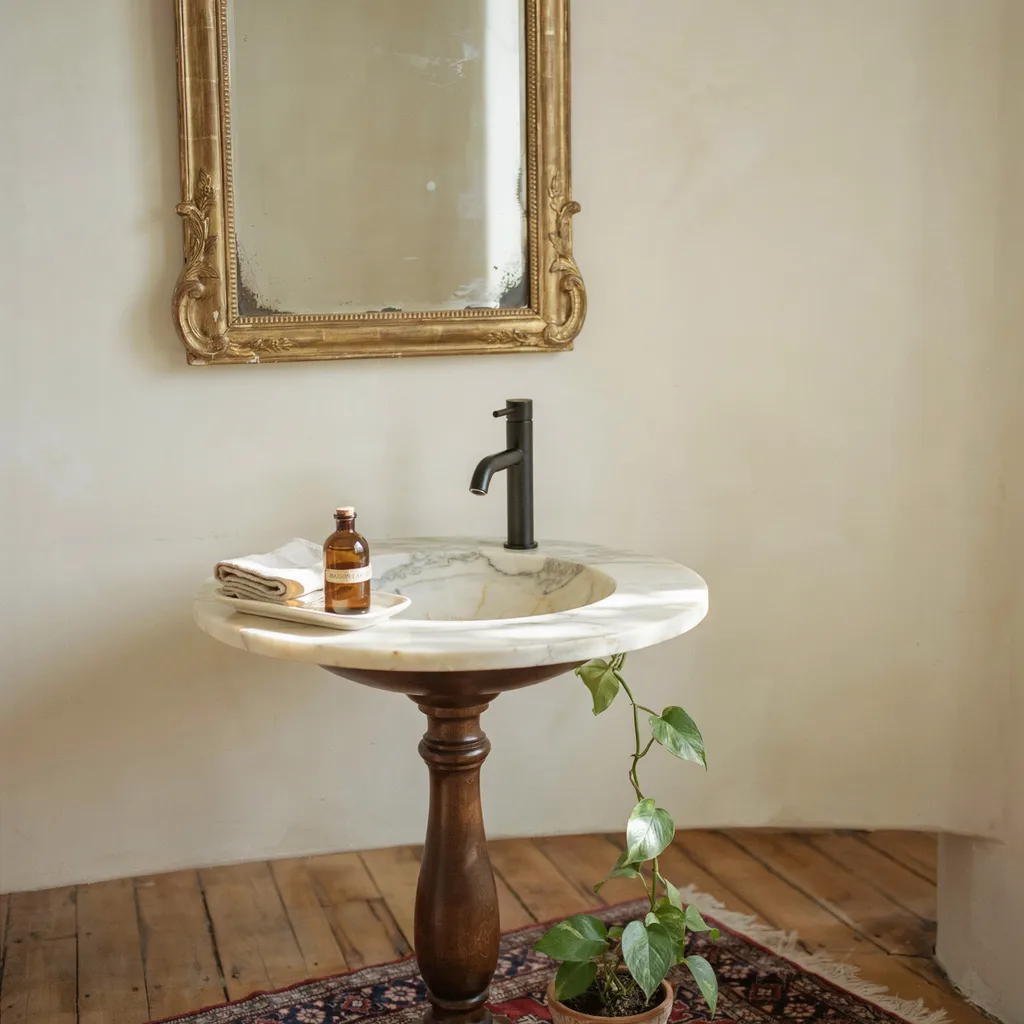
Pairing an antique gold mirror with a sleek matte-black modern faucet does more for a bathroom’s character than choosing every fixture in one matching finish ever could — it signals a room that’s evolved over time rather than been purchased as a set in a single showroom trip. The trick is restraint: limit yourself to exactly two metal finishes across the whole room, so the contrast looks intentional instead of accidental. An ornate vintage mirror frame in weathered gold-leaf paired with a contemporary wall-mounted black faucet is the clearest version of this pairing.Terms & Conditions
Vintage mirrors in this style run $80 to $250 depending on age and size, often less from estate sales than from retail antique shops. Keep every other metal accent — towel bars, drawer pulls — in one of your two chosen finishes, never a third, or the deliberate contrast collapses into visual noise.
6. Bold Botanical Wallpaper in the Powder Room
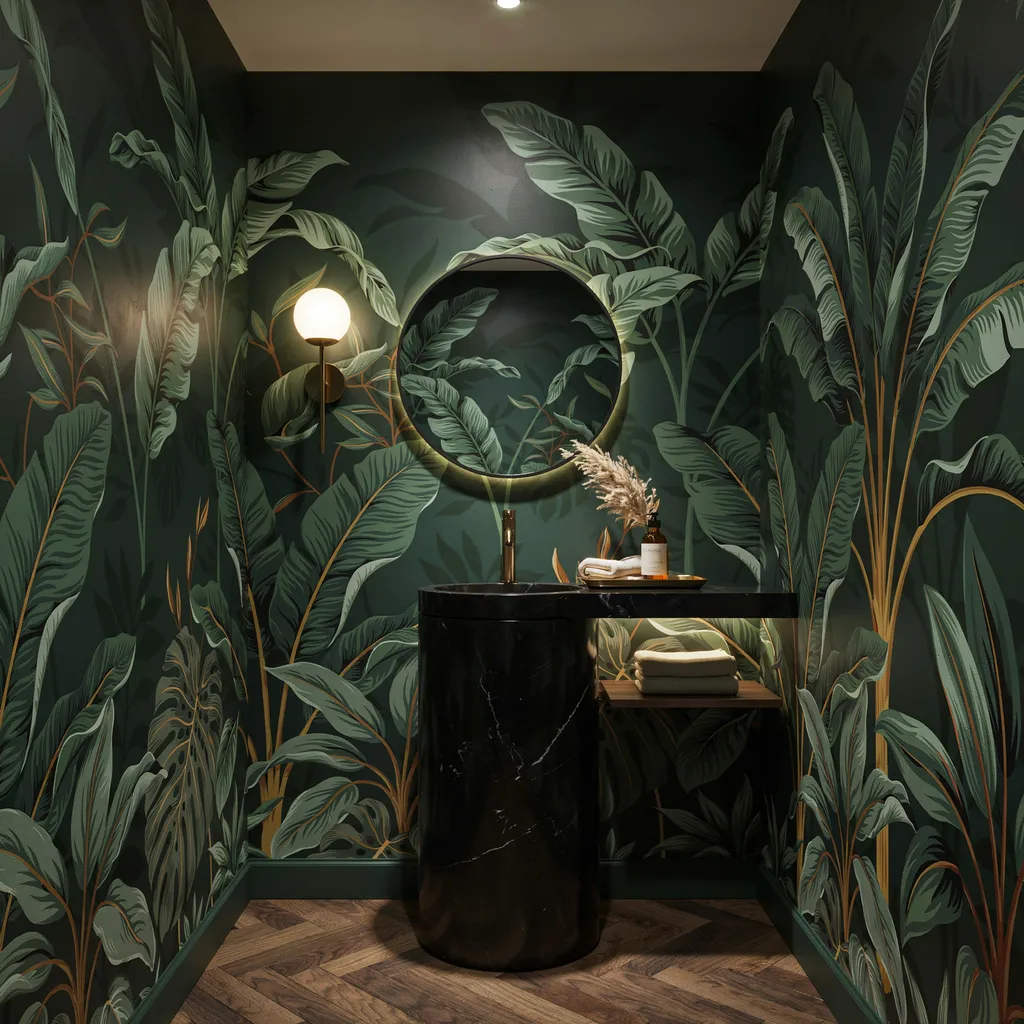
A half-bath without a shower is the one place in the house where a heavy, saturated wallpaper pattern can go without worrying about steam peeling it off the wall within a year. Large-scale leafy prints in deep forest green or charcoal make a small room feel more dramatic rather than cramped, since an oversized pattern tricks the eye into reading the space as more generous than its actual square footage. Choose a heavy-duty, moisture-resistant non-woven substrate even in a low-steam room, since sink splashes still happen.
Protect the lower third of the wall with 42-inch tall wainscoting in a painted wood tone that matches the wallpaper’s background color, which shields the paper’s bottom edge from daily fingerprints and water drips near the sink. Wallpaper and wainscoting together typically run $300 to $700 for a standard powder room, materials included.
7. Warm Under-Cabinet LED Lighting
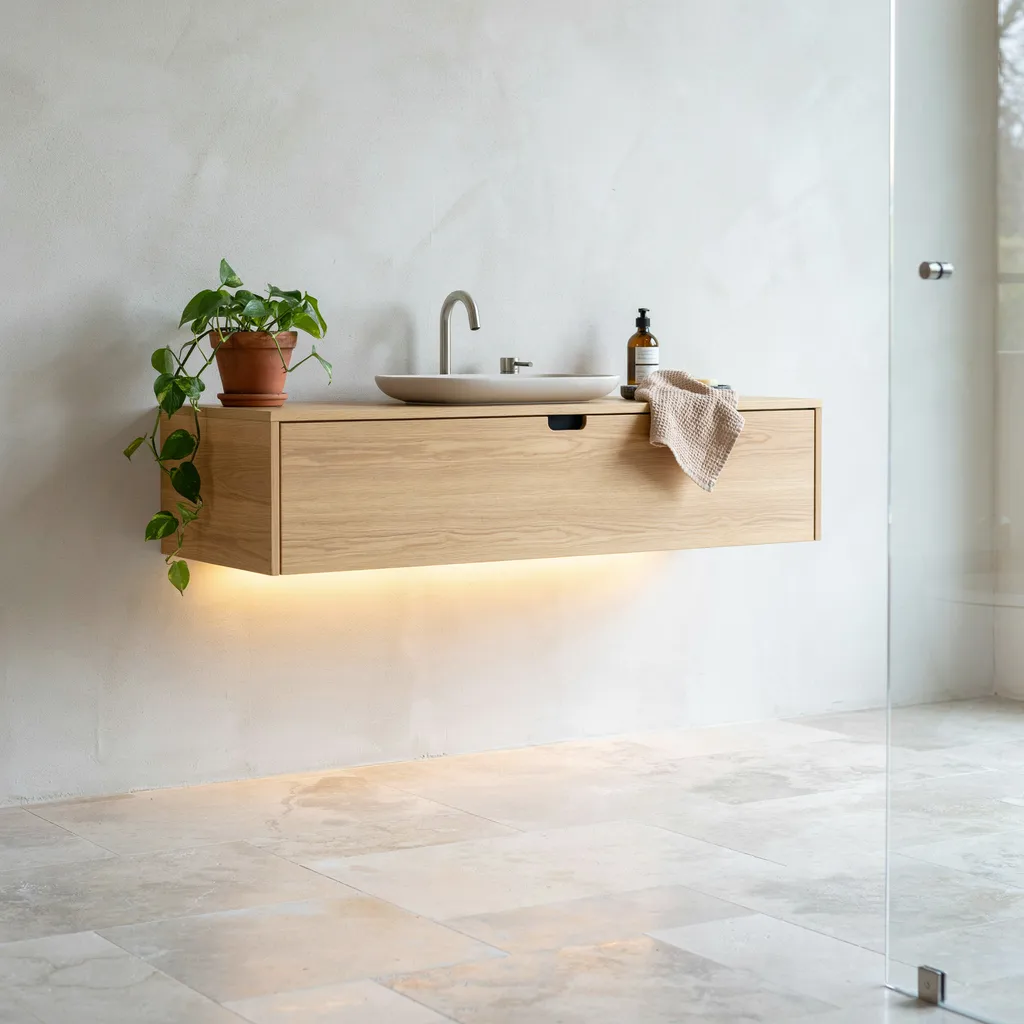
A thin LED strip hidden along the bottom edge of a floating vanity casts a soft glow across the floor that makes a heavy cabinet look like it’s hovering, while doubling as a low-level nightlight that doesn’t flood the whole room awake at 2 a.m. Embed a waterproof, low-voltage LED strip into a recessed channel along the cabinet’s underside baseline, and set the color temperature to a warm 2700K so it matches the tone of a typical sconce rather than reading cold or clinical.
This requires basic electrical work — most floating vanities have the channel pre-cut, but the wiring should go through a licensed electrician unless you’re confident with low-voltage installs. A quality LED strip kit with a dimmer driver costs $40 to $90 for a standard 30-to-36-inch vanity. The light is functional first, decorative second, which is exactly why it doesn’t compete with anything else in the room.
8. Reeded Glass Linen Cabinets
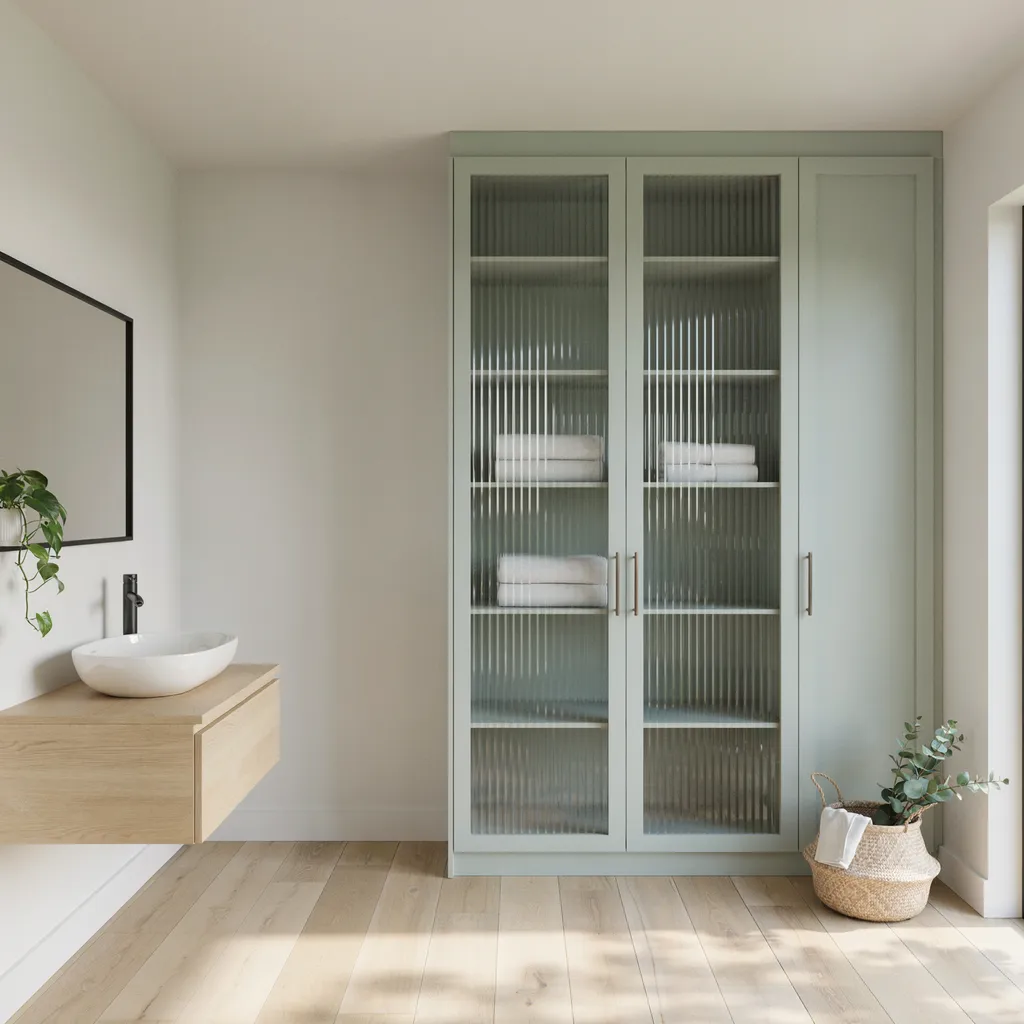
Fluted, reeded glass doors on a linen cabinet blur whatever’s stored inside without fully hiding it, which solves the real problem with open shelving — mismatched product bottles — without resorting to solid doors that make a tall cabinet feel heavy. The texture also keeps the piece from feeling like plain flat-panel storage; light catches the ridges differently depending on the angle you’re viewing from. Standard reeded glass panels run about 4 millimeters thick, set into slim 2-inch-wide shaker-style door frames.
Use the visible-but-blurred effect strategically: keep neatly rolled towels in the upper sections where the blur reads as intentional texture, and store mismatched bottles lower down where less light reaches. A custom or semi-custom floor-to-ceiling cabinet in this style runs $500 to $1,200 depending on size and whether it’s built-in or freestanding.
9. A Flush Linear Shower Drain
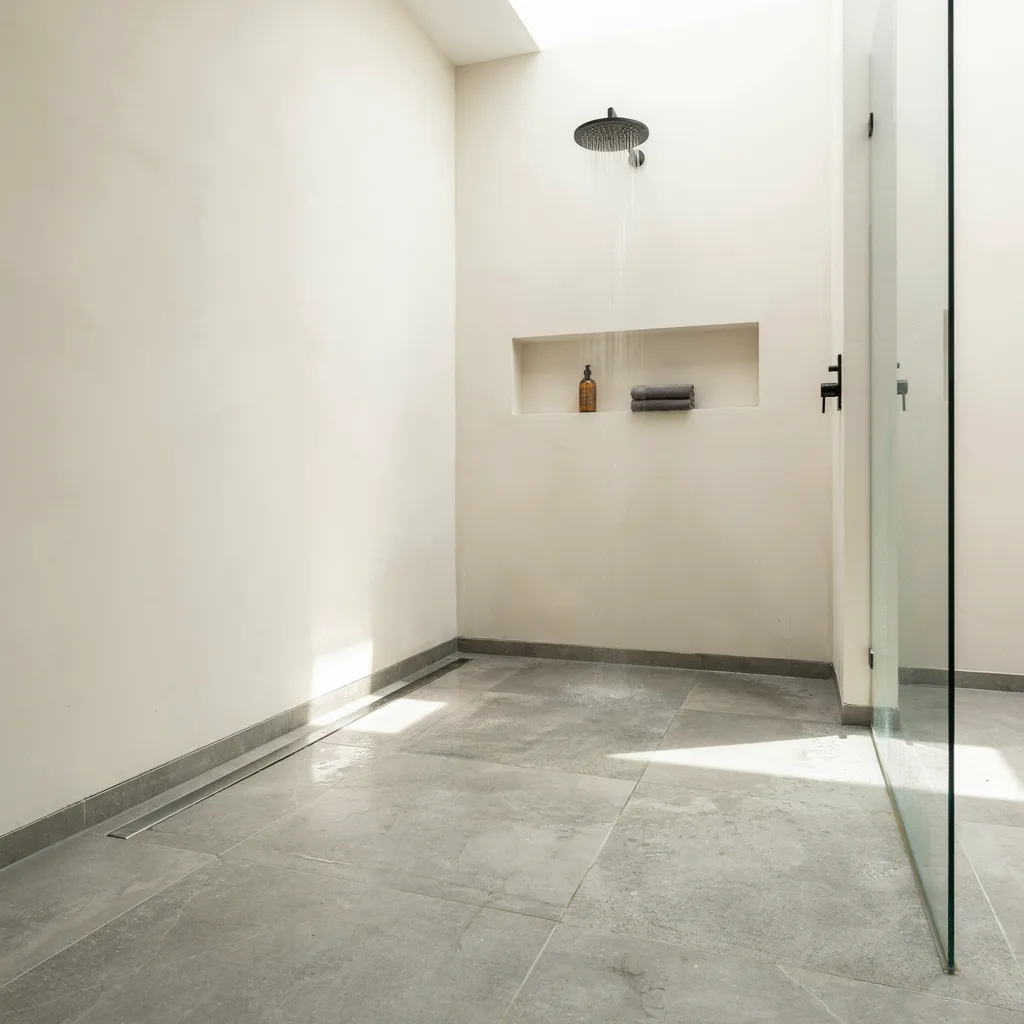
A linear drain installed along one wall lets the entire shower floor slope in a single direction instead of the four-way funnel a center drain requires, which means you can finally use large-format tile in a shower without resorting to small mosaic pieces just to handle the slope. The visual payoff is a floor that reads as one continuous surface instead of a grid broken up by dozens of small grout lines converging on a center point. A 32-inch stainless steel linear drain typically accepts a tile insert that matches your floor exactly, so the drain itself nearly disappears.
This is a renovation-only upgrade, since it changes how the subfloor is sloped before any tile goes down. Installed cost runs $300 to $700 for the drain and the additional labor the sloped substrate requires, more than a standard center drain but considerably less than most other structural changes on this list.
10. A Terracotta Vessel Sink
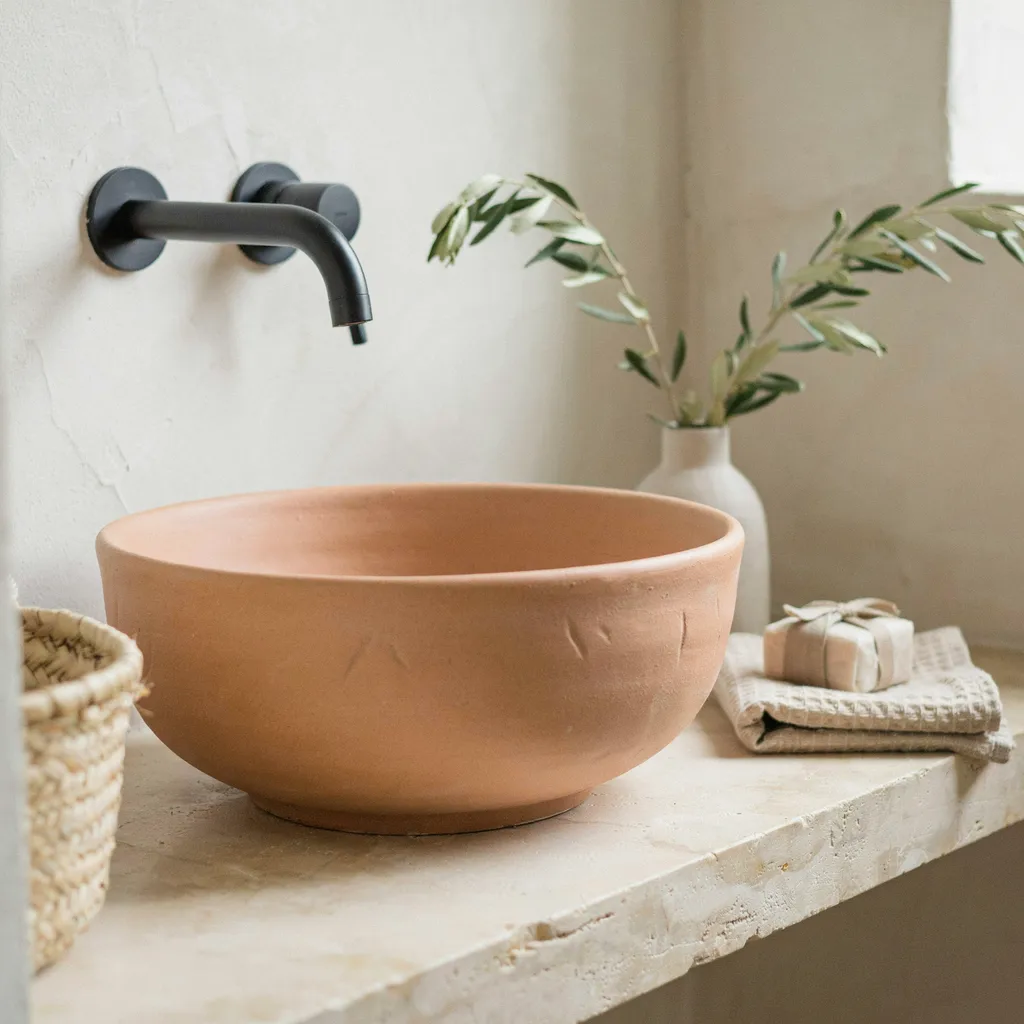
A round terracotta vessel sink sitting on top of the counter rather than dropped into it brings a warm, clay-toned alternative to the white porcelain basin in almost every bathroom, and it functions as a sculptural object in its own right rather than disappearing into the counter. The unglazed clay exterior keeps the handmade, slightly uneven look that makes terracotta read as artisanal, while a glazed interior keeps the bowl itself easy to clean and stain-resistant. Standard vessel basins in this style measure about 15 inches in diameter.
Pair it with a tall wall-mounted spout — around 9 inches — rather than a standard countertop faucet, which frees up counter space around the bowl for towels and daily items. A quality terracotta vessel sink runs $150 to $350, plus installation if you’re not handling the plumbing yourself, since vessel sinks usually need a taller faucet and sometimes a raised counter cutout.
11. A Floating Tiled Shower Bench
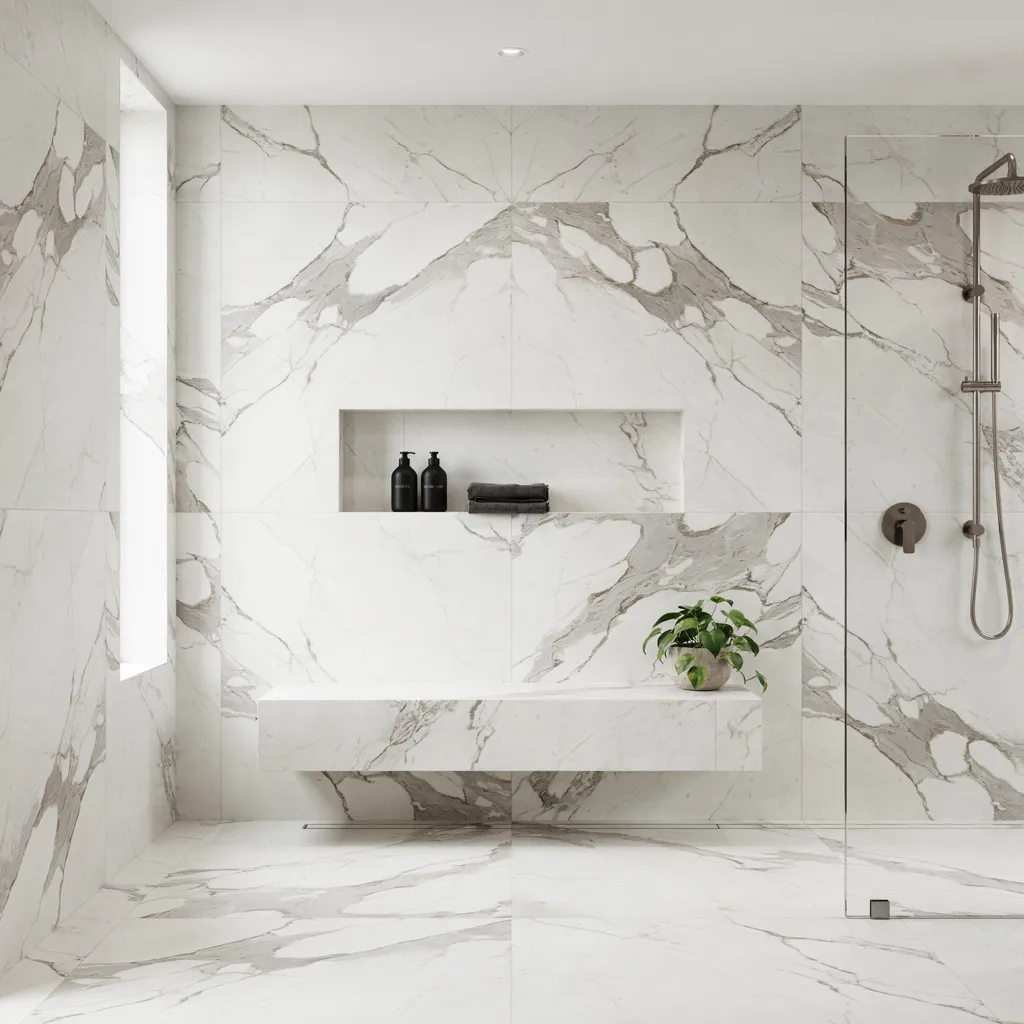
A bench that cantilevers directly from the wall rather than sitting on the shower floor frees up the entire floor area underneath for cleaning, while still giving you a solid seat for shaving or resting a foot while washing. The floating construction also reads as more architectural than a boxy floor-mounted bench, since the visible gap underneath makes the whole thing look lighter than its actual weight. Build the internal frame from a water-resistant high-density foam panel anchored into wall studs, with the seat sitting at 18 inches high.
Clad the exterior in large-format tile — 24×48 inches is standard — with minimal grout lines so the bench reads as a single solid block rather than an assembled structure. This is a renovation-stage build, typically running $400 to $900 installed depending on tile choice and shower size, done at the same time as the surrounding shower tile work.
If you’re also planning the bathtub area in the same renovation, our guide to 14 Stunning Bath Tub Decor Ideas for a Luxurious Bathroom covers matching styling moves for the tub zone.
12. Dual Backlit Vanity Mirrors
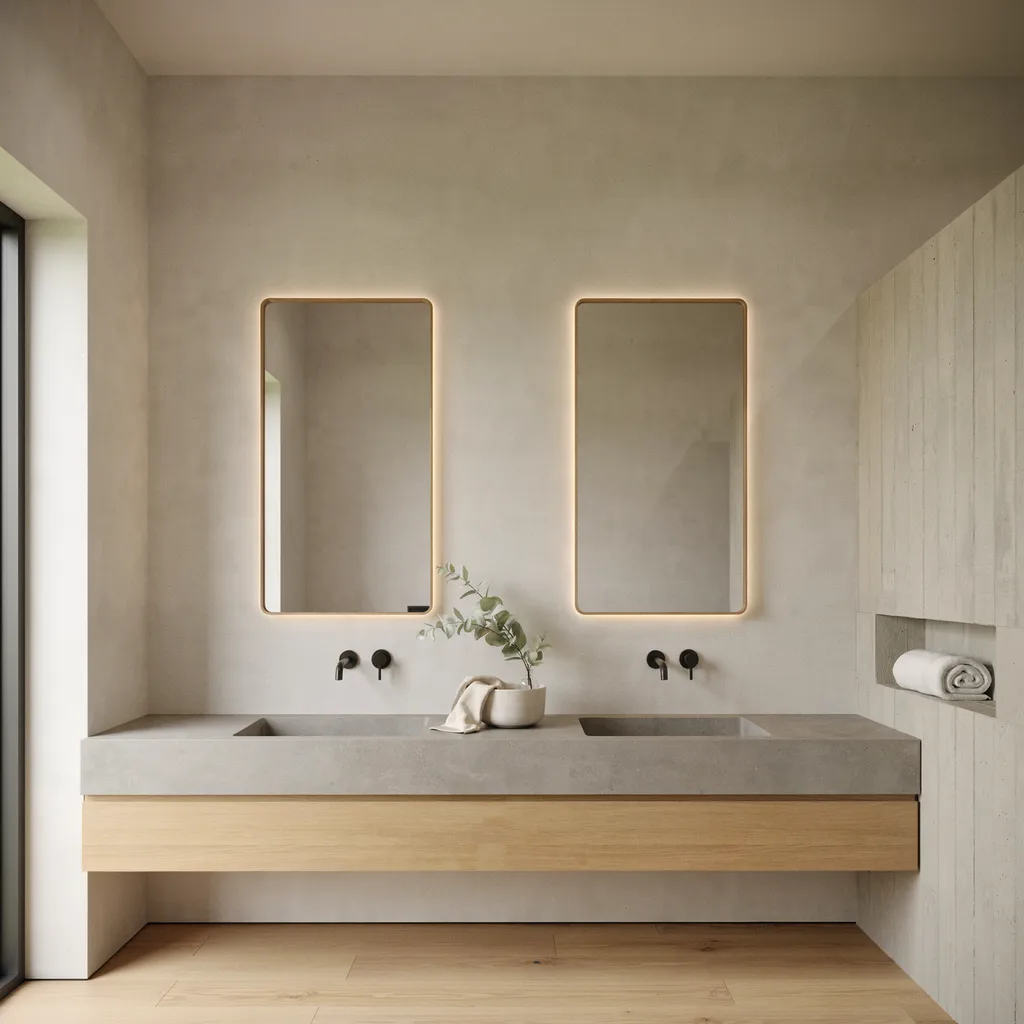
Two narrow backlit mirrors over a double vanity solve the harsh shadow problem that standard overhead vanity lights create, since the light comes from behind the glass and washes evenly across your face instead of casting shadows downward from above. Mount two 20-inch-wide by 40-inch-tall frameless mirrors directly over each sink, spaced about 6 inches apart, and wire the integrated lighting to a single low-voltage dimmer so you can shift from bright task lighting to a softer evening glow.
A pair of quality backlit mirrors in this size runs $300 to $600 total, not including the dimmer switch and wiring, which usually adds another $100 to $200 in electrician time if you don’t already have compatible wiring in the wall. The even, shadow-free light is the actual functional upgrade here — the clean modern look is just what comes with it.
13. A Low-Pile Vintage Runner Rug
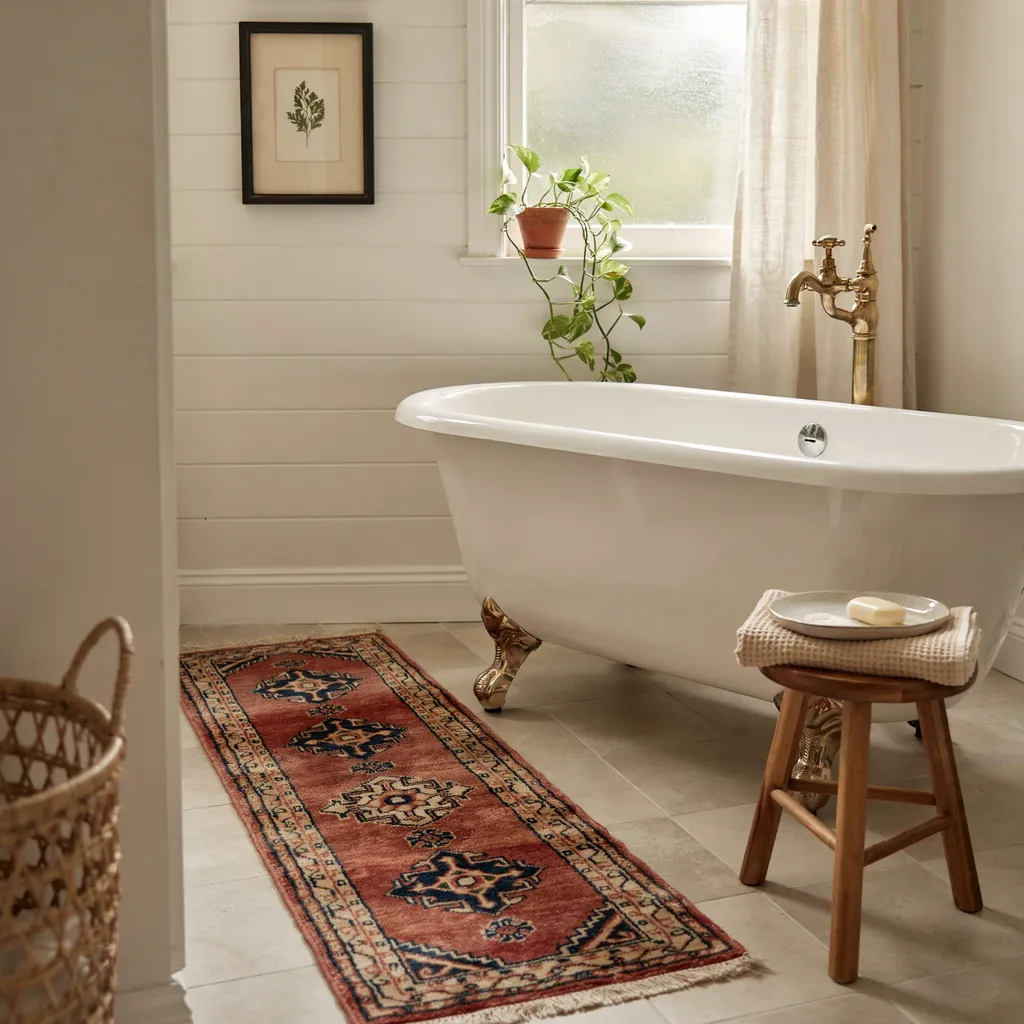
A long, low-pile vintage-style runner placed beside a tub or double vanity does more visual work than a small bath mat ever could, softening cold tile across the full length of the room instead of just one spot near the sink. Choose a genuinely low-pile weave — wool or a wool-blend — at roughly 2 feet wide by 6 feet long, since a thick, plush rug traps water and takes too long to dry in a humid room. Older, hand-knotted runners in particular hold up well here because wool’s natural lanolin coating resists light moisture better than most people expect.
Always place a high-grip rubber pad underneath, regardless of how non-slip the rug’s backing claims to be, since tile underneath a runner gets slick fast once any water reaches it. A genuine vintage or vintage-style wool runner at this size runs $80 to $220 depending on age and origin, with newer reproductions on the lower end of that range.
Conclusion:
These 13 bathroom decor ideas split roughly into two categories, and it’s worth knowing which is which before you start. Some — the runner rug, the mixed-era metal fixtures, the vessel sink — are weekend-scale swaps you can do yourself with a basic toolkit and a single trip to a retailer. Others — the recessed niche, the linear drain, the floating bench, the microcement walls — require cutting into a wall or floor and are genuinely contractor territory, best planned alongside a broader renovation rather than tackled alone on a Saturday.
Knowing the difference up front saves you from starting a project that stalls halfway through. Budget realistically: smaller swaps land under $300, while anything structural climbs into the $400 to $1,500 range once labor is included. The contrast principle holds across every idea here — rough against smooth, old against new, matte against polished — and it’s what makes a bathroom look deliberately designed rather than simply furnished. Start with whichever idea solves your most obvious daily annoyance, since that’s the change you’ll notice every time you walk into the room. The rest tend to follow naturally once the first piece is in place.
Follow us on Pinterest @nestellahome for daily bathroom inspiration, styling formulas, and the latest home decor ideas curated just for you.
Frequently Asked Questions:
Q1. Which of these 13 bathroom decor ideas can I do myself without a contractor?
The vanity swap, mixed-era metal fixtures, the runner rug, and the terracotta vessel sink (if you’re comfortable with basic plumbing) are the most DIY-friendly. Anything involving cutting into a wall or floor — the recessed niche, linear drain, microcement, and floating bench — needs a professional.
Q2. Is microcement a good option for a small bathroom with heavy daily shower use?
Yes, as long as it’s sealed with a wet-area-rated polyurethane topcoat. Microcement handles direct splash contact well once properly sealed, though it should be applied by someone trained in the technique, since uneven trowel work shows more on a smooth finish than it would under tile.
Q3. How do I keep mixed metal finishes from looking mismatched instead of intentional?
Limit the entire room to exactly two metal finishes — for example, antique gold and matte black — and repeat only those two across every fixture, including towel bars and drawer pulls. A third finish is usually what tips a mixed-metal look from curated into accidental.
Q4. Are vintage wool runner rugs actually practical near water?
Reasonably, yes, in a low-pile weave with a non-slip pad underneath. Wool’s natural lanolin coating resists light moisture better than synthetic fibers, though no rug — vintage or new — should sit directly in a shower’s splash zone without a chance to dry out between uses.
Q5. What’s the real advantage of a linear shower drain over a standard center drain?
A linear drain only requires the floor to slope in one direction, which means you can install large-format tile without the small mosaic cuts a four-way center-drain slope demands. It also means fewer grout lines overall, which keeps the floor easier to clean.